Buffer Cleaner
Oman Chemical is leading one Largest Supplier, Manufacture a


Product Code: RXSOL-50-5005-020
We carry a complete line of condensate treatment chemicals. Condensate treatment chemicals are used to increase the condensate pH, thus reducing corrosion to the entire boiler steam system. The most common product is a tri-blend amine of cyclohexylamine, morpholine, and diethylaminoethanol (DEAE) neutralizing amines, although we do have standard RXSOL products or we can custom blend to your needs.
RXSOL-50-5005-DCM1 10% DEAE, 10% Cyclo, 10% Morpholine
RXSOL-50-5005-DCM2 20% DEAE, 20% Cyclo, 20% Morpholine
RXSOL-50-5005-C 20% Cyclohexylamine
RXSOL-50-5005-D 20% DEAE
RXSOL-50-5005-M 20% Morpholine
RXSOL-50-5005-C5 50% Cyclohexylamine
RXSOL-50-5005-D 50% DEAE
RXSOL-50-5005-M5 50% Morpholine
RXSOL-50-5005-CC alkaline and the vapors are irritating to eyes and lungs. Avoid contact with eyes and skin. Do not take internally. Observe safety regulations wear Goggles, PVC gloves and Apron when handling Provide ample ventilation Avoid contact with skin in case of contacts wash with cupious amount of water immediately. If eyes are splashed give immediate and prolonged irrigation with clean running water and obtain medical attention.
Not for internal use :-
If swallowed do not induce vomiting give plenty of water or milk and call a doctor immediately.
Packing. GENERAL REMARKS:-Do not store RXSOL-50-5005-CA near a heating equipment.

Product Code: RXSOL-19-1523-025
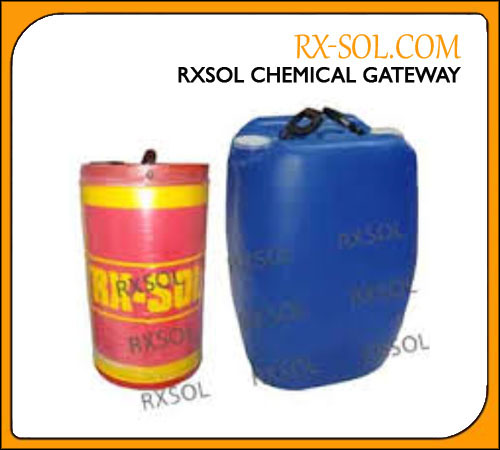
Product Code: RXSOL-19-1519-025
Specifications of Disodium EDTA
Product Name : Disodium EDTA.
Product Category : Ethylene Diamine Tetra Acetic Acid Derivatives.
CAS No. : 139-33-3 (Anhydrous); 6381-92-6 (Dihydrate).
HSN No. : 29173990.
Synonyms : Ethylenediaminetetraacetic Acid Disodium Salt, N,N'-1,2-ethanediylbis(N-(carboxymethyl)glycine) edetic acid Disodium Salt, Disodium Edetate, Metaclaw, Trilon B, Versene 220, Dissolvine, Titriplex, etc.
Molecular Formula : C10H14O8N2Na2.2H2O.
Molecular Weight : 372.2.
Appearance : White Crystalline Powder.
Solubility : Soluble In Water, Clear Solution.
Assay : 99.0% Min.
pH : 4.0 - 6.0.
Chelation Value as mg. of CaCO3 : 270.0.
Uses / Application of Disodium EDTA
Disodium EDTA is a Sequestering Agent, which is used in various Industries such as Pharmaceutical, Photography, Textile, Boiler Turbine scale removal, Agriculture. It is used for removing unwanted inorganic impurities present in the system, which helps in getting superior performance & cost saving.
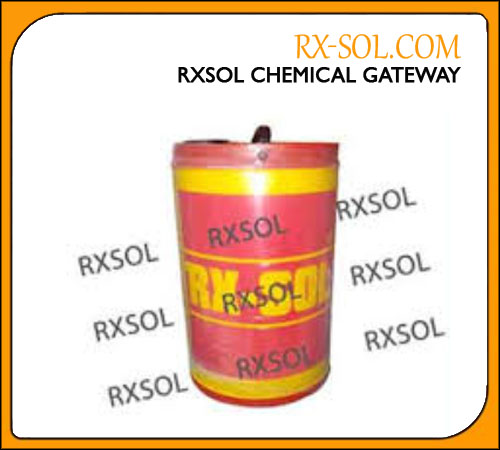
Product Code: RXSOL-19-1121-025
| PRODUCT NAME | : | DIETHYLAMINOETHANOL |
| CAS number | : | 100-37-8 |
| UN number | : | 2686 |
| Formula | : | (C2H5)2NCH2CH2OH |
| Odour | : | |
| Solubility in water | : | COMPLETE |
| Density | : | 0.880 at 20 oC |
| Boiling point | : | 161 oC |
| Melting point | : | -70 oC |
| Viscosity | : | |
| Flashpoint | : | 60 oC |
| Explosive limits | : | |
| Vapour pressure | : | 1.9 mbar at 20 oC |
| Skin absorption/irritation | : | YES |
| TLV Country NL Year 1995 | : | 10 S ppm 50 S mg/m3 |
| Pollution category 1994 | : |
C |
Never use DEAE in an open ventilation system, its oily residue can deposit on all available surfaces and results oil residue deposition. DEAE produces an oily residue which can soften varnishes.
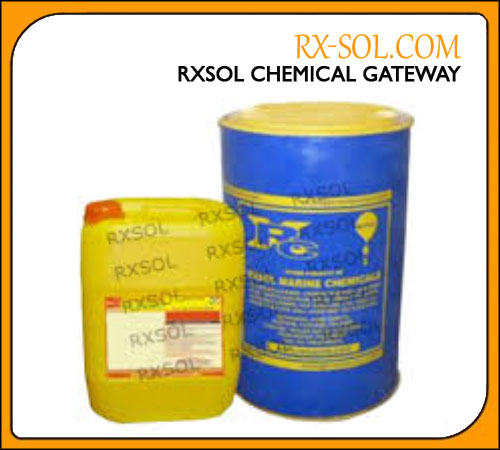
Product Code: RXSOL-50-5023-025
Physical Properties:-
| Appearance | Opaque Liquid |
| Odor | CHARACTERISTIC |
| pH (1% Solution) | 10 - 11 |
| Specific Gravity | 1.1 |
| Solubility in Water | 100 % water miscible |
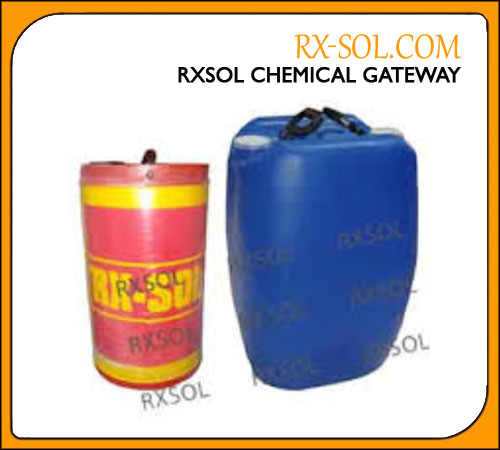
Product Code: RXSOL-50-5009-100
Product Code: RXSOL-50-5022-025
| Product Specifications: | |
|
Density |
1 |
|
Packing, Type |
PLASTIC |
|
Volume |
25 l |
|
pH |
10.5 |
|
Colour |
LIGHT YELLOW |
|
Appearance |
LIQUID |
Directions for use
This product is formulated for use in conjunction.Oxygen Scavenger Plus can be used in any boiler system, and in conjunction with mechanical deaeration systems. Removal of dissolved oxygen is vital for prevention of corrosion and especially pitting corrosion in boilers. When dosed into a boiler system, Oxygen Scavenger Plus will react with dissolved oxygen and form non corrosive compounds. The product is volatile, and left over product from oxygen scavenging in the pre-boiler section will evaporate and assist protection of the steam and condensate system. No solid materials are produced when using Oxygen Scavenger Plus.
Dosing method
Rx Marine International recommends continuously into the boiler feed line and Boiler Water Treatment Dosing Unit.
Dosing should be controlled so that the DEHA residual in the condensate is between 0.08-0,30 ppm. The consumption will depend on feed water temperature and the amount of water fed into the boiler. For more information about initial dosage and dose rate please consult your nearest Customer Centre.
Test result condensate PPM DEHA
0.00 - 0.08 0.08 - 0.30 0.30 +
Increase dose 25% Maintain dose Decrease dose 25%
Sampling and testing
A representative sample of Condensate should be drawn for analysis daily. The sample should always be taken from the same sampling point, cooled and tested immediately By Rxsol Test Kit. It is important that regular testing is carried out, to ensure the correct level of treatment is maintained.
Features
• Fast acting, liquid oxygen scavenger.
• Safe and easy to use, low toxicity.
• Reduces corrosion of iron and copper, increasing system life and reliability.
• Neutralises acids occurring in condensate system.
• Volatile product, provides distribution and protection throughout the boiler system, economical in use.
• Suitable for use in conjunction with combined and co-ordinated treatment programmes.
• Organic product, no dissolved solids added.
• Simple test to determine treatment level.
The establishment of protective metal oxide lay-ers through the use of reducing agents (such as hydrazine, hydroquinone, and other oxygen scavengers) is known as metal passivation or metal conditioning. Although "metal passivation" refers to the direct reaction of the compound with the metal oxide and "metal conditioning" more broadly refers to the promotion of a protective surface, the two terms are frequently used interchangeably.
The reaction of hydrazine and hydroquinone, which leads to the passivation of iron-based metals, proceeds according to the following reactions:
| N2H4 | + | 6Fe2O3 | ® | 4Fe3O4 | + | 2H2O | + | N2 |
| hydrazine | hematite | magnetite | water | nitrogen |
| C6H4(OH)2 | + | 3Fe2O3 | ® | 2Fe3O4 | + | C6H4O2 | + | H2O |
| hydroquinone | hematite | magnetite | benzoquinone | water |
Similar reactions occur with copper-based metals:
| N2H4 | + | 4CuO | ® | 2Cu2O | + | 2H2O | + | N2 |
| hydrazine | cupric oxide | cuprous oxide | water | nitrogen |
| C6H6O2 | + | 2CuO | ® | Cu2O | + | C6H4O2 | + | H2O |
| hydroquinone | cupric oxide | cuprous oxide | benzoquinone | water |
Magnetite and cuprous oxide form protective films on the metal surface. Because these oxides are formed under reducing conditions, removal of the dissolved oxygen from boiler feedwater and condensate promotes their formation. The effective application of oxygen scavengers indirectly leads to passivated metal surfaces and less metal oxide transport to the boiler whether or not the scavenger reacts directly with the metal surface.
Product Code: RXSOL-19-1382-025
|
||||||||||||||||||||||||||||
Our regular customer of morpholine getting advantage of our pure imported morpholine as per there customized packing and requirements.

Product Code: RXSOL-19-1288-025

Product Code: RXSOL-19-1286-050
| PRODUCT NAME | : | CYCLO HEXYL AMINE |
| CAS number | : | 108-94-1 |
| UN number | : | 1915 |
| Formula | : | C6H10O |
| Odour | : | ACETONE LIKE |
| Soluble in water | : | SLIGHT |
| Density | : | 0.948 at oC |
| Boiling point | : | 156 oC |
| Melting point | : | -31oC |
| Viscosity | : | |
| Flashpoint | : | 54 oC |
| Explosive limits | : | 1.1 – 9.4 Vol% |
| Vapour pressure | : | 4.7 mbar at 20 oC |
| Skin absorption/irritation | : | YES |
| TLV Country NL Year 1995 | : | 50 ppm 200 mg/m3 |
| Pollution category 1994 | : |
D |
Symptoms. irritation eyes, skin, mucous membrane, respiratory system; eye, skin burns; skin sensitization; cough, pulmonary edema; drowsiness, dizziness.

We are marine chemical supplier since 1996.These Marine Chemicals include different sets of products such as Tank Cleaners, Maintenance Chemicals, Cooling Water Treatment Chemicals, Boiler Water Treatment Chemicals, Fuel Additives, etc.

Oman Chemical is leading one Largest Supplier, Manufacture a

Oman Chemical is leading one Largest Supplier, Manufacture a
