Drilling Fluids & Mud Oil Field chemicals
CO2 absorber
- Part number
- RXSOL-81-8197-220
- Brand
- RXSOL
Overview
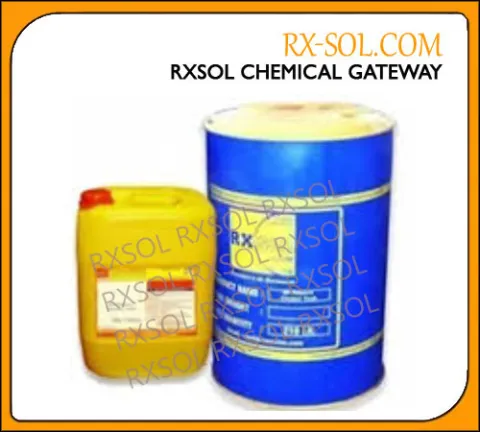
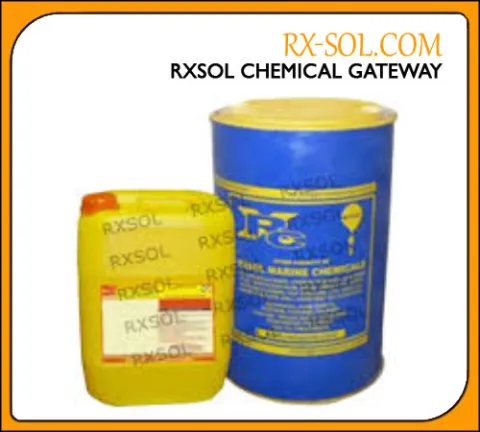
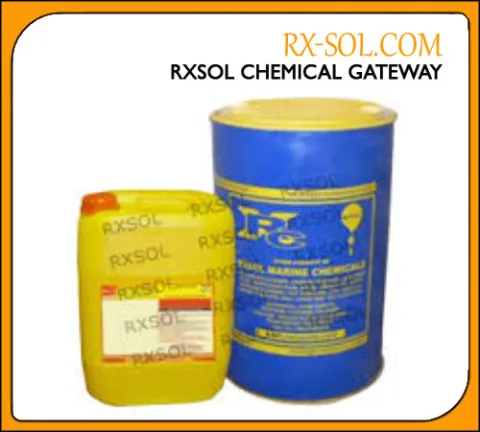
RXSOL Carbon Dioxide Absorbent is High Performance Grade Absorbent. RXSOL-81-8197-220 is a versatile CO2 absorbent for removal of carbon dioxide and other acidic contaminants from gas streams. It is a specialize compound consisting primarily of amines with other ingredient is an active compound of mixture of hydroxides , indicator.
Technical specifications
RXSOL-81-8197-220 is a colourless, slightly viscous liquid with a mild amine odour. It is miscible with water, alcohols, and aromatic hydrocarbons but relatively immiscible with aliphatic hydrocarbons and ethyl ether.
Applications
Characteristics and notes
Safety and SDS
Read the safety data sheet before handling. Wear suitable gloves and eye protection.
View safety data sheet
| Product Name | RXSOL-81-8197-220 |
| Product Type | CO2 absorber |
Company Details:
RX MARINE INTERNATIONAL
105, A wing , BSEL , TECH PARK.
VASHI ,NEW BOMBAY 400703 INDIA
Stock Point : Kolkata, Mumbai, Chennai, Visakhapatnam, Gandhidham, Fujairah, Muscat, Nairobi
| Phone | +91 22 65113333 / 5555 / 9999 / 27611360 |
| Fax | +91 22 2781 1318 :::AOH :0091 9821214367 |
| rxsolchemicals@gmail.com |
|
Chemica Name |
CAS Number |
% |
|
2-(2-Aminoethoxy)ethanol |
929-06-6 |
40-50 |
| Proprietary Blend of CO2 Absorbents | - | 50-60 |
|
Physical state |
Liquid. |
|
Odor |
Amine-like. |
|
OSHA/HCS status |
This material is considered hazardous by the OSHA Hazard Communication Standard (29 CFR 1910.1200). |
|
Emergency overview |
DANGER! |
|
GENERAL INFORMATION |
Read the entire MSDS for a more thorough evaluation of the hazards. |
|
Eye contact |
Get medical attention immediately. Call a poison center or physician. Immediately flush eyes with plenty of water, occasionally lifting the upper and lower eyelids. Check for and |
|
Skin contact |
Get medical attention immediately. Call a poison center or physician. Flush contaminated skin with plenty of water. Remove contaminated clothing and shoes. Wash contaminated clothing thoroughly with water before removing it, or wear gloves. Continue to rinse for at least 10 minutes. Chemical burns must be treated promptly by a physician. Wash clothing before reuse. Clean shoes thoroughly before reuse. |
|
Inhalation |
Get medical attention immediately. Call a poison center or physician. Remove victim to fresh air and keep at rest in a position comfortable for breathing. If it is suspected that fumes are still present, the rescuer should wear an appropriate mask or self-contained breathing apparatus. If not breathing, if breathing is irregular or if respiratory arrest occurs, provide artificial respiration or oxygen by trained personnel. It may be dangerous to the person providing aid to give mouth-to-mouth resuscitation. If unconscious, place in recovery position and get medical attention immediately. Maintain an open airway. Loosen tight clothing such as a collar, tie, belt or waistband. In case of inhalation of decomposition products in a fire, symptoms may be delayed. The exposed person may need to be kept under medical surveillance for 48 hours. |
|
Inhalation |
Get medical attention immediately. Wash out mouth with water. Move exposed person to fresh air. Aspiration hazard if swallowed. Can enter lungs and cause damage. Do not induce vomiting. Chemical burns must be treated promptly by a physician. Never give anything by mouth to an unconscious person. |
|
Notes to physician |
Symptomatic and supportive therapy as needed. Following severe exposure medical follow-up should be monitored for at least 48 hours |
|
Flash point |
Closed cup: 127°C (260.6°F) |
| Flammable limits | Lower: 2.6% |
|
Upper: 11.7% |
|
| Products of combustion | Decomposition products may include the following materials: |
| carbon dioxide | |
| carbon monoxide | |
| nitrogen oxides | |
| Extinguishing media | |
| Suitable | Use an extinguishing agent suitable for the surrounding fire. |
| Not suitable |
None known. |
| Special exposure hazards |
In a fire or if heated, a pressure increase will occur and the container may burst. Promptly isolate the scene by removing all persons from the vicinity of the incident if there is a fire. No action shall be taken involving any personal risk or without suitable training. |
| Special protective equipment for fire-fighters | Fire-fighters should wear appropriate protective equipment and self-contained breathing apparatus (SCBA) with a full face-piece operated in positive pressure mode. |
|
Personal precautions |
No action shall be taken involving any personal risk or without suitable training. Evacuate surrounding areas. Keep unnecessary and unprotected personnel from entering. Do not touch or walk through spilled material. Do not breathe vapor or mist. Provide adequate ventilation. Wear appropriate respirator when ventilation is inadequate. Put on appropriate personal protective equipment (see Section 8). |
|
Environmental precautions |
Avoid dispersal of spilled material and runoff and contact with soil, waterways, drains and sewers. Inform the relevant authorities if the product has caused environmental pollution (sewers, waterways, soil or air). |
|
Methods for cleaning up |
Stop leak if without risk. Move containers from spill area. Approach release from upwind. Prevent entry into sewers, water courses, basements or confined areas. Wash spillages into an effluent treatment plant or proceed as follows. Contain and collect spillage with non-combustible, absorbent material e.g. sand, earth, vermiculite or diatomaceous earth and place in container for disposal according to local regulations (see section 13). Dispose of via a licensed waste disposal contractor. Contaminated absorbent material may pose the same hazard as the spilled product. Note: see section 1 for emergency contact information and section 13 for waste disposal. |
|
Handling |
Put on appropriate personal protective equipment (see Section 8). Eating, drinking and smoking should be prohibited in areas where this material is handled, stored and processed. Workers should wash hands and face before eating, drinking and smoking. Do not get in eyes or on skin or clothing. Do not breathe vapor or mist. Do not ingest. If during normal use the material presents a respiratory hazard, use only with adequate ventilation or wear appropriate respirator. Keep in the original container or an approved alternative made from a compatible material, kept tightly closed when not in use. Keep away from acids. Empty containers retain product residue and can be hazardous. Do not reuse container. |
|
Storage |
Store in accordance with local regulations. Store in original container protected from direct sunlight in a dry, cool and well-ventilated area, away from incompatible materials (see section 10) and food and drink. Separate from acids. Keep container tightly closed and sealed until ready for use. Containers that have been opened must be carefully resealed and kept upright to prevent leakage. Do not store in unlabeled containers. Use appropriate containment to avoid environmental contamination. |
|
Preventive Measures |
Conditions of use, adequacy of engineering or other control measures, and actual exposures will dictate the need for specific protective devices at your workplace. |
|
Engineering controls |
Use local exhaust ventilation to maintain airborne concentrations below the TLV. Suitable respiratory equipment should be used in cases of insufficient ventilation or where operational procedures demand it. For guidance on engineering control measures refer to publications such as the ACGIH current edition of 'Industrial Ventilation, a manual of Recommended Practice.' |
|
Personal protection |
|
| Eyes | Safety eyewear complying with an approved standard should be used when a risk assessment indicates this is necessary to avoid exposure to liquid splashes, mists or dusts. |
| Skin | Personal protective equipment for the body should be selected based on the task being performed and the risks involved and should be approved by a specialist before handling this product. |
| Respiratory | Use a properly fitted, air-purifying or air-fed respirator complying with an approved standard if a risk assessment indicates this is necessary. Respirator selection must be based on nown or anticipated exposure levels, the hazards of the product and the safe working limits of the selected respirator. |
| Hands | Chemical-resistant, impervious gloves complying with an approved standard should be worn at all times when handling chemical products if a risk assessment indicates this is necessary. |
|
General information |
|
|
Appearance |
|
|
Physical state |
Liquid. |
|
Color |
Clear. |
|
Odor |
Amine-like. |
| Odor threshold | Not available. |
| Important health, safety and environmental information | |
| pH | 11.8 |
| Boiling point | 222.5 to 223.8°C (432.5 to 434.8°F) |
| Melting point | -12.5°C (9.5°F) |
| Flash point | Closed cup: 127°C (260.6°F) |
| Oxidizing properties | None |
| Vapor pressure | <0.1 kPa (<0.75 mm Hg) [20°C] |
| Relative density |
1.06 (Specific gravity) |
|
Partition coefficient: noctanol/ water (log Kow) |
-1.89 |
| Viscosity | Kinematic: 0.075 cm2/s (7.5cSt at 51.7°C) |
| Vapor density | 3.6 [Air = 1] |
| Auto-ignition temperature | 370°C (698°F) |
| VOC content | 99% |
|
Stability and reactivity |
The product is stable. |
|
Incompatibility with various |
Extremely reactive or incompatible with the following materials: acids. |
|
Hazardous polymerization |
Under normal conditions of storage and use, hazardous polymerization will not occur. |
|
Hazardous decomposition products |
Decomposition products may include the following materials: |
| carbon dioxide | |
| Not available. | |
| carbon monoxide | |
|
nitrogen oxides |
|
Toxicity data |
||||
| Acute toxicity | ||||
| Product/ingredient name | Test | Species | Result | Exposure |
| 2-(2-Aminoethoxy)ethanol | LD50 Dermal |
Rabbit - Male, Female |
>3000 mg/kg | |
|
LD50 Oral |
Rat - Male, Female |
3400 mg/kg | ||
|
LC50 Inhalation Vapor |
Rat - Male,Female |
>8.7 mg/m3 | 8 hours | |
| Sensitizer | ||||
|
Product/ingredient name |
Route of exposure |
Species | Result | |
| 2-(2-Aminoethoxy)ethanol | skin | Guinea pig | Not sensitizing | |
| Chronic toxicity | ||||
| Product/ingredient name | Test | Species | Result |
Exposure |
| 2-(2-Aminoethoxy)ethanol |
Sub-acute NOAEL Dermal |
Rat - Male, Female | >1500 mg/kg/d |
14 days; 6 hours per day |
| Mutagenicity | Test | Experiment | Result | |
| 2-(2-Aminoethoxy)ethanol |
OECD 471 Bacterial Reverse Mutation Test |
Experiment: In vitro Subject: Bacteria Metabolic activation: +/- |
Negative | |
|
OECD 471 Bacterial Reverse Mutation Test |
Experiment: In vitro Subject: Bacteria Metabolic activation: +/- |
Negative |
||
|
OECD 476 In vitro Mammalian Cell Gene Mutation Test |
Experiment: In vitro Subject: Mammalian- Animal Cell: Somatic |
Negative | ||
| EPA OPPTS |
Experiment: In vitro Subject: Mammalian- Animal |
Negative | ||
|
OECD 474 Mammalian Erythrocyte Micronucleus Test |
Experiment: In vivo Subject: Mammalian- Animal |
Negative |
| Potential acute health effects | |
|
Ingestion |
Aspiration hazard if swallowed. Can enter lungs and cause damage. May cause burns to mouth, throat and stomach. |
| Inhalation | May give off gas, vapor or dust that is very irritating or corrosive to the respiratory system |
| Eyes | Corrosive to eyes. Causes burns. |
| Skin | Corrosive to the skin. Causes burns. |
| Potential chronic health effects | |
| Chronic effects | No known significant effects or critical hazards. |
| Target organs | None known. |
| Carcinogenicity | No known significant effects or critical hazards. |
| Mutagenicity | No known significant effects or critical hazards. |
| Teratogenicity | No known significant effects or critical hazards. |
| Fertility effects | No known significant effects or critical hazards. |
| Developmental effects | No known significant effects or critical hazards. |
|
Aquatic ecotoxicity |
||||
| Product/ingredient name | Test | Result | Species | Exposure |
| 2-(2-Aminoethoxy)ethanol |
Acute EC50 190 mg/L |
Daphnia | 48 hours | |
|
Acute IC50 160 mg/L |
Algae | 72 hours | ||
|
Acute LC50 460 mg/L |
Fish | 96 hours | ||
| Biodegradability | ||||
|
Product/ingredient name |
Test | Result | Dose | Inoculum |
| 2-(2-Aminoethoxy)ethanol | OECD |
1 % - Not readily - 28 days |
3 mg/L | Marine water |
|
Product/ingredient name |
Aquatic half-life | Photolysis | Biodegradability | |
| 2-(2-Aminoethoxy)ethanol | Not readily | |||
| Product/ingredient name | LogPow | BCF | Potential | |
| 2-(2-Aminoethoxy)ethanol | 1.2 | low |
|
Environmental effects |
Not readily biodegradable. This product shows a low bioaccumulation potential. |
|
Waste disposal |
The generation of waste should be avoided or minimized wherever possible. Significant |
|
Regulatory information |
UN number |
Proper shipping name |
Class | PG* | Label | Additional information |
| DOT Classification | UN3055 |
2-(2- Aminoethoxy)ethanol |
8 | III | ||
| TDG Classification | UN3055 |
2-(2- Aminoethoxy)ethanol |
8 | III | ||
| IMDG Class | UN3055 |
2-(2- Aminoethoxy)ethanol |
8 | III |
Emergency schedules (EmS) F-A, S-B |
|
| IATA-DGR Class | UN3055 |
2-(2- Aminoethoxy)ethanol |
8 | III |
Passenger and Cargo AircraftQuantity limitation: 5 L Packaging instructions: 818 Cargo Aircraft Only Quantity limitation: 60 L Packaging instructions: 820 |
***The transport regulations may change in the different countries. Check for the appropriate regulations in the countryof transport or usage of this product.***
|
United States |
|
|
HCS Classification |
Corrosive material |
| U.S. Federal regulations | United States inventory (TSCA 8b): This material is listed or exempted. |
| CERCLA: Hazardous substances | No ingredients listed. |
| SARA 313 | No ingredients listed. |
| This product does not contain nor is it manufactured with ozone depleting substances. | |
| California Prop 65 |
This product contains no listed substances known to the State of California to cause cancer, birth defects or other reproductive harm, at levels which would require a warning under the statute. |
| Canada | |
| WHMIS (Canada) | Class E: Corrosive material |
| CEPA (DSL) | This material is listed or exempted. |
This product has been classified in accordance with the hazard criteria of the CPR (Controlled Products
Regulations) and this MSDS (Material Safety Data Sheet) contains all the information required by the CPR.
|
Label requirements |
CAUSES EYE AND SKIN BURNS. ASPIRATION HAZARD IF SWALLOWED - CAN |
|
Hazardous Material |
Health 3 |
| Fire hazard 1 | |
| Reactivity 0 | |
|
National Fire Protection Association (U.S.A.) |
Health 3 |
| Flammability 1 | |
| Instability 0 |
While the information and recommendations in this publication are to the best of our knowledge, information and belief accurate at the date of publication, NOTHING HEREIN IS TO BE CONSTRUED AS A WARRANTY, EXPRESS OR OTHERWISE. IN ALL CASES, IT IS THE RESPONSIBILITY OF THE USER TO DETERMINE THE APPLICABILITY OF SUCH INFORMATION AND RECOMMENDATIONS AND THE SUITABILITY OF ANY PRODUCT FOR ITS OWN PARTICULAR PURPOSE. THE PRODUCT MAY PRESENT HAZARDS AND SHOULD BE USED WITH CAUTION. WHILE CERTAIN HAZARDS ARE DESCRIBED IN THIS PUBLICATION, NO GUARANTEE IS MADE THAT THESE ARE THE ONLY HAZARDS THAT EXIST.
Hazards, toxicity and behaviour of the products may differ when used with other materials and are dependent upon the manufacturing circumstances or other processes. Such hazards, toxicity and behaviour should be determined by the user and made known to handlers, processors and end users.
NO PERSON OR ORGANIZATION EXCEPT A DULY AUTHORIZED HUNTSMAN EMPLOYEE IS AUTHORIZED TO PROVIDE OR MAKE AVAILABLE DATA SHEETS FOR HUNTSMAN PRODUCTS. DATA SHEETS FROM UNAUTHORIZED SOURCES MAY CONTAIN INFORMATION THAT IS NO LONGER CURRENT OR ACCURATE. NO PART OF THIS DATA SHEET MAY BE REPRODUCED OR TRANSMITTED IN ANY FORM, OR BY ANY MEANS, WITHOUT PERMISSION IN WRITING FROM HUNTSMAN. ALL REQUESTS FOR PERMISSION TO REPRODUCE MATERIAL FROM THIS DATA SHEET SHOULD BE DIRECTED TO HUNTSMAN, MANAGER, PRODUCT SAFETY AT THE ABOVE ADDRESS.
Indicates information that has changed from previously issued version.
DISCLAIMER OF LIABILITY :The information in this SDS was obtained from sources which we believe are reliable. However, the information is provided without any warranty, express or implied, regarding its correctness. The conditions or methods of handling, storage, use or disposal of the product are beyond our control and may be beyond our knowledge. For this and other reasons, we do not assume responsibility and expressly disclaim liability for loss, damage or expense arising out of or in any way connected with the handling, storage, use or disposal of the product. This MSDS was prepared and is to be used only for this product. If the product is used as a component in another product, this MSDS information may not be applicable.
Availability
Carbon Dioxide Absorbent exporter and supplier in Mumbai, Gandhidham, Kolkata, Chennai, Visakhapatnam, Fujairah, Dubai, Sharjah, Abudhabi, Ajman, Muscat Barka Sohar Oman, Canada, Nairobi Kenya Africa