Power Plant / Heavy Industries
Di Ammonium Phosphate
- Part number
- RXSOL-37-3702-050
- Category
- Power Plant / Heavy Industries
- Brand
- RXSOL
Overview
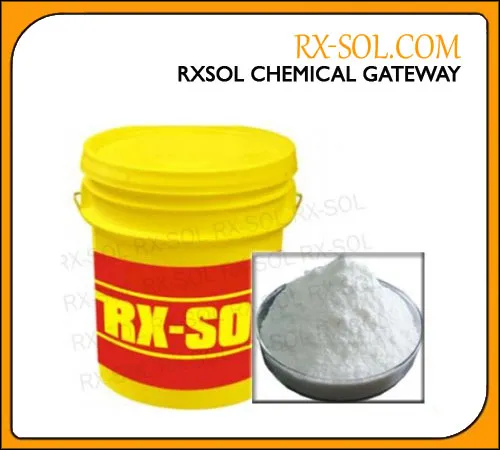
Diammonium Phosphate is a white powder which is used to add additional nitrogen to ensure correction of deficiencies in juice, wash or wort.
Applications
The product can be mixed into the yeast slurry about 30 minutes before pitching into the juice, wash or wort, or alternatively mixed with a small volume of juice, wash or wort and added to the fermenter. If used in wort it can also be added to the kettle at the end of the boil.
This solution should be added at a rate of between 3.0-8.0g per hectolitre of juice, wash or wort . A high rate may be required for a short period, after which the rate of addition may be significantly reduced dependant upon raw material nitrogen levels.
Safety and SDS
Read the safety data sheet before handling. Wear suitable gloves and eye protection.
View safety data sheet
| Product Name | Di Ammonium phosphate |
| Product Type | RXSOL-37-3702-050 |
Company Details:
RX MARINE INTERNATIONAL
105, A wing , BSEL , TECH PARK.
VASHI ,NEW BOMBAY 400703 INDIA
Stock Point : Mumbai, Kolkata, Chennai, Gandhidham, Visakhapatnam, Fujairah, Muscat
| Phone | +91 22 27815541 / 42 |
| Fax | +91 22 2781 1318 :::AOH :0091 9821214367 |
| rxsolchemicals@gmail.com |
|
Ingredient |
CAS No |
Percent |
|
(DAP) Diammonium phosphate (as P2O5) (Main constituent) |
(CAS No.) 7783-28-0 |
46 |
|
Total Nitrogen, as N** |
18 | |
|
Fluorides, as F |
1 |
GHS-US classification
Skin Irrit. 2 H315
Eye Irrit. 2B H320
STOT SE 3 H335
Aquatic, Acute 2 H401
2.2. Label elements GHS-US labelling Hazard pictograms (GHS-US)
Signal word (GHS-US) : Warning
Hazard statements (GHS-US) : H315 - Causes skin irritation
H320 - Causes eye irritation
H335 - May cause respiratory irritation
H401 - Toxic to aquatic life.
Precautionary statements (GHS-US) : P261 - Avoid breathing dust
P264 - Wash hands thoroughly after handling
P271 - Use only outdoors or in a well-ventilated area
P273 – Avoid release to the environment.
P280 - Wear eye protection, face protection, protective clothing, protective gloves
P302+P352 - IF ON SKIN: Wash with plenty of water
P304+P340 - IF INHALED: Remove person to fresh air and keep comfortable for breathing
P305+P351+P338 - If in eyes: Rinse cautiously with water for several minutes. Remove contact lenses, if present and easy to do. Continue rinsing
P312 - Call a POISON CENTER/doctor if you feel unwell
P332+P313 - If skin irritation occurs: Get medical advice/attention
P337+P313 - If eye irritation persists: Get medical advice/attention
P362 - Take off contaminated clothing
P403+P233 - Store in a well-ventilated place. Keep container tightly closed
P405 - Store locked up
P501 - Dispose of contents/container according to local, regional, national, and international regulations
2.3. Other hazards Hazardous to the aquatic environment. No additional information available
4.1. Description of first aid measures
First-aid measures general : If medical advice is needed, have product container or label at hand.
First-aid measures after inhalation : If inhaled, remove to fresh air and keep at rest in a position comfortable for breathing. Give oxygen or artificial respiration if necessary. Obtain medical attention if breathing difficulty persists.
First-aid measures after skin contact : Wash skin thoroughly with mild soap and water. Obtain medical attention if irritation develops or persists.
First-aid measures after eye contact : Immediately rinse with water for a prolonged period while holding the eyelids wide open. Obtain medical attention if irritation develops or persists.
First-aid measures after ingestion : Do not induce vomiting. Seek medical attention if a large amount is swallowed. Get medical advice and attention if you feel unwell. Drink large amounts of water (or milk if available) to dilute stomach contents. Ingestion of small quantifies in unlikely to cause toxic effect. Large quantities may give rise to gastro-intestinal disorders.
4.2. Most important symptoms and effects, both acute and delayed
Symptoms/injuries : Irritation to eyes, skin and respiratory tract.
Symptoms/injuries after inhalation : Difficulty in breathing. Dry/sore throat. Symptoms may be delayed.
Symptoms/injuries after skin contact : May cause skin irritation.
Symptoms/injuries after eye contact : May cause eye irritation.
Symptoms/injuries after ingestion : If a large quantity has been ingested : Abdominal pain. Diarrhea. Nausea. Vomiting.
4.3. Indication of any immediate medical attention and special treatment needed No additional information available
5.1. Extinguishing media
Suitable extinguishing media : Chemical type foam, Carbon Dioxide (CO2), dry chemical, water fog.
Unsuitable extinguishing media : None known.
5.2. Special hazards arising from the substance or mixture
Fire hazard : Under conditions of fire this material may produce: Ammonia.
Explosion hazard : Product is not explosive. Reactivity : Stable at ambient temperature and under normal conditions of use.
5.3. Advice for firefighters
Firefighting instructions : Keep upwind. Under conditions of fire this material may produce: Ammonia.
Protection during firefighting : Wear full fire-fighting turn-out gear (full Bunker gear) and respiratory protection (SCBA).
Other information : Do not allow run-off from fire fighting to enter drains or water courses
6.1. Personal precautions, protective equipment and emergency procedures
General measures : Do not breathe fumes from fires or vapours from decomposition.
6.1.1. For non-emergency personnel
Protective equipment : Wear suitable protective clothing, gloves and eye/face protection.
Emergency procedures : Collect as any solid. Ventilate area.
6.1.2. For emergency responders
Protective equipment : Wear suitable protective clothing, gloves and eye/face protection.
Emergency procedures : If possible, stop flow of product. Contain and collect as any solid. Ventilate area.
6.2. Environmental precautions If spill could potentially enter any waterway, including intermittent dry creeks, contact the U.S. COAST GUARD NATIONAL RESPONSE CENTER at 800-424-8802. In case of accident or road spill notify CHEMTREC at 800‐424‐9300. In other countries call CHEMTREC at (International code) +1-703-527-3887.
6.3. Methods and material for containment and cleaning up
For containment : If contaminated with other materials, contain and collect as any solid in suitable containers. Do not allow into drains or water courses or dispose of where ground or surface waters may be affected. Prevent large quantities from contacting vegetation.
Methods for cleaning up : Recover the product by vacuuming, shoveling or sweeping and place in appropriate container to be disposed at an appropriate disposal facility according to current applicable laws and regulations and product characteristics at the time of disposal. Provide adequate ventilation. Avoid generation of dust during clean-up of spills. If uncontaminated, recover and reuse product. Practice good housekeeping – spillage can be slippery on smooth surface either wet or dry.
6.4. Reference to other sections
No additional information available
7.1. Precautions for safe handling
Additional hazards when processed : When heated, material emits irritating fumes.
Precautions for safe handling : Handle in accordance with good industrial hygiene and safety procedures. Avoid contact with skin and eyes. Do not eat, drink or smoke when using this product.
Hygiene measures : Emergency eye wash fountains and safety showers should be available in the immediate vicinity of any potential exposure.
7.2. Conditions for safe storage, including any incompatibilities
Storage conditions : Store tightly closed in a dry, cool and well-ventilated place.
Protect from moisture. Incompatible materials : Alkalis and caustic products; strong acids; copper and its alloys.
7.3. Specific end use(s) Agricultural chemical
8.2. Exposure controls
Appropriate engineering controls : Ensure adequate ventilation, especially in confined areas. Avoid high dust concentration.
Personal protective equipment : Gloves. Safety glasses. Protective clothing.
Hand protection : Impermeable protective gloves.
Eye protection : Protective goggles.
Skin and body protection : Emergency eye wash fountains and safety showers should be available in the immediate vicinity of any potential exposure. Wear suitable protective clothing. Wash contaminated clothing before reuse. Handle in accordance with good industrial hygiene and safety practice.
Respiratory protection : Wear NIOSH approved respiratory protective equipment when exposure exceeds the OSHA nuisance dust standard of 15 mg/m3 or the ACGIH nuisance dust limit of 10 mg/m3 for the eight hour time weighted average. When stored in closed area, a self-contained breathing apparatus is required to protect against ammonia gas.
Environmental exposure controls : Ensure adequate ventilation, especially in confined areas.
Physical state : Solid
Appearance : Granular solid
Molecular mass : 132.06 g/mol
Colour : Gray to brownish black
Odour : Ammonia
Odour threshold : No data available
pH : 8.0 (conc: 1 % at 20 °C (solution)
Relative evaporation rate (butylacetate=1) : No data available
Melting point : 155 °C (302°F) (decomposes)
Freezing point : No data available
Boiling point : Decomposes Flash point : Not applicable
Self ignition temperature : Not flammable
Decomposition temperature : No data available
Flammability (solid, gas) : Not flammable
Vapour pressure : < 1 mm Hg (at 20 °C)
Relative vapour density at 20 °C : No data available
Relative density : No data available
Density : 1.619 g/cm³ (at 20 °C)
Bulk Density : 58-61 lb/ft3 (loose) 60-67 lb/ft3 (tamped)
Solubility : Water: 588 g/l (at 20 °C) Log Pow : No data available.
Based on water solubility it is expected that the log Pow would be very low. Log Kow : No data available
Viscosity : No data available
Explosive properties : Not explosive
Oxidising properties : No oxidizing properties
Explosive limits : No data available
10.1. Reactivity Stable at ambient temperature and under normal conditions of use.
10.2. Chemical stability Stable at standard temperature and pressure.
10.3. Possibility of hazardous reactions Hazardous polymerization will not occur.
10.4. Conditions to avoid Welding or hot work on equipment or plant which may have contained fertilizer should not be done without first washing thoroughly to remove all fertilizer.
10.5. Incompatible materials Alkalis and caustic products ; strong acids; copper and its alloys.
10.6. Hazardous decomposition products Ammonia is released upon reaction with strong bases or from thermal decomposition.
Skin corrosion/irritation : Causes skin irritation.
pH: 8.0 (conc: 1 % at 20 °C (solution)
Serious eye damage/irritation : Causes eye irritation.
pH: 8.0 (conc: 1 % at 20 °C (solution)
Respiratory or skin sensitisation : Not classified
Germ cell mutagenicity : OECD 471: Bacterial reverse mutation assay, S. typhimurium: Negative OECD 473:
Chromosome aberration test, Chinese hamster ovaries: Negative Carcinogenicity : Not classified
Reproductive toxicity : Not classified. OECD 422: NOAEL, Rat = 1,500 mg/kg/day
Specific target organ toxicity (single exposure) : May cause respiratory irritation.
Specific target organ toxicity (repeated exposure) : Not classified
Ecotoxicity: EPA Ecological Toxicity rating : Slightly toxic to practically non-toxic to aquatic organisms based on the Federal Insecticide Fungicide and Rodenticide Act (FIFRA) acute toxicity ratings.
Acute Toxicity to Fish: (Coho salmon, Chinook salmon, Rainbow trout, Bluegill, Large mouth
Chronic bass, Tilapia, Fathead minnow) 96-hr: LC50 = 90 - 1,875 mg/L Toxicity to Fish: No data available
Acute Toxicity to Aquatic Invertebrates: (Amphipod) 96-hr: LC50 = 40-52 mg/L; (Snails, worm) 96-hr: LC50 = 1,005 - 2,472 mg/L.
Chronic Toxicity to Aquatic Invertebrates: No data available
Toxicity to Aquatic Plants: (Selenastrum capricornutum) 72-hr: NOEC (stimulation) = 3.57 mg DAP/L; NOEC (toxicity) = 97.1 mg DAP/L.
Toxicity to Bacteria: No data available Toxicity to Soil Dwelling Organisms: No data available Toxicity to Terrestrial Plants: No data available
Environmental Fate: Stability in Water: Stable Stability in Soil: Stable
Transport and Distribution: Calculated, fugacity level III: 6.5 x 10 -15 to air, 45.3% to water, 54.6% to soil, 0.0755% to sediment. Phosphates, whether water or citrate soluble, are translocated in the soil only over very short periods and are then immobilized.
Toxicity: Inorganic phosphates have the potential to increase the growth of freshwater algae, whose eventual death will
Degradation Products: Biodegradation: The Phosphorus cycle is well understood. Phosphates are converted to calcium or iron/aluminum phosphates or are incorporated with the organic soil matter.
Photodegradation: No data available
13.1. Waste treatment methods
Sewage disposal recommendations : This material is hazardous to the aquatic environment. Keep out of sewers and waterways.
Waste disposal recommendations : Place in an appropriate container and dispose of the contaminated material at a licensed site.
Additional information : Dispose of waste material in accordance with all local, regional, national, and international regulations.
In accordance with DOT / TDG / ADR / RID / ADNR / IMDG / ICAO / IATA
14.1. UN number No dangerous good in sense of transport regulations.
14.2. UN proper shipping name Not applicable
14.2 Additional information Other information : No supplementary information available.
Overland transport No additional information available
Transport by sea No additional information available
Air transport No additional information available
15.1. US Federal regulations
(DAP) Diammonium phosphate (7783-28-0)
Listed on the United States TSCA (Toxic Substances Control Act) inventory
SARA Section 311/312 Hazard Classes Immediate (acute) health hazard
Eye Irrit. 2 Serious eye damage/eye irritation Category 2
------ Skin Irrit. 2 skin corrosion/irritation Category 2
------ STOT SE 3 H335 – May cause respiratory irritation.
------ H315 Causes skin irritation
------ H319 Causes serious eye irritation
The information provided about the product on this Safety Data Sheet has been compiled from knowledge of the individual constituents.The data given here is based on current knowledge and experience. This Safety Data Sheet describes the product .in terms of safety requirements and does not signify any warranty with regard to the product's properties The data given here only applies when product used for proper application(s). The product is not sold as suitable for other applications - usage in such may cause risks not mentioned in this sheet. Do not use for other.
DISCLAIMER OF LIABILITY :The information in this SDS was obtained from sources which we believe are reliable. However, the information is provided without any warranty, express or implied, regarding its correctness. The conditions or methods of handling, storage, use or disposal of the product are beyond our control and may be beyond our knowledge. For this and other reasons, we do not assume responsibility and expressly disclaim liability for loss, damage or expense arising out of or in any way connected with the handling, storage, use or disposal of the product. This MSDS was prepared and is to be used only for this product. If the product is used as a component in another product, this MSDS information may not be applicable.
Availability
Di Ammonium Phosphate DAP supplier in Mumbai, Kandla, Surat, Chennai, Kolkata, Visakhpatnam, Fujairah, Sharjah, Dubai, Abudhabi, Ajman, UAE, Gulf, RUWI, Barka, Muscat Oman, Sudan, Yemen, Nairobi, Canada