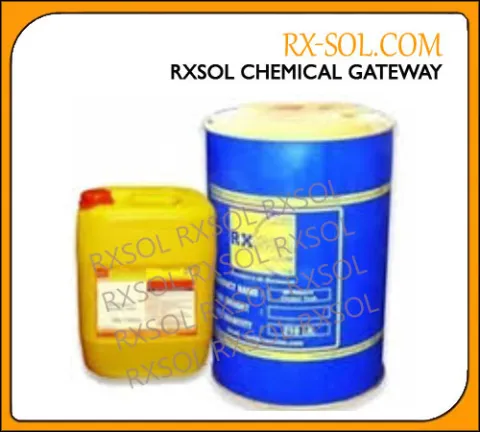
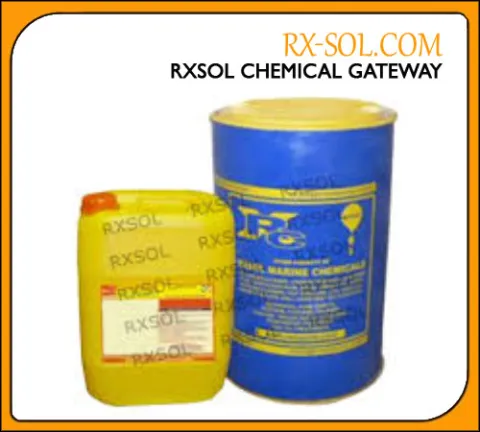
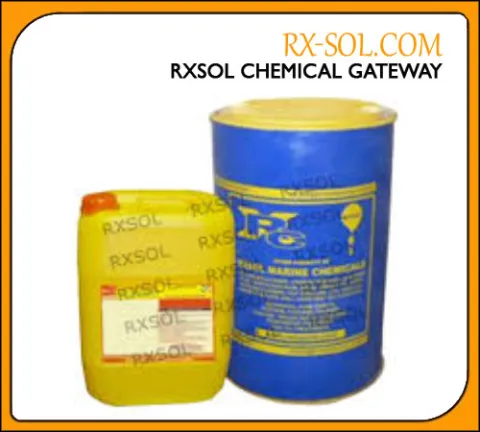
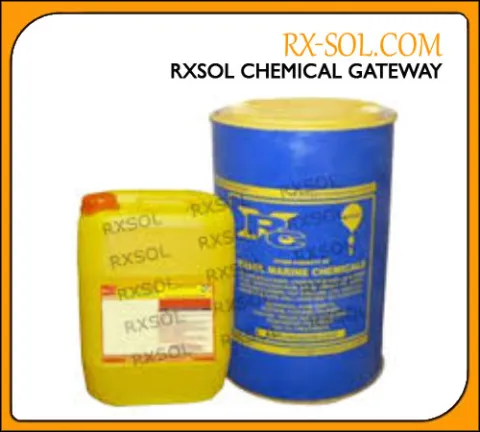
ETHYLENE DI CHLORIDE EDC
- Part number
- RXSOL-19-1181-025
- Category
- Solvent Chemicals
- Brand
- RXSOL
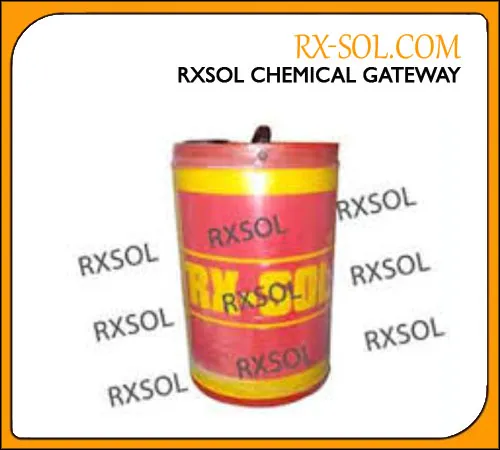
Overview
Ethylene dichloride (EDC), is a chlorinated hydrocarbon. It is a colourless liquid with a chloroform-like odour. The most common use of 1,2-dichloroethane is in the production of vinyl chloride, which is used to make polyvinyl chloride (PVC) pipes, furniture and automobile upholstery, wall coverings, housewares, and automobile parts. 1,2-Dichloroethane is also used generally as an intermediate for other organic chemical compounds, and as a solvent. It forms azeotropes with many other solvents, including water (at a boiling point of 70.5 °C or 158.9 °F or 343.6 K) and other chlorocarbons.
Technical specifications
|
ETHYLENE DICHLORIDE |
||
|
Test |
Unit |
Results |
|
Appearance |
- |
Colourless Clear Liquid |
|
Moisture |
ppm |
<200 |
|
Acidity as HCL |
ppm |
<10 |
|
Iron |
ppm |
<1.0 |
|
Non Volatile Residue |
ppm |
<100 |
|
Free Chlorine |
ppm |
NIL |
|
Light ends |
ppm |
<500 |
|
Heavy ends |
ppm |
<1250 |
|
1 : 2 EDC |
% |
>99.85 |
Applications
| PRODUCT NAME | : | ETHYLENEDICHLORIDE |
| CAS number | : | 107-06-2 |
| UN number | : | 1184 |
| Formula | : | CH2CICH2CI |
| Odour | : | CHOLOROFORM LIKE |
| Solubility in water | : | SLIGHT |
| Density | : | 1.255 at 20 oC |
| Boiling point | : | 84 oC |
| Melting point | : | -36 oC |
| Viscosity | : | |
| Flashpoint | : | 13 oC |
| Explosive limits | : | 6.2 – 16 Vol% |
| Vapour pressure | : | 87 mbar at 20 oC |
| Skin absorption/irritation | : | YES |
| TLV Country NL Year 1995 | : | 50 ppm 200 mg/m3 |
| Pollution category 1994 | : | B |
Dosage and directions
Vinyl chloride monomer (VCM) production:
Approximately 95% of the world's production of 1,2-dichloroethane is used in the production of vinyl chloride monomer (VCM, chloroethene) with hydrogen chloride as a byproduct. VCM is the precursor to polyvinyl chloride.
- Cl−CH2−CH2−Cl → H2C=CH−Cl + HCl
The hydrogen chloride can be re-used in the production of more 1,2-dichloroethane via the oxychlorination route described above.
EDC is used primarily as a raw material in the manufacture of vinyl chloride monomer (VCM). The vinyl chloride, in turn is used to manufacture polyvinyl chloride (PVC) resin. EDC is also used as an intermediate in the manufacture of chlorinated and fluorinated compounds.
Characteristics and notes
Other uses:
As a good polar aprotic solvent, 1,2-dichloroethane could be used as degreaser and paint remover but is now banned from use due to its toxicity and possible carcinogenity. As a useful 'building block' reagent, it is used as an intermediate in the production of various organic compounds such as ethylenediamine. In the laboratory it is occasionally used as a source of chlorine, with elimination of ethene and chloride.
Via several steps, 1,2-dichloroethane is a precursor to 1,1,1-trichloroethane, which is used in dry cleaning. Historically, 1,2-dichloroethane was used as an anti-knock additive in leaded fuels to scavenge lead from cylinders and valves preventing buildup .
Product Safety
EDC is a highly flammable, toxic and possibly carcinogenic product. It causes skin, eye and respiratory irritation. For more details and information on precautions to be taken, please refer to our Material Safety Data Sheet which is available on request.
Safety and SDS
Read the safety data sheet before handling. Wear suitable gloves and eye protection.
View safety data sheet
| Product Name | RXSOL-19-1181-025 |
| Product Type | ETHYLENE DI CHLORIDE EDC |
Company Details:
RX MARINE INTERNATIONAL
105, A wing , BSEL , TECH PARK.
VASHI ,NEW BOMBAY 400703 INDIA
Stock Point : Mumbai, Kolkata, Chennai, Gandhidham, Visakhapatnam, Fujairah, Muscat
| Phone | +91 22 27815541 / 42 |
| Fax | +91 22 2781 1318 :::AOH :0091 9821214367 |
| rxsolchemicals@gmail.com |
|
Ingredient |
CAS No |
Percent |
|
1,2-Dichloroethane |
107-06-2 |
99.9+% |
Highly flammable. Harmful if swallowed. Irritating to eyes, respiratory system and skin. May cause cancer.
|
Eye: |
Causes severe eye irritation. Contact with liquid or vapor causes severe burns and possible irreversible eye damage. Causes redness and pain. |
|
Skin: |
Causes mild skin irritation. May be absorbed through the skin. Causes redness and pain. |
|
Ingestion: |
Harmful if swallowed. May cause central nervous system depression, kidney damage, and liver damage. May cause gastrointestinal irritation with nausea, vomiting and diarrhea. May cause effects similar to those for inhalation exposure. |
|
Inhalation: |
Inhalation of high concentrations may cause central nervous system effects characterized by nausea, headache, dizziness, unconsciousness and coma. Causes respiratory tract irritation. May cause liver and kidney damage. |
|
Chronic: |
Prolonged or repeated skin contact may cause dermatitis. Prolonged or repeated eye contact may cause conjunctivitis. May cause liver and kidney damage. |
|
Eyes: |
Immediately flush eyes with plenty of water for at least 15 minutes, occasionally lifting the upper and lower eyelids. Get medical aid immediately. |
|
Skin: |
Get medical aid. Flush skin with plenty of water for at least 15 minutes while removing contaminated clothing and shoes. |
|
Ingestion: |
If victim is conscious and alert, give 2-4 cupfuls of milk or water. Get medical aid immediately. |
|
Inhalation: |
Get medical aid immediately. Remove from exposure and move to fresh air immediately. If not breathing, give artificial respiration. If breathing is difficult, give oxygen. |
General Information: As in any fire, wear a self-contained breathing apparatus in pressure-demand, MSHA/NIOSH (approved or equivalent), and full protective gear. Vapors can travel to a source of ignition and flash back
Extinguishing Media:For small fires, use dry chemical, carbon dioxide, water spray or alcohol-resistant foam. Use water spray to cool fire-exposed containers. Water may be ineffective.
|
General Information: |
Use proper personal protective equipment as indicated in Section 8. |
|
Spills/Leaks: |
Absorb spill with inert material (e.g. vermiculite, sand or earth), then place in suitable container. Remove all sources of ignition. Use a spark-proof tool. |
|
Handling |
Wash thoroughly after handling. Remove contaminated clothing and wash before reuse. Use only in a well-ventilated area. Use with adequate ventilation. Do not get on skin and clothing. Keep container tightly closed. Keep away from heat, sparks and flame. Do not ingest or inhale. Use only in a chemical fume hood. |
|
Storage: |
Keep away from heat, sparks, and flame. Store in a tightly closed container. Keep under a nitrogen blanket. Keep from contact with oxidizing materials. Store in a cool, dry, wellventilated area away from incompatible substances. Flammables-area. |
|
|
Local exhaust ventilation may be necessary to control any air contaminants to within their TLVs during the use of this product. Use adequate general or local exhaust ventilation to keep airborne concentrations below the permissible exposure limits. |
|
Exposure Limits |
CAS# 107-06-2: United Kingdom, WEL - TWA: 5 ppm TWA; 21 mg/m3 TWA United Kingdom, WEL - STEL: 15 ppm STEL; 63 mg/m3 STEL United States OSHA: 50 ppm TWA; 100 ppm Ceiling Belgium - TWA: 10 ppm VLE; 41 mg/m3 VLE France - VME: 10 ppm VME; 40 mg/m3 VME Germany: 5 ppm TWA; 20 mg/m3 TWA Japan: 10 ppm OEL; 40 mg/m3 OEL Malaysia: 10 ppm TWA; 40 mg/m3 TWA Netherlands: 1.5 ppm MAC; 7 mg/m3 MAC Russia: 10 mg/m3 TWA (vapour) Spain: 5 ppm VLA-ED; 20 mg/m3 VLA-ED |
| Personal Protective Equipment |
Eyes: Wear chemical splash goggles. Skin: Wear appropriate protective gloves to prevent skin exposure. Clothing: Wear appropriate protective clothing to prevent skin exposure. Respirators: Follow the OSHA respirator regulations found in 29 CFR 1910.134 or European Standard EN 149. Use a NIOSH/MSHA or European Standard EN 149 approved respirator if exposure limits are exceeded or if irritation or other symptoms are experienced. |
Physical State: Clear liquid
Color: colorless Odor: chloroform-like
pH: Not available
Vapor Pressure: 65mmHg @29 deg C
Viscosity: 0.8 mPas @20 deg C
Boiling Point: 81 - 85 deg C @760mmHg
Freezing/Melting Point: -35 deg C ( -31.00°F)
Autoignition Temperature: 440 deg C ( 824.00 deg F)
Flash Point: 13 deg C ( 55.40 deg F)
Explosion Limits: Lower: 6.2 Vol %
Explosion Limits: Upper: 15.9 Vol %
Decomposition Temperature: Not available
Solubility in water: 8.7 g/l (20°C)
Specific Gravity/Density: 1.250
Molecular Formula: C2H4Cl2
Molecular Weight: 98.96
Chemical Stability: Stable under normal temperatures and pressures.
Conditions to Avoid: Incompatible materials, light, ignition sources, excess heat, electrical sparks.
Incompatibilities with Other Materials Strong oxidizing agents, reducing agents, bases, alkali metals, aluminum, liquid ammonia, nitric acid, organic peroxides.
Hazardous Decomposition Products Hydrogen chloride, carbon monoxide, carbon dioxide.
Hazardous Polymerization Will not occur.
RTECS#: CAS# 107-06-2: KI0525000
LD50/LC50: RTECS:
CAS# 107-06-2: Draize test, rabbit, eye: 63 mg Severe; Draize test, rabbit, eye: 500 mg/24H Mild; Draize test, rabbit, skin: 500 mg/24H Mild; Inhalation, mouse: LC50 = 1060 mg/m3/6H; Inhalation, rat: LC50 = 1000 ppm/7H; Inhalation, rat: LC50 = 5100 mg/m3/6H; Oral, mouse: LD50 = 413 mg/kg; Oral, mouse: LD50 = 413 mg/kg; Oral, rabbit: LD50 = 860 mg/kg; Oral, rabbit: LD50 = 0.7 mL/kg; Oral, rat: LD50 = 500 mg/kg; Skin, rabbit: LD50 = 2800 mg/kg; Other: Skin, rabbit: 625 mg mild
Carcinogenicity: 1,2-Dichloroethane - California: carcinogen, initial date 10/1/87 NTP: Suspect carcinogen IARC: Group 2B carcinogen
Other: See actual entry in RTECS for complete information.
Ecotoxicity: Not available
Dispose of in a manner consistent with federal, state, and local regulations
|
Proper Shipping Name: |
ETHYLENE DICHLORIDE |
||
|
UN NO. |
1184 |
||
|
Hazard Class |
3 |
PackingGroup |
II |
|
Proper Shipping Name |
ETHYLENE DICHLORIDE |
||
|
ADR UN No. |
1184 |
||
|
ADRHazardClass |
3 |
II |
|
|
Proper Shipping Name |
ETHYLENE DICHLORIDE |
||
|
IMDG UN No. |
1184 |
||
|
IMDG Hazard Class |
3 |
IMDG PackGroup.: |
II |
|
IMDG EmS |
IMDG subrisk |
- |
|
|
IMDG Labels |
3 |
IMDG Flashpoint: |
N/A |
European/International Regulations :
European Labeling in Accordance with EC Directives
Hazard Symbols: T F
Risk Phrases:
R 45 May cause cancer.
R 11 Highly flammable.
R 22 Harmful if swallowed.
R 36/37/38 Irritating to eyes, respiratory system and skin.
Safety Phrases:
S 53 Avoid exposure - obtain special instructions before use.
S 45 In case of accident or if you feel unwell, seek medical advice immediately (show the label where possible). WGK (Water Danger/Protection)
CAS# 107-06-2: 3 Canada
CAS# 107-06-2 is listed on Canada's DSL List US Federal
TSCA
CAS# 107-06-2 is listed on the TSCA Inventory.
The information provided about the product on this Safety Data Sheet has been compiled from knowledge of the individual constituents.The data given here is based on current knowledge and experience. This Safety Data Sheet describes the product .in terms of safety requirements and does not signify any warranty with regard to the product's properties The data given here only applies when product used for proper application(s). The product is not sold as suitable for other applications - usage in such may cause risks not mentioned in this sheet. Do not use for other.
DISCLAIMER OF LIABILITY :The information in this SDS was obtained from sources which we believe are reliable. However, the information is provided without any warranty, express or implied, regarding its correctness. The conditions or methods of handling, storage, use or disposal of the product are beyond our control and may be beyond our knowledge. For this and other reasons, we do not assume responsibility and expressly disclaim liability for loss, damage or expense arising out of or in any way connected with the handling, storage, use or disposal of the product. This MSDS was prepared and is to be used only for this product. If the product is used as a component in another product, this MSDS information may not be applicable.
Availability
ETHYLENE DI CHLORIDE EDC supplier in Mumbai, Fujairah, Dubai, Chennai, Sharjah, Visakhapatnam, Gandhidham, Muscat, Kolkata Abudhabi UAE Middle East
Frequently asked questions
What is the boiling point and density of EDC?
Boiling point 83.5–84 °C; melting point −36 °C; density 1.255 g/cm³ at 20 °C; vapour pressure 87 mbar at 20 °C; explosive limits 6.2–16 vol%.
What is EDC used for?
Mainly as the raw material for vinyl chloride monomer (PVC); also as an intermediate for ethylenediamine and other organics, and as a solvent. Its former use as a degreaser and paint stripper is discontinued because of toxicity.
How is it packed and shipped?
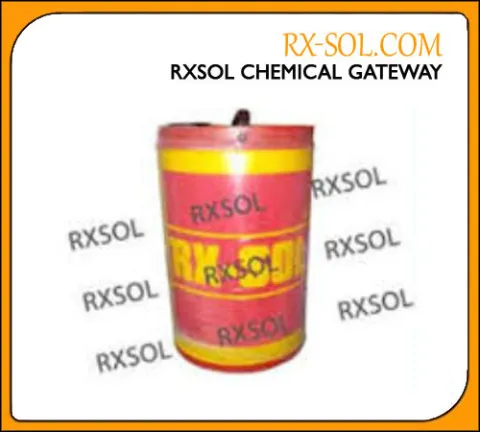
200–250 kg steel drums and ISO tanks; DG class 3 (UN 1184), with MSDS and TREM card.