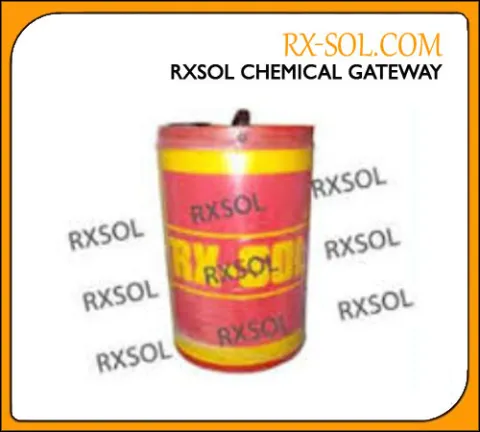
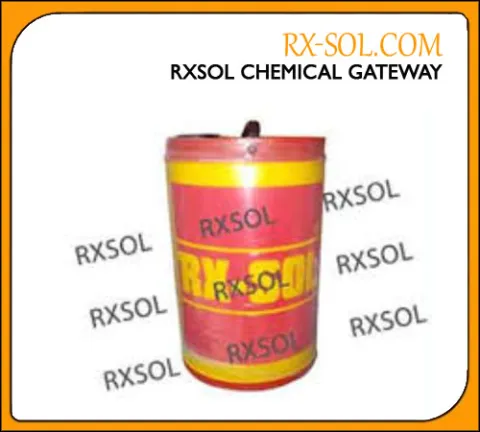
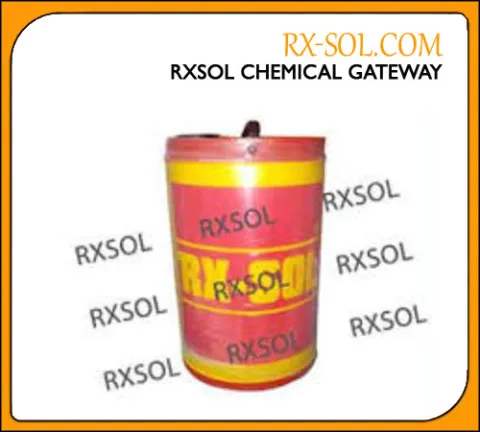
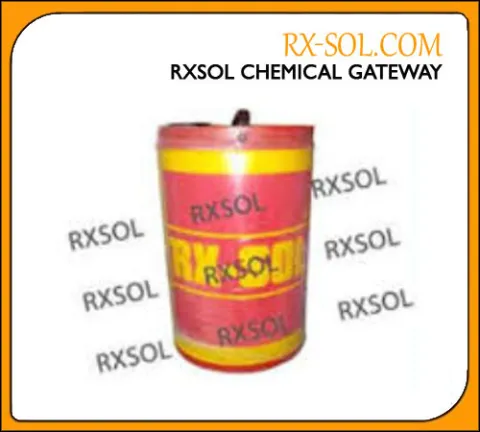
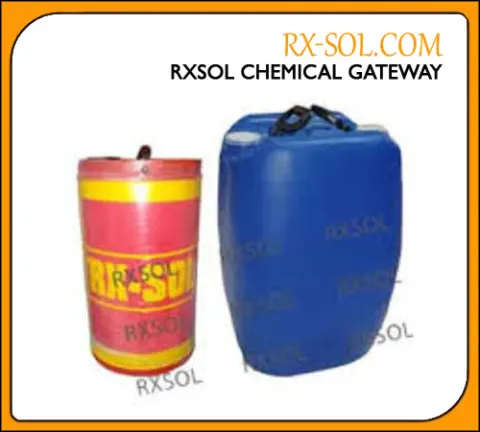
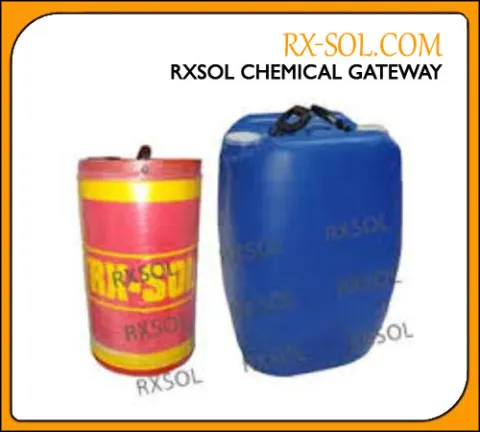
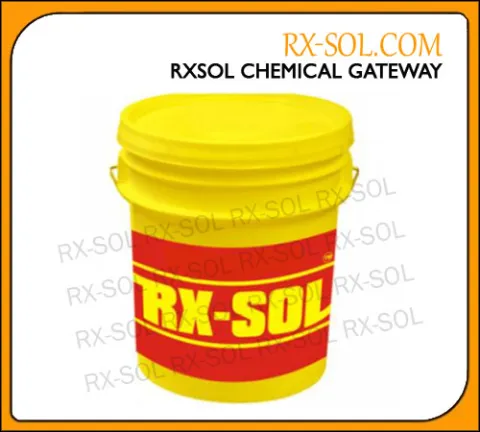
Enviro Guard Sulfite
- Part number
- RXSOL-23-1305-025
- Category
- Ballast Tank Chem
- Brand
- RXSOL
Overview
Enviro Guard Catalyzed sodium sulfite for corrosion prevention. Generally speaking, sulfite is not present in natural water. In boiler feedwater conditioning sodium sulfite is fed to a boiler to remove dissolved oxygen and thus prevent pitting. For the reaction between sulfite and oxygen to proceed rapidly and completely, it is necessary to maintain an excess sulfite concentration at an elevated temperature.
Theoretically, 3.5 Kg of chemically pure sodium sulfite are required to remove approx 400 gram of oxygen. The efficiency of the oxygen removal is estimated at 75 per cent to allow for oxidation in contact with air, blowdown losses, etc. Therefore it is estimated that 4.5 Kg of commercial sodium sulfite are required for 450 Gram of oxygen removed (or 10 ppm sulfite per 1 ppm dissolved oxygen.)
The use of sodium sulfite as a chemical deoxygenator is economical within certain limitations imposed by the dissolved oxygen content of the feedwater. If appreciable quantities of dissolved oxygen are permitted to enter the boiler, costs will be high if sulfite is relied on as the sole means of oxygen removal. Generally, costs are balanced by removal of as much of the oxygen as feasible by mechanical means, e.g. deaerator and by using sulfite to react with the residual oxygen.
To prevent corrosion and pitting in feed lines, closed heaters and economizers, it is desirable to feed the sulfite continuously to the boiler feedwater rather than directly to the boiler feedwater rather than directly to the boiler. Reaction between sulfite and oxygen is not instantaneous and the completion of the reaction is aided by the longer contact times provided by feeding sulfite to the feedwater.
Catalyzed sodium sulfite will, however, react almost instantaneously with dissolved oxygen even at cold water temperatures. Because of this property, catalyzed sulfite has found increased use in the treatment of cooling water, process water, distribution system, etc. for preventing oxygen corrosion.
Technical specifications
Applications
Enviro Guard Sulfite is a white granular material.
White, free flowing crystalline Odorless powder
Dosage and directions
Dose of Enviro Guard Sulfite can be controlled by this method ::: Because it readily reacts with oxygen to form sulfate, sulfite is not usually found in natural water systems. In its most common form, sodium sulfite, it is widely used as an oxygen scavenger in feedwater conditioning to prevent pitting in boilers; as a pulping or pulp-bleaching agent by the paper industry; to neutralize residual chlorine in potable water, sewage, industrial effluents, and textile process waters; and as a reducing agent in still other manufacturing processes.
Sample water over 100°F will cause a false-high reading; therefore, quickly cool to room temperature before testing. To prevent a false-low reading caused by the reaction between sulfite and ambient air or dissolved oxygen, water samples should be capped while cooling and then tested without delay. An iodometric drop test is the most popular field method for determining sodium sulfite concentrations.
Reagent packs, containing an instruction and chemicals only, may be purchased for use with buret setups. Note: Sulfide and ferrous iron cause positive interference; copper and nitrite cause negative interference.
Sulfite, Titrimetric Method(0-100ppm)
The test for sulfite is based on the colour change end point reaction. At the end point reagent combines with the indicator to form a blue color.
Apparatus Required
Buret, automatic, 25 ml - 1 ( Sample Tube, Graduated, 25 mL, plastic w/cap and white dot )
Casserole porcelain, 210 ml - 1
Cylinder, graduated, 50 ml - 1
Measuring dipper (plastic) - 1
Stirring rod, glass - 1
Chemicals Required
TK - 13 ::: RXSOL-62-5503-002
TK - 14 ::: RXSOL-62-5503-003
TK - 15 ::: RXSOL-62-5503-004 ( 1 ml =0.5 mg SO3 )
Procedure for Test
The water sample should be freshly obtained with as little contact as possible with air. Do not filter the sample, but cool it to room temperature (70 to 800F).
NOTE:
Sample must be cooled to less than 100ºF (38ºC) to prevent high test results.
Sample must be protected from air contact while cooling to prevent low test results.
1. Measure 50 ml of the water sample with the graduated cylinder . For error free result Collect water to be tested in a clean, preferably large-mouthed, bottle to overflowing. Immediately cap and cool to room temperature.
2. Add three or four drops of TK - 13 ::: RXSOL-62-5503-002 to the sample Swirl to mix. Sample should turn red.
3. Add TK - 14 ::: RXSOL-62-5503-003 Powder a dipper at a time, swirling after each dipper, until color changes from red to colorless. Add 2 more dippers. Swirl until dissolved. ( Note : Use the plastic dipper to add TK - 14 ::: RXSOL-62-5503-003 to the sample. Add only one measure at a time and stir thoroughly between each addition of TK - 14 ::: RXSOL-62-5503-003. All the particle of TK - 14 ::: RXSOL-62-5503-003 may not dissolve and this may create a slight haze in the sample. Continue to add the TK - 14 in this manner until the red color disappears. It is not necessary that the sample solution be exactly neutralized, only that the sample turn colorless. When the sample is colorless, add one additional measure of TK - 14 ::: RXSOL-62-5503-003 and stir. )
4. Add TK - 15 ::: RXSOL-62-5503-004 Reagent dropwise, swirling and counting after each drop, until color changes from colorless to a faint but permanent blue. Always hold bottle in vertical position.
This color change is taken as the endpoint. Record the ml of TK - 15 ::: RXSOL-62-5503-004 solution used.
Calculation of Results
FORMULA: ppm sulfite as SO3 = ml of TK - 15 ::: RXSOL-62-5503-004 x 500 / ml SAMPLE
Using a 50 ml sample, sulfite, in parts per million as SO3 is equal to the ml of TK - 15 ::: RXSOL-62-5503-004 required multiplied by 10.
Limitations of Test :::
This method is rapid and adaptable to field determinations. It is affected by any oxidizable substances in the water such as organic matter sulfides and nitrites. The presence of these interfering substances will cause the sulfite content obtained from this titration to by shown as a higher value than actually exists.
Characteristics and notes
The use of untreated water in a boiler can cause scale buildup and corrosion. Treating the boiler water with chemicals - known as boiler feed water treatment - will increase the life of the boiler and reduce maintenance costs. Scale is formed from calcium and magnesium salts that are carried in solution in the water used in the boiler. Treatment of the boiler water by raising the pH with the addition of alkaline salts – such as sodium or potassium hydroxide – will prohibit most of the calcium and magnesium salts from precipitating and causing scale buildup in the boiler. Sodium sulfite is a constituent of some boiler feed water treatments. This constituent acts as an oxygen scavenger. The presence of oxygen in boiler water will lead to corrosion of the boiler . A chelating agent, sodium hexametaphosphate is sometimes added to boiler water to inhibit hard water salts from precipitating to form scale. Hydrochloric acid is sometimes utilized in acid boils to remove scale form the boiler.
Safety and SDS
Read the safety data sheet before handling. Wear suitable gloves and eye protection.
View safety data sheet
|
Product Name |
Enviro Guard Sodium Sulphite with Catalyst |
|
Product Type |
RXSOL-23-1305-025 |
Company Details:
RX MARINE INTERNATIONAL
105, A wing , BSEL , TECH PARK.
VASHI ,NEW BOMBAY 400703 INDIA
Stock Point : Mumbai, Kandla, Kolkata, Chennai, Visakhapatnam, Fujairah, Muscat, Nairobi
| Phone | +91 22 27815541 / 42 |
| Fax | +91 22 2781 1318 :::AOH :0091 9322594669 |
| rxsolchemicals@gmail.com |
| Name | CAS # | % by Weight |
| Sodium Sulphite | 7757-83-7 | > 99 |
| Proprietory | --- | > 0.5 |
Potential Acute Health Effects:
| Hazardous in case of skin contact (irritant), of eye contact (irritant), of ingestion, of inhalation. Potential Chronic Health Effects: |
| CARCINOGENIC EFFECTS: | Not available. |
| MUTAGENIC EFFECTS: | Mutagenic for mammalian somatic cells. |
| TERATOGENIC EFFECTS: | Not available. |
| DEVELOPMENTAL TOXICITY: | Not available. The substance may be toxic to kidneys, liver. Repeated or prolonged exposure to the substance can produce target organs damage. |
| Eye Contact: |
Check for and remove any contact lenses. In case of contact, immediately flush eyes with plenty of water for at least 15 minutes. Cold water may be used. Get medical attention. |
| Skin Contact: | In case of contact, immediately flush skin with plenty of water. Cover the irritated skin with an emollient. Remove contaminated clothing and shoes. Cold water may be used.Wash clothing before reuse. Thoroughly clean shoes before reuse. Get medical attention. |
| Serious Skin Contact: | Wash with a disinfectant soap and cover the contaminated skin with an anti-bacterial cream. Seek immediate medical attention. |
| Inhalation: | If inhaled, remove to fresh air. If not breathing, give artificial respiration. If breathing is difficult, give oxygen. Get medical attention. |
| Serious Inhalation: | Not available. |
| Ingestion: | Do not induce vomiting unless directed to do so by medical personnel. Never give anything by mouth to an unconscious person. If large quantities of this material are swallowed, call a physician immediately. Loosen tight clothing such as a collar,tie, belt or waistband. |
| Serious Ingestion: | Not available. |
| Flammability of the Product: | Non-flammable. |
| Auto-Ignition Temperature: | Not applicable. |
| Flash Points: | Not applicable. |
| Flammable Limits: | Not applicable. |
| Products of Combustion: | Not available. |
| Fire Hazards in Presence of Various Substances: | Not applicable. |
| Explosion Hazards in Presence of Various Substances: | Risks of explosion of the product in presence of mechanical impact: Not available. Risks of explosion of the product in presence of static discharge: Not available. |
| Fire Fighting Media and Instructions: | Not applicable. |
| Special Remarks on Fire Hazards: | Not available. |
| Special Remarks on Explosion Hazards: | Not available. |
|
Small Spill: Use appropriate tools to put the spilled solid in a convenient waste disposal container. Finish cleaning by spreading water on the contaminated surface and dispose of according to local and regional authority requirements. Large Spill: Use a shovel to put the material into a convenient waste disposal container. Be careful that the product is not present at a concentration level above TLV. Check TLV on the MSDS and with local authorities. |
|
Precautions: Do not ingest. Do not breathe dust. Wear suitable protective clothing. In case of insufficient ventilation, wear suitable respiratory equipment. If ingested, seek medical advice immediately and show the container or the label. Avoid contact with skin and eyes. Keep away from incompatibles such as metals, alkalis. |
Storage:
Keep container tightly closed. Keep container in a cool, well-ventilated area.
| Engineering Controls: |
Use process enclosures, local exhaust ventilation, or other engineering controls to keep airborne levels below recommended exposure limits. If user operations generate dust, fume or mist, use ventilation to keep exposure to airborne contaminants below the exposure limit. |
| Personal Protection: |
Splash goggles. Lab coat. Dust respirator. Be sure to use an approved/certified respirator or equivalent,Gloves. |
| Personal Protection in Case of a Large Spill: |
Splash goggles. Full suit.Dust respirator. Boots. Gloves. A self contained breathing apparatus should be used to avoid inhalation of the product. Suggested protective clothing might not be sufficient; consult a specialist BEFORE handling this product. |
| Exposure Limits: | TWA: 5 (mg/m3) from OSHA (PEL) [United States] Inhalation TWA: 5 (mg/m3) from ACGIH (TLV) [United States] Inhalation TWA: 5 (mg/m3) [United States] Inhalation TWA: 5 (mg/m3) [United Kingdom (UK)] Inhalation TWA: 5 (mg/m3) [Canada] Inhalation Consult local authorities for acceptable exposure limits. |
|
|||||||||||||||||||||||||||||||||||||||
| Boiling Point: | Decomposition temperature: 650°C (1202°F) |
| Melting Point: | 590°C (1094°F) |
| Vapor Pressure: | Not applicable. |
| Vapor Density: | Not available. |
| Volatility: | Not available. |
| Odor Threshold: | Not available. |
| Water/Oil Dist.Coeff.: | Not available. |
| Ionicity (in Water): | Not available. |
| Dispersion Properties: | See solubility in water, methanol. |
| Solubility in methanol: | Easily soluble in hot water. Soluble in cold water. Soluble in 3.5 parts cold water. Soluble in 2 parts boiling water. Soluble in 70 parts alcohol Insoluble in liquid chloride, ammonia. |
| Stability: | The product is stable. |
| Instability Temperature: | Not available. |
| Conditions of Instability: |
Excess heat (high temperatures), incompatible materials, exposure to air. |
| Incompatibility with various substances: | Reactive with oxidizing agents, acids. |
| Corrosivity: | Non-corrosive in presence of glass. |
| Special Remarks on Reactivity: | Slowly oxidized to sulfate on exposure to air. |
| Special Remarks on Corrosivity: | Not Available |
| Polymerization: | Will not occur. |
| Routes of Entry: |
Inhalation. Ingestion. |
| Toxicity to Animals: |
Acute oral toxicity (LD50): 2000 mg/kg [Rat]. |
| Chronic Effects on Humans: | 3(Not classifiable for human.) by IARC. MUTAGENIC EFFECTS: Mutagenic for bacteria and/or yeast. May cause damage to the following organs: lungs, skin. |
| Other Toxic Effects on Humans: | Hazardous in case of skin contact (irritant), of ingestion, of inhalation. |
| Special Remarks on Toxicity to Animals: |
Not available. |
| Special Remarks on Chronic Effects on Humans: |
May affect genetic material (mutagenic). May cause cancer based on animal test data. No human data found. |
| Special Remarks on other Toxic Effects on Humans: |
Acute Potential Health Effects: Skin: Causes skin irritation. Eyes: Causes eye irritation. Inhalation: Can cause respiratory tract irritation with cough, wheezing, and shortness of breath. It can produce anaphylaxis or other hypersensivity reactions in some sensitized individuals. Ingestion: May be harmful if swallowed. It may cause nausea, vomiting, diarrhea, abdominal |
| Ecotoxicity: | Not Available |
| BOD5 and COD: | Not Available. |
| Products of Biodegradation: | Possibly hazardous short term degradation products are not likely. However, long term degradation products may arise. |
| Toxicity of the Products of Biodegradation: | The products of degradation are less toxic than the product itself. |
| Special Remarks on the Productsof Biodegradation: | Not Available |
| Waste Disposal: Waste must be disposed of in accordance with federal, state and local environmental control regulations. |
DOT Classification: Not a DOT controlled material (United States).
Identification: Not applicable.
Special Provisions for Transport: Not applicable.
Federal and State Regulations:
Connecticut hazardous material survey.: Sodium sulfite Illinois toxic substances disclosure to employee act: Sodium sulfite Illinois chemical safety act: Sodium sulfite New York release reporting list: Sodium sulfite Pennsylvania RTK: Sodium sulfite Minnesota: Sodium sulfite Massachusetts RTK: Sodium sulfite Massachusetts spill list: Sodium sulfite New Jersey: Sodium sulfite New Jersey spill list: Sodium sulfite Louisiana
Other Regulations: OSHA:
OSHA: Hazardous by definition of Hazard Communication Standard (29 CFR 1910.1200). EINECS: This product is on the European Inventory of Existing Commercial Chemical Substances.
Other Classifications:
WHMIS (Canada): CLASS D-2B: Material causing other toxic effects(TOXIC).
DSCL (EEC):
R22- Harmful if swallowed. R31- Contact with acids liberates toxic gas. S25- Avoid contact with eyes. S46- If swallowed, seek medical advice immediately and show this container or label.
HMIS (U.S.A.):
Health Hazard: 2
Fire Hazard: 0
Reactivity: 0
Personal Protection: E
The information above is believed to be accurate and represents the best information currently available to us. However, we make no warranty of merchantability or any other warranty, express or implied, with respect to such information, and we assume no liability resulting from its use. Users should make their own investigations to determine the suitability of the information for their particular purposes. In no event shall Rx Marine International be liable for any claims, losses, or damages of any third party or for lost profits or any special, indirect, incidental, consequential or exemplary damages, howsoever arising, even if RX Marine International has been advised of the possibility of such damages.
DISCLAIMER OF LIABILITY :The information in this SDS was obtained from sources which we believe are reliable. However, the information is provided without any warranty, express or implied, regarding its correctness. The conditions or methods of handling, storage, use or disposal of the product are beyond our control and may be beyond our knowledge. For this and other reasons, we do not assume responsibility and expressly disclaim liability for loss, damage or expense arising out of or in any way connected with the handling, storage, use or disposal of the product. This MSDS was prepared and is to be used only for this product. If the product is used as a component in another product, this MSDS information may not be applicable.
Availability
Neutralizer for Ballast Water Management System Enviro Guard Sulfite manufacturer and supplier in Mumbai, Kandla, Kolkata, Chennai, Visakhapatnam, Haldia, Paradip, Gandhidham, Hazira Surat, Muscat Oman, Barka, Ruwi, Ghala, Fujairah, Ajman, Abudhabi, Dubai, Sharjah, UAE, Nairobi Kenya, Sudan, Yemen, Canada