Morpholine
- Part number
- RXSOL-19-1382-200
- Category
- Agriculture
- Brand
- RXSOL
Overview
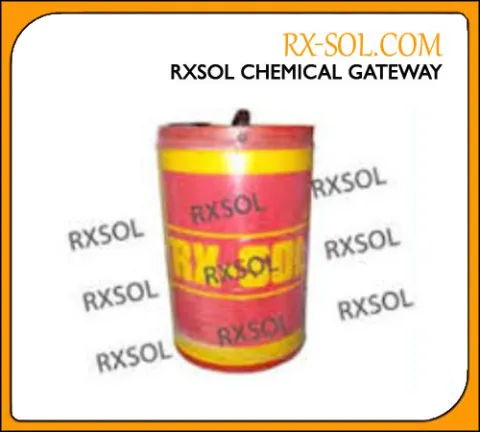
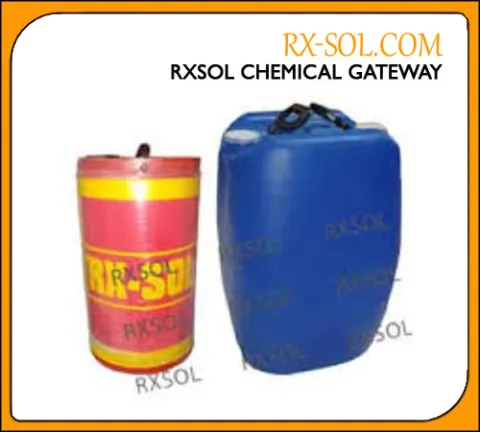
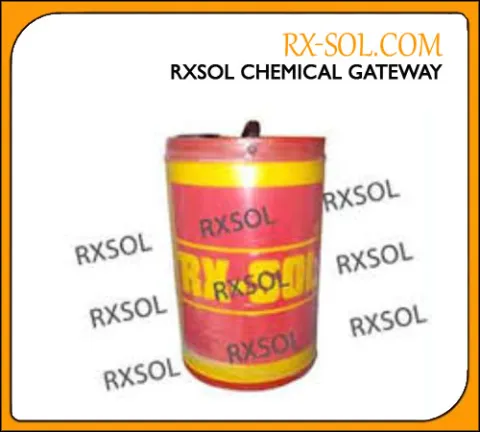
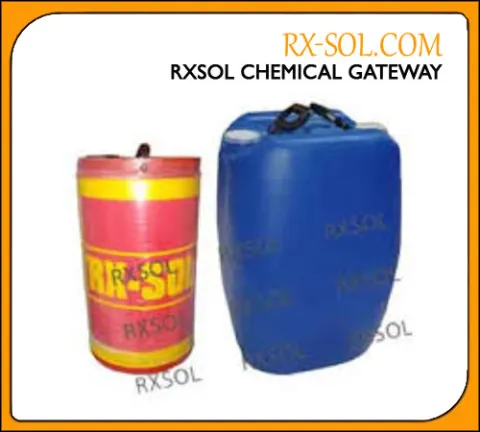
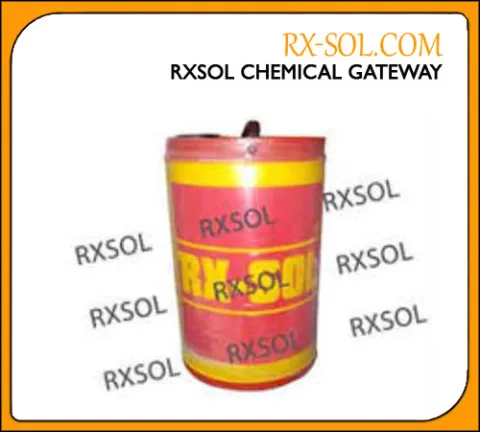
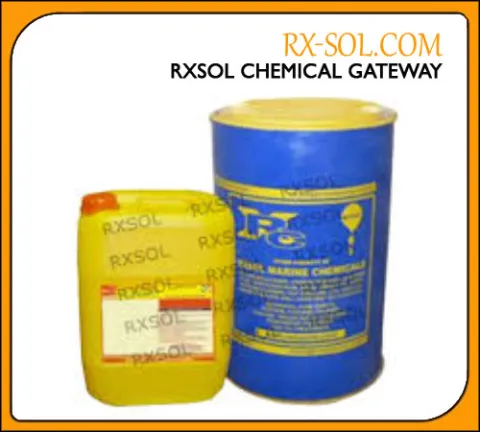
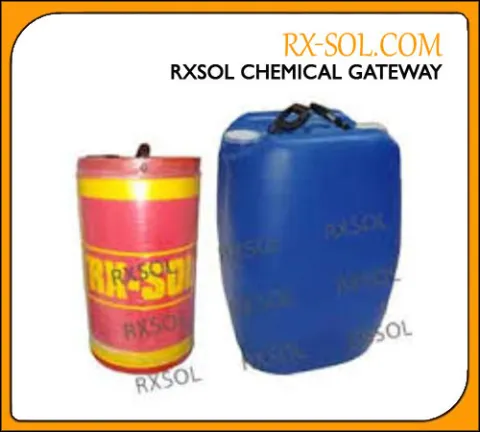
Morpholine classified as Boiler chemicals. Morpholine available pack is in 5 ltr to 210 Ltr.
Its pH adjusting qualities then become distributed throughout the steam plant to provide corrosionprotection. Morpholine is often used in conjunction with low concentrations of hydrazine or ammonia to provide a comprehensive all-volatile treatment chemistry for corrosion protection for the steam systems of such plants. Morpholine decomposes reasonably slowly in the absence of oxygen at the high temperatures and pressures in these steam systems.
Coating Auxiliary Agents, Plastic Auxiliary Agents, Rubber Auxiliary Agents, Surfactants, Textile Auxiliary Agents, Water Treatment Chemicals
Purity ::: 99%-99.5%
Applications
Also widely used as a fruit coating :::
Morpholine is used as a chemical emulsifier in the process of waxing fruit. Naturally, fruits make waxes to protect against insects and fungal contamination, but this can be lost as the fruit is cleaned. A small amount of new wax is applied to replace it. Morpholine is used as an emulsifier and solubility aid for shellac, which is used as a wax for fruit coating.
Morpholine derivatives used as agricultural fungicides in cereals are known as ergosterol biosynthesis inhibitors.
Basic nature of morpholine can be neutralized by addition of hydrochloric acid, which resulting salt formation as morpholinium chloride.
Dosage and directions
Morpholine is organic chemicals which have amine group and basic in nature. Morpholine is water soluble and most commonly used as vegetable and fruit coating chemicals compound as morpholine approved by FDA to use as coating on food item.
Morpholine also used in Bolier steam industries as pH balancing compound to provide corrosion protection towards all metalic surface concern. Its uses is very simple as morpholine is water soluble in all proportion. Morpholine also can be use with hydrazine and others Boiler Water Treatment Chemicals.
Shellac easily dissolved in Morpholine during fruist and vegetable coating process, Now a days wax coating process is common to protect fruits and vegetable from fungal / alage contamination.
Characteristics and notes
| PRODUCT NAME | : | MORPHOLINE |
| CAS number | : | 110-91-8 |
| UN number | : | 2054 |
| Formula | : | C4H8ONH or C4H9NO |
| Odour | : | AMINE LIKE |
| Solubility in water | : | COMPLETE |
| Density | : | 1.002 at 20 OC |
| Boiling point | : | 128 OC |
| Melting point | : | -5 OC |
| Viscosity | : | 2.23 cp at 20 OC |
| Flashpoint | : | 37 OC |
| Explosive limits | : | |
| Vapour pressure | : | 11 mbar at 20 OC |
| Skin absorption/irritation | : | YES |
| TLV Country NL Year 1995 | : | 20 S ppm 70 S mg/m3 |
| Pollution category 1994 | : |
D |
Safety and SDS
Read the safety data sheet before handling. Wear suitable gloves and eye protection.
View safety data sheet
| Product Name | Morpholine |
| Part Number | RXSOL-19-1382-200 |
Company Details:
RX MARINE INTERNATIONAL
105, A wing , BSEL , TECH PARK.
VASHI ,NEW BOMBAY 400703 INDIA
Branch : Kandla, Mumbai , Chennai, Vizag, Kolkata, UAE , OMAN , CANADA and KENYA
| Phone | +91 22 20871200 - 1400 |
| Fax | +91 22 27612100 :::AOH :0091 9821214367 |
| rxsolchemicals@gmail.com | |
| Website | www.rxmraine.com |
| Formula | C4H9NO |
| Molecular weight | 87,12 g/mol |
| CAS-No. | 110-91-8 |
| EC-No. | 203-815-1 |
| Index-No. | 613-028-00-9 |
| Component | Classification | Concentration |
| Tetrahydro-2H-1,4-oxazine | ||
|
CAS-No. 110-91-8
EC-No. 203-815-1
Index-No. 613-028-00-9
|
Flam. Liq. 3; Acute Tox. 4;
Acute Tox. 3; Skin Corr.
1B; Eye Dam. 1; Repr. 2;
H226, H302, H331, H311,
H314, H318, H361fd
|
<= 100 % |
Classification of the substance or mixture
| Classification according to Regulation (EC) No 1272/2008 |
Flammable liquids (Category 3), H226
Acute toxicity, Oral (Category 4), H302
Acute toxicity, Inhalation (Category 3), H331
Acute toxicity, Dermal (Category 3), H311
Skin corrosion (Sub-category 1B), H314
Serious eye damage (Category 1), H318
Reproductive toxicity (Category 2), H361fd
For the full text of the H-Statements mentioned in this Section, see Section 16.
|
Label elements
| Signal Word | Danger |
| Hazard Statements |
H226 Flammable liquid and vapor.
H302 Harmful if swallowed.
H311 + H331 Toxic in contact with skin or if inhaled.
H314 Causes severe skin burns and eye damage.
H361fd Suspected of damaging fertility. Suspected of damaging the unborn child.
|
| Precautionary Statements |
P210 Keep away from heat, hot surfaces, sparks, open flames and other ignition sources. No smoking.
P280 Wear protective gloves/ protective clothing/ eye protection/ face protection.
P301 + P312 IF SWALLOWED: Call a POISON CENTER/ doctor if you feel unwell.
P303 + P361 + P353 IF ON SKIN (or hair): Take off immediately all contaminated clothing. Rinse skin with water.
P304 + P340 + P310 IF INHALED: Remove person to fresh air and keep comfortable for breathing. Immediately call a POISON CENTER/ doctor.
P305 + P351 + P338 IF IN EYES: Rinse cautiously with water for several minutes.
Remove contact lenses, if present and easy to do. Continue rinsing.
|
| Supplemental Hazard Statements | None |
| Reduced Labeling (<= 125 ml) | |
| Signal Word | Danger |
| Hazard statement |
H314 Causes severe skin burns and eye damage.
H361fd Suspected of damaging fertility. Suspected of damaging the unborn child.
H311 + H331 Toxic in contact with skin or if inhaled.
|
| Precautionary statement |
P280 Wear protective gloves/ protective clothing/ eye protection/ face protection.
P303 + P361 + P353 IF ON SKIN (or hair): Take off immediately all contaminated clothing. Rinse skin with water.
P304 + P340 + P310 IF INHALED: Remove person to fresh air and keep comfortable for breathing. Immediately call a POISON CENTER/ doctor.
P305 + P351 + P338 IF IN EYES: Rinse cautiously with water for several minutes.
Remove contact lenses, if present and easy to do. Continue rinsing.
|
| Supplemental Hazard Statements | None |
| Other hazards | This substance/mixture contains no components considered to be either persistent, bioaccumulative and toxic (PBT), or very persistent and very bioaccumulative (vPvB) at levels of 0.1% or higher. |
| General Advice | First aiders need to protect themselves. Show this material safety data sheet to the doctor in attendance. |
| If inhaled | After inhalation: fresh air. Immediately call in physician. If breathing stops: immediately apply artificial respiration, if necessary also oxygen. |
| In case of skin contact | In case of skin contact: Take off immediately all contaminated clothing. Rinse skin with water/ shower. Call a physician immediately. |
| In case of eye contact | After eye contact: rinse out with plenty of water. Immediately call in ophthalmologist. Remove contact lenses. |
| If swallowed | After swallowing: make victim drink water (two glasses at most), avoid vomiting (risk of perforation). Call a physician immediately. Do not attempt to neutralise. |
| Most important symptoms and effects, both acute and delayed | The most important known symptoms and effects are described in the labelling (see section 2.2) and/or in section 11 |
| Indication of any immediate medical attention and special treatment needed | No data available |
| Suitable extinguishing media | Water Foam Carbon dioxide (CO2) Dry powder |
| Unsuitable extinguishing media | For this substance/mixture no limitations of extinguishing agents are given. |
| Special hazards arising from the substance or mixture |
Carbon oxides
Nitrogen oxides (NOx)
Combustible.
Fire may cause evolution of:
nitrogen oxides
Vapors are heavier than air and may spread along floors.
Forms explosive mixtures with air at elevated temperatures.
Development of hazardous combustion gases or vapours possible in the event of fire.
|
| Advice for firefighters | Stay in danger area only with self-contained breathing apparatus. Prevent skin contact by keeping a safe distance or by wearing suitable protective clothing. |
| Further information | Remove container from danger zone and cool with water. Suppress (knock down) gases/vapors/mists with a water spray jet. Prevent fire extinguishing water from contaminating surface water or the ground water system. |
| Personal precautions, protective equipment and emergency procedures |
Advice for non-emergency personnel: Do not breathe vapors, aerosols. Avoid substance contact. Ensure adequate ventilation. Keep away from heat and sources of ignition.
Evacuate the danger area, observe emergency procedures, consult an expert.
For personal protection see section 8.
|
| Environmental precautions | Do not let product enter drains. Risk of explosion. |
| Methods and material for containment and cleaning up | Cover drains. Collect, bind, and pump off spills. Observe possible material restrictions (see sections 7 and 10). Take up carefully with liquid-absorbent material (e.g. Chemizorb®). Dispose of properly. Clean up affected area. |
| Reference to other sections | For disposal see section 13. |
Precautions for safe handling
| Advice on safe handling | Work under hood. Do not inhale substance/mixture. Avoid generation of vapours/aerosols. |
| Advice on protection against fire and explosion | Keep away from open flames, hot surfaces and sources of ignition.Take precautionary measures against static discharge. |
| Hygiene measures |
Immediately change contaminated clothing. Apply preventive skin protection. Wash hands and face after working with substance.
For precautions see section 2.2.
|
| Conditions for safe storage, including any incompatibilities | |
| Storage conditions |
Keep container tightly closed in a dry and well-ventilated place. Keep away from heat and sources of ignition. Keep locked up or in an area accessible only to qualified or authorized persons.
Recommended storage temperature see product label.
|
| Storage class | Storage class (TRGS 510): 3: Flammable liquids |
| Specific end use(s) | Apart from the uses mentioned in section 1.2 no other specific uses are stipulated |
| Application Area | Routes of exposure | Health effect | Value |
| Worker DNEL, acute | inhalation | Local effects | 72 mg/m3 |
| Worker DNEL, longterm | dermal | Systemic effects | |
| Worker DNEL, longterm |
inhalation
|
Systemic effects | 91 mg/m3 |
| Worker DNEL, longterm |
inhalation
|
Local effects | 36 mg/m3 |
| Consumer DNEL, acute | oral | Systemic effects | |
| Consumer DNEL, acute | inhalation | Local effects | 18 mg/m3 |
| Consumer DNEL, longterm | dermal | Systemic effects | |
| Consumer DNEL, longterm | inhalation | Systemic effects | 45 mg/m3 |
| Consumer DNEL, longterm | oral | Systemic effects | |
| Consumer DNEL, longterm | inhalation | Local effects | 35,8 mg/m3 |
Predicted No Effect Concentration (PNEC)
| Compartment | Value |
| Fresh water | 0,1 mg/l |
| Sea water | 0,01 mg/l |
| Fresh water sediment |
1,49 mg/kg
|
| Sea sediment |
0,149 mg/kg
|
| Aquatic intermittent release | 0,28 mg/l |
| Sewage treatment plant | 10 mg/l |
| Soil | 0,239 mg/kg |
| Eye/face protection | Use equipment for eye protection tested and approved under appropriate government standards such as NIOSH (US) or EN 166(EU). Tightly fitting safety goggles |
| Skin protection |
This recommendation applies only to the product stated in the safety data sheet, supplied by us and for the designated use. When dissolving in or mixing with other substances and under conditions deviating from those stated in EN374 please contact the supplier of CE-approved gloves (e.g. KCL GmbH, D-36124 Eichenzell,
Internet: www.kcl.de).
Full contact
Material: butyl-rubber
Minimum layer thickness: 0,7 mm
Break through time: 480 min
Material tested: Butoject® (KCL 898)
This recommendation applies only to the product stated in the safety data sheet, supplied by us and for the designated use. When dissolving in or mixing with other substances and under conditions deviating from those stated in EN374 please contact the supplier of CE-approved gloves (e.g. KCL GmbH, D-36124 Eichenzell,
Internet: www.kcl.de).
Splash contact
Minimum layer thickness: 0,7 mm
Break through time: 60 min
Material tested:(KCL 890 / Aldrich Z677698, Size M)
|
| Body Protection |
Flame retardant antistatic protective clothing.
|
| Respiratory protection |
Recommended Filter type: Filter A (acc. to DIN 3181) for vapours of organic
compounds
The entrepeneur has to ensure that maintenance, cleaning and testing of respiratory protective devices are carried out according to the instructions of the producer.
These measures have to be properly documented.
|
| Control of environmental exposure | Do not let product enter drains. Risk of explosion. |
| Physical state | Liquid |
| Color | Colorless |
| Odor | Ammoniacalunpleasant |
| Melting point/freezing point | Melting point/range: -7 - -5 °C |
| Initial boiling point and boiling range | 127 - 129 °C at 1.013,25 hPa |
| Flammability (solid, gas) | No data available |
| Upper/lower flammability or explosive limits |
Upper explosion limit: 10,8 %(V)
Lower explosion limit: 1,8 %(V)
|
| Flash point | 31 °C - closed cup |
| Autoignition temperature |
255 °C
at 1.013 hPa - DIN 51794
|
| Decomposition temperature | > 330 °C |
| pH | 10,6 at 5 g/l at 20 °C |
| Viscosity |
Viscosity, kinematic: 2,2 mm2/s at 20 °C
Viscosity, dynamic: 2,23 mPa.s at 20 °C
|
| Water solubility | Completely miscible |
| Partition coefficient: n-octanol/water | log Pow: -2,55 at 25 °C - Bioaccumulation is not expected. |
| Vapor pressure |
9,33 hPa at 20 °C
41,32 hPa at 38 °C
|
| Density | 1,000 g/cm3 at 20 °C |
| Relative density | 1,001 at 20 °C |
| Relative vapor density | 3,01 - (Air = 1.0) |
| Particle characteristics | No data available |
| Explosive properties | No data available |
| Oxidizing properties | None |
| Other safety information | |
| Dissociation constant | 8,49 at 25 °C |
| Relative vapor density | 3,01 - (Air = 1.0) |
| Reactivity |
Vapor/air-mixtures are explosive at intense warming.
|
| Chemical stability | The product is chemically stable under standard ambient conditions (room temperature) . |
| Possibility of hazardous reactions |
Exothermic reaction with:
Strong oxidizing agents
Nitriles
acids
Caution! In contact with nitrites, nitrates, nitrous acid possible liberation of nitrosamines!
|
| Conditions to avoid | Heating |
| Incompatible materials | Aluminum, nonferrous metals |
| Hazardous decomposition products | In the event of fire: see section 5 |
| Acute toxicity |
LD50 Oral - Rat - male and female - 1.900 mg/kg
(OECD Test Guideline 401)
Symptoms: If ingested, severe burns of the mouth and throat, as well as a danger of
perforation of the esophagus and the stomach.
Acute toxicity estimate Oral - 1.900 mg/kg
(ATE value derived from LD50/LC50 value)
Acute toxicity estimate Inhalation - 4 h - 3,1 mg/l - vapor
(Expert judgment)
LD50 Dermal - Rabbit - male - 500 mg/kg
(OECD Test Guideline 402)
Acute toxicity estimate Dermal - 500 mg/kg
(ATE value derived from LD50/LC50 value)
|
| Skin corrosion/irritation |
Skin - Rabbit
Result: Causes burns. - 3 min
(OECD Test Guideline 404)
Remarks: Classified according to Regulation (EU) 1272/2008, Annex VI (Table 3.1/3.2)
|
| Serious eye damage/eye irritation |
Eyes - Rabbit
Result: Causes serious eye damage.
(OECD Test Guideline 405)
Remarks: Causes serious eye damage.
|
| Respiratory or skin sensitization |
Buehler Test - Guinea pig
Result: negative
Remarks: (IUCLID)
|
| Germ cell mutagenicity |
Test Type: Ames test
Test system: Escherichia coli/Salmonella typhimurium
Metabolic activation: with and without metabolic activation
Result: Positive results were obtained in some in vitro tests.
Remarks: (ECHA)
Test Type: In vitro mammalian cell gene mutation test
Test system: Mouse lymphoma test
Metabolic activation: Metabolic activation
Method: OECD Test Guideline 476
Result: negative
Test Type: sister chromatid exchange assay
Test system: Chinese hamster ovary cells
Metabolic activation: with and without metabolic activation
Method: OECD Test Guideline 479
Result: negative
Test Type: unscheduled DNA synthesis assay
Test system: rat hepatocytes
Metabolic activation: without metabolic activation
Method: OECD Test Guideline 482
Result: negative
Test Type: Micronucleus test
Species: Hamster
Application Route: Oral
Result: negative
Remarks: (ECHA)
|
| Carcinogenicity | No data available |
| Reproductive toxicity |
Suspected of damaging the unborn child.
Suspected of damaging fertility.
|
| Specific target organ toxicity - single exposure | No data available |
| Specific target organ toxicity - repeated exposure | No data available |
| Aspiration hazard | No data available |
| Additional Information | |
| Endocrine disrupting properties Product: | |
| Assessment | The substance/mixture does not contain components considered to have endocrine disrupting properties according to REACH Article 57(f) or Commission Delegated regulation (EU) 2017/2100 or Commission Regulation (EU) 2018/605 at levels of 0.1% or higher. Material is extremely destructive to tissue of the mucous membranes and upper respiratory tract, eyes, and skin., Cough, Shortness of breath, Headache, Nausea |
| Toxicity | |
| Toxity to fish |
Static test LC50 - Danio rerio (zebra fish) - 299 mg/l - 96 h
(OECD Test Guideline 203)
|
|
Toxicity to daphnia
and other aquatic
invertebrates
|
Static test EC50 - Daphnia magna (Water flea) - 51,25 mg/l - 48 h
Remarks: (ECHA)
|
| Toxicity to algae |
Static test NOEC - Pseudokirchneriella subcapitata (green algae) -
0,097 mg/l - 72 h
(OECD Test Guideline 201)
Static test EC50 - Pseudokirchneriella subcapitata (green algae) -
0,492 mg/l - 72 h
(OECD Test Guideline 201)
|
| Persistence and degradability | |
| Biodegradability |
aerobic - Exposure time 14 d
Result: 72 % - Readily biodegradable.
(OECD Test Guideline 301C)
|
| Bioaccumulative potential | No data available |
| Mobility in soil | No data available |
| Results of PBT and vPvB assessment | This substance/mixture contains no components considered to be either persistent, bioaccumulative and toxic (PBT), or very persistent and very bioaccumulative (vPvB) at levels of 0.1% or higher. |
| Endocrine disrupting properties Product | |
| Assessment | The substance/mixture does not contain components considered to have endocrine disrupting properties according to REACH Article 57(f) or Commission Delegated regulation (EU) 2017/2100 or Commission Regulation (EU) 2018/605 at levels of 0.1% or higher |
| Other adverse effects | No data available |
| Product | See www.retrologistik.com for processes regarding the return of chemicals and containers, or contact us there if you have further questions. |
| UN number | ADR/RID: 2054 IMDG: 2054 IATA: 2054 |
| UN proper shipping name |
ADR/RID: MORPHOLINE
IMDG: MORPHOLINE
IATA: Morpholine
|
| Transport hazard class(es) | ADR/RID: 8 (3) IMDG: 8 (3) IATA: 8 (3) |
| Packaging group | ADR/RID: l IMDG: l IATA: l |
| Environmental hazards | ADR/RID: no IMDG Marine pollutant: no IATA: no |
| Special precautions for user | |
| Tunnel restriction code | (D/E) |
| Further information | No data available |
| Safety, health and environmental regulations/legislation specific for the substance or mixture | This material safety data sheet complies with the requirements of Regulation (EC) No. 1907/2006. |
|
National legislation
Seveso III: Directive 2012/18/EU of the
European Parliament and of the Council
on the control of major-accident hazards
involving dangerous substances.
|
H2 ACUTE TOXIC
P5c FLAMMABLE LIQUIDS
|
| Other regulations |
Observe work restrictions regarding maternity protection in accordance to Dir 92/85/EEC or stricter national regulations where applicable.
Take note of Dir 94/33/EC on the protection of young people at work.
|
| Chemical Safety Assessment | A Chemical Safety Assessment has been carried out for this substance. |
| Other Information |
The information above is believed to be accurate and represents the best information currently available to us. However, we make no warranty of merchant ability or any other warranty, express or implied, with respect to such information, and we assume no liability resulting from its use. Users should make their own investigations to determine the suitability of the information for their particular purposes. In no event shall be liable for any claims, losses, or damages of any third party or for lost profits or any special, indirect, incidental, consequential or exemplary damages, how so ever arising, even if Rx Marine International has been advised of the possibility of such damages. |
Availability
Morpholine Supplier, Distributor and Exporter Kandla, Mumbai, Chennai, Visakhapatnam, Kolkata, Fujairah, Dubai, Sharjah, Abu Dhabi, Ajman, Muscat Ruwi Barka Sohar OMan, Nairobi, Kenya, Sudan, Yemen