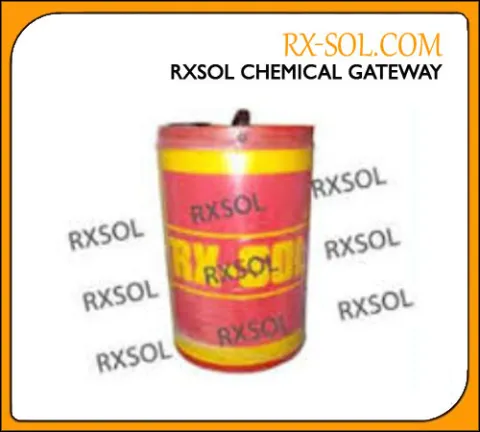
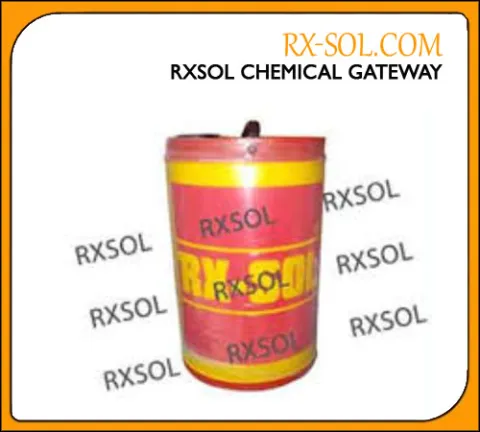
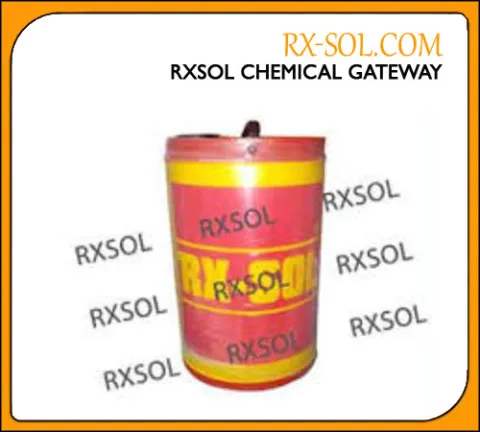
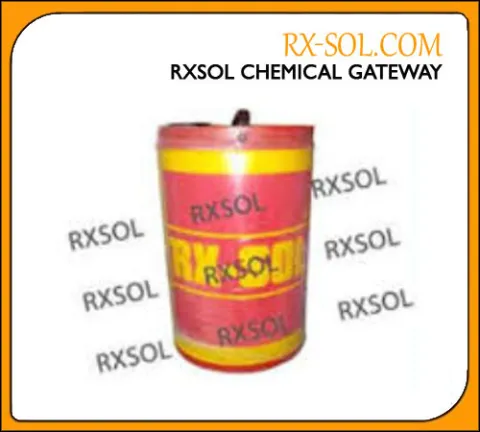
Pure Treat BWT
- Part number
- RXSOL-23-2901-035
- Category
- Ballast Tank Chem
- Brand
- RXSOL
Overview
A POWERFULL corrosive preventive to prevent corrosion from seawater in ship BALLAST TANK. It contains organic and inorganic inhibitors with Zinc.
Technical specifications
Technical Data
|
Form |
Liquid |
| Colour | Clear to Light Amber |
| Density | 1.38 |
| pH | <1.0 |
| Freezing Point | -45°C |
| Compatibility Materials | N, Hypalon, Neoprene, Polyethylene, Polypropylene, Polyurethane, PVC, Teflon, Vinyl, Viton. |
| Not compatible | Aluminium, Brass, Carbon Steel, Nickel, Stainless Steel 304/316, Plasite 4005/6000 and 7122 |
| Water solubility | Soluble |
Applications
Corroision Inhibitor for METAL Ballast Tank resulting film formation and provide Zinc ppm level inside the Ballast Tank. It contains no chromates and is completely soluble in sea water. Corrosion Inhibitor for Ballast Tank.
Dosage and directions
Directions for use :
Corroision Inhibitor for METALis best fed neat from the drum continuously to the water used to fill the tank or system. Strict proportioning is not required, so long as the turbulence on filling is sufficient to provide effective distribution throughout the system. Where the system to be treated is already full and draining and refilling is impractical, distribution of the Ballast Tank. Corroision Inhibitor for METAL in an open vessel can be achieved by air-agitation or pump circulation. Ballast Tank.Corroision Inhibitor for METAL is recommended for systems in which dissolved oxygen is present and the use of air to encourage mixing will not impair corrosion protection.
Dosing an Control :
The recommended initial dosage of Ballast Tank Inhibitor 9-933 is 100mls.ton of water. This will provide 2 to 4ppm zinc in the water system. For Ballast tanks or systems which are frequently emptied and refilled, the initial charge of 100ml per ton of water should be supplemented by a dosage of 50ml per ton each time the system is refilled.
Characteristics and notes
RXSOL-23-2901-025 is film-forming corrosion inhibitor. RXSOL-23-2901-025 is useful for Ballast Tanks, Bilges, Voids, Cofferdams and Barges.
Features & Benefits :
- Effective for use in ballast tanks, cofferdams, barges and voids
- Forms tightly bonded protective film on all metal surfaces below water level
- Protective film is stable over a wide pH and temperature range
- Formulated to give reduced pollution problems if accidentally discharged to sea
- Ideally suited for ballast and other tank protection during ship lay-up periods
Safety and SDS
Read the safety data sheet before handling. Wear suitable gloves and eye protection.
View safety data sheet
| Product Name | Pure Treat BWT |
| Part Number | RXSOL-23-2901-035 |
Company Details:....
RX MARINE INTERNATIONAL
105, A wing , BSEL , TECH PARK.
VASHI ,NEW BOMBAY 400703 INDIA
Branch : Kandla, Mumbai , Chennai, Vizag, Kolkata, UAE , OMAN , CANADA and KENYA
| Phone | +91 22 20871200 - 1400 |
| Fax | +91 22 27612100 :::AOH :0091 9821214367 |
| rxsolchemicals@gmail.com | |
| Website | www.rxmraine.com |
| Chemical Name | Identifiers | % | LD50/LC50 | Classifications According to Regulation/Directive | Comments |
| Sodium Chlorate |
CAS:7775-09-9
EC
Number:231-
887-4
EU Index:017-
005-00-9
|
40% | Ingestion/Oral-Rat LD50 • 1200 mg/kg |
UN GHS: Ox. Sol. 1; Acute Tox. 4 (orl); Aquatic Chronic 2
EU DSD/DPD: Annex VI, Table 3.2: O; R9; Xn; R22; N;
R51-53 / R5; R32
EU CLP: Annex VI, Table 3.1: Ox. Sol. 1, H271; Acute
Tox. 4, H302; Aquatic Chronic 2, H411 / Acute Tox. 3,
H332; EUH032
OSHA HCS 2012: Ox. Sol. 1; Acute Tox. 4 (orl)
|
Not applicable |
| Hydrogen peroxide |
CAS:7722-84-1
EC
Number:231-
765-0
EU Index:008-
003-00-9
|
8% | Ingestion/Oral-Rat LD50 • 376 mg/kg Inhalation-Rat LC50 • 2000 mg/m³ |
UN GHS: Skin Corr. 1A; Eye Dam. 1; Acute Tox. 4 (orl,
inhl); Acute Tox. 5 (orl); Aquatic Acute 3
EU DSD/DPD: Annex VI, Table 3.2: R5; O; R8; C;R35; Xn;
R20/22
EU CLP: Annex VI, Table 3.1: Ox. Liq. 1, H271; Acute
Tox. 4, H332; Acute Tox. 4, H302; Skin Corr. 1A, H314;
STOT SE 3: Resp. Irrit., H335
OSHA HCS 2012: Skin Corr. 1A; Eye Dam. 1; Acute Tox.
4 (orl, inhl)
|
Not applicable |
| Proprietory Blend of Corrosion Inhibitors | - | > 50% | - | - | - |
Classification of the substance or mixture
| CLP |
Oxidizing Liquids 1 - H271
Acute Toxicity Oral 4 - H302
Skin Irritation 2 - H315
Serious Eye Damage 1 - H318
Acute Toxicity Inhalation 4 - H332
Hazardous to the aquatic environment Chronic 2 - H411
EUH032
|
| DSD/DPD |
Oxidizing (O)
Irritant (Xi)
Harmful (Xn)
Dangerous to the Environment (N)
R8, R20, R22, R32, R38, R41, R51, R53
|
Label elements
|
Hazard Statements |
H271 - May cause fire or explosion; strong oxidizer
H302 - Harmful if swallowed
H318 - Causes serious eye damage
H332 - Harmful if inhaled
H411 - Toxic to aquatic life with long lasting effects
EUH032 - Contact with acids liberates very toxic gas.
|
|
Precautionary Statements |
|
| Prevention |
P210 - Keep away from heat.
P220 - Keep/Store away from clothing and other combustible materials.
P221 - Take any precaution to avoid mixing with combustibles
P261 - Avoid breathing mist, vapours, or spray.
P264 - Wash thoroughly after handling.
P271 - Use only outdoors or in a well-ventilated area.
P270 - Do not eat, drink or smoke when using this product.
P273 - Avoid release to the environment.
P280 - Wear protective gloves/protective clothing/eye protection/face protection.
P283 - Wear flame resistant clothing.
|
| Response |
P370+P378 - In case of fire: Use appropriate media Water only for extinction.
P371+P380+P375 - In case of major fire and large quantities: Evacuate area. Fight fire remotely due to the risk of explosion.
P391 - Collect spillage.
P304+P340 - IF INHALED: Remove victim to fresh air and keep at rest in a position
comfortable for breathing.
P306+P360 - IF ON CLOTHING: Rinse immediately contaminated clothing and skin
with plenty of water before removing clothes.
P305+P351+P338 - IF IN EYES: Rinse cautiously with water for several minutes.
Remove contact lenses, if present and easy to do. Continue rinsing.
P310 - Immediately call a POISON CENTER or doctor/physician.
P301+P312 - IF SWALLOWED: Immediately call a POISON CENTER or
doctor/physician if you feel unwell.
P330 - Rinse mouth.
|
| Risk phrases |
R8 - Contact with combustible material may cause fire.
R20 - Harmful by inhalation.
R22 - Harmful if swallowed.
R32 - Contact with acids liberates very toxic gas.
R38 - Irritating to skin.
R41 - Risk of serious damage to eyes.
R51 - Toxic to aquatic organisms.
R53 - May cause long-term adverse effects in the aquatic environment.
|
| Safety phrases |
S3/14 - Keep in a cool place away from combustible material.
S26 - In case of contact with eyes, rinse immediately with plenty of water and seekmedical advice.
S36/37/39 - Wear suitable protective clothing, gloves and eye/face protection.
S46 - If swallowed seek medical advice immediately and show this container label.
S50 - Do not mix with acid
S57 - Use appropriate containment to avoid environmental contamination.
S61 - Avoid release to the environment. Refer to special instructions/ Safety Data
Sheets.
|
| Other hazards | |
| CLP |
Contamination from metals will cause rapid decomposition resulting in oxygen gas
release and pressure build up if not properly vented.
According to Regulation (EC) No. 1272/2008 (CLP) this material is considered
hazardous.
|
| DSD/DPD |
Contamination from metals will cause rapid decomposition resulting in oxygen gas
release and pressure build up if not properly vented.
According to European Directive 1999/45/EC this material is considered dangerous.
|
Description of first aid measures
| Inhalation | Move victim to fresh air. Administer oxygen if breathing is difficult. Give artificial respiration if victim is not breathing. If signs/symptoms continue, get medical attention. |
| Skin | Wash skin with soap and water. Take off contaminated clothing and wash before reuse. If irritation develops and persists, get medical attention. |
| Eye | Contact lenses should not be worn when working with Pure Treat BWT. In case of contact with substance, immediately flush eyes with running water for at least 20 minutes. If eye irritation persists: Get medical advice/attention. |
| Ingestion | Rinse mouth. Give plenty of water to drink. Do not give anything by mouth to an unconscious person. Do NOT induce vomiting. Get medical attention immediately. |
| Most important symptoms and effects, both acute and delayed | Refer to Section 11 - Toxicological Information. |
| Indication of any immediate medical attention and special treatment needed | |
| Notes to Physician |
All treatments should be based on observed signs and symptoms of distress in the patient. Consideration should be given to the possibility that overexposure to materials other than this product may have occurred. Sodium chlorate poisoning is rare, but is associated with a high mortality rate with death generally occurring from massive intravascular hemolysis and acute renal failure. Sodium thiosulfate (2 to 5 gm. in 200
ml of 5% sodium bicarbonate) is a specific antidote that can be given orally or by I.V.
DO NOT treat with methylene blue because of risk of methemoglobinemia. Sodium chlorate is freely dialyzable, and early treatment by peritoneal or hemodialysis is recommended. Direct contact of hydrogen peroxide with the eye is likely to cause corneal damage, especially if not washed away immediately. Care opthalmologic evaluation is recommended. Attempts at evacuating the stomach via emesis induction
or gastric lavage should be avoided. In the event of severe distention of the stomach or esophagus due to gas formation, insertion of a gastric tube may be required.
|
Extinguishing media
| Suitable extinguishing media |
SMALL FIRES: Use water.
LARGE FIRE: Flood fire area with water from a distance
|
| Unsuitable extinguishing media | DO NOT USE CO2, Halon, dry chemical or powder fire extinguishers, or fire blankets in the event solid sodium chlorate is involved as these are totally ineffective and may confine the heat and create a worse situation. |
| Special hazards arising from the substance or mixture |
Highly flammable liquid and vapor. Runoff to sewer may create fire or explosion hazard.
In a fire or if heated, a pressure increase will occur and the container may burst, with the
risk of a subsequent explosion. The vapor/gas is heavier than air and will spread along
the ground. Vapors may accumulate in low or confined areas or travel a considerable
distance to a source of ignition and flash back.
|
| Unusual Fire and Explosion Hazards | Containers may explode when heated. May explode from heat or contamination. May ignite combustibles (wood, paper, cloth, and leather) if allowed to dry and may be ignited by friction or heat. Runoff may create fire or explosion hazard. Some may decompose explosively when heated or involved in a fire. Some will react explosively with hydrocarbons (fuels) These substances will accelerate burning when involved in a fire. The product will sustain combustion due to release of oxygen (upon thermal decomposition). |
| Hazardous Combustion Products |
No data available |
| Advice for firefighters |
Wear positive pressure self-contained breathing apparatus (SCBA).
Wear chemical protective clothing that is specifically recommended by the manufacturer. It may provide little or no thermal protection.
Structural firefighters' protective clothing will only provide limited protection.
Move containers from fire area if you can do it without risk.
LARGE FIRES: Cool containers with flooding quantities of water until well after fire is out.
LARGE FIRES: ALWAYS stay away from tanks engulfed in fire.
LARGE FIRES: For massive fire, use unmanned hose holders or monitor nozzles; if this is impossible, withdraw from area and let fire burn.
spray to keep fire-exposed containers cool.Promptly isolate the scene by removing all persons from the vicinity of the incident if
there is a fire. No action shall be taken involving any personal risk or without suitable
training. Move containers from fire area if this can be done without risk. Use water
spray to keep fire-exposed containers cool.
|
| Personal Precautions | Ventilate enclosed areas. Do not walk through spilled material. Wear appropriate personal protective equipment, avoid direct contact. Do not touch damaged containers or spilled material unless wearing appropriate protective clothing. Contaminated clothing may be a fire risk when dry. |
| Emergency Procedures |
As an immediate precautionary measure, isolate spill or leak area for at least 50 meters (150 feet) in all directions. LARGE SPILL: Consider initial downwind evacuation for at least 100 meters (330 feet) ELIMINATE all ignition sources (no smoking, flares, sparks or flames in immediate area). Keep combustibles (wood, paper, oil, etc.) away from spilled material. Ventilate closed spaces before entering. Stay upwind. Keep out of low areas. Keep unauthorized personnel away. Do not get water inside container. |
| Environmental precautions | Prevent entry into waterways, sewers, basements or confined areas. |
| Methods and material for containment and cleaning up | |
| Containment/Clean-up Measures |
Stop leak if you can do it without risk.
Avoid the solution coming into contact with inappropriate material such as certain
metals and organic materials.
SMALL LIQUID SPILLS: Use a non-combustible material like vermiculite or sand to
soak up the product and place into a container for later disposal.
LARGE SPILLS: Dike far ahead of spill for later disposal.
LARGE SPILLS: Following product recovery, flush area with water.
Do not get water inside containers.
|
| Reference to other sections | Refer to Section 8 - Exposure Controls/Personal Protection and Section 13 - Disposal Considerations. |
| Handling | Use only with adequate ventilation. Keep away from combustible and flammable materials. Avoid contact with heat and ignition sources. Avoid contact with acidic media which can liberate chlorine dioxide gas. Wear appropriate personal protective equipment, avoid direct contact. Avoid breathing mist, vapours and/or spray. Avoid contact with skin, eyes, and clothing. Contaminated clothing may be a fire risk when dry. Paper, wood, cloth, and leather impregnated with sodium chlorate solution are highly combustible if allowed to dry, and may be ignited by friction or heat. Wash contaminated clothing before reuse. Wash thoroughly with soap and water after handling and before eating, drinking, or using tobacco. |
| Conditions for safe storage, including any incompatibilities | |
|
Storage |
Keep away from combustible material. Keep away from sources of ignition – No Smoking. Store in properly vented containers or tanks. Store in a cool, dry, wellventilated place. DO NOT allow the temperature of the storage container to rise above 104°F (40°C). Never return unused product to storage container. |
| Specific end use(s) | Refer to Section 1.2 - Relevant identified uses |
Control parameters
| Exposure Limits/Guidelines | ||||
| Result | ACGIH | NIOSH | OSHA | |
| Hydrogen peroxide (7722-84-1) | TWAs | 1 ppm TWA | 1 ppm TWA; 1.4 mg/m3 TWA | 1 ppm TWA; 1.4 mg/m3 TWA |
Exposure controls
| Engineering Measures/Controls | Adequate ventilation systems as needed to control concentrations of airborne contaminants below applicable threshold limit values. |
| Personal Protective Equipment | |
| Respiratory | In case of insufficient ventilation, wear suitable respiratory equipment. Follow the OSHA respirator regulations found in 29 CFR 1910.134 or European Standard EN 149. Use a NIOSH/MSHA or European Standard EN 149 approved respirator if exposure limits are exceeded or symptoms are experienced. |
| Eye/Face | Goggles for normal handling conditions. Face shield for open handling. Do not wear contact lenses. |
| Hands | Wear protective gloves - neoprene, nitrile, natural rubber, or PVC. |
| Skin/Body | Wear long sleeves and/or protective coveralls. Use of impervious boots is recommended. |
| Environmental Exposure Controls | Controls should be engineered to prevent release to the environment, including procedures to prevent spills, atmospheric release and release to waterways. Follow best practice for site management and disposal of waste. |
| Physical state | Liquid |
| Colour | Clear, Colourless to Yellow Colored |
| Odor | Faintly odored. |
| Odor Threshold | Data lacking |
| Boiling Point | 219.2 F(104 C) |
| Melting Point | 29 C(-20.2 F) |
| Decomposition Temperature | 219.2 F(104 C) |
| Specific Gravity/Relative Density | Data lacking |
| Bulk Density | 1.37 Water=1 |
| Viscosity | 1370 kg/m³ |
| Oxidizing Properties | Strong oxidant. |
| Water Solubility |
Soluble |
| Explosive Properties | Data lacking |
| Vapor pressure | < 0.1 kPa 40°C and 80°C as sodium chlorate solution |
| Vapour Density | Data lacking |
| Evaporation Rate | > 1 n-Butyl Acetate = 1 |
| Flash Point | Not relevant |
| UEL | Not relevant |
| LEL | Not relevant |
| Autoignition | Not relevant |
| Flammability (solid, gas) | Not relevant |
| Octanol/Water Partition coefficient | Not relevant |
| Other Information | No additional physical and chemical parameters noted. |
| Reactivity | No dangerous reaction known under conditions of normal use |
| Chemical stability | Stable under normal temperatures and pressures. |
| Possibility of hazardous reactions | Hazardous polymerization will not occur. |
| Conditions to avoid | Avoid heat, flame, strong UV light and other sources of ignition. |
| Incompatible materials |
May react with acids, organic matter, expanded plastics such as polystyrene or polyurethane, ammonium salts, sulfur or sulfides, phosphorus, arsenic, metals including copper, zinc, aluminum or other metals, manganese dioxide, potassium cyanide, and thiocyanates. Incompatible with soluble metals and their salts (i.e. iron, copper, chromium, vanadium, tungsten, molybdenum, and platinum), reducing agents, organic materials, as well as flammable and combustible materials.
|
| Hazardous decomposition products | Material will react with strong mineral acids liberating chlorine dioxide gas. Contamination from various metals or organic materials may cause rapid decomposition of the hydrogen peroxide, resulting in oxygen gas release and pressure buildup if not properly vented. |
Information on toxicological effects
| GHS Properties | Classification |
| Acute toxicity |
EU/CLP • Acute Toxicity - Inhalation 4; Acute Toxicity - Oral 4 - ATEmix (oral): 1840 mg/kg
OSHA HCS 2012 • Acute Toxicity - Inhalation 4; Acute Toxicity - Oral 4 - ATEmix (oral):1840 mg/kg
UN GHS • Acute Toxicity - Inhalation 4; Acute Toxicity - Oral 4 - ATEmix (oral): 1840 mg/kg
|
| Aspiration Hazard |
EU/CLP • Data lacking
OSHA HCS 2012 • Data lacking
UN GHS • Data lacking
|
| Carcinogenicity |
EU/CLP • Data lacking
OSHA HCS 2012 • Data lacking
UN GHS • Data lacking
|
| Germ Cell Mutagenicity |
EU/CLP • Data lacking
OSHA HCS 2012 • Data lacking
UN GHS • Data lacking
|
| Skin corrosion/Irritation |
EU/CLP • Data lacking
OSHA HCS 2012 • Data lacking
UN GHS • Data lacking
|
| Skin sensitization |
EU/CLP • Data lacking
OSHA HCS 2012 • Data lacking
UN GHS • Data lacking
|
| STOT-RE |
EU/CLP • Data lacking
OSHA HCS 2012 • Data lacking
UN GHS • Data lacking
|
| STOT-SE |
EU/CLP • Data lacking
OSHA HCS 2012 • Data lacking
UN GHS • Data lacking
|
| Toxicity for Reproduction |
EU/CLP • Data lacking
OSHA HCS 2012 • Data lacking
UN GHS • Data lacking. |
| Respiratory sensitization |
EU/CLP • Data lacking
OSHA HCS 2012 • Data lacking
UN GHS • Data lacking
|
| Serious eye damage/Irritation |
EU/CLP • Data lacking
OSHA HCS 2012 • Data lacking
UN GHS • Data lacking
|
| Inhalation | |
| Acute (Immediate) | Under normal conditions of use, no health effects are expected. |
| Chronic (Delayed) | No data available. |
| Skin | |
| Acute (Immediate) | Causes skin irritation. |
| Chronic (Delayed) | No data available. |
| Eye | |
| Acute (Immediate) | Causes serious eye irritation. |
| Chronic (Delayed) | No data available. |
| Ingestion | |
| Acute (Immediate) | Harmful if swallowed. |
| Chronic (Delayed) | No data available. |
| Dosage | Species | Duration | Results | Exposure Conditions | Comments |
| 468 mg/L | Aquatic Plant(s): Algae | 3 Day(s) | EC50 | N/A | Sodium Chlorate |
| 919.3 mg/L | Crustacea: Water flea | 2 Day(s) | EC50 | N/A | Sodium Chlorate |
| 14300 mg/L | Fish: Fathead minnow | 4 Day(s) | N/A | N/A | Sodium Chlorate |
| 50 mg/L | Aquatic Plant(s): Algae | 3 Day(s) | NOEC | N/A | Sodium Chlorate |
| 526 mg/L | Crustacea: Water flea | 21 Day(s) | NOEC | N/A | Sodium Chlorate |
| 18-32 mg/L | Water Flea: Daphnia magna | 48 Hour(s) | EC50 | N/A | Hydrogen peroxide |
| >1000 mg/L | Fish: Fathead minnow | 96 Hour(s) | LC50 | N/A | Sodium Chlorate |
| Waste treatment Method | |
| Product waste | Dispose of content and/or container in accordance with local, regional, national, and/or international regulations. |
| Packaging waste | Dispose of content and/or container in accordance with local, regional, national, and/or international regulations. |
| UN number | UN proper shipping name | Transport hazard class(es) | Packing group | Environmental hazards | |
| DOT | UN2428 | Sodium chlorate, aqueous solution | 5.1 | II | N/A |
| TDG | UN2428 | Sodium chlorate, aqueous solution | 5.1 | II | N/A |
| IMO/IMDG | UN2428 | Sodium chlorate, aqueous solution | 5.1 | II | N/A |
| IATA/ICAO | UN2428 | Sodium chlorate, aqueous solution | 5.1 | II | N/A |
| FIFRA – Pesticide Labeling |
This chemical is a pesticide product registered by the United States Environmental
Protection Agency and is subject to certain labeling requirements under federal
pesticide law. These requirements differ from the classification criteria and hazard
information required for safety data sheets (SDS), and for workplace labels of nonpesticide chemicals. The hazard information required on the pesticide label is
reproduced below. The pesticide label also includes other important information,
including directions for use.
For industrial use
Keep out of reach of children.
|
| Hazards to Humans and Domestic Animals | Corrosive to skin and eyes. Causes irreversible eye damage. Harmful if absorbed through the skin or inhaled. Do not get in eyes or on clothing. Avoid contact with skin. Wear protective eyewear (goggles or face shield). Wear protective clothing and gloves (neoprene, plastic, or rubber). Wash thoroughly with soap and water after handling and before eating, drinking, chewing gum, using tobacco, or using the toilet. Remove contaminated clothing and wash before reuse. |
| First Aid | IF IN EYES: Hold eye open and flush with a directed stream of water for 15 - 20 minutes. Remove contact lenses, if present, after the first 5 minutes, then continue rinsing eyes. Call a poison control center or doctor for treatment advice. IF ON SKIN OR CLOTHING:Take off contaminated clothing. Rinse skin immediately with plenty of water for 15 - 20 minutes. Call a poison control center or doctor immediately for treatment advice. IF INHALED: Move person to fresh air. If person is not breathing, call 911 or an ambulance, then give artificial respiration, preferably mouth-to-mouth if possible. Call a poison control center or doctor for further treatment. IF SWALLOWED: Call a poison control center or doctor immediately for treatment advice. Have person sip a glass of water if able to swallow. Do not induce vomiting unless told to do so by a poison control center or doctor. Do not give anything by mouth to an unconscious person. NOTE TO PHYSICIAN: Probable mucosal damage may contraindicate the use of gastric lavage |
| Environmental Hazards | This product is toxic to freshwater and saltwater aquatic invertebrates, including shrimp. Do not discharge effluent containing this product into lakes, streams, ponds, estuaries, oceans or other waters unless in accordance with the requirements of a National Pollutant Discharge Elimination System (NPDES) permit, and the permitting authority has been notified in writing prior to discharge. Do not discharge effluent containing this product to sewer systems without previously notifying the local sewage treatment plant authority. For guidance contact your State Water Board or Regional Office of the EPA. |
| Physical or Chemical Hazards | Purate BWT is a strong oxidizing agent. Do not contaminate with dirt, oils or organic matter of any sort. Contamination may cause violent chemical reactions, fire and explosion. Clean up all chemical spills immediately. Allowing spills to dry or concentrate may cause spontaneous combustion. In case of chemical spills, avoid bodily contact and wear appropriate protective equipment. |
| Other Information |
The information above is believed to be accurate and represents the best information currently available to us. However, we make no warranty of merchantability or any other warranty, express or implied, with respect to such information, and weassume no liability resulting from its use. Users should make their own investigations to determine the suitability of the information for their particular purposes. In no event shall be liable for any claims, losses, or damages of any third party or for lost profits or any special, indirect, incidental, consequential or exemplary damages, howsoever arising, even if RX Marine International has been advised of the possibility of such damages. DISCLAIMER OF LIABILITY :The information in this SDS was obtained from sources which we believe are reliable. However, the information is provided without any warranty, express or implied, regarding its correctness. The conditions or methods of handling, storage, use or disposal of the product are beyond our control and may be beyond our knowledge. For this and other reasons, we do not assume responsibility and expressly disclaim liability for loss, damage or expense arising out of or in any way connected with the handling, storage, use or disposal of the product. This MSDS was prepared and is to be used only for this product. If the product is used as a component in another product, this MSDS information may not be applicable. |
Availability
Corroision Inhibitor for Ballast Tank Exporter, manufacturer and supplier in Mumbai, Gandhiddham, Chennai, Visakhapatnam, Kolkata, Fujairah, Oman, Ajmna, Dubai, Sharjah, Abudhabi, Muscat Sohar