Sodium Bisulphite Powder
- Part number
- RXSOL-19-1556-020
- Category
- Powder Chemical
- Brand
- RXSOL
Overview
Sodium Bisulfite solution for using as chlorine reducing agent in RO units and for membranes preservation. Acts as Dechlorinating agent is a kind of rapid reaction, is used to remove the residual chlorine in the reverse osmosis water, suitable for all kinds of reverse osmosis membrane.
Technical specifications
| Formula | NaHSO3 |
| Molecular Weight | 104 |
| Assay as (Na2S2O5) | 95 % Min. |
| Assay as (SO2) | 62 % Min. |
| Solubility (10 % Aquous Soln) | V. S. Hazy to clear solution. |
| pH Value of 5% Solution | 3.5 to 4.5 |
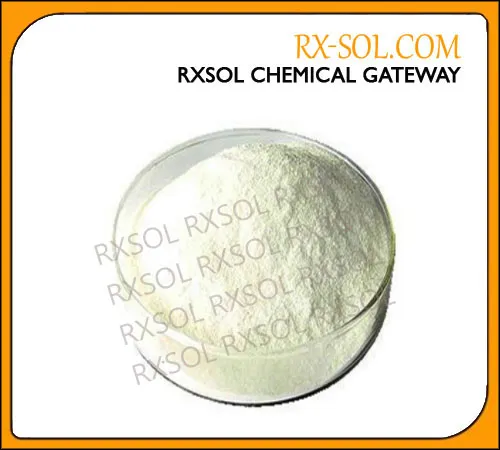
| Description | White crystalline powder, free from extraneous Matter with a faint odour of sulphur dioxide gas. |
| Standard Packing |
25 Kg. / 50 Kg. HDPE bag with extra liner inside |
Applications
Sodium Bisulfite RXSOL-22-1556-050 is a Dechlorination product which is frequently used in municipal wastewater, pulp & paper, power, and textile water treatment plants and as a Oxygen scavenger in Boiler water treatment.
RXSOL-22-1556-050 also popuar for preservative in photo developer process and Food additive.
Dosage and directions
Its chemical reaction gives Flue gas desulfurization and Mild reducing agent in organic synthesis by Efficiently remove traces or excess amounts of bromine, iodine, osmate esters, chromium trioxide, and potassium permanganate
Characteristics and notes
Safety and SDS
Read the safety data sheet before handling. Wear suitable gloves and eye protection.
View safety data sheet
| Product Name | Sodium Bisulphite Powder |
| Part Number | RXSOL-19-1556-020 |
Company Details:
RX MARINE INTERNATIONAL
105, A wing , BSEL , TECH PARK.
VASHI ,NEW BOMBAY 400703 INDIA
Branch : Kandla, Mumbai, Vizag, Chennai, Kolkata Fujairah UAE and Omans
| Phone | +91 22 27815540 / 41 / 42 |
| Fax | +91 22 2781 1318 :::AOH :0091 9821214367 |
| rxsolchemicals@gmail.com | |
| Website | www.rxmarine.com |
| Component | CAS No. | Weight % |
| Sodium bisulfite | 7631-90-5 | >95 |
| Classification of the substance or mixture: |
Acute oral toxicity Category 4. Specific target organ toxicity (single exposure) Category 3 Target Organs - Respiratory system. |
| Signal word: |
Warning. |
| Hazard statement(s): |
Harmful if swallowed. May cause respiratory irritation. |
| Precautionary Statements: |
Wash face, hands and any exposed skin thoroughly after handling. Do not eat, drink or smoke when using this product. Avoid breathing dust/fume/gas/mist/vapors/spray Use only outdoors or in a well-ventilated area. IF INHALED: Remove victim to fresh air and keep at rest in a position comfortable for breathing Call a POISON CENTER or doctor/physician if you feel unwell. IF SWALLOWED: Call a POISON CENTER or doctor/physician if you feel unwell Rinse mouth. Storage Store in a well-ventilated place. Keep container tightly closed Store locked up. Dispose of contents/container to an approved waste disposal plant |
| Hazards not otherwise Classified (HNOC) |
Contact with acids liberates toxic gas. |
| General notes: |
If symptoms persist, call a physician. |
| Eye Contact: |
Rinse immediately with plenty of water, also under the eyelids, for at least 15 minutes. Getmedical attention. |
| Skin contact: |
Wash off immediately with plenty of water for at least 15 minutes. If skin irritationpersists,call a physician. |
| Inhalation | Remove to fresh air. If not breathing, give artificial respiration. Get medical attentionif symptoms occur. |
| Ingestion |
Clean mouth with water and drink afterwards plenty of water. Get medical attentionif symptoms occur. |
| Most important symptoms and effects, both acute and delayed: |
None reasonably foreseeable. |
| Indication of any immediate medical attention and special treatment needed: | Treat symptomatically. |
| Extinguishing media: |
Water spray, carbon dioxide (CO2), dry chemical, alcohol-resistant foam. |
| Special hazards arising from the substance or mixture: |
Keep product and empty container away from heat and sources of ignition. |
| Hazardous Combustion Products: | Sulfur oxides. Sodium oxides. |
| Advice for Firefighters: |
As in any fire, wear self-contained breathing apparatus pressure-demand, MSHA/NIOSH (approved or equivalent) andfull protective gear. |
| Personal Precautions: |
Use personal protective equipment as required. Ensure adequate ventilation. Avoid dust formation. |
| Enviromental Precautions: |
Should not be released into the environment. |
| Methods and material for containment and cleaning up: |
Sweep up and shovel into suitable containers for disposal. Keep in suitable, closedcontainers for disposal. |
| Precautions forSsafe Handling: |
Wear personal protective equipment/face protection. Avoid dust formation. Ensureadequate ventilation. Do not get in eyes, on skin, or on clothing. Avoid ingestionandinhalation. |
| Conditions for safe storage, including any incompatibilities: |
Keep in a dry, cool and well-ventilated place. Keep container tightly closed. Keepawayfrom acids. Incompatible Materials. Acids. Metals. |
| Engineering Measures: | Ensure adequate ventilation, especially in confined areas. Ensure that eyewashstationsand safety showers are close to the workstation location. |
| Eye/face Protection: | Wear appropriate protective eyeglasses or chemical safety goggles as describedbyOSHA's eye and face protection regulations in 29 CFR 1910.133 or EuropeanStandardEN166. |
| Skin and body protection: |
Wear appropriate protective gloves and clothing to prevent skin exposure. |
| Respiratory Protection: | Follow the OSHA respirator regulations found in 29 CFR 1910.134 or EuropeanStandardEN 149. Use a NIOSH/MSHA or European Standard EN 149 approved respirator if exposure limits are exceeded or if irritation or other symptoms are experienced. |
| Hygiene Measures: | Handle in accordance with good industrial hygiene and safety practice. |
|
Engineering Controls |
Use process enclosures,local exhaust ventilation, or other engineering controls to keep airbome levels below recommended exposure limits. If user operations generate dust, fume or mist , use ventilation to keep exposure to airborne contaminants below the exposure limit. |
|
Personal Protection |
Splash goggles. Lab coat, Dust respirator. Be sure to use an approved / certifiled respirator or equivalent Gloves. |
|
Personal Protection in case of a Large Spill" |
Splash goggles. Full suit. Dust respirator. Boots Gloves. A self contained breathing apparatus should be used to avoid inhalation of the product. Suggested protective clothing might not be sufficient; consult a specialist BEFORE handling this product. |
|
Exposure Limits |
TWA 5 (mg/m3) from OSHA (PEL) [united states] Inhalation TWA 5 (mg/m3) from ACGIH (TLV) [united states] Inhalation TWA 5 (mg/m3) from [united states] Inhalation TWA 5 (mg/m3) from [United Kingdom(UK)] Inhalation TWA 5 (mg/m3) from [Canada] inhalation Consult local authorities for acceptable exposure limits. |
| State: | Powder. |
| Color: | White |
| Odour: | Rotten-egg like |
| Melting Point/Range | 150 °C / 302 °F |
| pH Value: | 4-5 25% aq. soI |
| Specific Gravity: | 1.480 |
| Water Solubility: | 300 g/l |
|
Physical state and appearance |
Solid. |
|
Odor |
Sulfurous. (Slight.) |
|
Taste |
Disagreeable. |
|
Molecular Weight |
104.07 g/mole |
|
Color |
White. Off-white. |
|
pH (1% soln/water) |
Not available |
|
Boiling Point |
Not available. |
|
Melting Point |
Decomposes. |
|
Critical Temperature |
Not available. |
|
Specific Gravity |
1.48 (Water = 1) |
|
Vapor Pressure |
Not applicable. |
|
Vapor Density |
Not available. |
|
Volatility |
Not available. |
|
Odor Threshold |
Not available. |
|
Water/Oil Dist. Coeff |
Not available. |
|
Ionicity (in Water) |
Not available. |
|
Dispersion Properties |
See solubility in water. |
|
Solubility |
Easily soluable in hot water. Soluble in cold water. Soluble in 3.5 parts cold water. Soluble in 2 parts boiling water. Soluble in 70 parts alcohol Insoluble in liquid chloride,ammonia. |
| Reactivity: |
Yes |
| Chemical stability: |
Moisture sensitive. |
| Conditions to avoid: |
Avoid dust formation. Excess heat. Exposure to air. Incompatible products. Exposuretomoist air or water. Temperatures above 150°C. acids. |
| Incompatible materials: |
Acids, Metals. |
| Hazardous Decomposition products: |
Sulfur oxides, Sodium oxides. |
|
Stability |
The product is stable. |
|
Instability Temperature |
Not available. |
|
Conditions of Instability |
Incompatible materials |
|
Incompatibility with various substances |
Reactive with oxidizing agents, acids. |
|
Corrosivity |
Non - corrosive in presence of glass. |
|
Special Remarks on Reactivity |
Slowly oxidized to sulfate on exposure to air. |
|
Special Remarks on Corrosivity |
Not available. |
|
Polymerization |
Will not occur. |
| Acute toxicity: |
LD50 = 1310 mg/kg ( Rat ) |
| Respiratory or skin sensitisation: |
Not classified |
| Carcinogenicity: |
Not classified |
| Aspiration hazard: |
Shall not be classified as presenting an aspiration hazard. |
| Reproductive hazards: |
Not classified |
| Germ cell mutagenicity: |
Not classified |
| Skin corrosion/irritation: |
Causes skin irritation. |
| Serious eye damage/eye irritation: |
Causes serious eye irritation. |
|
Routes of Entry |
Inhalation, Ingestion. |
|
Toxicity to Animals |
Acute oral toxicity (LD50): 2000 mg/kg [Rat]. |
|
Chronic Effects on Humans |
CARCINOGENIC EFFECTS :3 (Not classifiable for human.) by IARC. MUTAGENIC EFFECTS :Mutagenic for bacteria and/or yeast. May cause damage to the following organs: lungs, skin. |
|
Other Toxic Effects on Humans |
Hazardous in case of skin contact (irritant), of ingestion, of inhalation. |
|
Special Remarks on Toxicity to Animals |
Not available |
|
Special Remarks on Chronic Effects on Humans |
May affect genetic material (mutagenic). May cause cancer based on animal test data. No human data found. |
|
Special Remarks on other Toxic Effects on Humans |
Acute Potential Health Effects: Skin Causes skin irritation. Eyes. Causes eye irritation. Inhalation :Can cause respiratory tract irritation with cough, Wheezing, and Shortness of breath. It can produce anaphylaxis or other hypersensivity reactions in some sensitized individuals. Ingestion :May be harmful if swallowed. It may cause nausea, vomiting ,diarrhea, abdominal pain, gastric. Extremely large amounts may affect behavior / central nervous system and may produce central nervous system stimulation,irritation,seizures and may also cause, cyanosis, respiratory depression, apnea,circulatory disturbances, hypotension and cardlovascular collapse.May cause asthmatic reaction in sensitized individuals. Chronic Potential Health Effects: Inhalation : Prolonged or repeated inhalation may cause bronchitis to develop with cough, phlegm, and/or shortness of breath. It can cause an asthma-like allergy or other hypersensivity reactions such as anaphylaxis, angloedema, bronchoconstriction, flushing, diaphoresis, urtiacaria, tachycardia, and hypotension in sensitized individuals. Futures exposures may cause shortness of breath. Wheezing, cough, and/or chest tightness. Skin:Protonged or repeated skin contact can cause dermatitis. Ingestion : Prolonged or repeated ingestion may affect the liver, and blood |
| Aquatic toxicity: |
EC50: = 119 mg/L, 48h(Daphnia magna) |
| Results of PBT and vPvB assessment: |
This product does not contain any PBT or vPvB substances. |
| Biodegradability: |
Soluble in water Persistence is unlikely based on information available. |
| Bio – accumulation: |
No information available. |
| Mobility in soil: |
Will likely be mobile in the environment due to its water solubility |
|
Ecotoxicity |
Not available. |
|
BOD5 and COD |
Not available. |
|
Products of Biodegradation |
Possibly hazardous short term degradation product are not likely. However, long term degradation products may arise. |
|
Toxicity of the Products of Biodegradation |
The products of degradation are less toxic than the product itself. |
|
Special Remarks on the Products of Biodegradation |
Not available. |
| Disposal methods: |
Chemical waste generators must determine whether a discarded chemical is classified as a hazardous waste. Chemical waste generators must also consult local, regional, andnational hazardous waste regulations to ensure complete and accurate classification |
| UN Number: | Not applicable. |
| Proper Shipping Name | Not applicable. |
| Hazard Class | Not applicable. |
| Packing Group | Not applicable. |
|
DOT Classification |
Not a DOT controlled material (United States). |
|
Identification |
Not applicable. |
|
Special Provisions for Transport |
Not applicable. |
| National legislation: |
Hazardous Substances Act 15 of 1973 and Regulations. Occupational Health and Safety Act 85 of 1993 (Hazardous Chemical Substances Regulations). |
| International Legislation: |
IATA Dangerous Goods Regulation (DGR) 59th Edition 2018. IMDG Code, International Maritime Dangerous Goods Code, 2008 Edition, Volume 1 and 2. |
Federal and state Regulations:
Connecticut hazardous material survey : Sodium bisulfite
Illinoistoxic substances disclosure to employee act: Sodium bisulfite
Illinois chemical safety act: Sodium bisulfite
New York release reporting list: Sodium bisulfite
Pennsylvania RTK : Sodium bisulfite
Minnesota :Sodium bisulfite
Massachuselts RTK : Sodium bisulfite
Massachuseltts spill list : Sodium bisulfite
New Jersey : Sodium bisulfite
New Jersey spill list : Sodium bisulfite
Louisianp spill reporting : Sodium bisulfite
Califomia Director's List of Hazardous Substances: Sodium bisulfite
TSCA 8(b) inventory Sodium bisulfite
TSCA 8(a) PAIR : Sodium bisulfite
TSCA 8(d) H and S data reporting : Sodium bisulfite: Effective date :1/26/94; Sunset date : 6/30/98
CERCLA : Hazardous substances : Sodium bisulfite : 5000 lbs. (2268 kg)
Other Regulations:
OSHA Hazardous by definition of Hazard Communication Standard (29 CFR 1910,1200).
EINECS : This product is on the European Inventory of Existing Commercial Chemical Substances.
Other Classifications:
WHMIS (Canada): CLASS D-2B: Material causing other toxic effects (TOXIC)
DSCL (EEC):
R22- Harmful if swallowed.
R31- Contact with acids liberates toxic gas.
S25- Avoid contact with eyes.
S46- If swallowed, seek medical advice immediately and show this container or label.
HMIS (U.S.A.):
Health Hazard :2
Fire Hazard :0
Reactivity :0
Personal Protection :E
National Fire Protection ASsociation (U.S.A.):
Health :2
Flammability :0
Reactivity :0
Specific hazard :
Protective Equipment:
Gloves
Lab coat
Dust respirator. Be sure to use an approved/certified respirator or equivaient. Wear appropriate respirator when ventilation is inadequate.
Splash goggles.
| Other Information: |
The information above is believed to be accurate and represents the best information currently available to us. However, we make no warranty of merchantability or any other warranty, express or implied, with respect to such information, and we assume no liability resulting from its use. Users should make their own investigations to determine the suitability of the information for their particular purposes. In no event shall rxmarine.com be liable for any claims, losses, or damages of any third party or for lost profits or any special, indirect, incidental, consequential or exemplary damages, howsoever arising, even if RXMARINE has been advised of the possibility of such damages. DISCLAIMER OF LIABILITY :The information in this SDS was obtained from sources which we believe are reliable. However, the information is provided without any warranty, express or implied, regarding its correctness. The conditions or methods of handling, storage, use or disposal of the product are beyond our control and may be beyond our knowledge. For this and other reasons, we do not assume responsibility and expressly disclaim liability for loss, damage or expense arising out of or in any way connected with the handling, storage, use or disposal of the product. This MSDS was prepared and is to be used only for this product. If the product is used as a component in another product, this MSDS information may not be applicable |
|
Engineering Controls |
Use process enclosures,local exhaust ventilation, or other engineering controls to keep airbome levels below recommended exposure limits. If user operations generate dust, fume or mist , use ventilation to keep exposure to airborne contaminants below the exposure limit. |
|
Personal Protection |
Splash goggles. Lab coat, Dust respirator. Be sure to use an approved / certifiled respirator or equivalent Gloves. |
|
Personal Protection in case of a Large Spill" |
Splash goggles. Full suit. Dust respirator. Boots Gloves. A self contained breathing apparatus should be used to avoid inhalation of the product. Suggested protective clothing might not be sufficient; consult a specialist BEFORE handling this product. |
|
Exposure Limits |
TWA 5 (mg/m3) from OSHA (PEL) [united states] Inhalation TWA 5 (mg/m3) from ACGIH (TLV) [united states] Inhalation TWA 5 (mg/m3) from [united states] Inhalation TWA 5 (mg/m3) from [United Kingdom(UK)] Inhalation TWA 5 (mg/m3) from [Canada] inhalation Consult local authorities for acceptable exposure limits. |
Availability
Sodium Bisulphite, sodium bisulfite manufacturers & exporters in India, UAE Middle East, Oman, Sudan, Kenya. Sodium Bisulphite, sodium bisulfite suppliers in Mumbai, Muscat Barka, Fujairah, Sharjah, Dubai, Abudhabi, Sudan, Yemen, Gandhidham Kandla Gujrat, Kolkata, Visakhapatnam, Chennai, Ennore, Hazira Surat