Mono Ethanol Amine
- Part number
- RXSOL-19-1582-230
- Category
- Clean Air deodorizer
- Brand
- RXSOL
Overview
RXSOL Monoethanolamine (MEA) is a colorless, hygroscopic and moderately viscous liquid with a mild ammoniacal odor. It is used as a chemical intermediate in the manufacture of cosmetics, surfaceactive agents, emulsifiers, plasticizing agents, rubber vulcanization accelerators, antibiotics and pharmaceuticals. MEA also acts as a gas-scrubbing agent for absorption and removal of H2S and CO2.
Technical specifications
Specification :
| Purity | : Min 99.0% by wt. |
| Specifci Gravity | : 1.013 - 1.018 @ 25°C |
| Boiling Range | : 165°C - 175°C |
| Flash Point | : 85°C |
| Colour | : Clear to Straw Yellow |
| Chloride as CL | : Max 0.005 % by Wt. |
| Iron as Fe | : Max 0.100 % By Wt |
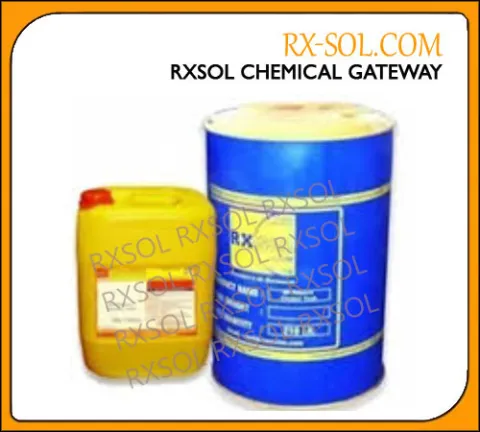
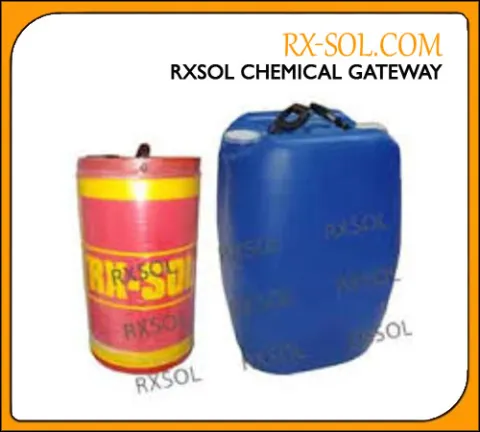
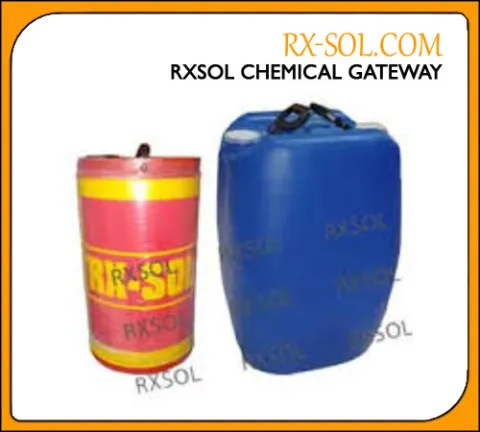
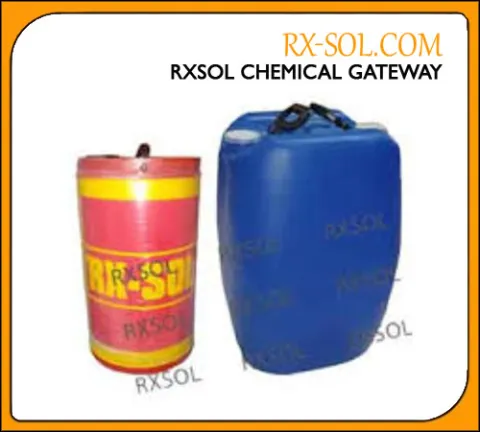
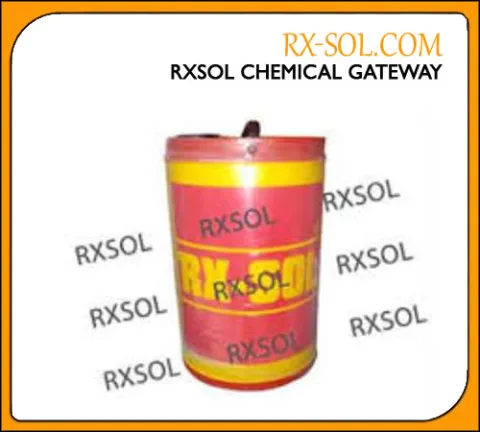
| Packing | : 200 Kg Drum |
Applications
A chemical intermediate in the manufacture of cosmetics, surface-active agents, emulsifiers, pharmaceuticals, and plasticizing agents; a gas-scrubbing agent for the absorption and removal of H2S and CO2 from refinery and natural gas streams; carbon dioxide and ammonia manufacturing. It has various use also applications include use as “down hole” in oil well chemicals and in metalworking to prevent corrosion, and as catalysts that promote stability during the reaction process in the manufacture of flexible and rigid urethane foams.
Characteristics and notes
Future & Benefit :
Detergents :
• MEA imparts a reserve alkalinity to the laundry bath, which is essential to efficient cleaning.
• MEA is an effective oil and anti-redeposition agent.
Personal Care :
• Fatty acids neutralized with MEA are used as emulsifiers for oil-in water emulsions such as gel-type industrial hand cleaners, aerosol shave creams, and hand and body lotions.
Textile Finishing :
• MEA is used as reaction intermediates for the preparation of durable press fabric finishes and softeners.
• When reacted to form amine soaps, useful as scouring agents for wool and silk because of its low alkalinity.
• Because it is hygroscopic, MEA is used in the preparation of vat printing pastes.
Wood Treating :
• MEA is used in both alkaline copper quaternary (ACQ) and copper azole formulations for treating wood to improve its resistance to pests and decay. Both are arsenic-free alternatives to the phased-out CCA formulations.
TOXICITY AND SAFETY :
For information on the toxicity and safe handling of this product, please read the Material Safety Data Sheet prior to use of the product.
HANDLING AND STORAGE :
Monoethanolamine may be satisfactorily stored in carbon steel, stainless steel, or aluminum tanks using steel pipes and pumps. Caution must be exercised, however, to keep the material in the anhydrous state to prevent severe corrosion to the carbon steel or aluminum tank and related equipment. A drier on the breathing nozzle is recommended to help maintain anhydrous conditions in the storage tank. For longer term color stability, it is recommended that the product be stored under an inert atmosphere. Solid sediment may form upon standing. There should be circulation in the storage vessel to keep solids suspended. Low pressure steam coils in storage tanks and heat tracing of transfer lines should be provided in cases where low environmental temperatures may make pumping of the product difficult.
SHIPPING DATA:
Product is available in tank cars, tank wagons and drums. Small samples are available by contacting our sample department at + 91 22 6511 5555.
BIODEGRADABILITY AND ENVIRONMENTAL SAFETY:
Monoethanolamine undergoes moderate biodegradation and is not expected to be persistent in the environment.
Safety and SDS
Read the safety data sheet before handling. Wear suitable gloves and eye protection.
View safety data sheet
| Porduct Name | Mono Ethanol Amine |
| Part Number | RXSOL-19-1582-230 |
Company Details:
RX MARINE INTERNATIONAL
105, A wing , BSEL , TECH PARK.
VASHI ,NEW BOMBAY 400703 INDIA
Branch : Kandla, Mumbai , Chennai, Vizag, Kolkata, UAE , OMAN , CANADA and KENYA
| Phone | +91 22 20871200 - 1400 |
| Fax | +91 22 27612100 :::AOH :0091 9821214367 |
| rxsolchemicals@gmail.com | |
| Website | www.rxmraine.com |
| Chemical Name | Cas No | EC No | Whight | Formula |
| Ethanolamine | 141-43-5 | 205-483-3 | 61,08 g/mol | C2H7NO |
| Signal Word | Danger |
| Hazard Statements | H302 + H312 + H332 Harmful if swallowed, in contact with skin or if inhaled. H314 Causes severe skin burns and eye damage. H335 May cause respiratory irritation. H412 Harmful to aquatic life with long lasting effects. |
| Precautionary statements | P273 Avoid release to the environment. P280 Wear protective gloves/ protective clothing/ eye protection/ face protection. P301 + P312 IF SWALLOWED: Call a POISON CENTER/ doctor if you feel unwell. P303 + P361 + P353 IF ON SKIN (or hair): Take off immediately all contaminated clothing. Rinse skin with water. P304 + P340 + P310 IF INHALED: Remove person to fresh air and keep comfortable for breathing. Immediately call a POISON CENTER/ doctor. P305 + P351 + P338 IF IN EYES: Rinse cautiously with water for several minutes. Remove contact lenses, if present and easy to do. Continue rinsing. |
| Classification of the substance or mixture | Not a hazardous substance or mixture according to Regulation (EC) No 1272/2008. |
| Supplemental Hazard Statements | None |
| Other hazards | This substance/mixture contains no components considered to be either persistent, bioaccumulative and toxic (PBT), or very persistent and very bioaccumulative (vPvB) at levels of 0.1% or higher |
| General advice | First aiders need to protect themselves. Show this material safety data sheet to the doctor in attendance |
| If inhaled | After inhalation: fresh air. Immediately call in physician. If breathing stops: immediately apply artificial respiration, if necessary also oxygen. |
| Eye Contact | After eye contact: rinse out with plenty of water. Immediately call in ophthalmologist. Remove contact lenses. |
| Swallowed | After swallowing: make victim drink water (two glasses at most), avoid vomiting (risk of perforation). Call a physician immediately. Do not attempt to neutralise. |
| Skin Contact | In case of skin contact: Take off immediately all contaminated clothing. Rinse skin with water/ shower. Call a physician immediately. |
| Inhalation | No data available |
| Ingestion | No data available |
| Most important symptoms and effects, both acute and delaye | The most important known symptoms and effects are described in the labelling (see section 2.2) and/or in section 11 |
| Indication of any immediate medical attention and special treatment needed | No data available |
| Flammability | No data available |
| Suitable extinguishing media | Water Foam Carbon dioxide (CO2) Dry powder |
| Unsuitable extinguishing media | For this substance/mixture no limitations of extinguishing agents are given. |
| Special hazards arising from the substance or mixture | Carbon oxides Nitrogen oxides (NOx) Combustible. Vapors are heavier than air and may spread along floors. Forms explosive mixtures with air on intense heating. Development of hazardous combustion gases or vapours possible in the event of fire. |
| Further information | Remove container from danger zone and cool with water. Suppress (knock down) gases/vapors/mists with a water spray jet. Prevent fire extinguishing water from contaminating surface water or the ground water system. |
|
Hazardous combustion products |
No data available |
| Advice for firefighters | Stay in danger area only with self-contained breathing apparatus. Prevent skin contact by keeping a safe distance or by wearing suitable protective clothing. |
| Protective Equipment | No data available |
| Specific Hazards Arising from the Chemical | No data available |
| Personal precautions, protective equipment and emergency procedures | Advice for non-emergency personnel: Do not breathe vapors, aerosols. Avoid substance contact. Ensure adequate ventilation. Keep away from heat and sources of ignition. Evacuate the danger area, observe emergency procedures, consult an expert. For personal protection see section 8. |
| Spillage | No data available |
| Personal Protection | No data available |
| Enviromental Precaution | Do not let product enter drains. |
|
Methods and materials for containment and cleaning |
Cover drains. Collect, bind, and pump off spills. Observe possible material restrictions (see sections 7 and 10). Take up with liquid-absorbent and neutralising material (e.g. Chemizorb® OH⁻, Merck Art. No. 101596). Dispose of properly. Clean up affected area. |
| Reference to other sections | For disposal see section 13. |
| Advice on protection against fire and explosion | Keep away from open flames, hot surfaces and sources of ignition.Take precautionary measures against static discharge. |
| Incompatible materials | No data available |
| Hygiene measures | Immediately change contaminated clothing. Apply preventive skin protection. Wash hands and face after working with substance. For precautions see section 2.2. |
| Advice on safe handling | Work under hood. Do not inhale substance/mixture. Avoid generation of vapours/aerosols. |
| Conditions for safe storage, including any incompatibilities |
No data available |
| Storage conditions | Tightly closed. hygroscopic Handle and store under inert gas. |
| Storage class | Storage class (TRGS 510): 8A: Combustible, corrosive hazardous materials |
| Specific end use(s) | Apart from the uses mentioned in section 1.2 no other specific uses are stipulated |
| Advice on general occupational hygiene | No data available |
| Exposure controls | |
| Engineering Control | No data available |
| Eye/face protection | No data available |
| Body Protection | No data available |
| Skin protection | Handle with gloves. Gloves must be inspected prior to use. Use proper glove removal technique (without touching glove's outer surface) to avoid skin contact with this product. Dispose of contaminated gloves after use in accordance with applicable laws and good laboratory practices. Wash and dry hands. |
| Respiratory protection |
No data available
|
| Other Protection Measure | No data available |
| Physical state | liquid |
| Colour | colorless |
| Odour | amine-like |
| Odor Threshold | Not Applicable |
| pH | 12,1 at 100 g/l at 20 °C |
| Melting Point | 10 - 11 °C - lit. |
| Boiling Point | 170 °C - lit. 69 - 70 °C at 13 hPa |
| Flash Point | 91 °C at ca.1.013 hPa - Pensky-Martens closed cup - ISO 2719 |
| Evaporation Rate | Not Applicable |
| Flammability (solid, gas) | No data available |
| Explosive limits | No Data Available |
| Upper/lower flammability or explosive limits | Upper explosion limit: 17 %(V) Lower explosion limit: 2,5 %(V) |
| Autoignition temperature | 424 °C at 1.013 hPa - ASTM E-659 |
| Decomposition temperature | No data available |
| Vapour pressure | 0,5 hPa at 20 °C - (calculated |
| Viscosity | Viscosity, kinematic: 23,5 mm2/s at 20 °C9,8 mm2/s at 40 °C |
| Density | 1,012 g/cm3 at 25 °C - lit. |
| Relative Density | No data available |
| Specific Gravity | No data available |
| Partition coefficient | -2,3 at 25 °C |
| Explosive properties | No data available |
| Solubility | 1.000 g/l at 20 °C - |
| Ignition temperature | No information available. |
| Particle characteristics | No data available |
| Reactivity | Forms explosive mixtures with air on intense heating. A range from approx. 15 Kelvin below the flash point is to be rated as critical. |
| Chemical stability | The product is chemically stable under standard ambient conditions (room temperature) . Absorbs carbon dioxide (CO2) from air. |
| Possibilityof hazardous reactions | No data available |
| Conditions to avoid | Exposure to moisture. Strong heating.. |
| Incompatible materials |
Strong oxidizing agents, glass
|
| Hazardous decomposition products | In the event of fire: see section 5 |
| Acute toxicity | Oral: No data available Acute toxicity estimate Oral - 10,63 mg/kg (Calculation method) AOcute toxicity estimation Inhalation - 4 h - 1,25 mg/l - vapor(Calculation method) Acute toxicity estimate Dermal - 10,63 mg/kg (Calculation method) |
| Skin corrosion/irritation | Skin - Rabbit Result: Corrosive - 4 h (OECD Test Guideline 404) |
| Serious eye damage/irritation | Eyes - Rabbit Result: Corrosive (OECD Test Guideline 405) Remarks: Causes serious eye damage. |
| Respiratory or skin sensitization | Maximization Test - Guinea pig Result: negative Remarks: (ECHA) |
| Carcinogenicity | No data available |
| Germ cell mutagenicity | Test Type: Ames test Test system: Escherichia coli/Salmonella typhimurium Metabolic activation: with and without metabolic activation Method: OECD Test Guideline 471 Result: negative Test Type: Chromosome aberration test in vitro Test system: rat hepatocytes Metabolic activation: without metabolic activation Method: OECD Test Guideline 473 Result: negative Test Type: In vitro mammalian cell gene mutation test Test system: mouse lymphoma cells Metabolic activation: with and without metabolic activation Method: OECD Test Guideline 476 Result: negative Test Type: In vitro mammalian cell gene mutation test Test system: Chinese hamster fibroblasts Metabolic activation: without metabolic activation Result: negative Remarks: (ECHA) |
| Reproductive toxicity | No data available |
| Specific target organ toxicity - single exposure |
No data available
|
| Additional Information | No data available |
| Persistence and degradability | No data available |
| Toxicity to fish | No data available |
| Toxicity to daphnia and other aquatic invertebrates | No data available |
| Toxicity | No data available |
| Toxicity to bacteria | No data available |
| Toxicity to algae | No data available |
| Products Biodegradation | No data available |
| Mobility in soil | No data available |
| Results of PBT and vPvB assessment | This substance/mixture contains no components considered to be either persistent, bioaccumulative and toxic (PBT), or very persistent and very bioaccumulative (vPvB) at levels of 0.1% or higher. |
| Endocrine disrupting properties | Assessment : The substance/mixture does not contain components considered to have endocrine disrupting properties according to REACH Article 57(f) or Commission Delegated regulation (EU) 2017/2100 or Commission Regulation (EU) 2018/605 at levels of 0.1% or higher. |
| Other adverse effects | No data available . |
| Product | See www.retrologistik.com for processes regarding the return of chemicals and containers, or contact us there if you have further questions. |
| UN number |
ADR/RID: 2491 IMDG: 2491 IATA: 2491 |
| UN proper shipping name | ADR/RID: ETHANOLAMINE IMDG: ETHANOLAMINE IATA: ETHANOLAMINE |
| Transport hazard class(es) | ADR/RID:8 IMDG: 8 IATA: 8 |
| Packaging group | ADR/RID: II IMDG: II IATA: II |
| Environmental hazards | ADR/RID: No IMDG Marine pollutant: No IATA: No |
| Special precautions for user | Tunnel restriction code : (E) |
| Further information | No data available |
| Safety, health and environmental regulations/legislation specific for the substance or mixture | This material safety data sheet complies with the requirements of Regulation (EC) No. 1907/2006 |
| Other regulations | No data available |
| Chemical Safety Assessment | For this product a chemical safety assessment was not carried out |
| Other Information |
The information above is believed to be accurate and represents the best information currently available to us. However, we make no warranty of merchantability or any other warranty, express or implied, with respect to such information, and weassume no liability resulting from its use. Users should make their own investigations to determine the suitability of the information for their particular purposes. In no event shall be liable for any claims, losses, or damages of any third party or for lost profits or any special, indirect, incidental, consequential or exemplary damages, howsoever arising, even if Rx Marine International has been advised of the possibility of such damages. DISCLAIMER OF LIABILITY :The information in this SDS was obtained from sources which we believe are reliable. However, the information is provided without any warranty, express or implied, regarding its correctness. The conditions or methods of handling, storage, use or disposal of the product are beyond our control and may be beyond our knowledge. For this and other reasons, we do not assume responsibility and expressly disclaim liability for loss, damage or expense arising out of or in any way connected with the handling, storage, use or disposal of the product. This MSDS was prepared and is to be used only for this product. If the product is used as a component in another product, this MSDS information may not be applicable. |