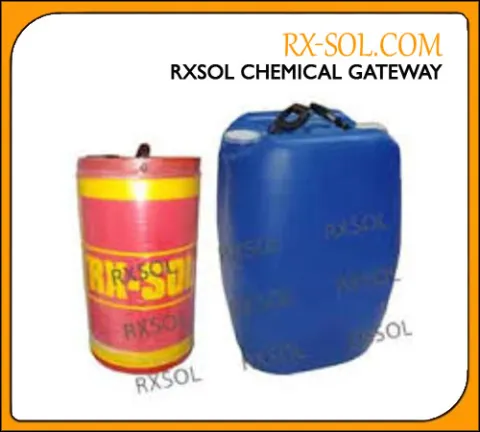
Water Filter, Vessel, Softner, Accessory
Flocculant Cationic Polymer DAF
- Part number
- RXSOL-32-3109-025
- Brand
- RXSOL
Overview
RXSOL Flocculant is a very effective liquid treatment based on Polymer to separate oil residues from bilge water. It is iron-free and is completely safe for the environment.
Technical specifications
Boiling Point |||
| 1 | 120 °C |
|---|
Secific Gravity |||
| 1.15 | 1.25 |
|---|
Applications
International environmental regulations set strict rules as to the oil content in effluent water from ships. To meet these regulations, a combination of mechanical and chemical cleaning is necessary. Rxsol Flocculant is used in combination with multistage bilge water cleaning systems that include mechanical separation of free oil, emulsion breaking, flocculation and filtration. After dosing, Rxsol Flocculant breaks the oil-in-water emulsion created by contaminants in lubricating and fuel oils, emulsifying cleaning agents etc. It then destabilizes the remaining small oil droplets and agglomerates them into larger particles (flocs) that are easily collected by filtering.
Dosage and directions
Dosing method :
Typical dose rate: 100 - 500ppm (0.1 - 0.5 litre/m3 of water)
In a multistage bilge water cleaning system, RXSOL Flocculant is fed undiluted through a dosage pump connected to the pressure side of the oil descaler. The floc tank is fed according to the flow of the bilge water pumped into it.The feed is adjusted in connection with the installation and normally needs no alteration. If required, dosing can also be controlled by measuring the level in the container.
Characteristics and notes
Features & Benefit :
- Cost-effective bilge water treatment based on specially selected Polymer
- Iron-free. Completely safe to the environment
- Acts by both breaking the oil-in-water emulsion and by building flocs
- Remaining oil sludge can be burned onboard or pumped ashore-contains very little water
- Helps to meet environmental regulations on oil content. Discharged water contains normally less than 3 ppm oil
- Low dosage, economical use
- Effective over an extended pH-range. Eliminates the use of pH-stabilising chemicals
Handling and Storage :
Avoid all personal contact, including inhalation. Wear protective clothing when risk of exposure occurs. Use in a well-ventilated area.
Store in original containers. Keep containers securely sealed. Store in a cool, dry, well-ventilated area.
Safety and SDS
Read the safety data sheet before handling. Wear suitable gloves and eye protection.
View safety data sheet
| Product Name | Flocculant (Cationic Polymer) DAF |
| Part Number | RXSOL-32-3109-025 |
Company Details:
RX MARINE INTERNATIONAL
105, A wing , BSEL , TECH PARK.
VASHI ,NEW BOMBAY 400703 INDIA
Stock Point : Mumbai, Fujairah, Chennai, Visakhapatnam, Kolkata, Kandla, Muscat
| Phone | +91 22 27815541 / 42 |
| Fax | +91 22 2781 1318 :::AOH :0091 9821214367 |
| rxsolchemicals@gmail.com | |
| Website | www.rxmarine.com |
| Name of Substance | Cas Number | EC Number | Weight % |
| Polyaluminiumchloride Hydroxide Silicate | 1327-41-9 | 215-477-2 | 30-60 |
| Polydiallyldiemethyl Amoniumchloride | 26062-79-3 | 10-25 | |
| Proprietory Blend of POWDER MIXTURE | -------------- | --------- | 15-40 |
| Signal Word | Irritant |
| Hazard Statements |
H290 May be corrosive to metals. H318 Causes serious eye damage |
| Precautionary statements - prevention |
P280 Wear protective gloves/protective clothing/eye protection/face protection. P234 Keep only in original container. |
| Precautionary statements - response |
P305+P351+P338 IF IN EYES: Rinse cautiously with water for several minutes. Remove contact lenses, if present and easy to do. Continue rinsing. P310 Immediately call a POISON CENTER/doctor/physician/first aider. P390 Absorb spillage to prevent material damage. |
| Eye Contact | Rinse immediately with plenty of water, also under the eyelids, for at least 15 minutes. Obtain medical attention |
| Skin Contact | Wash off immediately with plenty of water for at least 15 minutes. Obtain medical attention. |
| Inhalation: | Move to fresh air. If breathing is difficult, give oxygen. Get medical attention immediately if symptoms occur. |
| Ingestion: | Do not induce vomiting. Obtain medical attention.If vomiting occurs, lean patient forward or place on left side (head-down position, if possible) to maintain open airway and prevent aspiration. |
| Notes to Physician | Treat symptomatically |
| Flammability | Non-flammable. |
| Flash Point | Not applicable. |
| Suitable extinguishing media | No information available |
|
Hazardous combustion products |
Non combustible. |
| Protective Equipment | Use personal protective equipment. |
| Specific Hazards Arising from the Chemical |
Not considered to be a significant fire risk. Acids may react with metals to produce hydrogen, a highly flammable and explosive gas. |
| Small Spillage | Use appropriate tools to put the spilled solid in a convenient waste disposal container. Finish cleaning by spreading water on the contaminated surface and dispose of according to local and regional authority requirements |
| Personal Protection | Advice for non-emergency personnel: Avoid inhalation of dusts. Evacuate the danger area, observe emergency procedures, consult an expert. Advice for emergency responders: Protective equipment see section 8. |
| Enviromental Precaution | Do not let product enter drains. |
|
Methods and materials for containment and cleaning |
Cover drains. Collect, bind, and pump off spills. Observe possible material restrictions (see sections 7 and 10). Take up dry. Dispose of properly. Clean up affected area. Avoid generation of dusts |
| Handling | Do not ingest. Do not breathe dust. Avoid contact with eyes. Wear suitable protective clothing. In case of insufficient ventilation, wear suitable respiratory equipment. If ingested, seek medical advice immediately and show the container or the label. Keep away from incompatibles such as oxidizing agents, acids. |
| Storage |
Keep container tightly closed. Keep container in a cool, well-ventilated area. Do not store above 25°C (77°F). Packing : Only packagings which are approved (e.g. acc. to ADR) may be used. |
| Advice on general occupational hygiene | Advice on safe handling Observe label precautions. Change contaminated clothing. Wash hands after working with substance. |
| Engineering Control | Use process enclosures, local exhaust ventilation, or other engineering controls to keep airborne levels below recommended exposure limits. If user operations generate dust, fume or mist, use ventilation to keep exposure to airborne contaminants below the exposure limit. |
| Personal Protection |
Eye/face Protection : Wear appropriate protective eyeglasses or chemical safety goggles as described by OSHA's eye and face protection regulations in 29 CFR 1910.133 or European Standard EN166. Skin and body protection : Wear appropriate protective gloves and clothing to prevent skin exposure. Respiratory Protection : Follow the OSHA respirator regulations found in 29 CFR 1910.134 or European Standard EN 149. Use a NIOSH/MSHA or European Standard EN 149 approved respirator exposure limits are exceeded or if irritation or other symptoms are experienced. |
| Other Protection Measure | Handle in accordance with good industrial hygiene and safety practice. |
Gloves Suit
| Form | Liquid |
| Colour | Clear |
| Odour | No Information Available |
| Odor Threshold | No Information Available |
| pH | 1 - 2 |
| Freezing Point | -25 °C |
| Boiling Point | 100 - 120 °C / 2534 °F @ 760 mmHg |
| Flash Point | Not Applicable |
| Evaporation Rate | Not Applicable |
| Flammability (solid, gas) | No Data Available |
| Explosive limits | No Data Available |
| Vapour pressure | No Data Available |
| Vapour Density | Not Applicable |
| Relative density Information | 1.10 - 1.30 at 25 °C |
| Partition coefficient | No data available |
| Explosive properties | None |
| Solubility | Soluble in water |
| Recativity | None known, based on information available |
| Stability | Product is stable. |
| Possibility of hazardous reactions | No known hazardous reactions. |
| Conditions to avoid | To avoid thermal decomposition, do not overheat. Incompatible products. Exposure to moist air or water. |
| Incompatible materials | Strong oxidizing agents, Alaklinr materials. |
| Hazardous Polymerization | Hazardous polymerization does not occur. |
| Acute toxicity |
LD50 Oral LD50 Dermal LC50 Inhal. 13000 mg/kg[2] >2000 mg/kg ( Rabbit ) Not listed. |
| Skin corrosion/irritation | Corrosion : None. Mild Erritation |
| Toxic Effects on Humans | Hazardous in case of ingestion, of inhalation. Slightly hazardous in case of skin contact (irritant). |
| Special Remarks on Chronic Effects on Humans | May cause adverse reproductive effects (male and female effects on fertility and effects on newborns and fetotoxicity) based on animal data Human: passes the placental barrier, detected in maternal milk. |
| Special Remarks on other Toxic Effects on Humans: |
Repeated or prolonged exposure to acids may result in the erosion of teeth, inflammatory and ulcerative changes in the mouth and necrosis (rarely) of the jaw. Bronchial irritation, with cough, and frequent attacks of bronchial pneumonia may ensue. Gastrointestinal disturbances may also occur. |
| Eco Toxicity | Not Available |
| COD and BOD 5 | Not Available |
| Products of Biodegradation: | Possibly hazardous short term degradation products are not likely. However, long term degradation products may arise. |
| Mobility in soil | Will likely be mobile in the environment due to its water solubility. |
| Results of PBT and vPvB assessment | PBT/vPvB assessment not available as chemical safety assessment not required/not conducted. |
| Other adverse effects | Discharge into the environment must be avoided. |
| Waste treatment Method | Waste material must be disposed of in accordance with the national and local regulations. Leave chemicals in original containers. No mixing with other waste. Handle uncleaned containers like the product itself |
DOT
| UN Number | UN3264 |
| Proper shipping name | CORROSIVE LIQUID, ACIDIC, INORGANIC, N.O.S. (polyaluminiumchloridehydroxysilicate solution) |
| Hazard Class | 8 |
| Packing group | III |
TDG
| UN Number | UN3264 |
| Proper shipping name | CORROSIVE LIQUID, ACIDIC, INORGANIC, N.O.S. (polyaluminiumchloridehydroxysilicate solution) |
| Hazard Class | 8 |
| Packing group | III |
IATA
| UN Number | UN3264 |
| Proper shipping name | CORROSIVE LIQUID, ACIDIC, INORGANIC, N.O.S. (polyaluminiumchloridehydroxysilicate solution) |
| Hazard Class | 8 |
| Packing group | III |
IMDG/IMO
| UN Number | UN3264 |
| Proper shipping name | CORROSIVE LIQUID, ACIDIC, INORGANIC, N.O.S. (polyaluminiumchloridehydroxysilicate solution) |
| Hazard Class | 8 |
| Packing group | III |
| Fedral and State Regulation | TSCA 8(b) inventory: Water |
| Other Regulation | OSHA: Hazardous by definition of Hazard Communication Standard (29 CFR 1910.1200). |
| WHMIS (Canada) | : Corrosive Liquid |
| DSCL (EEC) |
R34- Causes burns. S24/25- Avoid contact with skin and eyes. S26- In case of contact with eyes, rinse immediately with plenty of water and seek medical advice. S28- After contact with skin, wash immediately with plenty of [***] S37/39- Wear suitable gloves and eye/face protection. S38- In case of insufficient ventilation, wear suitable respiratory equipment. |
| HMIS | |
| Health Hazard | : 3 |
| Fire Hazard | : 0 |
| Reactivity | : 0 |
| Personal Protection | : E |
| Fire : | |
| Health Hazard | : 3 |
| Fire Hazard | : 0 |
| Reactivity | : 0 |
| Specific Hazard | : E |
| Other Information |
The information above is believed to be accurate and represents the best information currently available to us. However, we make no warranty of merchantability or any other warranty, express or implied, with respect to such information, and we assume no liability resulting from its use. Users should make their own investigations to determine the suitability of the information for their particular purposes. In no event shall be liable for any claims, losses, or damages of any third party or for lost profits or any special, indirect, incidental, consequential or exemplary damages, howsoever arising, even if RX Marine International has been advised of the possibility of such damages. DISCLAIMER OF LIABILITY :The information in this SDS was obtained from sources which we believe are reliable. However, the information is provided without any warranty, express or implied, regarding its correctness. The conditions or methods of handling, storage, use or disposal of the product are beyond our control and may be beyond our knowledge. For this and other reasons, we do not assume responsibility and expressly disclaim liability for loss, damage or expense arising out of or in any way connected with the handling, storage, use or disposal of the product. This MSDS was prepared and is to be used only for this product. If the product is used as a component in another product, this MSDS information may not be applicable. |
Availability
Flocculant Cationic Polymer DAF manufacturer and supplier in India, UAE Gulf, Oman, Nairobi Kenya. Flocculant Cationic Polymer DAF available andready stock supplier Fujairah, Abudhabi, Ajman, Dubai, Sharjah, Ruwi, Barka, Sohar, Muscat Oman, Sudan, Yemen