Drilling Fluids & Mud Oil Field chemicals
Vanadium Inhibitor RXSOL ORG 70
- Part number
- RXSOL-81-1770-210
- Brand
- RXSOL
Overview
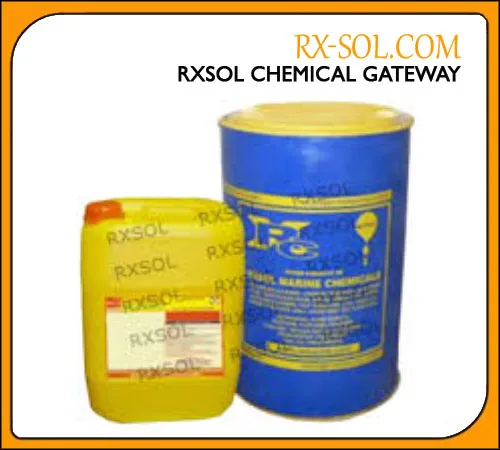
Vanadium Inhibitor is specially designed for gas turbine. It protects the gasturbine from the adverse effect of vanadium. RXSOL Vanadium Inhibitor is a magnesium base with superior performance with water tolerance and asphaltene suspension Crude Oil and Heavy Fuel Oil. It is the newest technology in Vanadium Inhibitor Formulations.
Technical specifications
| Type | ||| |
|---|
20%
| Specification Gravity | ||| |
|---|
1.21
| Flash Point | ||| |
|---|
60 °C
| Pour Point | ||| |
|---|
20°C
| Viscisity | ||| |
|---|
100 Cst (38°C)
| Compatibility with fuel | ||| |
|---|
Totally Miscible
| Hydrolyic Stability | ||| |
|---|
Stable
| Particulate Matter | ||| |
|---|
0.5% , Sediment 99.9%
| Average particle | ||| |
|---|---|
| 4 | nm |
| Capabilities | ||| |
Highly Resistant to hydrolysis
| Water % | ||| |
|---|
Applications
The main application of Vanadium Inhibitor is extensively used in heavy, residual and petroleum crude fuel oil for vanadium.Vanadium Inhibitor is a fuel additive, Which can not only prevent the corrosion of gas turbine blades affected by chemicals reaction ( Vanadium and Sodium compound) at high temperature , but also reduce the scaling and make ash scale lose & removable, so it is used in the heavy oil-fueled equipment like gas turbine and etc heating furnace.
Dosage and directions
High quality, high purity oil soluble vanadium inhibitor containing Magnesium 20% by weight that provides immediate mixing with Crude Oil and Heavy Fuel Oil. Intended to increase the melting point of ashes. Prevents hot corrosion in Gas-turbines and reduces hard deposit build-ups.
Characteristics and notes
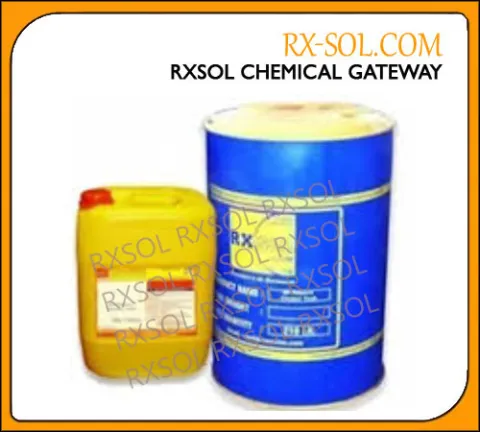
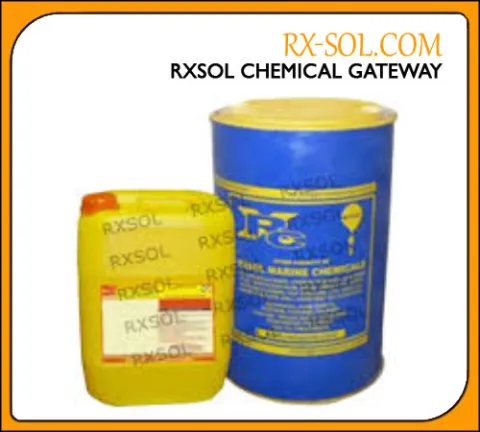
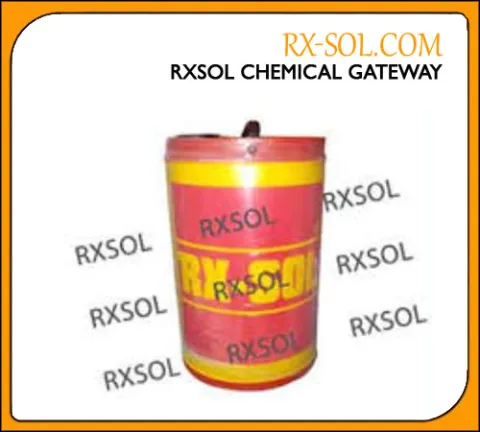
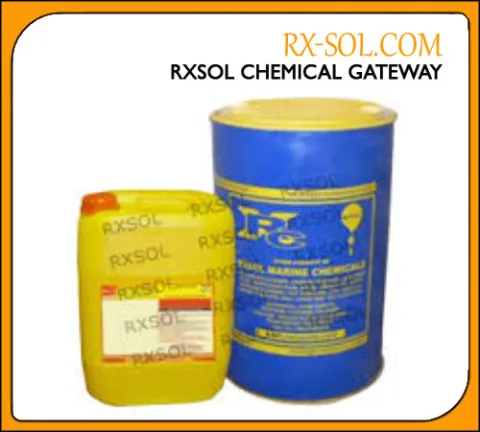
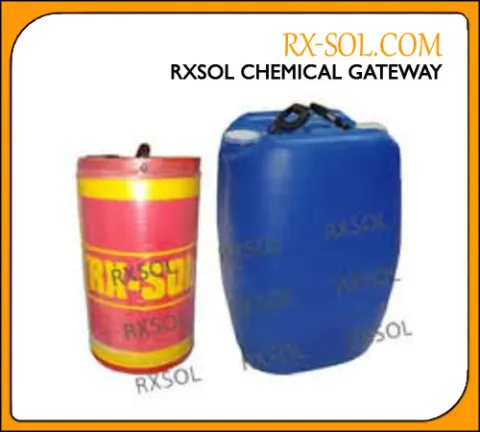
Packing: The product is packed in 250 Kgs Drum
Storage: Please refer to SH/T0164, for transportation, storage and oil blending. Keep the temperature not higher than 60°C. For long-term storage the suggested temperature is lower than 50°C. The dry, clean and ventilating warehouse is recommended.
Safety and SDS
Read the safety data sheet before handling. Wear suitable gloves and eye protection.
View safety data sheet
| Product Name | Vanadium Inhibitor RXSOL ORG 70 |
| Part Number |
RXSOL-81-1770-210 |
Company Details:
RX MARINE INTERNATIONAL
105, A wing , BSEL , TECH PARK.
VASHI ,NEW BOMBAY 400703 INDIA
Stock Point : Mumbai, Gandhidham, Chennai, Visakhapatnam, Kolkata, Fujairah, Muscat, Kenya, Canada
| Phone | +91 22 27815541 / 42 |
| Fax | +91 22 2781 1318 :::AOH :0091 9821214367 |
| rxsolchemicals@gmail.com | |
| Website | www.rxmarine.com |
| Name of Substance | Cas Number | Weight % |
| Fatty Acids, Tall Oil, Magnesium Salts | 67701-23-9 | 40 - < 80 |
| Distillates, Petroleum, Hydrotreated Heavy Naphthenic |
64742-52-5 |
10 - < 20 |
| Solvent Naphtha (petroleum), Heavy Arom | 64742-94-5 | 10 - < 20 |
| Naphthalene | 91-20-3 | 1 - < 3 |
| Signal Word | Warning |
| Hazard Statements | Combustible liquid. May be fatal if swallowed and enters airways. Causes skin irritation. Causes serious eye irritation. Harmful if inhaled. Suspected of causing cancer. Toxic to aquatic life with long lasting effects. |
| Precautionary statements - prevention | Obtain special instructions before use. Do not handle until all safety precautions have been read and understood. Keep away from flames and hot surfaces-No smoking. Avoid breathing vapors. Wash thoroughly after handling. Use only outdoors or in a well-ventilated area. Avoid release to the environment. Wear protective gloves/protective clothing/eye protection/face protection. |
| Precautionary statements -response | If swallowed: Immediately call a poison center/doctor. Do NOT induce vomiting. If on skin: Wash with plenty of water. If inhaled: Remove person to fresh air and keep comfortable for breathing. If in eyes: Rinse cautiously with water for several minutes. Remove contact lenses, if present and easy to do. Continue rinsing. If exposed or concerned: Get medical advice/attention. Call a poison center/doctor if you feel unwell. If skin irritation occurs: Get medical advice/attention. If eye irritation persists: Get medical advice/attention. Take off contaminated clothing and wash before reuse. In case of fire: Use appropriate media to extinguish. Collect spillage.Get medical attention/advice if you feel unwell |
| Skin Contact | Remove contaminated clothing. Wash with plenty of soap and water. If skin irritation occurs: Get medical advice/attention. Wash contaminated clothing before reuse. |
| Eye Contact | Immediately flush eyes with plenty of water for at least 15 minutes. Remove contact lenses, if present and easy to do. Continue rinsing. Get medical attention if irritation develops and persists. |
| Inhalation: | Remove victim to fresh air and keep at rest in a position comfortable for breathing. Oxygen or artificial respiration if needed. Call a POISON CENTER or doctor/physician if you feel unwell. |
| Ingestion | Call a physician or poison control center immediately. Rinse mouth. Do not induce vomiting. If vomiting occurs, keep head low so that stomach content doesn't get into the lungs. |
| Most important symptoms/effects | Aspiration may cause pulmonary edema and pneumonitis. Severe eye irritation. Symptoms may include stinging, tearing, redness, swelling, and blurred vision. Skin irritation. May cause redness and pain. |
| Notes to Physician | Provide general supportive measures and treat symptomatically. Keep victim warm. Keep victim under observation. Symptoms may be delayed. Treat symptomatically |
| Flammability of the Product | Flammable. |
| Suitable extinguishing media | Use water spray, alcohol-resistant foam, dry chemical or carbon dioxide. Cool closed containers exposed to fire with water spray. |
| Unsuitable extinguishing media | Do not use water jet as an extinguisher, as this will spread the fire. |
| Sensitivity to Mechanical Impact | No information available |
| Sensitivity to Static Discharge | No information available |
| Specific Hazards Arising from the Chemical | The product is combustible, and heating may generate vapors which may form explosive vapor/air mixtures. During fire, gases hazardous to health may be formed. |
| Hazardous Combustion Products | Carbon monoxide (CO) Carbon dioxide (CO2) |
| Protective Equipment and Precautions for Firefighters | Self-contained breathing apparatus and full protective clothing must be worn in case of fire.In case of fire and/or explosion do not breathe fumes. Move containers from fire area if you can do so without risk. |
| Further Information | Remove container from danger zone and cool with water. Prevent fire extinguishing water from contaminating surface water or the ground water system. |
|
Personal precautions, protective equipment and emergency procedures |
Keep unnecessary personnel away. Keep people away from and upwind of spill/leak. Eliminate all ignition sources (no smoking, flares, sparks, or flames in immediate area). Wear appropriate protective equipment and clothing during clean-up. Avoid inhalation of vapors and spray mists. Do not touch damaged containers or spilled material unless wearing appropriate protective clothing. Ensure adequate ventilation. Local authorities should be advised if significant spillages cannot be contained. For personal protection, see section 8 of the MSDS. |
|
Methods and materials for containment and cleaning up |
Eliminate all ignition sources (no smoking, flares, sparks, or flames in immediate area). Keep combustibles (wood, paper, oil, etc.) away from spilled material. The product is immiscible with water and will sediment in water systems. Prevent entry into waterways, sewer, basements or confined areas. Large Spills: Stop the flow of material, if this is without risk. Dike the spilled material, where this is possible. Use a non-combustible material like vermiculite, sand or earth to soak up the product and place into a container for later disposal. Following product recovery, flush area with water. Small Spills: Absorb with earth, sand or other non-combustible material and transfer to containers for later disposal. Wipe up with absorbent material (e.g. cloth, fleece). Clean surface thoroughly to remove residual contamination. Never return spills to original containers for re-use. Put material in suitable, covered, labeled containers. For waste disposal, see section 13 of the SDS. |
| Enviromental Precaution |
Avoid release to the environment. Inform appropriate managerial or supervisory personnel of all environmental releases. Prevent further leakage or spillage if safe to do so. Avoid discharge into drains, water courses or onto the ground. |
| Handling | Obtain special instructions before use. Do not handle until all safety precautions have been read and understood. Keep away from open flames, hot surfaces and sources of ignition. When using do not smoke. Avoid inhalation of vapors and spray mists. Avoid contact with eyes, skin, and clothing. Avoid prolonged exposure. Should be handled in closed systems, if possible. Use only outdoors or in a well-ventilated area. Wear appropriate personal protective equipment. Wash hands thoroughly after handling. Avoid release to the environment. Observe good industrial hygiene practices. |
| Storage | Store locked up. Keep away from heat, sparks and open flame. Store in a cool, dry place out of direct sunlight. Store in original tightly closed container. Store in a well-ventilated place. Keep in an area equipped with sprinklers. Store away from incompatible materials (see Section 10 of the MSDS). |
| Hygiene measures | Immediately change contaminated clothing. Apply preventive skin protection. Wash hands and face after working with substance. |
|
Engineering Control |
Good general ventilation (typically 10 air changes per hour) should be used. Ventilation rates should be matched to conditions. If applicable, use process enclosures, local exhaust ventilation, or other engineering controls to maintain airborne levels below recommended exposure limits. If exposure limits have not been established, maintain airborne levels to an acceptable level. Provide eyewash station. Eye wash fountain and emergency showers are recommended. | ||||||||||||||||
| Personal Protection |
Eye/face Protection : Wear appropriate protective eyeglasses or chemical safety goggles as described by OSHA's eye and face protection regulations in 29 CFR 1910.133 or European Standard EN166. Skin and body protection : Wear appropriate protective gloves and clothing to prevent skin exposure. Long sleeved clothing.Flame retardant antistatic protective clothing. Respiratory Protection : Follow the OSHA respirator regulations found in 29 CFR 1910.134 or European Standard EN 149. Use a NIOSH/MSHA or European Standard EN 149 approved respirator if exposure limits are exceeded or if irritation or other symptoms are experienced. |
||||||||||||||||
| Occupational exposure limits |
OSHA Table Z-1 Limits for Air Contaminants (29 CFR 1910.1000)
|
||||||||||||||||
| Biological limit values | No biological exposure limits noted for the ingredient(s). | ||||||||||||||||
| US ACGIH Threshold Limit Values |
Naphthalene (CAS 91-20-3) Can be absorbed through the skin. Solvent Naphtha (petroleum), Heavy Arom.(CAS64742-94-5 ) Can be absorbed through the skin. |
||||||||||||||||
| Hygiene Measures | Observe any medical surveillance requirements. When using do not smoke. Always observe good personal hygiene measures, such as washing after handling the material and before eating, drinking, and/or smoking. Routinely wash work clothing and protective equipment to remove contaminants. |
Gloves Suit
| Form | Liquid |
| Colour | Dark brown |
| Odour | Hydrocarbon-like. |
| Odor Threshold | No Information Available |
| pH | Not Applicable |
| Melting Point | < -40 °F (< -40 °C) |
| Boiling Point | 348.8 °F (176 °C) |
| Flash Point | 150.1 °F (65.6 °C) Pensky-Martens Closed Cup |
| Evaporation Rate | < 1 (Ether =1) |
| Flammability (solid, gas) | Not Applicable |
| Explosive limits Lower / Uper | Not Available |
| Vapour pressure | < 5 mm Hg @ 21°C |
| Vapour Density | > 1 (Air =1) |
| Secific Gravity | 1.42 |
| Decomposition Temperature | No information available |
| Partition coefficient | No data available |
| Autoignition Temperature | No data available |
| Solubility in Water | Not Soluble |
| Viscosity | < 400 cSt @ 60°F |
| Explosive properties | Not explosive. |
| Oxidizing properties | Not oxidizing. |
| Pour point | < -40 °C |
| Recativity Hazard | The product is stable and non-reactive under normal conditions of use, storage and transport. |
| Stability | Product is stable under normal conditions |
| Possibility of hazardous reactions | No known hazardous reactions. |
| Conditions to avoid | Avoid heat, sparks, open flames and other ignition sources. Avoid temperatures exceeding the flash point. Contact with incompatible materials. |
| Incompatible materials | Strong oxidizing agents, Strong acids, Strong reducing agents |
| Hazardous Decomposition Products | No hazardous decomposition products are known. |
| Hazardous Polymerization | Hazardous polymerization does not occur. Hazardous Reactions None under normal processing |
| Acute oral toxicity | May be fatal if swallowed and enters airways. Harmful if inhaled. |
| Acute dermal toxic |
Dermal LD50 Rabbit > 5000 mg/kg |
| Skin corrosion | Drying-out effect resulting in rough and chapped skin. Mixture causes skin irritation. |
| Toxic Effects on Humans |
Acute Potential Health Effects: Skin: Causes skin irritation. Can be absorbed through skin. Eyes: Causes eye irritation. Inhalation: Vapor causes respiratory tract and mucous membrane irritation. Ingestion : Droplets of the product aspirated into the lungs through ingestion or vomiting may cause a serious chemical pneumonia. |
| Special Remarks on Chronic Effects on Humans | Detected in maternal milk in human. Passes through the placental barrier in animal. Embryotoxic and/or foetotoxic in animal. May cause adverse reproductive effects (male and femael fertility (spontaneous abortion and fetotoxicity) and birth defects based animal data. |
|
Further information After absorption: |
Headache, somnolence, Dizziness, euphoria, agitation, spasms, narcosis Effect potentiated by: ethanol Damage to: Kidney, Central nervous system, Liver |
| Ecotoxicity |
Toxic to aquatic life with long lasting effects.
Components Species Test Result |
| COD and BOD 5 | Not Available |
| Products of Biodegradation: | No information available. |
| Mobility in soil | No information available. |
| Results of PBT and vPvB assessment | Substance(s) in the mixture do(es) not meet the criteria for PBT or vPvB according to Regulation (EC) No 1907/2006, Annex XIII, or a PBT/vPvB assessment was not conducted. |
| Other adverse effects | Discharge into the environment must be avoided. |
| Disposal instructions | Collect and reclaim or dispose in sealed containers at licensed waste disposal site. Do not allow this material to drain into sewers/water supplies. Do not contaminate ponds, waterways or ditches with chemical or used container. Dispose of contents/container in accordance with local/regional/national/international regulations. |
| Local disposal regulations : | Dispose in accordance with all applicable regulations. |
| Hazardous waste code : | The waste code should be assigned in discussion between the user, the producer and the waste disposal company. |
| Waste from residues / unused products : |
Dispose of in accordance with local regulations. Empty containers or liners may retain some product residues. This material and its container must be disposed of in a safe manner (see: Disposal instructions). |
| Contaminated packaging : | Since emptied containers may retain product residue, follow label warnings even after container is emptied. Empty containers should be taken to an approved waste handling site for recycling or disposal. |
DOT
| UN Number | NA 1993 |
| Proper shipping name | Combustible liquid, n.o.s. (Distillates, Petroleum, Hydrotreated Heavy Naphthenic and Solvent Naphtha, Heavy Aromatic) |
| Hazard Class | Combustible liq |
| Packing group | III |
IATA
| UN Number | UN3082 |
| Proper shipping name | Environmentally hazardous substance, liquid, n.o.s. |
| Hazard Class | 9 L |
| Packing group | III |
IMDG/IMO
| UN Number | 3082 |
| Proper shipping name | ENVIRONMENTALLY HAZARDOUS SUBSTANCE, LIQUID, N.O.S., MARINE POLLUTANT |
| Hazard Class | 9 |
| Packing group | III |
| Special precautions for user - |
Read safety instructions, SDS and emergency procedures before handling. |
| Transport Annex II of MARPOL 73/78 and the IBC Code : |
Not established. |
| Fedral and State Regulation | This product is a "Hazardous Chemical" as defined by the OSHA Hazard Communication Standard, 29 CFR 1910.1200. |
| Other Regulation | OSHA Specifically Regulated Substances (29 CFR 1910.1001-1050) : Not regulated. |
| SARA 302 | Not Listed |
| SARA 313 | Not Listed |
| HMIS | |
| Health Hazard | : 3 |
| Fire Hazard | : 3 |
| Reactivity | : 0 |
| Personal Protection | : H |
| Fire : | |
| Health Hazard | : 3 |
| Fire Hazard | : 3 |
| Reactivity | : 0 |
| Specific Hazard | : .. |
| Other Information |
The information above is believed to be accurate and represents the best information currently available to us. However, we make no warranty of merchantability or any other warranty, express or implied, with respect to such information, and we assume no liability resulting from its use. Users should make their own investigations to determine the suitability of the information for their particular purposes. In no event shall be liable for any claims, losses, or damages of any third party or for lost profits or any special, indirect, incidental, consequential or exemplary damages, howsoever arising, even if Rx Marine International has been advised of the possibility of such damages. DISCLAIMER OF LIABILITY :The information in this SDS was obtained from sources which we believe are reliable. However, the information is provided without any warranty, express or implied, regarding its correctness. The conditions or methods of handling, storage, use or disposal of the product are beyond our control and may be beyond our knowledge. For this and other reasons, we do not assume responsibility and expressly disclaim liability for loss, damage or expense arising out of or in any way connected with the handling, storage, use or disposal of the product. This MSDS was prepared and is to be used only for this product. If the product is used as a component in another product, this MSDS information may not be applicable. |
Availability
Vanadium Inhibitor manufacturer and supplier in Mumbai, MIDC, Gandhidham, Kolkata, Kandla, Visakhapatnam, Chennai, Fujairah, Sharjah, Dubai, Ajman, Oman, Muscat, Abudhabi, Kennya, Uganda, Canada, Sudan, Yemen, Iraq