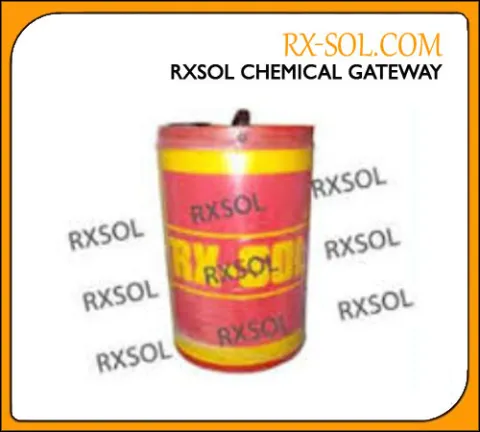
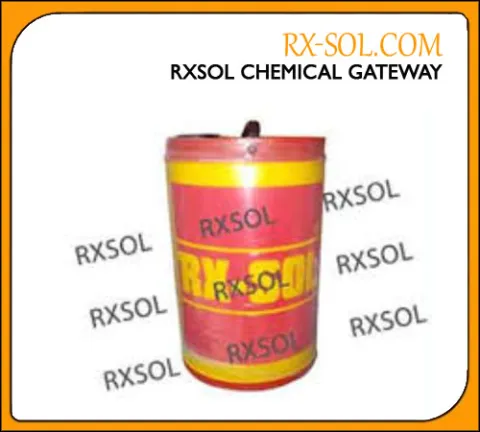
BALLAST TANK INHIBITOR
- Part number
- RXSOL-23-2901-025
- Category
- Ballast Tank Chem
- Brand
- RXSOL

Overview
A POWERFULL corrosive preventive to prevent corrosion from seawater in ship BALLAST TANK. It contains organic and inorganic inhibitors with Zinc.
Technical specifications
Technical Data
|
Form |
Liquid |
| Colour | Clear to Light Amber |
| Density | 1.38 |
| pH | <1.0 |
| Freezing Point | -45°C |
| Compatibility Materials | N, Hypalon, Neoprene, Polyethylene, Polypropylene, Polyurethane, PVC, Teflon, Vinyl, Viton. |
| Not compatible | Aluminium, Brass, Carbon Steel, Nickel, Stainless Steel 304/316, Plasite 4005/6000 and 7122 |
| Water solubility | Soluble |
Applications
Corroision Inhibitor for METAL Ballast Tank resulting film formation and provide Zinc ppm level inside the Ballast Tank. It contains no chromates and is completely soluble in sea water. Corrosion Inhibitor for Ballast Tank.
Key Features of Ballast Tank Corrosion Inhibitor
- Provides long-term protection against rust and corrosion.
- Suitable for both seawater and freshwater ballast systems.
- Prevents scale formation and bacterial corrosion.
- Compatible with most water treatment and coating systems.
Dosage and directions
Directions for use :
Corroision Inhibitor for METALis best fed neat from the drum continuously to the water used to fill the tank or system. Strict proportioning is not required, so long as the turbulence on filling is sufficient to provide effective distribution throughout the system. Where the system to be treated is already full and draining and refilling is impractical, distribution of the Ballast Tank. Corroision Inhibitor for METAL in an open vessel can be achieved by air-agitation or pump circulation. Ballast Tank.Corroision Inhibitor for METAL is recommended for systems in which dissolved oxygen is present and the use of air to encourage mixing will not impair corrosion protection.
Dosing an Control :
The recommended initial dosage of Ballast Tank Inhibitor 9-933 is 100mls.ton of water. This will provide 2 to 4ppm zinc in the water system. For Ballast tanks or systems which are frequently emptied and refilled, the initial charge of 100ml per ton of water should be supplemented by a dosage of 50ml per ton each time the system is refilled.
Characteristics and notes
RXSOL-23-2901-025 is film-forming corrosion inhibitor. RXSOL-23-2901-025 is useful for Ballast Tanks, Bilges, Voids, Cofferdams and Barges.
Features & Benefits :
- Effective for use in ballast tanks, cofferdams, barges and voids
- Forms tightly bonded protective film on all metal surfaces below water level
- Protective film is stable over a wide pH and temperature range
- Formulated to give reduced pollution problems if accidentally discharged to sea
- Ideally suited for ballast and other tank protection during ship lay-up periods
Safety and SDS
Read the safety data sheet before handling. Wear suitable gloves and eye protection.
View safety data sheet
| Product Name | : Corroision Inhibitor for METAL |
| Part Number | : RXSOL-23-2901-025 |
Company Details:
RX MARINE INTERNATIONAL
105, A wing , BSEL , TECH PARK.
VASHI ,NEW BOMBAY 400703 INDIA
Branch : Kandla, Mumbai, Chennai, Vizag, Kolkata, UAE, & Oman
| Phone | +91 22 20871200 - 1500 |
| Fax | +91 22 27612100 :::AOH :0091 9821214367 |
| rxsolchemicals@gmail.com | |
| Website | www.rxmarine.com |
| Name of Substance | Cas Number | EINECS No | Wt.% | Symbol |
| Phosphoric acid | 7664-38-2 | 231-633-2 | 10 -30 % | C |
| 2-phosphonobutane-1,2,4-tricarboxylic acid | 37971-36-1 | 2653-733-5 | 10 - 30% | Xn |
| zinc chloride | 7646-85-7 | 231-592-0 | 10 - 30% | Xi |
| Signal Word | Danger |
| Hazard Statements |
|
| Precautionary statements - prevention |
P101 If medical advice is needed, have product container or label at hand. P102 Keep out of reach of children. P103 Read label before use. P260 Do not breathe dust/fume/gas/mist/vapours/spray. P271 Use only outdoors or in a well-ventilated area. P280 Wear protective gloves/protective clothing/eye protection/face protection. P270 Do not eat, drink or smoke when using this product. P273 Avoid release to the environment. |
| Precautionary statements - response |
P301+P330+P331 IF SWALLOWED: Rinse mouth. Do NOT induce vomiting. P303+P361+P353 IF ON SKIN (or hair): Take off immediately all contaminated clothing. Rinse skin with water/shower. P305+P351+P338IF IN EYES: Rinse cautiously with water for several minutes. Remove contact lenses, if present and easy to do. Continue rinsing. P310 Immediately call a POISON CENTER/doctor/physician/first aider. P363 Wash contaminated clothing before reuse. P391 Collect spillage. P301+P312 IF SWALLOWED: Call a POISON CENTER/doctor/physician/first aider/if you feel unwell. P304+P340 IF INHALED: Remove person to fresh air and keep comfortable for breathing.Storage: Store locked up. Disposal: P501 Dispose of contents/container in accordance with local regulations. |
| Eye Contact |
Immediately hold eyelids apart and flush the eye continuously with running water.Ensure complete irrigation of the eye by keeping eyelids apart and away from eye and moving the eyelids by occasionally lifting the upper and lower lids. Continue flushing until advised to stop by the Poisons Information Centre or a doctor, or for at least 15 minutes. Transport to hospital or doctor without delay. Removal of contact lenses after an eye injury should only be undertaken by skilled personnel. |
| Skin Contact | Immediately flush body and clothes with large amounts of water, using safety shower if available.Quickly remove all contaminated clothing, including footwear. ash skin and hair with running water. Continue flushing with water until advised to stop by the Poisons Information Cntre.Transport to hospital, or doctor. |
| Inhalation: |
Lay patient down. Keep warm and rested.Prostheses such as false teeth, which may block airway, should be removed, where possible, prior to initiating first aid procedures. Apply artificial respiration if not breathing, preferably with a demand valve resuscitator, bag-valve mask device, or pocket mask as trained. Perform CPR if necessary. Transport to hospital, or doctor, without delay. Inhalation of vapours or aerosols (mists, fumes) may cause lung oedema. Corrosive substances may cause lung damage (e.g. lung oedema, fluid in the lungs). As this reaction may be delayed up to 24 hours after exposure, affected individuals need complete rest (preferably in semi-recumbent posture) and must be kept under medical observation even if no symptoms are (yet) manifested. Before any such manifestation, the administration of a spray containing a dexamethasone derivative or beclomethasone derivative may be considered. |
| Ingestion: | For advice, contact a Poisons Information Centre or a doctor at once. Urgent hospital treatment is likely to be needed. If swallowed do NOT induce vomiting. If vomiting occurs, lean patient forward or place on left side (head-down position, if possible) to maintain open airway and prevent aspiration. Observe the patient carefully. Never give liquid to a person showing signs of being sleepy or with reduced awareness; i.e. becoming unconscious. Give water to rinse out mouth, then provide liquid slowly and as much as casualty can comfortably drink. Transport to hospital or doctor without delay. |
| Notes to Physicians | Treat symptomatically. |
| Suitable extinguishing media |
Water spray or fog. Foam. Dry chemical powder. |
| Protective Equipment | Use personal protective equipment. |
| Hazardous combustionproducts | Avoid contamination with oxidising agents i.e. nitrates, oxidising acids, chlorine bleaches, pool chlorine etc. as ignition may result |
| Advice for firefighters |
Alert Fire Brigade and tell them location and nature of hazard. Wear full body protective clothing with breathing apparatus. Prevent, by any means available, spillage from entering drains or water course. |
| Fire/Explosion Hazard |
Combustible. Slight fire hazard when exposed to heat or flame. Acids may react with metals to produce hydrogen, a highly flammable and explosive gas. Combustion products include: amp;43cw carbon dioxide (CO2)phosphorus oxides (POx) other pyrolysis products typical of burning organic material. |
| Personal precautions, protective equipment and emergency procedures |
Ensure adequate ventilation. Keep people away from and upwind of spill/leak. Avoid inhalation, ingestion and contact with skin and eyes. Wear suitable personal protective equipment.Respiratory protective equipment. |
| Enviromental Precaution | Do not allow contact with soil, surface or ground water.If the products get into drains, inform the relevant authorities immediately. |
|
Methods and materials for containment and cleaning up |
Minor Spill : Drains for storage or use areas should have retention basins for pH adjustments and dilution of spills before discharge or disposal of material. Check regularly for spills and leaks. Clean up all spills immediately. Avoid breathing vapours and contact with skin and eyes. Control personal contact with the substance, by using protective equipment. Mazor Spill : Clear area of personnel and move upwind. Alert Fire Brigade and tell them location and nature of hazard. Wear full body protective clothing with breathing apparatus. |
| Advice on safe handling |
Avoid all personal contact, including inhalation. Wear protective clothing when risk of exposure occurs. Use in a well-ventilated area. |
| Storage |
Store in original containers.
DO NOT use aluminium or galvanised containers |
| Storage incompatibility |
Reacts with mild steel, galvanised steel / zinc producing hydrogen gas which may form an explosive mixture with air. Avoid strong bases. Segregate from alkalies, oxidising agents and chemicals readily decomposed by acids, i.e. cyanides, sulfides, carbonates. |
| Advice on general occupational hygiene | Wash hands after use. Do not to eat, drink and smoke in work areas. Remove contaminated clothing and protective equipment before entering eating areas. |
| Engineering Control | Engineering controls are used to remove a hazard or place a barrier between the worker and the hazard. Well-designed engineering controls can be highly effective in protecting workers and will typically be independent of worker interactions to provide this high level of protection. The basic types of engineering controls are: Process controls which involve changing the way a job activity or process is done to reduce the risk. | ||||||||||||||||||||||||||||||
| Personal Protection |
Eye & Face protection : Safety glasses with unperforated side shields may be used where continuous eye protection is desirable, as in laboratories; spectacles are not sufficient where complete eye protection is needed such as when handling bulk-quantities, where there is a danger of splashing, or if the material may be under pressure. Chemical goggles.whenever there is a danger of the material coming in contact with the eyes; goggles must be properly fitted. Full face shield (20 cm, 8 in minimum) may be required for supplementary but never for primary protection of eyes; these afford face protection. Hand protection : Wear the following personal protective equipment: Standard glove type. Gloves should be discarded and replaced if there is any indication of degradation or chemical breakthrough. Skin protection : Personal protective equipment comprising: suitable protective gloves, safety goggles and protective clothing Respiratory protection :When workers are facing concentrations above the exposure limit they must use appropriate certified respirators. |
||||||||||||||||||||||||||||||
|
Exposure Limits: |
|
||||||||||||||||||||||||||||||
| Hygiene measures | Handle in accordance with good industrial hygiene and safety practice. Remove and wash contaminated clothing before re-use. Wash face, hands and any exposed skin thoroughly after handling. Provide suitable facilities for quick drenching or flushing of the eyes and body in case of contact or splash hazard. |
Gloves Suit
| Appearance | Colourless to yellow, miscible with water |
| Physical state | Liquid |
| Odour | Not Available |
| Odour threshold | Not Available |
| Boiling point and boiling range | 100°C |
| Flash Point | No Data Available |
| Freezing Point | No Data Available |
| pH | 1-2 |
| Evaporation rate | No data available |
| Flammability (solid, gas) | No data available |
| Upper explosion limit | No data available |
| Lower explosion limit | No data available |
| Explosive properties | No data available |
| Vapor pressure | No data available |
| Relative vapor density | No data available |
| Relative density | 1.32 - 1.38 |
| Water solubility | Soluble |
| Solubility in other solvents | No data available |
| Partition coefficient: octanol | No data available |
| Autoignition temperature | No data available |
| Thermal decomposition | No data available |
| Viscosity, kinematic | No data available |
| Explosive properties | No data available |
| Oxidizing properties | No data available |
| Molecular weight | No data available |
| VOC | No data available |
| Recativity | None |
| Stability | Stable under normal conditions. |
| Possibility of hazardous reactions | No dangerous reaction known under conditions of normal use. |
| Incompatible materials | See Section 7 |
| Hazardous Decomposition |
carbon dioxide (CO2) |
| Condition to Avoid | Strong Alkaline material and Oxidizing Material |
| Polymerization | Will not occur. |
| Route of Exposure | Inhalation, Eye contact, Skin contact |
| Eyes |
Direct eye contact with acid corrosives may produce pain, tears, sensitivity to light and burns. Mild burns of the epithelia generally recover rapidly and completely. |
| Skin |
Skin contact with acidic corrosives may result in pain and burns; these may be deep with distinct edges and may heal slowly with the formation of scar tissue. Skin contact is not thought to produce harmful health effects (as classified under EC Directives using animal models). Systemic harm, however, has been identified following exposure of animals by at least one other route and the material may still produce health damage following entry through wounds, lesions or abrasions. Open cuts, abraded or irritated skin should not be exposed to this material Entry into the blood-stream, through, for example, cuts, abrasions or lesions, may produce systemic injury with harmful effects. Examine the skin prior to the use of the material and ensure that any external damage is suitably protected. |
| Ingestion | Accidental ingestion of the material may be harmful; animal experiments indicate that ingestion of less than 150 gram may be fatal or may produce serious damage to the health of the individual. Ingestion of acidic corrosives may produce burns around and in the mouth, the throat and oesophagus. Immediate pain and difficulties in swallowing and speaking may also be evident. |
| Inhalation | The material can cause respiratory irritation in some persons. The body's response to such irritation can cause further lung damage. Corrosive acids can cause irritation of the respiratory tract, with coughing, choking and mucous membrane damage. There may be dizziness, headache, nausea and weakness. |
| Chronic Exposure | Repeated or prolonged exposure to acids may result in the erosion of teeth, swelling and/or ulceration of mouth lining. Irritation of airways to lung, with cough, and inflammation of lung tissue often occurs. Long-term exposure to respiratory irritants may result in disease of the airways involving difficult breathing and related systemic problems. Substance accumulation, in the human body, may occur and may cause some concern following repeated or long-term occupational exposure. |
| Acute oral toxicity | No data available |
| Acute inhalation toxicity | No data available |
| Acute dermal toxicity | No data available |
| Classification | The classification was made by the conventional (calculation) method of Dangerous Preparations Directive(1999/45/EC) |
| Toxicity |
Toxic to aquatic organisms, may cause long-term adverse effects in the aquatic environment. Do NOT allow product to come in contact with surface waters or to intertidal areas below the mean high water mark. Do not contaminate water when cleaning equipment or disposing of equipment wash-waters. Wastes resulting from use of the product must be disposed of on site or at approved waste sites. |
||||||||||||||||||||||||||||||||||||||||||||||||||||||||||||||||||||||||||||||
| Ecotoxicity | The tolerance of water organisms towards pH margin and variation is diverse. Recommended pH values for test species listed in OECD guidelines are between 6.0 and almost 9. Acute testing with fish showed 96h-LC50 at about pH 3.5 Prevent, by any means available, spillage from entering drains or water courses. | ||||||||||||||||||||||||||||||||||||||||||||||||||||||||||||||||||||||||||||||
| Toxicity to daphnia and others | No data available | ||||||||||||||||||||||||||||||||||||||||||||||||||||||||||||||||||||||||||||||
| Toxicity to algae | No data available | ||||||||||||||||||||||||||||||||||||||||||||||||||||||||||||||||||||||||||||||
| Biodegradability | Medium | ||||||||||||||||||||||||||||||||||||||||||||||||||||||||||||||||||||||||||||||
| Persistence and degradability | No data available | ||||||||||||||||||||||||||||||||||||||||||||||||||||||||||||||||||||||||||||||
| Bioaccumulative potential |
phosphoric acid ... %, orthophosphoric acid ...% LOW (LogKOW = -0.7699) 2-phosphonobutane- 1,2,4-tricarboxylic acid LOW (LogKOW = -1.359) zinc chloride HIGH (BCF = 16000) |
||||||||||||||||||||||||||||||||||||||||||||||||||||||||||||||||||||||||||||||
| Mobility in soil |
phosphoric acid ... %, orthophosphoric acid ...HIGH (KOC = 1) 2-phosphonobutane-1,2,4-tricarboxylic acid LOW (KOC = 846) zinc chloride LOW (KOC = 23.74) |
| Remarks | Please consider the relevant national or regional provisions. Waste shall be separated into the categories that can be handled separately by the local or national waste management facilities. |
| Waste Disposal | The product should not be allowed to enter drains, water courses or the soil. Where possible recycling is preferred to disposal or incineration. If recycling is not practicable, dispose of in compliance with local regulations. Dispose of wastes in an approved waste disposal facility |
Hazard Pictograms:
| UN Number | UN3264 |
| Proper shipping name | CORROSIVE LIQUID, ACIDIC, INORGANIC, N.O.S. (Zink Chloride, phosphoric acid mixture) |
| Transport hazard class(es) | |
| ADR/RID | 8 |
| Subsidiary risk IMDG | 8 |
| Subsidiary risk IATA | 8 |
| Packing group | |
| Packing group | III |
| Environmental hazards | |
| Environmental hazards | No |
| Marine pollutant | No |
| ADR/RID | |
| Hazard ID | 80 |
| Tunnel Category | (E) |
| IMDG | |
| EmS Code | F-A S-B |
| IATA | |
| Packing Instruction (Cargo) | 856 |
| Maximum quantity | 60 L |
| Packing Instruction (Passenger) | 852 |
| Maximum quantity | 5 L |
| Regulations | This safety data sheet is in compliance with the following EU legislation and its adaptations - as far as applicable - : 98/24/EC, 92/85/EC, 94/33/EC, 91/689/EEC, 1999/13/EC, Commission Regulation (EU) 2015/830, Regulation (EC) No 1272/2008 and their amendments |
| Chemical safety assessment |
For further information please look at the Chemical Safety Assessment and Exposure Scenarios prepared by your Supply Chain if available.
National Inventory Status |
| Further information |
FOR INDUSTRIAL USE. Water Hazard Class:. WGK 1. PR Number - 1821143. Product Declaration Number - P-14188 (Norwegian). |
| Other Information |
The information above is believed to be accurate and represents the best information currently available to us. However, we make no warranty of merchantability or any other warranty, express or implied, with respect to such information, and we assume no liability resulting from its use. Users should make their own investigations to determine the suitability of the information for their particular purposes. In no event shall be liable for any claims, losses, or damages of any third party or for lost profits or any special, indirect, incidental, consequential or exemplary damages, howsoever arising, even if Rx Marine International has been advised of the possibility of such damages. DISCLAIMER OF LIABILITY :The information in this SDS was obtained from sources which we believe are reliable. However, the information is provided without any warranty, express or implied, regarding its correctness. The conditions or methods of handling, storage, use or disposal of the product are beyond our control and may be beyond our knowledge. For this and other reasons, we do not assume responsibility and expressly disclaim liability for loss, damage or expense arising out of or in any way connected with the handling, storage, use or disposal of the product. This MSDS was prepared and is to be used only for this product. If the product is used as a component in another product, this MSDS information may not be applicable. |
Availability
Corroision Inhibitor for Ballast Tank Exporter, manufacturer and supplier in Mumbai, Gandhiddham, Chennai, Visakhapatnam, Kolkata, Fujairah, Oman, Ajmna, Dubai, Sharjah, Abudhabi, Muscat Sohar