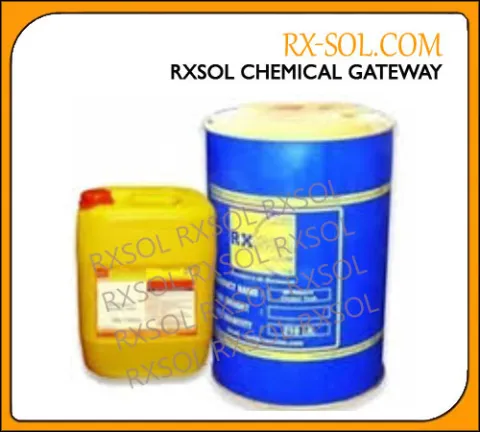
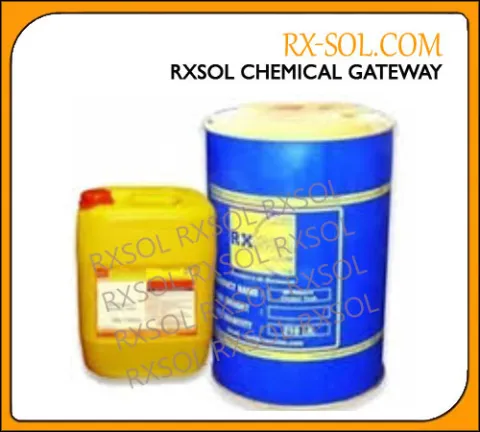
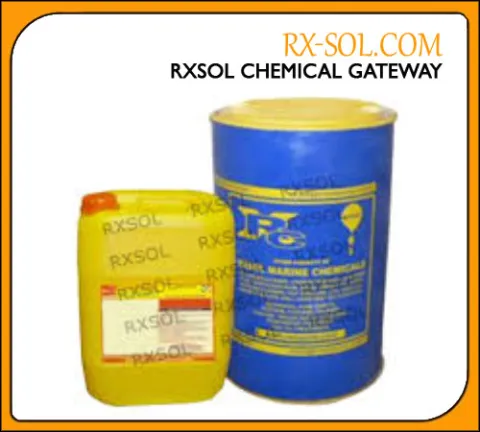
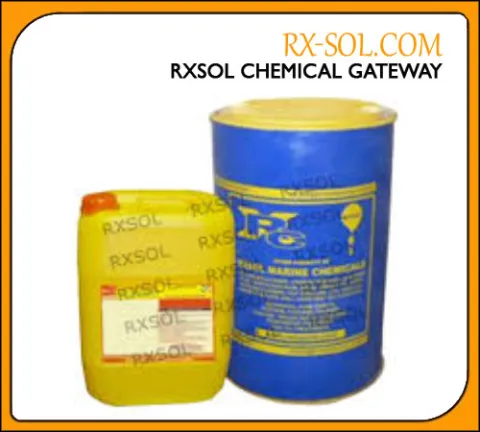
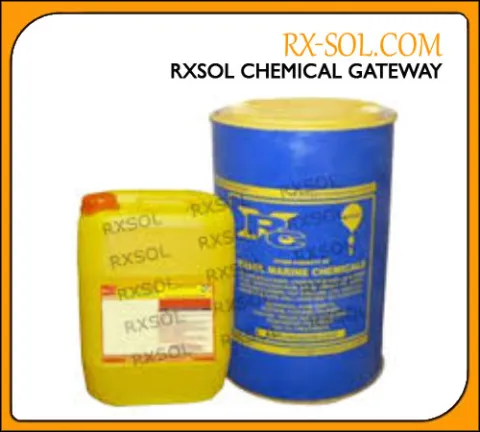
DOWANOL DPM / RXSOL D-SOLV DPM
- Part number
- RXSOL-19-1162-050
- Category
- Solvent Chemicals
- Brand
- RXSOL
Overview
RXSOL D-SOLV DPM glycol ether is a mid-to slow evaporating solvent. This hydrophilic solvent has 100% water solubility and is ideally suited as a coupling agent in a wide range of solvent systems. RXSOL D-SOLV DPM glycol ether has a higher flash point which making it easier to handle, store, and ship. Often incorporated into latex emulsion coatings RXSOL D-SOLV DPM glycol ether can be used to prevent shocking (coagulation of emulsion) when hydrophobic solvents are used. More broadly, its hydrophilic nature makes it an ideal coupling aid in water reducible coatings, and cleaning applications. RXSOL D-SOLV DPM glycol ether’s intermediate evaporation rate allow it to be used in a potentially wider range of systems than many other solvents.
Technical specifications
| PRODUCT NAME | : | DOWANOLDPM |
| CAS number | : | 34590-94-8 |
| UN number | : | |
| Formula | : | CH3OC3H6OC3H6OH |
| Odour | : | |
| Solubility in water | : | COMPLETE |
| Density | : | 0.950 at 25oC |
| Boiling point | : | 189 oC |
| Melting point | : | -80 oC |
| Viscosity | : | 3.5 cp at 25 oC |
| Flashpoint | : | 85 oC |
| Explosive limits | : | |
| Vapour pressure | : | 0.4 mbar at 20 oC |
| Skin absorption/irritation | : | YES |
| TLV Country NL YEAR 1995 | : | 50 ppm 300 mg/m3 |
| Pollution category 1994 | : | D |
Applications
- Coupling agent (often in blends) for water-based dilutable coatings.
- Active solvent for solvent-based coatings.
- Coupling agent and solvent in household and industrial cleaners, grease and paint removers, metal cleaners, and hard surface cleaners.
- Tail solvent for solvent-based gravure and flexographic printing inks.
- Primary solvent in solvent-based silk screen printing inks.
- Coupling agent in solvent blends for water-based gravure, flexographic, and silk screen printing inks.
- Coupling agent and solvent for vat dyeing fabrics.
- Mutual solvent, coupling agent, and emollient in cosmetic formulations.
- Stabilizer for agricultural herbicides.
- Coalescent for floor polishes and finishes
Characteristics and notes
Features
- Powerful solvency
- Moderate evaporation rate
- Low viscosity
- High dilution ratio
- Low surface tension
- Coupling ability
- Wide range of applications
Safety and SDS
Read the safety data sheet before handling. Wear suitable gloves and eye protection.
View safety data sheet
| Part Number | RXSOL-16-1162-210 |
| Product Name | DOWANOL DPM / RXSOL D-SOLV DPM |
Company Details:
RX MARINE INTERNATIONAL
105, A wing , BSEL , TECH PARK.
VASHI ,NEW BOMBAY 400703 INDIA
| Phone | +91 22 65113333 / 5555 / 9999 / 27611360 |
| Fax | +91 22 2781 1318 :::AOH :0091 9821214367 |
| rxsolchemicals@gmail.com |
|
Chemical Name |
Concentration |
CAS Number |
EC Number |
R Phrases* |
Symbols |
| Dipropylene glycol monomethyl ether | 100% | 34590-94-8 |
*See Section 16
|
Odour |
Solvent odour. |
|
Appearance |
Clear Liquid, soluble in water and Solvents |
|
Contact with eyes |
May cause slight temporary eye irritation. Corneal injury is unlikely. |
|
Contact with skin |
Prolonged exposure not likely to cause significant skin irritation.Prolonged skin contact with very large amounts may cause dizziness or drowsiness. |
|
Inhalation |
Excessive exposure may cause irritation to upper respiratory tract (nose and throat). Symptoms of excessive exposure may be anesthetic or narcotic effects; dizziness and drowsiness. |
|
Ingestion |
Very low toxicity if swallowed. Small amounts swallowed incidentally as a result of normal handling operations are not likely to cause injury; however, swallowing larger amounts may cause injury. |
|
Contact with skin |
Remove contaminated clothing immediately and drench affected skin with plenty of water. Then wash with soap and water.Seek medical attention if irritation persists |
|
Contact with eyes |
If substance has got into eyes, immediately wash out with plenty of water for at least 15 minutes Irrigate eyes thoroughly whilst lifting eyelids When in doubt or symptoms persist, seek medical attention |
|
Ingestion |
Do not induce vomiting Never give anything by mouth to an unconscious person Give water or milk to drink |
|
Inhalation |
Move person to fresh air. If not breathing, give artificial respiration; if by mouth to mouth use rescuer protection (pocket mask, etc). If breathing is difficult, oxygen should be administered by qualified personnel. Call a physician or transport to a medical facility. |
|
General |
When in doubt or symptoms persist, seek medical attention.Use good personal hygiene practices |
Extinguishing Media: Water fog or fine spray. Dry chemical fire extinguishers. Carbon dioxide fire extinguishers. Foam. Alcohol resistant foams (ATC type) are preferred. General purpose synthetic foams (including AFFF) or protein foams may function, but will be less effective.
Fire Fighting Procedures: Keep people away. Isolate fire and deny unnecessary entry. Use water spray to cool fire exposed containers and fire affected zone until fire is out and danger of reignition has passed. Fight fire from protected location or safe distance. Consider the use of unmanned hose holders or monitor nozzles. Immediately withdraw all personnel from the area in case of rising sound from venting safety device or discoloration of the container. Burning liquids may be extinguished by dilution with water. Do not use direct water stream. May spread fire. Move container from fire area if this is possible without hazard. Burning liquids may be moved by flushing with water to protect personnel and minimize property damage.
Special Protective Equipment for Firefighters: Wear positive-pressure self-contained breathing apparatus (SCBA) and protective fire fighting clothing (includes fire fighting helmet, coat, trousers, boots, and gloves). Avoid contact with this material during fire fighting operations. If contact is likely, change to full chemical resistant fire fighting clothing with self-contained breathing apparatus. If this is not available, wear full chemical resistant clothing with self-contained breathing apparatus and fight fire from a remote location. For protective equipment in post-fire or non-fire clean-up situations, refer to the relevant sections.
Unusual Fire and Explosion Hazards: Container may rupture from gas generation in a fire situation.Violent steam generation or eruption may occur upon application of direct water stream to hot liquids.
|
Personal Precautions |
Wear protective clothing as per section 8. |
|
Environmental Precautions |
Do not flush spilt material into any public water system. |
|
Immediate Actions |
Use appropriate containment to avoid environmental contamination (S57). |
|
Clean Up Actions |
Absorb spillage in inert material and shovel up Ventilate the area and wash spill site after material pick-up is complete. |
|
Handling |
General Handling: Avoid breathing vapor. Use with adequate ventilation. Keep container closed. Other Precautions: Containers, even those that have been emptied, can contain vapors. Do not cut,drill, grind, weld, or perform similar operations on or near empty containers. Spills of these organic materials on hot fibrous insulations may lead to lowering of the autoignition temperatures possibly resulting in spontaneous combustion. |
|
Storage |
Store in the following material(s): Carbon steel. Stainless steel. Phenolic lined steel drums. Do notstore in: Aluminum. Copper. Galvanized iron. Galvanized steel. information. Storage Period:, Shelf life: Use within, Bulk 6 Months Steel drums. 24 Months |
|
Exposure Limits |
No exposure limits have been set for this substance. |
|
Exposure controls |
No special ventilation is required unless the product is used in a spray form. |
|
Occupational exposure controls |
Wear goggles giving complete eye protection Wear plastic or rubber gloves Wear apron No respiratory protection is required unless subject to contact with substance mist |
Goggles Gloves Suit Respirator
|
Odour |
Mild |
|
Appearance |
Liquid, Colourless |
|
Flash Point - Closed Cup |
75 °C (167 °F) Setaflash Closed Cup ASTMD3278 |
|
Boiling point |
190 °C (374 °F) |
|
Vapour pressure |
0.41 mmHg @ 25 °C |
|
Vapour density |
5.11 @ 20 °C |
|
Freezing point |
-82.8 °C (-117.0 °F) |
|
Completely soluble in water |
|
|
Specific gravity (water=1) |
0.951 25 °C/25 °C |
|
Flammable Limit |
Lower: 1.1 %(V) Upper: 14 %(V) |
Stability/Instability:Stable under recommended storage conditions. See Storage, Section 7.
Conditions to Avoid: Do not distill to dryness. Product can oxidize at elevated temperatures.Generation of gas during decomposition can cause pressure in closed systems.
Incompatible Materials: Avoid contact with: Strong acids. Strong bases. Strong oxidizers.
Hazardous Polymerization :Will not occur.
Thermal Decomposition
Decomposition products depend upon temperature, air supply and the presence of other materials.
Decomposition products can include and are not limited to: Aldehydes. Ketones. Organic acids.
Ingestion
LD50, Rat 5,135 mg/kg
Skin Absorption
LD50, Rabbit > 20 ml/kg
Inhalation
LC50, 7 h, Aerosol, Rat > 500 ppm
Sensitization
Skin
Did not cause allergic skin reactions when tested in humans.
Repeated Dose Toxicity
In animals, effects have been reported on the following organs: Kidney. Symptoms of excessive exposure may be anesthetic or narcotic effects; dizziness and drowsiness may be observed.
Developmental Toxicity
Did not cause birth defects or any other fetal effects in laboratory animals.
Genetic Toxicology
In vitro genetic toxicity studies were negative.
CHEMICAL FATE
Data for Component: Dipropylene glycol monomethyl ether
Movement & Partitioning
Bio - concentration potential is low (BCF less than 100 or log Pow less than 3). Potential for mobility in soil is very high (Koc between 0 and 50). Given its very low Henry's constant, volatilization from natural bodies of water or moist soil is not expected to be an important fate
process.
Henry's Law Constant (H): 1.6E-7 atm*m3/mole; 25 °C Estimated
Partition coefficient, n-octanol/water (log Pow): -0.35 Estimated
Partition coefficient, soil organic carbon/water (Koc): 0.28 Estimated
Persistence and Degradability
Material is readily biodegradable. Passes OECD test(s) for ready biodegradability. Material is
ultimately biodegradable (reaches > 70% mineralization in OECD test(s) for inherent biodegradability).
Indirect Photodegradation with OH Radicals
Rate Constant Atmospheric Half-life Method
5.00E-05 cm3/s 3.4 - 10.4 h Estimated
OECD Biodegradation Tests:
Biodegradation Exposure Time Method
75 % 28 d OECD 301F Test
93 % 13 d OECD 302B Test
Biological oxygen demand (BOD):
BOD 5 BOD 10 BOD 20 BOD 28
0 % 0 % 31.6 %
Chemical Oxygen Demand: 2.02 mg/mg
Theoretical Oxygen Demand: 2.06 mg/mg
ECOTOXICITY
Data for Component: Dipropylene glycol monomethyl ether
Material is practically non-toxic to aquatic organisms on an acute basis (LC50/EC50 >100 mg/L in the most sensitive species tested).
Fish Acute & Prolonged Toxicity
LC50, fathead minnow (Pimephales promelas), static, 96 h: > 10,000 mg/l
Aquatic Invertebrate Acute Toxicity
LC50, water flea Daphnia magna, 48 h: 1,919 mg/l
Aquatic Plant Toxicity
EC50, green alga Selenastrum capricornutum, biomass growth inhibition, 96 h: > 969 mg/l
DO NOT DUMP INTO ANY SEWERS, ON THE GROUND, OR INTO ANY BODY OF WATER. All disposal practices must be in compliance with all Federal, State/Provincial and local laws and regulations. Regulations may vary in different locations. Waste characterizations and compliance with applicable laws are the responsibility solely of the waste generator. DOW HAS NO CONTROL OVER
THE MANAGEMENT PRACTICES OR MANUFACTURING PROCESSES OF PARTIES HANDLING OR USING THIS MATERIAL. THE INFORMATION PRESENTED HERE PERTAINS ONLY TO THE PRODUCT AS SHIPPED IN ITS INTENDED CONDITION AS DESCRIBED IN MSDS SECTION.
Composition Information. FOR UNUSED & UNCONTAMINATED PRODUCT, the preferred options include sending to a licensed, permitted: Incinerator or other thermal destruction device. As a service to its customers, Dow can provide names of information resources to help identify waste management companies and other facilities which recycle, reprocess or manage chemicals or plastics, and that manage used drums
DOT Non-Bulk
NOT REGULATED
DOT Bulk
Proper Shipping Name: COMBUSTIBLE LIQUID, N.O.S.
Technical Name: DIPROPYLENE GLYCOL METHYL ETHER ISOMERS
Hazard Class: COMBUSTIBLE LIQUID
ID Number: NA1993 Packing Group: PG III
IMDG
NOT REGULATED
ICAO/IATA
NOT REGULATED
This information is not intended to convey all specific regulatory or operational requirements/information relating to this product. Additional transportation system information can be obtained through an authorized sales or customer service representative. It is the responsibility of the transporting organization to follow all applicable laws, regulations and rules relating to the transportation of the material.
OSHA Hazard Communication Standard
This product is a "Hazardous Chemical" as defined by the OSHA Hazard Communication Standard, 29 CFR 1910.1200.
Superfund Amendments and Reauthorization Act of 1986 Title III (Emergency Planning
and Community Right-to-Know Act of 1986) Sections 311 and 312
Immediate (Acute) Health Hazard Yes
Delayed (Chronic) Health Hazard No
Fire Hazard Yes
Reactive Hazard No
Sudden Release of Pressure Hazard No
Superfund Amendments and Reauthorization Act of 1986 Title III (Emergency Planning and
Community Right-to-Know Act of 1986) Section 313
To the best of our knowledge, this product does not contain chemicals at levels which require reporting under this statute.
Pennsylvania (Worker and Community Right-To-Know Act): Pennsylvania Hazardous
Substances List and/or Pennsylvania Environmental Hazardous Substance List.
The following product components are cited in the Pennsylvania Hazardous Substance List and/or the Pennsylvania Environmental Substance List, and are present at levels which require reporting.
Component CAS # Amount
Dipropylene glycol monomethyl ether 34590-94-8 > 99.0 %
Pennsylvania (Worker and Community Right-To-Know Act): Pennsylvania Special Hazardous
Substances List:
To the best of our knowledge, this product does not contain chemicals at levels which require reporting
under this statute.
California Proposition 65 (Safe Drinking Water and Toxic Enforcement Act of 1986)
This product contains no listed substances known to the State of California to cause cancer, birth defects or other reproductive harm, at levels which would require a warning under the statute.
US. Toxic Substances Control Act
All components of this product are on the TSCA Inventory or are exempt from TSCA Inventory requirements under 40 CFR 720.30
CEPA - Domestic Substances List (DSL)
All substances contained in this product are listed on the Canadian Domestic Substances List (DSL) or are not required to be listed.
The information provided about the product on this Safety Data Sheet has been compiled from knowledge of the individual constituents The data given here is based on current knowledge and experience. This Safety Data Sheet describes the product in terms of safety requirements and does not signify any warranty with regard to the product's properties The data given here only applies when product used for proper application(s). The product is not sold as suitable for other applications - usage in such may cause risks not mentioned in this sheet. Do not use for other application(s) without seeking advice from manufacturer.
DISCLAIMER OF LIABILITY :The information in this SDS was obtained from sources which we believe are reliable. However, the information is provided without any warranty, express or implied, regarding its correctness. The conditions or methods of handling, storage, use or disposal of the product are beyond our control and may be beyond our knowledge. For this and other reasons, we do not assume responsibility and expressly disclaim liability for loss, damage or expense arising out of or in any way connected with the handling, storage, use or disposal of the product. This MSDS was prepared and is to be used only for this product. If the product is used as a component in another product, this MSDS information may not be applicable.
Availability
DOWANOL DPM / RXSOL D-SOLV DPM manufacturer supplier distributor in Mumbai, Kandla, Kolkata, Vizag, Chennai, India, Fujairah, Dubai UAE, Muscat Oman, Kenya Africa. Get the best quality of DOWANOL DPM / RXSOL D-SOLV DPM at a competitive price from us. We have ready stock of DOWANOL DPM / RXSOL D-SOLV DPM in India, UAE Gulf, Oman, Kenya Africa. Contact us for bulk as well as small orders.