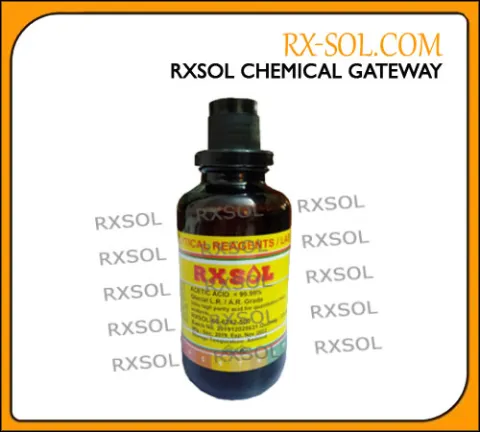
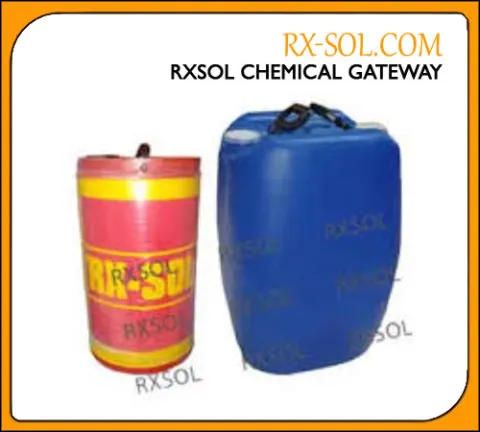
Dimethyl Sulfoxide DMSO
- Part number
- RXSOL-60-6224-100
- Category
- Medicine
- Brand
- RXSOL
Overview
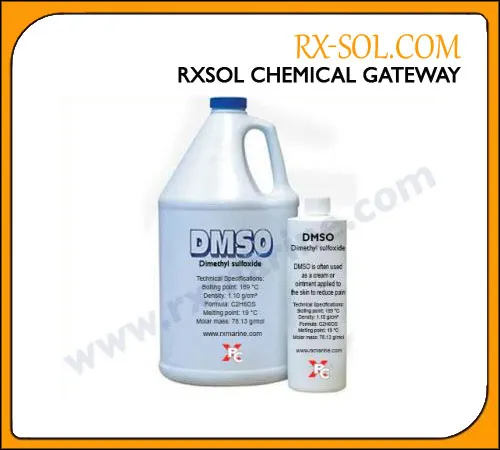
Dimethyl sulfoxide (DMSO)
DMSO is an effective paint stripper, being safer than many of the others such as nitromethane and dichloromethane. Dimethyl sulfoxide (DMSO) is an organosulfur compound with the formula (CH3)2SO. This colorless liquid is an important polar aprotic solvent that dissolves both polar and nonpolar compounds and is miscible in a wide range of organic solvents as well as water. It has a relatively high melting point. DMSO has the unusual property that many individuals perceive a garlic-like taste in the mouth after contact with the skin.
Technical specifications
| Boiling point | 189 °C |
|---|---|
| Density | 1.10 g/cm³ |
| Formula | C2H6OS |
| Melting point | 19 °C |
| Molar mass | 78.13 g/mol |
Applications
What is DMSO cream used for?
DMSO is often used as a cream or ointment applied to the skin to reduce pain, decrease swelling, treat autoimmune diseases such as arthritis, and promote healing in wounds and burns. DMSO is medically approved in the United States only for the treatment of interstitial cystitis, a type of inflammation of the bladder.
Dosage and directions
Dermal application of DMSO seems to provide rapid, temporary, relief of pain in patients with arthritis and connective tissue injuries. However, claims for antiinflammatory effects or acceleration of healing are currently unwarranted.
Characteristics and notes
Di Methyl Sulfoxide (DMSO) is a organosulphur compound with the molecular formula (CH3)2SO. It is a colorless liquid, it is an important polar aprotic solvent that dissolves both polar and non-polar compounds and is miscible in a wide range of organic solvents and water. It readily mixes with the skin and it can be directly taken from mouth, applied to skin and also injected through veins, it is one of the lightest compound in this family compared to other compounds. We export and sale a wide range of this solution as it is a very effective compound and is more demanded as it is used in pharmaceutical use to make various medicines.
Safety and SDS
Read the safety data sheet before handling. Wear suitable gloves and eye protection.
View safety data sheet
| Product Name | Dimethyl sulfoxide DMSO |
| Part Number | RXSOL-60-6224-100 |
Company Details:
RX MARINE INTERNATIONAL
105, A wing , BSEL , TECH PARK.
VASHI ,NEW BOMBAY 400703 INDIA
Branch : Kandla , Hazira, Mumbai, Chennai, Vizag, Kolkata, UAE & OMAN
| Phone | +91 22 2781 5540 / 41 /42 |
| Fax | +91 22 2781 1318 :::AOH :0091 9821214367 |
| rxsolchemicals@gmail.com | |
| Website | www.rxmarine.com |
| Name of Substance | Cas Number | EC Number | Weight % |
| Dimethyl Sulfoxide (DMSO) | 67-68-5 | 200-664-3 | 100% |
| Signal Word | Warning |
| Hazard Statements | Combustible liquid |
| Precautionary statements - prevention |
Keep away from heat/sparks/open flames/hot surfaces. - No smoking Fire : In case of fire: Use CO2, dry chemical, or foam for extinction Storage : Store in a well-ventilated place. Keep cool Disposal : Dispose of contents/container to an approved waste disposal plant Hazards not otherwise classified (HNOC) : None identified |
| Other hazards |
DMSO readily penetrates skin and may carry other dissolved chemicals into the body. |
| Skin Contact | Take off immediately all contaminated clothing. Rinse skin with water/ shower. |
| Eye Contact | Rinse immediately with plenty of water, also under the eyelids, for at least 15 minutes. Obtain medical attention. |
| Inhalation: | Move to fresh air. If not breathing, give artificial respiration. Get medical attention ifm symptoms occur. Risk of serious damage to the lungs. |
| Ingestion | Clean mouth with water and drink afterwards plenty of water. Do not induce vomiting. Call a physician or Poison Control Center immediately. If vomiting occurs naturally, have victim lean forward. |
| Most important symptoms/effects | Irritant effects, Headache, Nausea, Tiredness, CNS disorders |
| Notes to Physician |
Indication of any immediate medical attention and special treatment needed Laxative: Sodium sulfate (1 tablespoon/1/4 l water). |
| Suitable extinguishing media | Foam, Carbon dioxide (CO2), Dry powder, Water |
| Unsuitable extinguishing media | For this substance/mixture no limitations of extinguishing agents are given. |
| Flash Point | 87 °C / 181.6 °F |
| AutoignitionTemperature | 301 °C / 573.8 °F |
| Explosion Limits Uper | 42 Vol % |
| Explosion Limits Lower | 2.6 Vol % |
| Sensitivity to Mechanical Impact | No information available |
| Sensitivity to Static Discharge | No information available |
| Specific Hazards Arising from the Chemical | Combustible material. Containers may explode when heated. Thermal decomposition can lead to release of irritating gases and vapors |
| Hazardous Combustion Products | Carbon monoxide (CO) Carbon dioxide (CO2) Sulfur oxides Sulfides Formaldehyde |
| Protective Equipment and Precautions for Firefighters | As in any fire, wear self-contained breathing apparatus pressure-demand, MSHA/NIOSH (approved or equivalent) and full protective gear. |
| Further Information | Suppress (knock down) gases/vapours/mists with a water spray jet. Prevent fire extinguishing water from contaminating surface water or the ground water system. |
| Spillage | Absorb with an inert material and put the spilled material in an appropriate waste disposal. |
| Personal Protection | Use personal protective equipment. Remove all sources of ignition. Take precautionary measures against static discharges. Ensure adequate ventilation. |
| Enviromental Precaution | Should not be released into the environment. Do not flush into surface water or sanitary sewer system. See Section 12 for additional ecological information. |
| Methods and materials for containment and cleaning | Remove all sources of ignition. Soak up with inert absorbent material. Keep in suitable, closed containers for disposal |
| Handling |
Wear personal protective equipment. Ensure adequate ventilation. Keep away from open flames, hot surfaces and sources of ignition. Avoid contact with skin, eyes and clothing. Avoid ingestion and inhalation. |
| Storage | Keep containers tightly closed in a dry, cool and well-ventilated place. Keep away from heat and sources of ignition |
| Hygiene measures | Change contaminated clothing. Wash hands after working with substance. |
| Engineering Control | Ensure adequate ventilation, especially in confined areas. Ensure that eyewash stations and safety showers are close to the workstation location. |
| Personal Protection |
Eye/face Protection : Wear appropriate protective eyeglasses or chemical safety goggles as described by OSHA's eye and face protection regulations in 29 CFR 1910.133 or European Standard EN166. Skin and body protection : Wear appropriate protective gloves and clothing to prevent skin exposure. Long sleeved clothing.Flame retardant antistatic protective clothing. Respiratory Protection : Follow the OSHA respirator regulations found in 29 CFR 1910.134 or European Standard EN 149. Use a NIOSH/MSHA or European Standard EN 149 approved respirator if exposure limits are exceeded or if irritation or other symptoms are experienced. |
| Hygiene Measures | Handle in accordance with good industrial hygiene and safety practice. |
| Exposure Limits |
This product does not contain any hazardous materials with occupational exposure limitsestablished by the region specific regulatory bodies. |
Gloves Suit
| Form | Liquid |
| Colour | Colourless |
| Odour | Odourless |
| Odor Threshold | No Information Available |
| pH | Not Applicable |
| Melting Point | 18.4 °C / 65.1 °F |
| Boiling Point | 189 °C / 372.2 °F |
| Flash Point | 87 °C / 188.6 °F |
| Evaporation Rate | No information available |
| Flammability (solid, gas) | Not Applicable |
| Explosive limits |
Upper 42 vol % Lower 2.6 vol % |
| Vapour pressure | 0.55 mbar @ 20°C |
| Vapour Density | 2.7 |
| Secific Gravity | 1.100 |
| Solubility | Soluble in water |
| Partition coefficient n-octanol/water | No data available |
| Autoignition Temperature | 301 °C / 573.8 °F |
| Decomposition Temperature | > 190°C |
| Viscosity | 1.98 mPa.s @ 25°C |
| Molecular Formula | C2 H6 O S |
| Molecular Weight | 78.13 |
| Recativity Hazard | None known, based on information available |
| Stability | Hygroscopic. |
| Possibility of hazardous reactions | No known hazardous reactions. |
| Conditions to avoid | Incompatible products. Excess heat. Exposure to moist air or water. Keep away from open flames, hot surfaces and sources of ignition. |
| Incompatible materials | Strong oxidizing agents, Strong acids, Strong reducing agents,Alkali metals |
| Hazardous Decomposition Products | Carbon monoxide (CO), Carbon dioxide (CO2), Sulfur oxides, Sulfides, Formaldehyde |
| Hazardous Polymerization | Hazardous polymerization does not occur. Hazardous Reactions Hazardous polymerization does not occur. Hazardous Reactions Thermal decomposition can take place above 189°C / 372°F. |
| Acute oral toxicity |
LD50 Rat: 28,300 mg/kg OECD Test Guideline 401 |
|
Acute inhalation toxicity |
LC0 Rat: > 5.33 mg/l; 4 h ; dust/mist OECD Test Guideline 403 |
| Acute dermal toxic | LD50 Rat: 40,000 mg/kg |
| Skin corrosion |
Rabbit Result: slight irritation OECD Test Guideline 404 Possible damages: slight irritation |
| Eye corrosion |
Rabbit Result: slight irritation OECD Test Guideline 405 Possible damages: slight irritation |
|
Sensitisation |
Maximisation Test Guinea pig Result: negative Method: OECD Test Guideline 406 |
| In animal experiments |
Mouse Result: negative Method: OECD Test Guideline 429 |
|
No indication of carcinogenic activity. (IUCLID) |
Reproductive toxicity This information is not available. Teratogenicity Did not show teratogenic effects in animal experiments. Specific target organ toxicity - single exposure This information is not available. Specific target organ toxicity - repeated exposure This information is not available. Aspiration hazard This information is not available. |
| Further information |
Possible symptoms: After uptake: CNS disorders, Nausea, Tiredness, Headache Damage to: Liver, Kidney However, when the product is handled appropriately, hazardous effects are unlikely to occur. Handle in accordance with good industrial hygiene and safety practice. |
| Toxicity |
Toxicity to fish static test LC50 Danio rerio (zebra fish): > 25,000 mg/l; 96 h OECD Test Guideline 203 Toxicity to daphnia and other aquatic invertebrates static test EC50 Daphnia magna (Water flea): 24,600 mg/l; 48 h Analytical monitoring: yes OECD Test Guideline 202 Toxicity to algae static test EC50 Pseudokirchneriella subcapitata (green algae): 17,000 mg/l; 72 h Analytical monitoring: yes OECD Test Guideline 201 Toxicity to bacteria EC10 Pseudomonas putida: 7,100 mg/l; 16 h (IUCLID) EC50 activated sludge: 10 - 100 mg/l; 30 min (IUCLID) |
| Persistence and degradability |
Biodegradability 31 %; 28 d; aerobic OECD Test Guideline 301D Not readily biodegradable. |
|
Bioaccumulative potential |
Partition coefficient: n-octanol/water log Pow: -1.35 (experimental) (Lit.) Bioaccumulation is not expected. |
| Mobility in soil | No information available. |
| Results of PBT and vPvB assessment | PBT/vPvB assessment not available as chemical safety assessment not required/not conducted. |
| Other adverse effects | Discharge into the environment must be avoided. |
| Waste treatment Method | Waste material must be disposed of in accordance with the national and local regulations. Leave chemicals in original containers. No mixing with other waste. Handle uncleaned containers like the product itself. |
Transport in
| Land transport (ADR/RID) | Not classified as dangerous in the meaning of transport regulations. |
| Inland waterway transport (ADN) | Not relevant |
| Air transport (IATA) | Not classified as dangerous in the meaning of transport regulations. |
| Sea transport (IMDG) | Not classified as dangerous in the meaning of transport regulations. |
| Transport in bulk according to Annex II of MARPOL 73/78 and the IBC Code | Not relevant |
| Regulatory Information |
Safety, health and environmental regulations/legislation specific for the substance or mixture National legislation Storage class 10 - 13 |
| Chemical safety assessment | For this product a chemical safety assessment was not carried out. |
| Other Information |
The information above is believed to be accurate and represents the best information currently available to us. However, we make no warranty of merchantability or any other warranty, express or implied, with respect to such information, and we assume no liability resulting from its use. Users should make their own investigations to determine the suitability of the information for their particular purposes. In no event shall be liable for any claims, losses, or damages of any third party or for lost profits or any special, indirect, incidental, consequential or exemplary damages, howsoever arising, even if Rx Marine International has been advised of the possibility of such damages.
DISCLAIMER OF LIABILITY :The information in this SDS was obtained from sources which we believe are reliable. However, the information is provided without any warranty, express or implied, regarding its correctness. The conditions or methods of handling, storage, use or disposal of the product are beyond our control and may be beyond our knowledge. For this and other reasons, we do not assume responsibility and expressly disclaim liability for loss, damage or expense arising out of or in any way connected with the handling, storage, use or disposal of the product. This MSDS was prepared and is to be used only for this product. If the product is used as a component in another product, this MSDS information may not be applicable.
|
Availability
Dimethyl sulfoxide DMSO supplier in Pawane Turbhe MIDC, Bhiwandi, Kolkata, Chennai, Visakhapatnam, Gandihdham, Fujairah, Dubai, Ajman, Abudhabi, Sharjah, UAE Middle East, Oman Muscat Barka