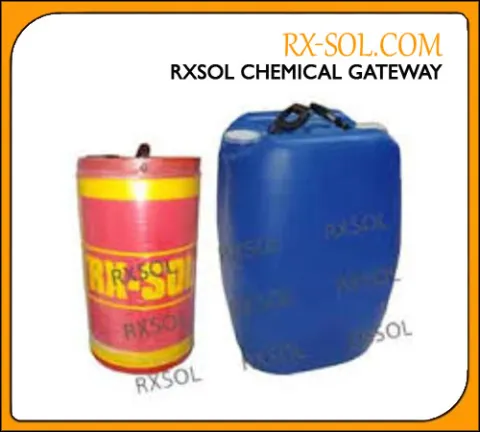
ETHYLENE DI AMINE (EDA)
- Part number
- RXSOL-19-1179-025
- Category
- Detergent & Soap
- Brand
- RXSOL
Overview
Applications
| PRODUCT NAME | : | ETHYLENEDIAMINE |
| CAS number | : | 107-15-3 |
| UN number | : | 1604 |
| Formula | : | NH2CH2CH2NH2 |
| Odour | : | MILD AMMONIA LIKE |
| Solubility in water | : | COMPLETE |
| Density | : | 0.899 at 20 oC |
| Boiling point | : | 117 oC |
| Melting point | : | 8 oC |
| Viscosity | : | 1.54 cp at 25oC |
| Flashpoint | : | 34 oC |
| Explosive limits | : | 5.8 – 11.1 Vol% |
| Vapour pressure | : | 12 mbar at 20 oC |
| Skin absorption/irritation | : | YES |
| TLV Country NL Year 1995 | : | 10 ppm 25 mg/m3 |
| Pollution category 1994 | : | C |
Safety and SDS
Read the safety data sheet before handling. Wear suitable gloves and eye protection.
View safety data sheet
| Product Name | RXSOL-19-1179-025 |
| Product Type | ETHYLENE DIAMINE |
Company Details:
RX MARINE INTERNATIONAL
105, A wing , BSEL , TECH PARK.
VASHI ,NEW BOMBAY 400703 INDIA
Stock Point ::: Kandla, Kolkata, Chennai, Visakhapatnam, Mumbai, Fujairah
| Phone | +91 22 27815540 / 41 / 42 |
| Fax | +91 22 2781 1318 :::AOH :0091 9821214367 |
| rxsolchemicals@gmail.com |
|
Chemica Name |
Concentration |
CAS Number |
| Ethylenediamine |
60-100% |
107-15-3 |
*See Section 16
|
Odour |
Smells of hydrocarbon. |
|
Appearance |
Appearance: Colorless, viscous liquid Danger! Causes eye and skin burns. Causes digestive and respiratory tract burns. Flammable liquid and vapor. May cause allergic respiratory and skin reaction. Harmful if absorbed through the skin. May be harmful if swallowed or inhaled. Hygroscopic (absorbs moisture from the air). |
|
Contactwith eyes |
Causes irritation. |
|
Contact with skin |
|
|
Inhalation |
Vapours may cause drowsiness and dizziness (R67), In cases of severe exposure, anaesthesia may develop, In cases of severe exposure, chronic pneumonitis may develop. |
|
Ingestion |
Ingestion: Causes gastrointestinal tract burns. May cause liver and kidney damage. May be harmful if swallowed. Inhalation: May cause severe allergic respiratory reaction. Irritation may lead to chemical pneumonitis and pulmonary edema. May cause liver and kidney damage. Causes chemical burns to the respiratory tract. May cause asthma. Chronic: May cause liver and kidney damage. Repeated exposure may cause allergic respiratory reaction (asthma). |
|
General |
In case of accident or if you feel unwell, seek medical advice immediately (show the label where possible) (S45). |
|
Contact with skin |
Get medical aid. Flush skin with plenty of water for at least 15 minutes while removing contaminated clothing and shoes. Wash clothing before reuse. |
|
Contact with eyes |
Flush eyes with plenty of water for at least 15 minutes, occasionally lifting the upper and lower eyelids. Get medical aid. |
|
Ingestion |
Call a poison control center. If swallowed, do not induce vomiting unless directed to do so by medical personnel. Never give anything by mouth to an unconscious person. Get medical aid. |
|
Inhalation |
Remove from exposure and move to fresh air immediately. If not breathing, give artificial respiration. If breathing is difficult, give oxygen. Get medical aid. Notes to Physician: Treat symptomatically and supportively. |
|
General |
In case of accident or if you feel unwell, seek medical advice immediately (show the label where possible) (S45). |
General Information: As in any fire, wear a self-contained breathing apparatus in pressure-demand, MSHA/NIOSH (approved or equivalent), and full protective gear. During a fire, thermal decomposition or combustion may generate irritating and highly toxic gases.
Use water spray to keep fire-exposed containers cool. Flammable liquid and vapor.
Vapors are heavier than air and may travel to a source of ignition and flash back. Vapors can spread along the ground and collect in low or confined areas. Extinguishing Media: Solid streams of water may be ineffective and spread material.
Use water spray, dry chemical, "alcohol resistant" foam, or carbon dioxide.
Autoignition Temperature: Not applicable.
Flash Point: Not applicable.
NFPA Rating: (estimated) Health: 3; Flammability: 3; Instability: 0 Explosion Limits: Lower: n/a Upper: n/a
|
Personal Precautions |
Wear protective clothing as per section 8. General Information: Use proper personal protective equipment as indicated in Section 8. Spills/Leaks: Absorb spill with inert material (e.g. vermiculite, sand or earth), then place in suitable container. |
|
Environmental Precautions |
Do not allow to enter public sewers and watercourses. |
|
Immediate Actions |
Use appropriate containment to avoid environmental contamination (S57). |
|
Clean Up Actions |
Absorb spillage in inert material and shovel up. Ventilate the area and wash spill site after material pick-up is complete |
|
Special Precautions |
Wear protective clothing as per section 8. Vapours are heavier than air and may travel considerable distances to a source of ignition and flashback Wear suitable respiratory protection. |
Remove all sources of ignition. Use a spark-proof tool. Provide ventilation. Evacuate unnecessary personnel. Approach spill from upwind. Use water spray to cool and disperse vapors, protect personnel, and dilute spills to form nonflammable mixtures
|
Handling |
Wash thoroughly after handling. Remove contaminated clothing and wash before reuse. Ground and bond containers when transferring material. Use spark-proof tools and explosion proof equipment. Do not get in eyes, on skin, or on clothing. Empty containers retain product residue, (liquid and/or vapor), and can be dangerous. Keep container tightly closed. Keep away from heat, sparks and flame. Do not pressurize, cut, weld, braze, solder, drill, grind, or expose empty containers to heat, sparks or open flames. Do not breathe vapor or mist. Use only with adequate ventilation or respiratory protection. |
|
Storage |
Keep away from sources of ignition. Store in a tightly closed container. Store in a cool, dry, wellventilated area away from incompatible substances. Flammables-area. Store protected from moisture. Do not store in copper or copper alloy storage vessels Keep container tightly closed, in a cool, well ventilated place (S3/7/9).Keep away from open flames, hot surfaces and sources of ignition. |
|
Exposure Limits |
OSHA Vacated PELs: Ethylenediamine: 10 ppm TWA; 25 mg/m3 TWA |
|
Exposure controls |
Engineering Controls: Facilities storing or utilizing this material should be equipped with an eyewash facility and a safety shower. Use process enclosure, local exhaust ventilation, or other engineering controls to control airborne levels. |
|
Occupational exposure controls |
Wear suitable protective clothing, including eye/face protection and gloves (neoprene or nitrile are recommended) Respiratory protection may be required under exceptional circumstances when excessive air contamination exists. We arapproved respirator if exposure likely to exceed MEL/OES |
Respirator Gloves Goggles Suit
|
Odour |
Smells Ammonia-like |
|
Appearance |
Liquid, colourless, soluble in water |
|
pH |
11.9 (25% aq soln) |
|
Vapor Pressure |
Not available |
|
Vapor Density |
Not available |
|
Freezing/Melting Point |
Not available |
|
Evaporation Rate |
Not available |
|
Decomposition Temperature |
Not available |
|
Boiling Point |
Not available |
|
Viscosity |
Not available |
Solubility in water: Soluble Specific Gravity/Density: Not available Molecular Formula: Not applicable Molecular Weight: Not applicable
- This article is considered stable under normal conditions.
- Avoid overheating, Keep away from naked flames, incandescent or hot surfaces.
Chemical Stability: Absorbs carbon dioxide from air to form nonvolatile carbonate. Conditions to Avoid: Incompatible materials, ignition sources, excessive heat, confined spaces. Incompatibilities with Other Materials: Strong oxidizing agents, strong acids, copper, copper alloys. Hazardous Decomposition Products: Nitrogen oxides, carbon monoxide, carbon dioxide, ammonia and/or derivatives. Hazardous Polymerization: Has not been reported.
|
Toxicological information |
RTECS: CAS# 107-15-3: KH8575000. CAS# 7732-18-5: ZC0110000. LD50/LC50: CAS# 107-15-3: Draize test, rabbit, eye: 750 ug Severe; Draize test, rabbit, eye: 750 ug/24H Severe; Inhalation, mouse: LC50 = 300 mg/m3; Oral, mouse: LD50 = 1 gm/kg; Oral, rat: LD50 = 1200 mg/kg; Skin, rabbit: LD50 = 730 uL/kg CAS# 7732-18-5: Oral, rat: LD50 = >90 mL/kg |
|
Inhalation |
Epidemiology: Edema of the epithelium of the cornea, generally without pain, has been produced by amine vapors, causing colored haloes to be seen around lights, usually in the evening, after industrial exposure to the vapors of various amines. |
|
Contact with skin |
Prolonged skin contact will result in defatting of the skin, leading to irritation, and in some cases, dermatitis. |
|
Contact with eyes |
In cases of severe exposure, irritation may develop. |
|
Ingestion |
May cause gastro-intestinal disturbances.Aspiration hazard Harmful: may cause lung damage if swallowed (R65). |
|
Carcinogenicity |
Carcinogenicity: CAS# 107-15-3: Not listed by ACGIH, IARC, NTP, or CA Prop 65. CAS# 7732-18-5: Not listed by ACGIH, IARC, NTP, or CA Prop 65. |
|
Ecotoxicity |
Ecotoxicity: Fish: Fathead Minnow: LC50 = 115.7 mg/L; 96 Hr.; Static Condition Fish: Rainbow trout: LC50 = 230.0 mg/L; 96 Hr.; Static Condition Water flea EC50 = 0.88 mg/L; 48 Hr.; Unspecified Bacteria: Phytobacterium phosphoreum: EC50 = 20.0 mg/L; 15 Minutes; Microtox test Chub (fresh water) 60ppm/24H (lethal) Rainbow trout LC50=230 mg/L/48H |
|
Mobility |
Insoluble in water. |
|
Persistence and Biodegradability |
Biodegradability 67 % (OECD 301F). |
|
Bioaccumulation Potential |
Low bioaccumulation potential. |
|
Adverse Effects |
Environmental: On soil, substance will leach and volatilize. In water, substance will form alkaline solution and will biodegrade. Bioconcentration is not predicted. In air, substance will react with hydroxyl radicals and carbon dioxide. Biological Oxygen Demand (BOD): 75% (theory), 5 days |
|
Classification |
EU Waste class: 07.01. Dispose of in accordance with Federal, State, and local regulations |
|
Disposal considerations |
Do not discharge into drains or the environment, dispose to an authorised waste collection point Disposal should be in accordance with local, state or national legislation. |
US DOT Shipping Name: ETHYLENEDIAMINE Hazard Class: 8 UN Number: UN1604 Packing Group: II
|
Risk Phrases |
Harmful: may cause lung damage if swallowed (R65).Repeated exposure may cause skin dryness or cracking (R66) |
|
Safety Phrases |
Do not breathe vapour/fumes(S23) Avoid contact with skin (S24) Wear suitable gloves and eye/face protection (S37/39) If swallowed, do not induce vomiting: seek medical advice immediately and show this container or label (S62). |
Text of R and S phrase codes used in this safety data sheet:- R65: Harmful: may cause lung damage ifswallowed; R66: Repeated exposure may cause skin dryness or cracking.The information provided about the product on this Safety Data Sheet has been compiled from knowledge of the individual constituents.The data given here is based on current knowledge and experience. This Safety Data Sheet describes the product in terms of safety requirements and does not signify any warranty with regard to the product's properties. The data given here only applies when product used for proper application(s).The product is not sold as suitable for other applications - usage in such may cause risks not mentioned in this sheet Do not use for other.application(s) without seeking advice from manufacturer.
This Safety Data Sheet is provided in compliance with The Dangerous Substances Directive
This Safety Data Sheet is provided in compliance with The Dangerous Preparations Directive
This Safety Data Sheet is provided in compliance with The Safety Data Sheets Directive
DISCLAIMER OF LIABILITY :The information in this SDS was obtained from sources which we believe are reliable. However, the information is provided without any warranty, express or implied, regarding its correctness. The conditions or methods of handling, storage, use or disposal of the product are beyond our control and may be beyond our knowledge. For this and other reasons, we do not assume responsibility and expressly disclaim liability for loss, damage or expense arising out of or in any way connected with the handling, storage, use or disposal of the product. This MSDS was prepared and is to be used only for this product. If the product is used as a component in another product, this MSDS information may not be applicable.
Availability
ETHYLENE DI AMINE (EDA) manufacturer supplier distributor in Mumbai, Kandla, Kolkata, Vizag, Chennai, India, Fujairah, Dubai UAE, Muscat Oman, Kenya Africa. Get the best quality of ETHYLENE DI AMINE (EDA) at a competitive price from us. We have ready stock of ETHYLENE DI AMINE (EDA) in India, UAE Gulf, Oman, Kenya Africa. Contact us for bulk as well as small orders.