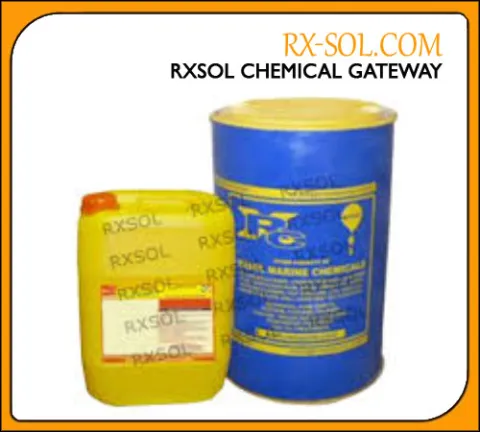
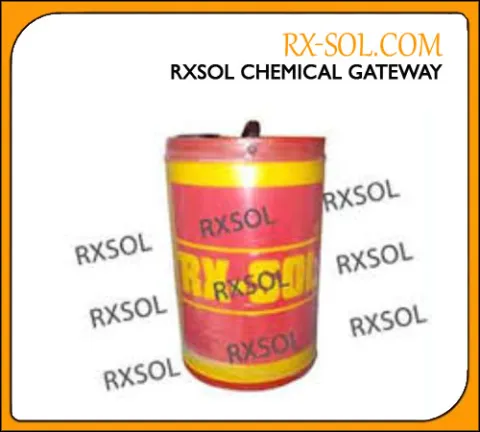
Evaporator Coil Cleaner
- Part number
- RXSOL-51-6004-025
- Category
- Evaporator Treat
- Brand
- RXSOL
Overview
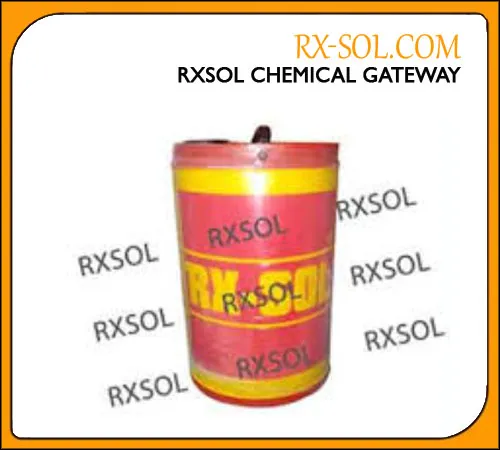
Evaporator Coil Cleaner is a special blend of effective ingredients designed to penetrate and remove built-up grease, dirt and oxidation from finned coils, cleaning in one step. Evaporator Coil Cleaner DOES NOT CONTAIN ACID.
Buildup of greasy dirt on air conditioning or refrigeration cooling coils makes the units work much harder. Impeded air flow and poor heat transfer can put a sever strain on both the equipment and the pocket book. Cleaning removes dirt and greasy film from evaporator coils and enables the equipment to operate more efficiently.
Technical specifications
| Coil Cleaning | Condenser Coil Cleaning | Evaporator Coil Cleaning |
Other Grade of Coil Cleaner
| Coil Brite Rx Yellow | Part No.- RXSOL-16-1680-005 --- www.rxmarine.com/coil-brite |
|---|---|
| Coil Cleaner | Part No.- RXSOL-41-8672-025 --- www.rxmarine.com/Coil-Cleaner-RXSOL |
| Coil Cleaner ( Non Rinsing Type ) | Part No. - RXSOL-16-1697-025 --- www.rxmarine.com/coil-cleaner-non-rinsing |
| Condenser Coil Cleaner | Part No.- RXSOL-50-5015-025 --- www.rxmarine.com/Condensor-cleaner |
| Evaporator Coil Cleaner | Part No.- RXSOL-51-6004-025 --- www.rxmarine.com/evaporator-coil-cleaner |
| Coil Cleaner Free from ACID | Part No.- RXSOL-16-1082-025 --- http://rxmarine.com/Coil-Cleaner-Free-from-ACID |
| C-SHINE Alkaline coil cleaner | Part No- RXSOL-16-1668-025 --- www.rxmarine.com/C-SHINE-RXSOL-coil-cleaner |
Applications
What is EVAPORATOR PLANT ?
For production of fresh water Large ships usually carry evaporating plants.
Steam ships must be able to produce high-quality distillate in order to maintain boiler-water levels.
Diesel-engined ships often utilise waste heat as an energy source for producing fresh water. In this system, the engine-cooling water is passed through a heat exchanger, where it is cooled by concentrated seawater (brine). Because the cooling water (which is chemically treated fresh water) is at a temperature of 70–80 °C (158–176 °F), it would not be possible to flash off any water vapour unless the pressure in the heat exchanger vessel was dropped. To alleviate this problem, a brine-air ejector venturi pump is used to create a vacuum inside the vessel. Partial evaporation is achieved, and the vapour passes through a demister before reaching the condenser section. Seawater is pumped through the condenser section to cool the vapour sufficiently to precipitate it. The distillate gathers in a tray, from where it is pumped to the storage tanks. A salinometer monitors salt content and diverts the flow of distillate from the storage tanks if the salt content exceeds the alarm limit. Sterilisation is carried out after the evaporator.
Evaporators are usually of the shell-and-tube type (known as an Atlas Plant) or of the plate type (such as the type designed by Alfa Laval). Temperature, production and vacuum are controlled by regulating the system valves. Seawater temperature can interfere with production, as can fluctuations in engine load. For this reason, the evaporator is adjusted as seawater temperature changes and shut down altogether when the ship is manoeuvring. An alternative in some vessels, such as naval ships and passenger ships, is the use of the reverse osmosis principle for fresh-water production, instead of using evaporators.
MECHANISM of EVAPORATOR :::---
Lots of heat is absorbed in the process this is called the latent heat of vaporization and makes for very efficient heat transfer because the freon is vaporizing in this coil, it is called the evaporator coil Freon makes an excellent heat transfer material at atmospheric pressure, it is a colourless gas when it boils. absorbs a lot of heat when it condenses from a gas to a liquid, it gives off a lot of heat (this is helpful when discharging heat to the outside through the condensing coil)
Dosage and directions
¨ Economical - mix one part Evaporator Coil Cleaner to four parts water.
¨ Safer than acid cleaners.
¨ Cleans coils in one step - no rinsing needed.
¨ High foaming for faster penetration
Characteristics and notes
Use Instructions:
1. Protect eyes and skin with appropriate safety items.
2. May be used with unit on or off.
3. Use low pressure spraying tank.
4. Mix one part Evaporator Coil Cleaner to four parts water.
5. Spray Evaporator Coil Cleaner solution into coils and allow approximately a ten minute contact time for best results. Condensate will rinse coils. Rinse filters with clean water.
RXSOL brand is very popular as a Evaporator Coil Cleaner manufacturer. And our group division have Evaporator Coil Cleaner supplier network for manglore, Navi Mumbai, Goa, Mumbai, Kakinada, Gangavaram, Vizag, Visakhapatnam, Ennore, Chennai, kandla, mundra, sikka, Surat, Fujairah, Sharjah, Dubai, Abudhabi, Middle East, Gulf. we are RXSOL Evaporator Coil Cleaner exporter for Saudi Arabia, Iraq and Kuwait.
Safety and SDS
Read the safety data sheet before handling. Wear suitable gloves and eye protection.
View safety data sheet
| Product Name | : | RXSOL-51-6004-025 |
| Product Type | : | EVOPORATOR COIL CLEANER |
Company Details:
RX MARINE INTERNATIONAL
105, A wing , BSEL , TECH PARK.
VASHI ,NEW BOMBAY 400703 INDIA
Stock Point : Mumbai, Kandla, Kolkata, Chennai, Vizag, Fujairah, Muscat
| Phone | : | +91 22 65113333 / 5555 / 9999 / 27611360 |
| Fax | : | +91 22 2781 1318 :::AOH :0091 9821214367 |
| : | rxsolchemicals@gmail.com | |
| Website | : | www.rxmarine.com |
| Chemica Name | Concentration | CAS Number | EC Number | R Phrases* | Symbols |
| Lauryl Dimethyl Amine Oxide | 2-5 | 961788-90-7 | ACGIH TLV N/D |
OSHA PEL N/D
|
|
| Polylene Glycol Butyl Ether | 5-7 | 57018-52-7 | ACGIH TLV N/D | OSHA PEL N/D | |
| Sodium Metasilicate | 2-5 | 6834-92-0 | ACGIH TLV N/D | OSHA PEL N/D | |
| Isopropyl Alcohol | 10-20 | 67-63-0 | N/A | - | - |
| Ethoxylated nonylphenol | 1-5 | 9016-45-9 | |||
| Proprietary Ingredients | 60-70 | N/A | N/A |
*See Section 16
| Odour | Mild Odour |
| Appearance | Liquid, Light Green, soluble in water |
| Contact with eyes | Mildly irritating to eyes |
| Contact with skin | In cases of severe exposure, irritation may develop |
| Inhalation | Vapours or aerosols may cause irritation of eyes, nose and respiratory tract |
| Ingestion | May cause gastro-intestinal disturbances |
| Contact with skin |
Remove contaminated clothing immediately and drench affected skin with plenty of water. Then wash with soap and water. Seek medical attention if irritation persists, Remove and wash
any contaminated clothing.
|
| Contact with eyes |
If substance has got into eyes, immediately wash out with plenty of water for at least 15 minutes Seek medical advice |
| Ingestion | Never make an unconscious person vomit or drink fluids Give water or milk to drink When in doubt or symptoms persist, seek medical attention |
| Inhalation |
Inhalation is unlikely to occur Remove patient to fresh air , Give oxygen or artificial respiration as
needed. Obtain emergency medical attention. Prompt action is essential.Never give anything by mouth to an unconscious person.
|
| General |
In case of accident or if you feel unwell, seek medical advice immediately (show the label where possible) |
- Non combustible
- Smoke from fires is irritating
- Not flammable. In case of fire use extinguishing media appropriate to surrounding condition
| Personal Precautions | Wear protective clothing as per section 8 |
| Environmental Precautions | No special precautions are required for this product |
| Immediate Actions | Shut off source of leak if safe to do so |
| Clean Up Actions | Flush spill area with copious amounts of water |
| See SeSpecial Precautions |
Wear protective clothing as per section 8 No special precautions are required for this product |
|
Handling |
The usual precautions for handling chemicals should be observed |
| Storage | Keep only in the original container in a cool, well ventilated place (S3/9/49 |
| Exposure Limits | There are no recommended or established controls for this product |
| Exposure controls | No special precautions are required for this product |
| Occupational exposure controls | Wear suitable protective clothing, including eye/face protection and gloves (plastic or rubber are recommended) |
| Odour | Mild Odour |
| Appearance | Liquid, colouless or Light Green, soluble in water |
| pH | 10.4-10.5 at 100 % concentration |
| Boiling point | 100 °C at 760 mm /Hg |
| Vapour pressure | not known |
| Freezing point | <0 °C at 760 mm/Hg |
| Completely soluble in water | |
| Specific gravity (water=1) | 0.999 |
| Non | combustible |
- No hazardous decomposition products known
- Avoid overheating, Keep away from frost
| Toxicological information |
LD50 (dermal) : > 10000 mg/kg No effects in humans |
| Inhalation | Vapours or aerosols may cause irritation of eyes, nose and respiratory tract |
| Contact with skin | In cases of severe exposure, redness and irritation may develop |
| Contact with eyes | In cases of severe exposure, redness may develop |
| Ingestion | In cases of severe exposure, gastro-intestinal disturbances may develop |
| Carcinogenicity | No evidence of carcinogenic effects |
| Ecotoxicity |
On available data, substance is not harmful to aquatic life. LC50 (bluegill sunfish) 4750 mg/l (96 hr) |
| Mobility | Completely soluble in water |
| Persistence and Biodegradability |
Most components in this product are not readily biodegradable. Sodium polyacrylate: Chemical oxygen demand (COD) 0.4 g/g Biological oxygen demand (BOD) 0.009 g/g |
| Bioaccumulation Potential | Bioaccumulation is insignificant |
| Other Adverse Effects | Presents little or no hazard to the aquatic environment |
| Classification | EU Waste class |
| Disposal considerations |
Do not discharge into drains or the environment, dispose to an authorised waste collection point Disposal should be in accordance with local, state or national legislation |
- Not classified as hazardous for transport
| Classification and labelling | Not classified as hazardous for users |
| Risk Phrases | Not applicable |
| Safety Phrases | Not applicable |
|
The information provided about. the product on this Safety Data Sheet has been compiled from knowledge of the individual constituents The data given here is based on current knowledge and experience. This Safety Data Sheet describes the product in terms of safety requirements and does not signify any warranty with regard to the product's properties The data given here only applies when product used for proper application(s). The product is not sold as suitable for other applications - usage in such may cause risks not mentioned in this sheet. Do not use for other DISCLAIMER OF LIABILITY :The information in this SDS was obtained from sources which we believe are reliable. However, the information is provided without any warranty, express or implied, regarding its correctness. The conditions or methods of handling, storage, use or disposal of the product are beyond our control and may be beyond our knowledge. For this and other reasons, we do not assume responsibility and expressly disclaim liability for loss, damage or expense arising out of or in any way connected with the handling, storage, use or disposal of the product. This MSDS was prepared and is to be used only for this product. If the product is used as a component in another product, this MSDS information may not be applicable. |
Availability
Evaporator Coil Cleaner manufacturer and supplier in India, UAE GUlf, Oman, Nairobi, Sudan, Yemen, Fujairah, Dubai, Sharjah, Abudhabi, Ajman, Ruwi Barka Muscat, Sohar, Mumbai, Kandla, Kolkata Haldia, Surat Gujarat, Vizag Visakhapatnam, Chennai Ennore,