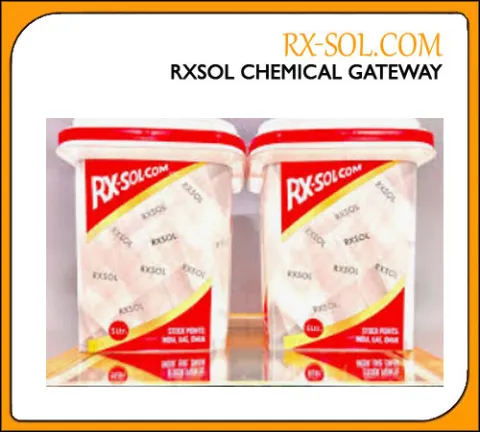
Floor Care (Polish / Cleaner )
Grafitti Removal Cleanser
- Part number
- RXSOL-13-1010-025
- Category
- Floor Care (Polish / Cleaner )
- Brand
- RXSOL
Overview
Graffiti cleaning chemical manufacturer and supplier in various packing and size. It has been developed for one job to remove graffiti and classified as best Housekeeping and industrial graffiti cleaning chemical.
Applications
Mild acid, mild abrasive formula quickly removes stubborn stains without scratching the surface
Provides controlled sudsing so it rinses freely for a clean surface
Its viscous thickened creme formula makes it easy to apply on vertical surface.
Cleansing Paste, Emerel Multi-Surface Creme Cleanser
Dosage and directions
Just apply onto the oily greasy affected area allow a few seconds to work and then wash away or wipe off. Save lot of time and cleaning makes easier. Result can do in fifteen minutes what it would take an hour or more for with a standard bleach cleanser.
RXSOL-13-1010-025 is An effective mixture of cleansing paste. Excellent for use on any hard surface. Simply apply to surface, allow to stand, and finally wash with RXSOL-10-1006.
Apply to surface, allow to stand for several minutes, agitate and wash with RXSOL-10-1006 .( Degreaser Liquid Alkaline )
Apply concentrated.
Characteristics and notes
Field : For the removal of unsightly grafitti, obscenities or other marking from marble, bricks, terrazzo, metals etc
Safety and SDS
Read the safety data sheet before handling. Wear suitable gloves and eye protection.
View safety data sheet
| Product Name |
Multi surface Graffiti Cleaner |
| Product Type | RXSOL-13-1010-025 |
Company Details:
RX MARINE INTERNATIONAL
105, A wing , BSEL , TECH PARK.
VASHI ,NEW BOMBAY 400703 INDIA
| Phone | +91 22 65113333/ 5555 / 9999 / 27611360 / 27815540 |
| Fax | +91 22 2781 1318 :::AOH :0091 9322594669 |
| rxsolchemicals@gmail.com |
| Ingrident | CAS Number | Weight Percentage |
| Quartz | 14808-60-7 | 40 - 50% |
| Dodecylbenzene sulfonic acid | 27176-87-0 | 10 - 20% |
| Alcohol ethoxylates | 68439-46-3 | 05-10 % |
Principal routes of exposure: Eye contact. Skin contact. Inhalation.
Eye contact : Moderately irritating to the eyes.
Skin contact : Moderately irritating to the skin.
Inhalation : None known.
Ingestion : May cause irritation to mouth, throat and stomach .
Eye Contact: In case of contact, immediately flush eyes with plenty of water. If easy to do, remove contact lenses, if worn.
Skin Contact: In case of contact, immediately flush skin with plenty of water. Remove contaminated clothing and shoes. Wash clothing before reuse. Call a physician if irritation develops and persists.
Inhalation: If inhaled, remove to fresh air. If not breathing, give artificial respiration. If breathing is difficult, give oxygen.
Ingestion: If swallowed, do NOT induce vomiting unless directed to do so by medical personnel. Never give anything by mouth to an unconscious person.
General Advice: In case of accident or if you feel unwell, seek medical advice immediately (show the label or MSDS where possible).
Suitable extinguishing media: The product is not flammable. Extinguish fire using agent suitable for surrounding fire.
Specific hazards: None known.
Unusual hazards: None known.
Specific methods: No special methods required
Personal precautions: Not relevant for the product itself.
Environmental precautions Clean-up methods : large spillage. Sweep up and shovel into suitable containers for disposal.
Use and clean-up methods: water rinse for final clean-up.
Handling: Avoid contact with skin, eyes and clothing. Wash thoroughly after handling. FOR COMMERICAL AND INDUSTRIAL USE ONLY.
Storage: Protect from freezing. Keep tightly closed in a dry, cool and well-ventilated place. KEEP OUT OF REACH OF CHILDREN.
Engineering measures to reduce exposure: No special ventilation requirements General room ventilation is adequate
Personal Protective Equipment
| Eye protection: | No special requirements under normal use conditions. |
| Hand protection: | No special requirements under normal use conditions |
| Skin and body protection: | No special requirements under normal use conditions. |
| Respiratory protection: | No special requirements under normal use conditions. |
| Hygiene measures: | Handle in accordance with good industrial hygiene and safety practice |
| Physical State | : Creme |
| Bulk density | : No information available |
| Appearance | : Viscous liquid |
| Specific gravity | : 1.25 |
| Color | : Opaque Off-White |
| Odor | : Fresh |
| Boiling point/range | : Not determined |
| Melting point/range | : Not determined |
| Evaporation Rate | : No information available |
| Vapor density | : No information available |
| Flash point | : > 200 °F > 93.4 °C |
| pH | : 2.0 |
| Solubility | :Soluble / Dispersible |
| Solubility in other sol. | : No information available |
| Viscosity | :No information available |
Stability: Stable under normal storage conditions. Contents under pressure. Container may explode if heated. Do not puncture. Do not burn. Keep in a cool place.
Polymerization: Hazardous polymerization does not occur
Hazardous decomposition products: None reasonably foreseeable.
Materials to avoid: Strong oxidising agents.
Conditions to avoid: Do not freeze.
Acute toxicity: Oral LD50 estimated to be greater than 5000 mg/kg. Dermal LD50 estimated to be > 2000 mg/kg.
Component Information: See Section 3
Chronic toxicity: None known
Specific effects
Carcinogenic effects: None known
Mutagenic effects: None known
Reproductive toxicity: None known
Target organ effects: None known
Environmental Information: No data available
This material must be disposed of in accordance with all local, state, provincial, and federal regulations.
DOT/TDG/IMDG: Please refer to the shipping information.
DOT Bill of Lading Description: Cleaning, washing, buffing, or polishing compounds Liquid
IMDG Bill of Lading Description:Cleaning, washing, buffing, or polishing compounds Liquid
Federal Regulations
Canadian: All components of this product are listed on the following inventories: U.S.A. (TSCA), Canada (DSL/NDSL).
California : This product is not subject to the reporting requirements under California's Proposition 65
CAA HAP/CAA ODS/CWA Priority Pollutants: None
SARA 311/312 Hazard Categories
Immediate: x
Delayed: -
Fire: -
Reactivity: -
Sudden Release of Pressure: -
The information above is believed to be accurate and represents the best information currently available to us. However, we make no warranty of merchantability or any other warranty, express or implied, with respect to such information, and we assume no liability resulting from its use.
Users should make their own investigations to determine the suitability of the information for their particular purposes. In no event shall RX Marine International be liable for any claims, losses, or damages of any third party or for lost profits or any special, indirect, incidental, consequential or exemplary damages, howsoever arising, even if Rx Marine International has been advised of the possibility of such damages.
DISCLAIMER OF LIABILITY :The information in this SDS was obtained from sources which we believe are reliable. However, the information is provided without any warranty, express or implied, regarding its correctness. The conditions or methods of handling, storage, use or disposal of the product are beyond our control and may be beyond our knowledge. For this and other reasons, we do not assume responsibility and expressly disclaim liability for loss, damage or expense arising out of or in any way connected with the handling, storage, use or disposal of the product. This MSDS was prepared and is to be used only for this product. If the product is used as a component in another product, this MSDS information may not be applicable.
| Product Name |
ALL SOLV GRAFFITTI REMOVER |
| Product Type | RXSOL-41-8731-025 |
Company Details:
RX MARINE INTERNATIONAL
105, A wing , BSEL , TECH PARK.
VASHI ,NEW BOMBAY 400703 INDIA
| Phone | +91 22 65113333/ 5555 / 9999 / 27611360 / 27815540 |
| Fax | +91 22 2781 1318 :::AOH :0091 9322594669 |
| rxsolchemicals@gmail.com |
| Ingredient | CAS # | Wt. % |
| Acetone | 67-64-1 | 30 - 60 |
| Toluene | 108-88-3 | 10 - 30 |
| Isobutane | 75-28-5 | 5 - 10 |
| Glycol Ether EB | 111-76-2 | 5 - 10 |
| Methyl ethyl ketone | 78-93-3 | 6 - 10 |
| Propane | 74-98-6 | 3 – 7 |
EMERGENCY OVERVIEW HMIS: See Section 15
DANGER EXTREMELY FLAMMABLE. HARMFUL BY INHALATION.MAY CAUSE EYE
IRRITATION. MAY CAUSE SKIN IRRITATION. CONTENTS UNDER PRESSURE.
CONTAINER MAY EXPLODE IF HEATED.
Potential Health Effects: See Section 11 for more information.
Likely Routes of Exposure: Skin contact, eye contact, inhalation, and ingestion.
Eye: May cause eye irritation.
Skin: May cause skin irritation.
Ingestion: Not a normal route of exposure. Harmful: may cause lung damage if swallowed.
Inhalation: Harmful by inhalation. May cause respiratory tract irritation. May cause asphyxiation.This product may be aspirated into the lungs and cause chemical pneumonitis.
Chronic Effects: Prolonged or repeated contact may dry skin and cause irritation.
Signs and Symptoms: Symptoms may include discomfort or pain, excess blinking and tear production, with marked redness and swelling of the conjunctiva. Handling can cause dry skin. Vapours may cause drowsiness and dizziness.
Medical Conditions Aggravated By Exposure: Asthma. Allergies.
Target Organs: Skin, eyes, gastrointestinal tract, respiratory system.
This product is a "Hazardous Chemical" as defined by the OSHA Hazard Communication
Standard, 29 CFR 1910.1200.
Potential Environmental Effects: May cause long-term adverse effects in the aquatic
environment. See Section 12 for more information.
Eye Contact: In case of contact, immediately flush eyes with plenty of water. If easy to do, remove contact lenses, if worn.
Skin Contact: In case of contact, immediately flush skin with plenty of water. Remove contaminated clothing and shoes. Wash clothing before reuse. Call a physician if irritation develops and persists.
Inhalation: If inhaled, remove to fresh air. If not breathing, give artificial respiration. If breathing is difficult, give oxygen.
Ingestion: If swallowed, do NOT induce vomiting unless directed to do so by medical personnel. Never give anything by mouth to an unconscious person.
General Advice: In case of accident or if you feel unwell, seek medical advice immediately (show the label or MSDS where possible).
Note to Physicians: Symptoms may not appear immediately.
Flammability: Flammable by WHMIS/OSHA criteria.
Means of Extinction:
Suitable Extinguishing Media: Powder, water spray, foam, carbon dioxide.
Unsuitable Extinguishing Media: Not available.
Products of Combustion: May include, and are not limited to: oxides of carbon.
Explosion Data:
Sensitivity to Mechanical Impact: Not available.
Sensitivity to Static Discharge: Not available.
Protection of Firefighters: Containers may explode when heated. Keep upwind of fire.
Wear full fire fighting turn-out gear (full Bunker gear) and respiratory protection (SCBA).
Personal Precautions: Use personal protection recommended in Section 8. Isolate the hazard area and deny entry to unnecessary and unprotected personnel. Eliminate sources of ignition. Ruptured cylinders may rocket.
Environmental Precautions: Many gases are heavier than air and will spread along ground and collect in low or confined areas (sewers, basements, tanks). This material is a water pollutant. Keep out of drains, sewers, ditches, and waterways. Minimize use of water to prevent environmental contamination.
Methods for Containment: Contain and/or absorb spill with inert material (e.g. sand, vermiculite), then place in a suitable container. Do not flush to sewer or allow to enter waterways. Use appropriate Personal Protective Equipment (PPE).
Methods for Clean-Up: Vacuum or sweep material and place in a disposal container.
Allow gas to dissipate harmlessly into the atmosphere.
Other Information: Not available.
Handling:
Keep away from sources of ignition. - No smoking. Avoid contact with skin and eyes. Do not swallow. Do not breathe gas/fumes/vapor/spray. Use only in well-ventilated areas. Handle and open container with care. When using, do not eat or drink. Wash hands before eating, drinking, or smoking.
Storage:
Keep out of the reach of children. Keep container in a well-ventilated place. Do not store at temperatures above 49°C / 120°F.
Exposure Guidelines
Exposure Limits
Ingredient OSHA-PEL ACGIH-TLV
Acetone 1000 ppm 500 ppm
Toluene 200 ppm 50 ppm
Isobutane Not available. Not available.
Ethylene glycol monobutyl ether 50 ppm 20 ppm
Methyl ethyl ketone 200 ppm 200 ppm
Propane 1000 ppm 1000 ppm
Engineering Controls: Use ventilation adequate to keep exposures (airborne levels of dust, fume, vapor, etc.) below recommended exposure limits.
Wear eye/face protection.
Hand ProtecPersonal Protective Equipment: HMIS: See Section 15
Eye/Face Protection:tion: Wear suitable gloves.
Skin and Body Protection: Wear suitable protective clothing.
Respiratory Protection: In case of insufficient ventilation, wear suitable respiratory equipment.
General Hygiene Considerations: Handle according to established industrial hygiene and safety practices.
| Appearance: | Clear. |
| Color: | Colorless. |
| Odour: | Aromatic. |
| Odour Threshold: | Not available. |
| Physical State: | Gas/Pressurized Liquid. |
| pH: | Not applicable. |
| Viscosity: | Not applicable. |
| Freezing Point: | Not applicable. |
| Boiling Point: | Not applicable. |
|
Flash Point: Not available. |
Not applicable. |
| Evaporation Rate: Not available. | Not applicable. |
| Lower Flammability Limit: | Not applicable. |
| Upper Flammability Limit: | Not applicable. |
| Vapor Pressure: | Not applicable. |
| Vapor Density: | Not applicable. |
| Specific Gravity: | 0.810 (Concentrate only) |
| Solubility in Water: | Partial. |
| Coefficient of Water/Oil Distribution: | Not available. |
| Auto-ignition Temperature: | Not available. |
| Percent Volatile, wt. %: Not available. | Not applicable. |
|
VOC content, wt. %: ) |
49.0% (US federal/CARB/OTC/LADCO |
Stability: Stable under normal storage conditions. Contents under pressure. Container may explode if heated. Do not puncture. Do not burn. Keep in a cool place.
Conditions of Reactivity: Heat. Incompatible materials.
Incompatible Materials: Oxidizers. Acids.
Hazardous Decomposition Products: May include, and are not limited to: oxides of carbon.
Possibility of Hazardous Reactions: No dangerous reaction known under conditions of normal use.
EFFECTS OF ACUTE EXPOSURE
Component Anaylsis
Ingredient LD50 (oral) LC50
Acetone 5800 mg/kg, rat Not available.
Toluene 636 mg/kg, rat 8000 mg/m³, rat
Isobutane Not available. Not available.
Ethylene glycol monobutyl ether 470 mg/kg, rat 450 ppm 4 hrs, rat
Methyl ethyl ketone 2737 mg/kg, rat 23500 mg/m³ 8hrs, rat
Propane Not available. Not available.
Eye: May cause eye irritation. Symptoms may include discomfort or pain, excess blinking and tear production, with marked redness and swelling of the conjunctiva.
Skin: May cause skin irritation. Handling can cause dry skin.
Ingestion: Not a normal route of exposure. Harmful: may cause lung damage if swallowed.
Inhalation: Harmful by inhalation. May cause respiratory tract irritation. May cause asphyxiation.This product may be aspirated into the lungs and cause chemical pneumonitis. Vapours may cause drowsiness and dizziness.
EFFECTS OF CHRONIC EXPOSURE
Target Organs: Not available.
Chronic Effects: (Effects due to excessive exposure to the raw materials of this mixture) May cause cardiac abnormalities, kidney and/or lung damage. Lab animals have experienced anemia, kidney, liver, lung and blood damage due to Ethylene glycol monobutyl ether.
Carcinogenicity: Not hazardous by WHMIS/OSHA criteria.
Ingredient Chemical Listed as Carcinogen or
Potential Carcinogen *
Acetone Not listed.
Toluene Not listed.
Isobutane Not listed.
Ethylene glycol monobutyl ether Not listed.
Methyl ethyl ketone Not listed.
Propane Not listed.
* See Section 15 for more information.
Mutagenicity: Not hazardous by WHMIS/OSHA criteria.
Reproductive Effects: Not hazardous by WHMIS/OSHA criteria.
Developmental Effects:
Teratogenicity: Hazardous by WHMIS/OSHA criteria.
Embryotoxicity: Hazardous by WHMIS/OSHA criteria.
Respiratory Sensitization: Not hazardous by WHMIS/OSHA criteria.
Skin Sensitization: Not hazardous by WHMIS/OSHA criteria.
Toxicologically Synergistic Materials: Not available.
Ecotoxicity: May cause long-term adverse effects in the aquatic environment
Persistence / Degradability: Not available.
Bioaccumulation / Accumulation: Not available.
Mobility in Environment: Not available.
Disposal Instructions:
This material must be disposed of in accordance with all local, state, provincial, and federal regulations.
DOT Classification
ORM-D
TDG Classification
Limited Quantity
Federal Regulations
Canadian: This product has been classified in accordance with the hazard criteria of the Controlled Products Regulations and the MSDS contains all the information required by the Controlled Products Regulations.
US: MSDS prepared pursuant to the Hazard Communication Standard (29 CFR
1910.1200).
SARA Title III
Ingredient Section 302
(EHS) TPQ
(lbs.)
Section 304
EHS RQ (lbs.)
CERCLA
RQ (lbs.)
Section
313
Acetone Not listed. Not listed. 5,000 Not listed.
Toluene Not listed. Not listed. 1,000 313
Isobutane Not listed. Not listed. Not listed. Not listed.
Ethylene glycol monobutyl ether Not listed. Not listed. Not listed. Yes.
Methyl ethyl ketone Not listed. Not listed. 5,000 313
Propane Not listed. Not listed. Not listed. Not listed.
State Regulations
California Proposition 65:
This product contains a chemical known to the state of California to cause cancer. This product contains a chemical known to the state of California to cause birth defects or other reproductive harm.
Global Inventories
Ingredient Canada
DSL/NDSL
USA
TSCA
Acetone DSL Yes.
Toluene DSL Yes.
Isobutane DSL Yes.
Ethylene glycol monobutyl ether DSL Yes.
Methyl ethyl ketone DSL Yes.
Propane DSL Yes.
HMIS - Hazardous Materials Identification System
Health - 2 Flammability - 3 Physical Hazard - 0 PPE – B
NFPA - National Fire Protection Association:
Health - 2 Fire - 3 Reactivity - 0
Hazard Rating: 0 = minimal, 1 = slight, 2 = moderate, 3 = severe, 4 = extreme
WHMIS Classification(s):
Class A - Compressed Gas
Class B5 - Flammable Aerosol
Class D2A - Teratogenicity and Embryotoxicity
Class D2B - Skin/Eye Irritant
WHMIS Hazard Symbols:
SOURCE AGENCY CARCINOGEN CLASSIFICATIONS:
OSHA (O) Occupational Safety and Health Administration.
ACGIH (G) American Conference of Governmental Industrial Hygienists.
A1 - Confirmed human carcinogen.
A2 - Suspected human carcinogen.
A3 - Animal carcinogen.
A4 - Not classifiable as a human carcinogen.
A5 - Not suspected as a human carcinogen.
IARC (I) International Agency for Research on Cancer.
1 - The agent (mixture) is carcinogenic to humans.
2A - The agent (mixture) is probably carcinogenic to humans; there is limited evidence of carcinogenicity in humans and sufficient evidence of carcinogenicity in experimental animals.
2B - The agent (mixture) is possibly carcinogenic to humans; there is limited evidence of carcinogenicity in humans in the absence of sufficient evidence of carcinogenicity in experimental animals.
3 - The agent (mixture, exposure circumstance) is not classifiable as to its carcinogenicity to humans.
4 - The agent (mixture, exposure circumstance) is probably not carcinogenic to humans.
NTP (N) National Toxicology Program.
1 - Known to be carcinogens.
2 - Reasonably anticipated to be carcinogens.
None.
While this information and recommendations set forth herein are believed to be accurate and reliable, it is provided without warranty regarding its accuracy. BRIDGEPOINT SYSTEMS MAKES NO WARRANTYWITH RESPECT HERETO AND DISCLAIMS ALL LIABILITY FROM RELIANCE THEREON. Users must determine safe conditions for use and assume liability for any loss, injury, damage or expense resulting from use of this product.
N/A = Not applicable N/D = Not determined N/E = Not established
Availability
Graffiti Remover manufacturer and supplier in Navi Mumbai, Surat, Gandhidham, Visakhapatnam, Chennai, Kolkata, Fujairah, Dubai, Sharjah, Abudhabi, Ajman, Muscat Oman, Canada BC