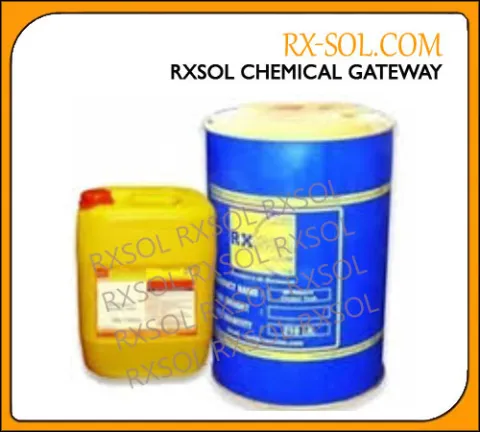
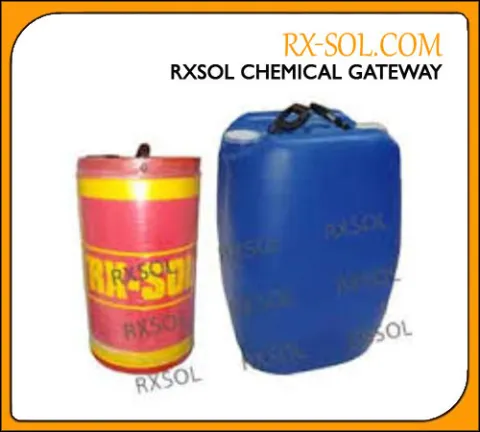
Hydrofluoric Acid 60 %
- Part number
- RXSOL-20-1107-040
- Category
- Tank Cleaner
- Brand
- RXSOL
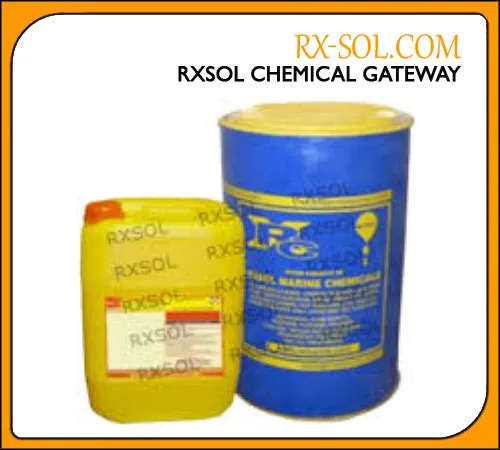
Overview
Hydrofluoric acid is a solution of hydrogen fluoride in water. It is a colorless fuming liquid which can cause painful burns. Hf is one of the strongest inorganic acids, is used mainly for industrial purposes (eg, glass etching, metal cleaning, electronics manufacturing). Hydrofluoric acid also may be found in home rust removers.
Applications
Hydrofluoric Acid dealer and Suppliers in Mumbai and Navi Mumbai. HF is classified as one of the strongest inorganic acids, is usedmainly for industrial purposes (eg, glass etching, metal cleaning, electronics manufacturing). Hydrofluoric acid also may be found in home rust removers. Hydrofluoric acid is a colourless solution of hydrogen fluoride in water.
Safety and SDS
Read the safety data sheet before handling. Wear suitable gloves and eye protection.
View safety data sheet
| Product Name | : | RXSOL-20-1107-040 |
| Product Type | : | HYDROFLORIC ACID - 60% |
Company Details:
RX MARINE INTERNATIONAL
105, A wing , BSEL , TECH PARK.
VASHI ,NEW BOMBAY 400703 INDIA
| Phone | : | +91 22 65113333 / 5555 / 9999 / 27611360 |
| Fax | : | +91 22 2781 1318 :::AOH :0091 9821214367 |
| : | rxsolchemicals@gmail.com | |
| Website | : | www.rxmarine.com |
| Chemica Name | CAS # | Percent | Hazardous |
| Hydrogen Fluoride | 7664-39-3 | 60% | Yes |
| Water | 7732-18-5 | 40% | No |
| Inhalation | Severely corrosive to the respiratory tract. May cause sore throat, coughing, labored breathing and lung congestion/inflammation. |
| Ingestion | Corrosive. May cause sore throat, abdominal pain, diarrhea, vomiting, severe burns of the digestive tract, and kidney dysfunction. |
| Skin Contact | Corrosive to the skin. Skin contact causes serious skin burns which may not be immediately apparent or painful. Symptoms may be delayed 8 hours or longer. The fluoride ion readily penetrates the skin causing destruction of deep tissue layers and even bone. |
| Eye Contact | Corrosive to the eyes. Symptoms of redness, pain, blurred vision, and permanent eye damage may occur. |
| Chronic Exposure | Intake of more than 6 mg of fluorine per day may result in fluorosis, bone and joint damage. Hypocalcemia and hypomagnesemia can occur from absorption of fluoride ion into blood stream. |
| Aggravation of Pre-existing Conditions | Persons with pre-existing skin disorders, eye problems, or impaired kidney or respiratory function may be more susceptible to the effects of this substance. |
| Ingestion | If swallowed, DO NOT INDUCE VOMITING. Give large quantities ofwater. Never give anything by mouth to an unconscious person. Get medical attention immediately. |
|
Skin Contact: FOR ACID BURNS TO THE BODY: 1) Remove the victim from the contaminated area and immediately place him under a safety shower or wash him with a water hose, whichever is available. 2) Remove all contaminated clothing. 3) Keep washing with large amounts of water for a minimum of 15 to 20 minutes. 4) Have someone make arrangements for medical attention while you continue flushing the affected area with water. 5) a) If available, after thorough washing, the burned area should be immersed in a solution of 0.2% iced aqueous Hyamine 1622 or 0.13% iced aqueous Zephiran Chloride. If immersion is not practical, towels should be soaked with one of the above solutions and used as compresses for the burn area. Ideally compresses should be changed every 2 minutes. 5) b) An alternative treatment to 5a is for the physician to inject sterile 10% aqueous calcium gluconate solution subcutaneously beneath, around, and in the burned area. Initially use no more than 0.5 cc per square centimeter and do not distort appearance of skin. If pain is not completely relieved, additional treatment is indicated. 6) Seek medical attention as soon as possible for all burns regardless of how minor they may appear initially. Hyamine 1622 is a trade name for Tetracaine Benzethonium Chloride, Merck Index Monograph 1078, a quaternary ammonium compound sold by Rohm & Haas, Philadelphia. Zephiran Chloride is a trade name for Benzalkonium Chloride, Merck Index Monograph 1059, also a quaternary ammonium compound, sold by SANOFI Winthrop Pharmaceutical, New York, NY. |
|
|
Eye Contact: FOR ACID IN THE EYES: 1) Irrigate eyes for at least 30 minutes with copious quantities of water, keeping the eyelids apart and away from eyeballs during irrigation. 2) Get competent medical attention immediately, preferably an eye specialist. 3) If a physician is not immediately available, apply one or two drops of 0.5% Pontocaine Hydrochloride solution. 4) Do not use oily drops or ointment. Place ice pack on eyes until reaching emergency room. Note to Physician: For burns of large skin areas, (greater than 25 square inches), for ingestion and for significant inhalation exposure, severe systemic effects may occur. Monitor and correct for hypocalcemia, cardiac arrhythmias, hypomagnesemia and hyperkalemia. In some cases renal dialysis may be indicated. For certain burns, especially of the digits, use of intra-arterial calcium gluconate may be indicated. Treat as chemical pneumonia. Monitor for hypocalcemia, 2.5% calcium gluconate in normal saline by nebulizer or by IPPB with 100% oxygen may decrease pulmonary damage. Bronchodilators may also be administered. Medical Surveillance: Provide phycical examinations of exposed personnel every six months including fluoride determinations in urine, studies of liver and kidney function: chest X-ray, annually. Protect from exposure those individuals with diseases of kidneys, liver, and lung. Hazardous Industrial Chemicals Safety Manual). AN ALTERNATIVE FIRST AID PROCEDURE: Hydrofluoric Acid (HF) is a highly corrosive and toxic acid, even in a dilute form. It can severely damage the skin and eyes causing severe burns which are extremely painful. Additionally, the vapor from anhydrous HF or its concentrated solutions can cause damage to skin, eyes and the respiratory system. HF differs from other strong acids in that it not only causes surface burns but rapidly penetrates the skin, even in dilute solution, and causes destruction of underlying tissue and even bone by the extraction of Calcium. For this reason, washing the burn with water is not sufficient. A neutralizing agent which will also penetrate the skin is required. The effect of HF, i.e. onset of pain, particularly in dilute solutions, may not be felt for up to 24 hours. It is important, therefore, that persons using HF have immediate access to an effective antidote even when they are away from their work place in order that first aid treatment can be commenced immediately while the patient seeks medical advice. HOW TO TREAT HYDROFLUORIC ACID BURNS: It has been conclusively shown (references 1,2,3 and 4 below) that flushing the affected area with water for one minute and then massaging HF Antidote Gel into the wound until there is a cessation of pain is the most effective first aid treatment available. HF Antidote Gel contains Calcium Gluconate which combines with HF to form insoluble Calcium Fluoride, thus preventing the extraction of Calcium from the body tissue and bones. HF Antidote Gel is available in 25g tubes, and since the effects of the dilute acid may not be apparent for some hours, we recommend that any person in contact with HF should carry, or have access to a tube of HF Antidote Gel at all times; ideally with one tube at the work place, one on the person and one at home. For safety's sake, we believe that HF Antidote Gel should be issued to all employees who may come into contact with HF. EYE INJURIES: Irrigate the affected part immediately with copious amounts of cold water. Urgent medical advice must be sought. HF Antidote Gel is NOT for use in the eye. It is imperative that any person who has been contaminated by HF should seek medical advice even when the treatment by HF Antidote Gel has been applied. |
|
| Fire |
Not considered to be a fire hazard. Fire may produce poisonous or irritating gases. |
| Explosion |
Violent exothermic reaction occurs with water. Sufficient heat may be produced to ignite combustible materials. Reacts with metals forming flammable Hydrogen gas. |
| Fire Extinguishing Media |
Keep upwind of fire. Use water or carbon dioxide on fires in which Hydrofluoric Acid is involved. Halon or foam may also be used. In case of fire, the sealed containers can be kept cool by spraying with water. |
| Special Information |
In the event of a fire, wear full protective clothing and NIOSH- approved self-contained breathing apparatus with full facepiece operated in the pressure demand or other positive pressure mode. Avoid getting water in tanks or drums; water can cause generation of heat and spattering. In contact with air, the acid gives off corrosive fumes which are heavier than air. |
|
Notify safety personnel, provide adequate ventilation, and remove ignition sources since hydrogen may be generated by reactions with metals. Wear appropriate personal protective equipment as specified in Section 8. Do not flush to sewers or waterways. Spills: Evacuate the danger area. Apply magnesium sulfate (dry) to the spill area. Follow up with inert absorbent and add soda ash or magnesium oxide and slaked lime. Collect in appropriate plastic containers and save for disposal. Wash spill site with soda ash solution. NOTE: Porous materials (concrete, wood, plastic, etc.) will absorb HF and become a hazard for an indefinite time. Such spills should be cleaned and neutralized immediately. US Regulations (CERCLA) require reporting spills and releases to soil, water and air in excess of reportable quantities. The toll free number for the US Coast Guard National Response Center is (800) 424-8802. |
|
Keep in tightly closed polyethylene containers. Store in a cool, dry place with adequate ventilation separated from other chemicals. Protect from physical damage. Storage facilities should be constructed for containment and neutralization of spills. Handling and storage of HF requires special materials and technology for containers, pipes, valves, etc., which is available from suppliers. Containers of this material may be hazardous when empty since they retain product residues (vapors, liquid); observe all warnings and precautions listed for the product. |
| Airborne Exposure Limits | ||
| Hydrogen fluoride | OSHA Permissible Exposure Limit (PEL) | 3 ppm (TWA) |
| ACGIH Threshold Limit Value (TLV) | 3 ppm Ceiling as F | |
| Ventilation System |
A system of local and/or general exhaust is recommended to keep employee exposures as low as possible. Local exhaust ventilation is generally preferred because it can control the emissions of the contaminant at its source, preventing dispersion of it into the general work area. Please refer to the ACGIH document, Industrial Ventilation, A Manual of Recommended Practices, most recent edition, for details. |
|
| Personal Respirators (NIOSH Approved) |
If the exposure limit is exceeded, a full facepiece respirator with an acid gas cartridge may be worn up to 50 times the exposure limit or the maximum use concentration specified by the appropriate regulatory agency or respirator supplier, whichever is lowest. For emergencies or instances where the exposure levels are not known, use a full-facepiece positive-pressure, air-supplied respirator. |
|
| WARNING | Air purifying respirators do not protect workers in oxygen-deficient atmospheres. Since the IDLH is low (30 ppm), the above cartridge system is not specifically approved for HF. (3M Respirator Selection Guide) | |
| Skin Protection |
Wear protective clothing, including boots or safety shoes with polyvinyl Chloride (PVC) or neoprene. Use chemical goggles and/or a full face shield. Wear coveralls with long sleeves, gauntlets and gloves of PVC or neoprene. A high degree of protection is obtained with an air-inflated suit with mask and safety belt. Use protection suitable for conditions. |
|
| Eye Protection |
Use chemical safety goggles and/or full face shield where splashing is possible. Maintain eye wash fountain and quick drench facilities in work area. |
| Appearance | Colorless, fuming liquid. |
| Odor | Acrid odor. Do not breathe fumes. |
| Solubility | Infinitely soluble. |
| Specific Gravity | 1.15 -1.18 |
| pH | 1.0 (0.1M solution) |
| % Volatiles by volume @ 21C (70F) | 100 (as water and acid) |
| Boiling Point | 108C (226F) |
| Melting Point | < -36C (< -33F) |
| Vapor Density (Air=1) | 1.97 |
| Vapor Pressure (mm Hg) | 25 @ 20C (68F) |
| Evaporation Rate (BuAc=1) | No information found. |
| Stability | Stable at room temperature (68F) when stored and used under proper conditions. |
| Hazardous Decomposition Products | On contact with metals, liberates hydrogen gas. On heating to decomposition, could yield toxic fumes of fluorides. Attacks glass and other silicon containing compounds. Reacts with silica to produce silicon tetrafluoride, a hazardous colorless gas. |
| Hazardous Polymerization | Will not occur. |
| Incompatibilities | Hydrofluoric acid is incompatible with arsenic trioxide, phosphorus pentoxide, ammonia, calcium oxide, sodium hydroxide, sulfuric acid, vinyl acetate, ethylenediamine, acetic anhydride, alkalis, organic materials, most common metals, rubber, leather, water, strong bases, carbonates, sulfides, cyanides, oxides of silicon, especially glass, concrete, silica, fluorine. Will also react with steam or water to produce toxic fumes. |
| Hydrofluoric acid | Inhalation rat LC50: 1276 ppm/1H; Investigated as a mutagen, reproductive effector. |
| Environmental Fate | If the pH is > 6.5, soil can bind fluorides tightly. High calcium content will immobilize fluorides, which can be damaging to plants when present in acid soils. |
| Environmental Toxicity | This material is expected to be slightly toxic to aquatic life. 60 ppm/*/Fish/Lethal/Fresh Water *=time period not specified. > 300ppm/48hr./Shrimp/LC50/Aerated Saltwater |
|
Whatever cannot be saved for recovery or recycling should be handled as hazardous waste and sent to a RCRA approved incinerator or disposed in a RCRA approved waste facility. Processing, use or contamination of this product may change the waste management options. State and local disposal regulations may differ from federal disposal regulations. Dispose of container and unused contents in accordance with federal, state and local requirements. |
| Proper Shipping Name | RQ, HYDROFLUORIC ACID |
| (WITH NOT MORE THAN 60% STRENGTH) | |
| Hazard Class | 8, 6.1 |
| UN/NA | UN1790 |
| Packing Group | II |
| Information reported for product/size | 250LB |
|
This MSDS has been prepared according to the hazard criteria of the Controlled Products Regulations (CPR) and the MSDS contains all of the information required by the CPR. |
| Health Rating | 4 - Extreme (Poison) |
| Flammability Rating | 0 - None |
| Reactivity Rating | 2 – Moderate |
| Contact Rating | 4 - Extreme (Corrosive) |
| Lab Protective Equip | GOGGLES, APRON, VENT HOOD; PROPER GLOVES |
| Storage Color Code | White (Corrosive) |
| NFPA Ratings | Health: 4 Flammability: 0 Reactivity: 1 |
|
THIS PRODUCT SAFETY DATA SHEET IS OFFERED SOLELY FOR YOUR INFORMATION, CONSIDERATION AND INVESTIGATION. DISCLAIMER OF LIABILITY :The information in this SDS was obtained from sources which we believe are reliable. However, the information is provided without any warranty, express or implied, regarding its correctness. The conditions or methods of handling, storage, use or disposal of the product are beyond our control and may be beyond our knowledge. For this and other reasons, we do not assume responsibility and expressly disclaim liability for loss, damage or expense arising out of or in any way connected with the handling, storage, use or disposal of the product. This MSDS was prepared and is to be used only for this product. If the product is used as a component in another product, this MSDS information may not be applicable. |
|
Availability
We are keeping ready stock Hydrofluoric acid at Pawana MIDC - Navi Mumbai, Meghpar - Gandhidham, Kolkata, Visakhapatnam, Chennai, Fujairah - Dubai - Sharjah UAE. And one of popular supplier of HF acid.