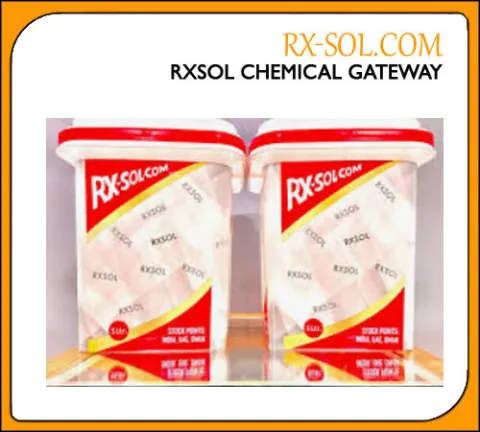
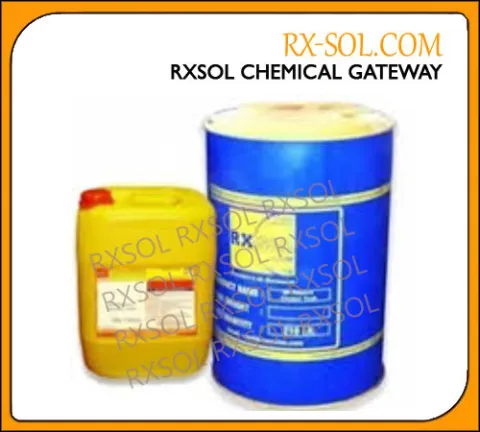
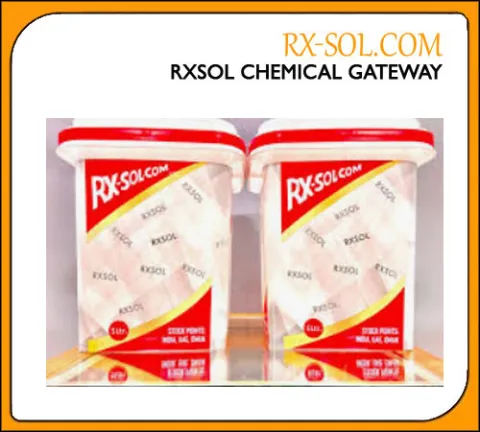
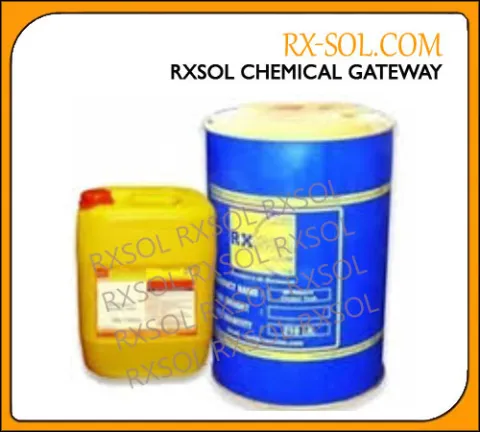
Hydrogen Peroxide 50 Percent with Silver Nitrate
- Part number
- RXSOL-15-6190-035
- Category
- House / HOTEL & CATERING
- Brand
- RXSOL
Overview
Microorganisms deactivator and cleaning solution formulated with Hydrogen Peroxide and Silver Nitrate. It is a very powerful and stable oxidizing disinfectant Chemicals. Hydrogen peroxide (H2O2) is the only germicidal agent composed only of water and oxygen. Like ozone, it kills disease organisms by oxidation! For this reason, Hydrogen peroxide is considered the world’s safest all natural effective sanitizer.
Hydrogen peroxide kills microorganisms by oxidizing them, which can be best described as a controlled burning process. When Hydrogen peroxide reacts with organic material it breaks down into oxygen and water, meaning it is non-toxic for general use.
Dosage and directions
Characteristics and notes
1. Cuts and infections
Soak any infections or cuts in 3% for five to ten minutes several times a day. Even gangrene that would not heal with any medicine has been healed by soaking in Hydrogen peroxide. Put half a bottle of hydrogen peroxide in your bath to help rid boils, fungus or other skin infections.
2. Rejuvenating Detoxifying Bath
Use about 2 quarts 3% Hydrogen peroxide to a tub of warm water. Soak at least 1/2 hour, adding hot water as needed to maintain a comfortable water temperature.
3. Foot Fungus
To cure a foot fungus, simply spray a 50/50 mixture of Hydrogen peroxide and water on them (especially the toes) every night and let dry.
4. Bird Mites Infections
Patients infected by tiny mites report that hydrogen peroxide effectively kills the mites on their skins. They spray it on their skin a couple of times (with a few minutes in between the applications) with amazing results.
5. Sinus Infections
A tablespoon of 3% Hydrogen peroxide added to 1 cup of non-chlorinated water can be used as a nasal spray. Depending on the degree of sinus involvement, one will have to adjust the amount of peroxide used.
6. Wound Care
3% H2O2 is used medically for cleaning wounds, removing dead tissue, and as an oral debriding agent. Peroxide stops slow (small vessel) wound bleeding/oozing, as well.
Some sources recommend soaking wounds for five to ten minutes several times a day. However, washing and rinsing action is sufficient. You shouldn’t leave the solution on open tissue for extended periods of time as, like many oxidative antiseptics, Hydrogen peroxide causes mild damage to tissue in open wounds. Therefore it is important to use with caution.
Personal Care
7. Mouthwash
Many people don’t realize that hydrogen peroxide makes a very effective and inexpensive mouthwash. Take one capful (the little white cap that comes with the bottle) and hold in your mouth for 10 minutes daily, then spit it out. You will not have canker sores and your teeth will be whiter. Use 3% H2O2 – add a dash of liquid chlorophyll for flavoring if desired.
8. Toothpaste
Use baking soda and add enough 3% H202 to make a paste.
9. Toothbrush
Or, just dip your brush in 3% H202 and brush. Soak your toothbrush in Hydrogen peroxide to keep them free of germs.
10. Tooth Ache
Hydrogen peroxide is not a pain killer; however, as an anti-viral, antibacterial and anti-fungal agent, it is effective at treating the pathogen that is causing the infection. The following is from my own personal experience: My dentist wanted to give me a root canal some time ago as one tooth was inflamed and, in her opinion, would die. I felt some discomfort but told her that I would give it chance to heal. I rinsed with hydrogen peroxide (several times a day) as well ascoconut oil (once a day). The discomfort went away and I have had no further problems with the tooth.
If you have a terrible toothache and cannot get to a dentist right away, put a capful of 3% Hydrogen peroxide into your mouth and hold it for 10 minutes several times a day. The pain will lessen greatly.
11. Tooth Whitening
Having used 3% Hydrogen peroxide as a mouth wash for sometime ago, I am thrilled to note that my teeth have been beautifully and effortlessly whitened. I used to pay so much for professional whitening, those silly strips and uncomfortable trays. Live and learn.
12. Douche
Add 2 capfuls of 3% Hydrogen peroxide in warm distilled water once to twice a week to remove even chronic yeast infections.
13. Colonic or Enema
For a colonic, add 1 cup (8 ozs.) 3% H202 to 5 gallons warm water. (Do not exceed this amount) For an enema, add 1 tablespoon of 3% H202 to a quart of warm distilled water.
14. Hair Lightening
Peroxide is a bleaching agent and is used for lightened hair. Dilute 3% Hydrogen peroxide with water (50 / 50) and spray the solution on your wet hair after a shower and comb it through. You will not have the peroxide burnt blonde hair like the hair dye packages, but more natural highlights if your hair is a light brown, faddish, or dirty blonde. It also lightens gradually so it’s not a drastic change.
15. Contact Lenses
Hydrogen peroxide is used as a disinfectant in CIBA Vision’s Clear Care no rub contact lens cleaning solution, due to its ability to break down the proteins that build up on the lense from the eye’s immune response, resulting in increased comfort for those with sensitive eyes.
Sanitizing / Disinfectant / Cleaning
16. In the Dishwasher
To disinfect your dishwasher, add 2 oz. of 3% Hydrogen peroxide to your regular washing formula.
17. Kitchen/Household surfaces
Clean your counters and table tops with hydrogen peroxide to kill germs and leave a fresh smell. Simply put a little on your dishrag when you wipe, or spray it on the counters.
Fill a spray bottle with a 50/50 mixture of 3% Hydrogen peroxide and water and keep it in every bathroom to disinfect without harming your septic system like bleach or most other disinfectants will. After rinsing off your wooden cutting board, pour or spray hydrogen peroxide (and then vinegar) on it to kill salmonella and other bacteria.
Keep a spray bottle of 3% (straight) to disinfect the interior of the refrigerator and kids’ school lunch boxes. You can also use hydrogen peroxide to clean glass and mirrors with no smearing. Use it in the bathroom to sanitize the counters, toilets, floors, etc.
Directions: It is best to use two spray bottles rather than mixing the solutions together. Put straight vinegar in one and straight Hydrogen peroxide in the other spray bottle. When you want to sanitize a surface (cutting board, counters, sink, cages, toys, toilets, floors, etc.) spray one mixture on the surface, then the other. When they mix, for a brief time the chemical action of the two make a very powerful sanitizer. You can rinse off the surface afterwards. This applies for kitchen surfaces as well as vegetable and food decontamination.
18. Humidifiers/Steamers
To clear the air, use 1 pint 3% hydrogen peroxide to 1 gallon of water in a humidifier or steamer.
19. Washing/Laundry
You can also add a cup of hydrogen peroxide instead of bleach to a load of whites in your laundry to whiten them. If there is blood on clothing, pour directly on the soiled spot. Let it sit for a minute, then rub it and rinse with cold water. Repeat if necessary.
Peroxide is a perfect alternate solution to keep those clothes white. Also, when chlorinating clothes, they tend to wear out faster – peroxide won’t do that.
20. Laundry / Stain Removing
3% Hydrogen peroxide is an effective stain remove if it is used fairly soon after a spill – although blood stains as old as 2 days have been successfully lifted with Hydrogen Peroxide. If a little peroxide is poured onto the stain it will bubble up in the area of the blood, due to a reaction with catalase. After a few minutes the excess liquid can be wiped up with a cloth or paper towel and the stain will be gone.
3% H2O2 must be applied to clothing before blood stains can be accidentally “set” with heated water. Cold water and soap are then used to remove the peroxide treated blood.
Please note: Hydrogen peroxide will bleach or discolor many fabrics.
Food Preparation
21. Food preparation/decontamination
Combination of vinegar and hydrogen peroxide make a cheap, effective and non-toxic disinfectant agent and is said to be more effective at killing pathogens than bleach. As it is non-toxic, you can use it to cleanse cooking and food preparation areas (as well as fruits and vegetables – see #24). In tests run at Virginia Polytechnic Institute and State University, pairing Vinegar and Hydrogen Peroxide mists, kills virtually all Salmonella, Shigella, or E. coli bacteria on heavily contaminated food and surfaces.
22. Vegetable Soak
Use as a vegetable wash or soak to kill bacteria and neutralize chemicals. Add 1/4 cup 3% H2O2 to a full sink of cold water. Soak light skinned (light lettuce) 20 minutes, thicker skinned (like cucumbers) 30 minutes. Drain, dry and refrigerate. Prolongs freshness.
If time is a problem, spray vegetables (and fruits) with a solution of 3%. Let stand for a few minutes, rinse and dry.
23. Meat Sanitizing
You can also use it to rinse off your meat before cooking.
24. Leftover tossed salad
To help keep leftover salads, spray with a solution of 1/2 cup water and 1 Tbsp. 5%. Drain, cover and refrigerate.
25. Marinade
Place meat, fish or poultry in a casserole (avoid using aluminium pans). Cover with a dilute solution of equal parts of water and 3% H202. Place loosely covered in refrigerator for 1/2 hour. Rinse and cook.
26. Sprouting Seeds
Add 1 ounce 3% Hydrogen peroxide to 1 pint of water and soak the seeds overnight. Add the same amount of hydrogen peroxide each time you rinse the seeds.
Grades of Hydrogen Peroxide
A) 3.5% Pharmaceutical Grade: This is the grade sold at your local drugstore or supermarket. This product is not recommended for internal use. It contains an assortment of stabilizers which shouldn’t be ingested. Various stabilizers include: acetanilide, phenol, sodium stanate and tertrasodium phosphate.
B) 6% Beautician Grade: This is used in beauty shops to color hair and is not recommended for internal use.
C) 30% Reagent Grade: This is used for various scientific experimentation and also contains stabilizers. It is also not for internal use.
D) 30% to 32% Electronic Grade: This is used to clean electronic parts and not for internal use.
E) 35% Technical Grade: This is a more concentrated product than the Reagent Grade and differs slightly in that phosphorus is added to help neutralize any chlorine from the water used to dilute it.
F) 35% Food Grade: This is used in the production of foods like cheese, eggs, and whey-containing products. It is also sprayed on the foil lining of aseptic packages containing fruit juices and milk products. THIS IS THE ONLY GRADE RECOMMENDED FOR INTERNAL USE.
G) 90%: This is used as an oxygen source for rocket fuel.
Safety and SDS
Read the safety data sheet before handling. Wear suitable gloves and eye protection.
View safety data sheet
| Product Name | RXSOL-60-6190-500 |
| Product Type | Hydrogen Peroxide with Silver Nitrate Microquell shield |
Company Details:
RX MARINE INTERNATIONAL
105, A wing , BSEL , TECH PARK.
VASHI ,NEW BOMBAY 400703 INDIA
Stock Point ::: Mumbai, Kandla, Kolkata, Vizag, Chennai, Fujairah UAE, Oman Muscat
| Phone | +91 22 27815541 / 42 |
| Fax | +91 22 2781 1318 :::AOH :0091 9821214367 |
| rxsolchemicals@gmail.com |
| SARA 313 Component | CAS Number | Percent Comp. |
Dimension |
Exposure Limits |
| Hydrogen Peroxide 50% | 7722-84-1 | 8-10% | V/V |
OSHA TWA 1 ppm (1.4 mg/mƒ) |
| Water, Deionized ASTM Type II | 7732-18-5 | 91.1 % | V/V |
None Established |
| Silver Nitrate Solution | 7761-88-8 | 0.01% | w/v |
Generally not hazardous in normal handling, however good laboratory practices should always be used. Avoid long term exposure to skin or by inhalation.
Emergency Overview:Warning! May be Harmful if Swallowed. Causes Eye Irritation.
Inhalation:Not Expected to be a Health Hazard under Normal Conditions.
Ingestion:Large Oral doses May Cause Irritaiton and Blistering to the Mouth, Throat, and Abdomen. May also Cause Abdominal Pain, Vomiting, and Diarrhea.
Skin:No Adverse Effects Expected on Intact Skin. Contact on Burn or Open Skin may Cause
Stinging Pain or Irritation.
Eye Contact:Causes Irritation, Redness, and Pain.
Chronic Exposure:No Information Found.
Generally not hazardous in normal handling, however good laboratory practices should always be used. Avoid long term exposure to skin or by inhalation.
|
SKIN: |
Wash exposed area with soap and water. If irritation persists, seek |
| EYES: | Wash eyes with plenty of water for at least 15 minutes, lifting lids occasionally. Seek Medical Aid. INHALATION: Remove to fresh air. If not breathing, give artificial respiration. If breathing is difficult, give oxygen |
| INGESTION: | Give several glasses of milk or water. Vomiting may occur spontaneously, but it is not necessary to induce. Never give anything by mouth to an unconscious person. |
|
Fire Extinguisher Type: |
Any means suitable for extinguishing surrounding fire |
| Fire / Explosion Hazards: | Oxidizer. Contact with combustible materials may cause a fire. |
| Fire Fighting Procedure: | Wear self-contained breathing apparatus and protective clothing to prevent contact with skin and clothing. |
Dilute with water. Flush excess down drain. Ventilate Area of Leak or Spill. Wear Appropriate Personal Protective Equipment as Specified in Section 8. Contain and Recover Liquid when Possible. Collect Liquid in an Appropriate Container or Absorb with an Inert Material (e.g., Vermiculite, Dry Sand, Earth), and Place in a Chemical Waste Container. Do Not Use Combustible Materials, such as Saw Dust.
Store in a cool dry place. Do not get in eyes, on skin, on clothing. Wash thoroughly after handling
|
Respiratory Protection |
None required |
|
Ventilation |
Local |
| OTHER |
Mechanical |
| Protective Gloves | Gloves to prevent skin exposure as rubber or vinyl |
| EYE PROTECTION | Splash Goggles |
| Other Protective Equipment |
Wear appropriate clothing to prevent skin exposure |
| BOILING POINT | ~100° C |
| VAPOR PRESSURE |
not available |
| MELTING POINT | ~0° C |
| VAPOR DENSITY |
not available |
| EVAPORATION RATE | 1 |
| Appearance /Odors | Colorless, odorless liquid |
| Flash Point | not flammable |
| Specific Gravity | ~1.01 |
| Percent Volatile by | 100% |
| Evaporation Standard | water-1 |
| Auto Ignition Temp |
Not applicable |
| Lower Flamm. Limit in Air | Not applicable |
| Upper Flamm. Limit in Air | Not applicable |
| Solubility in Water | Soluble |
|
STABILITY |
Stable |
|
CONDITIONS TO AVOID |
Temperature extremes, heat, light |
|
MATERIALS TO AVOID |
Flammables, combustibles, Cyanides, |
|
HAZARDOUS DECOMPOSITION PRODUCTS |
Hydrogen, Oxygen |
|
HAZARDOUS POLYMERIZATION |
not expected to occur |
| Conditions to Avoid | None known |
Carcinogenic References: NTP Carcinogen - Known: No, IARC Category- 3
No Information Found.
Dilute with Water and Flush to Sewer if Local Ordinances allow, Otherwise, Whatever Cannot be saved for recovery or recycling should be managed in an appropriate and approved waste Disposal Facility. Processing, use or Contamination of this product may change the waste management options. State and Local Disposal Regulations may Differ from Federal Disposal Regulations. Dispose of Container and Unused Contents in Accordance with Federal, State and Local Requirements.
International (Water, IMO, IATA)
-----------------------------
Not Regulated
DOT Classification: Not Regulated
DOT Regulations may change from time to time. Please consult the most recent D.O.T. regulations.
Chemical Inventory Status –
Part 1:Ingrdient
Hydrogen Peroxide (7722-84-1)
TSCA Yes
EC Yes
Japan No
Australia Yes
Chemical Inventory Status –
Part 2:Ingredient
Hydrogen Peroxide (7722-84-1)
Korea Yes
DSL Yes
NDSL No
Phil. Yes
Federal, State & International Regulations –
Part 1: Ingredient.
Hydrogen Peroxide (7722-84-1)
RQ NO
TPQ NO
List NO
Chemical Catg No
Federal, State &
International Regulations –
Part 2:Ingredient
Hydrogen Peroxide (7722-84-1)
CERCLA No
261.33 No
8(d) No
Chemical Weapons Convention:No
TSCA 12 (b):YES
CDTA:NO Mixture/Liquid)
SARA 311/312: Acute: Yes
Chronic: NO
Fire: No
Pressure: No
Reactivity: No
Australian Hazchem Code: None
Poison Schedule: S5
Solution has oxidizing properties. Skin contact may cause irritation, burns, Eye contact may cause irritation, discomfort, burns. Ingestion may release large amounts of oxygen, Cause burns to GI and intestinal tract. Treat symptomatically. Persons with preexisting skin, eye or mucous membrane disorders may be more
Flammability
Health Reactivity
|
Revisions |
NFPA |
| 5/10/2011 |
0.2 Revised sec 14 LS |
| 7/29/2010 |
0.1 updated msds to 16 section from 10 section msds. STN |
The information herein is believed to be accurate and is offered in good faith for the user's consideration and investigation. No warranty either expressed or implied is made for the completeness or accuracy of the information whether originating from the above mentioned company or not. Users of this material should satisfy themselves by independent investigation of current scientific and medical knowledge that the material
DISCLAIMER OF LIABILITY :The information in this SDS was obtained from sources which we believe are reliable. However, the information is provided without any warranty, express or implied, regarding its correctness. The conditions or methods of handling, storage, use or disposal of the product are beyond our control and may be beyond our knowledge. For this and other reasons, we do not assume responsibility and expressly disclaim liability for loss, damage or expense arising out of or in any way connected with the handling, storage, use or disposal of the product. This MSDS was prepared and is to be used only for this product. If the product is used as a component in another product, this MSDS information may not be applicable.