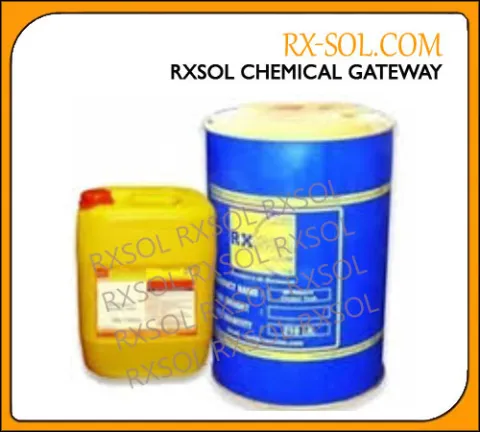
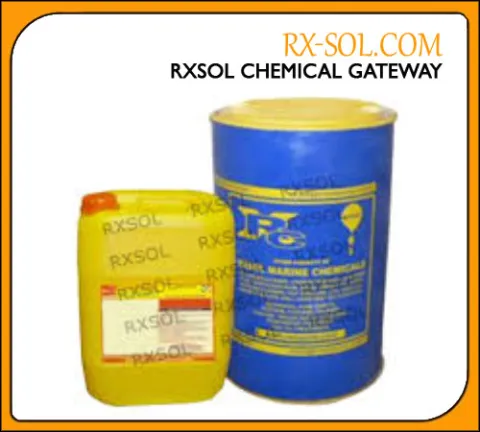
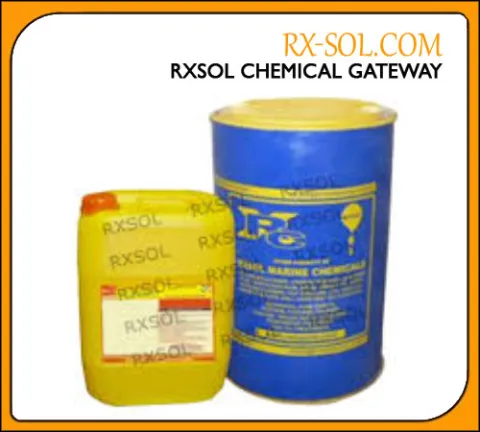
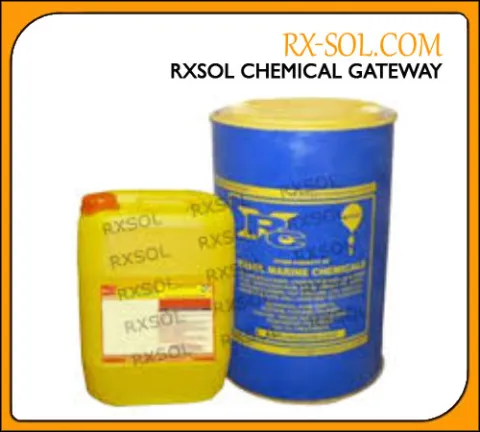
2 Ethyl Hexanol
- Part number
- RXSOL-19-1568-210
- Category
- Solvent Chemicals
- Brand
- RXSOL
Overview
Applications
Manufacturing of PVC, Plasticizers, Antifoam Agents, Solvents, etc.
Dosage and directions
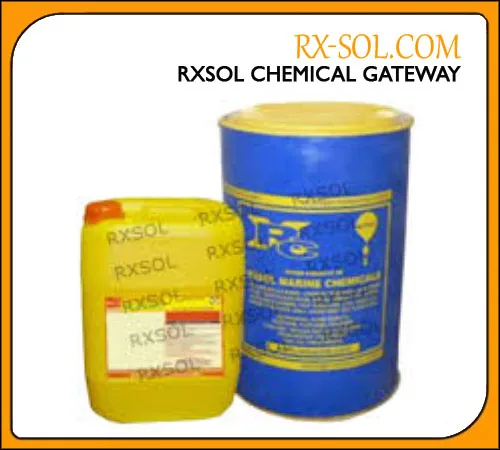
2-Ethyl Hexanol (2-EH) is a clear high-boiling point and low volatility solvent, uniform, nontoxic liquid with a characteristic odor, insoluble in water, soluble in organic solvent. It is obtained indirectly in OXO synthesis from propylene (C3H6) and synthesis gas (CO + H2)
Characteristics and notes
Safety and SDS
Read the safety data sheet before handling. Wear suitable gloves and eye protection.
View safety data sheet
| Product Name | 2 Ethyl Hexanol |
| Part Number | RXSOL-19-1568-210 |
Company Details:
RX MARINE INTERNATIONAL
105, A wing , BSEL , TECH PARK.
VASHI ,NEW BOMBAY 400703 INDIA
Branch : JNPT, GOA, Kandla, Sikka, Mangalore, Tuticorin, Chennai, Kakinada, Vizag, Dhamra, Paradip, Haldia, Kolkata , UAE and Singapore.
| Phone | +91 22 27815540 / 41 / 42 |
| Fax | +91 22 2781 1318 :::AOH :0091 9821214367 |
| rxsolchemicals@gmail.com | |
| Website | www.rxmarine.com |
| Name of Substance | Cas Number | EC Number | Weight % |
| 2 Ethyl Hexanol | 104-76-7 | 203-234-3 | 100% |
| Signal Word | Warning |
| Classification according to Regulation (EC) No 1272/2008 |
Acute toxicity, Inhalation (Category 4), H332 Skin irritation (Category 2), H315 Eye irritation (Category 2), H319 Specific target organ toxicity - single exposure (Category 3), Respiratory system, H335 |
| Hazard Statements |
Avoid breathing dust/fume/gas/mist/vapors/spray.Use only outdoors or in a well-ventilated area Wash face, hands and any exposed skin thoroughly after handling Wear protective gloves/protective clothing/eye protection/face protection. Keep away from heat/sparks/open flames/hot surfaces. - No smoking |
| Precautionary statements - prevention |
Inhalation IF INHALED: Remove victim to fresh air and keep at rest in a position comfortable for breathing.Call a POISON CENTER or doctor/physician if you feel unwell. Skin IF ON SKIN: Wash with plenty of soap and water.If skin irritation occurs: Get medical advice/attention.Take off contaminated clothing and wash before reuse. Eyes IF IN EYES: Rinse cautiously with water for several minutes. Remove contact lenses, if present and easy to do. Continue rinsing.If eye irritation persists: Get medical advice/attention. Fire In case of fire: Use CO2, dry chemical, or foam for extinction. Storage Store in a well-ventilated place. Keep container tightly closed.Store locked up Disposal Dispose of contents/container to an approved waste disposal plant |
| Precautionary statements - response | Get medical attention/advice if you feel unwell |
| Skin Contact | Wash off immediately with plenty of water for at least 15 minutes. Immediate medical attention is required. |
| Eye Contact | Rinse immediately with plenty of water, also under the eyelids, for at least 15 minutes. Obtain medical attention. |
| Inhalation: | Move to fresh air. If not breathing, give artificial respiration. Get medical attention ifm symptoms occur. Risk of serious damage to the lungs. |
| Ingestion | Clean mouth with water and drink afterwards plenty of water. Do not induce vomiting. Call a physician or Poison Control Center immediately. If vomiting occurs naturally, have victim lean forward. |
| Most important symptoms/effects | Breathing difficulties. Symptoms of overexposure may be headache, dizziness, tiredness, nausea and vomiting. |
| Notes to Physician | Treat symptomatically |
| Suitable extinguishing media | Use water spray, alcohol-resistant foam, dry chemical or carbon dioxide. Cool closed containers exposed to fire with water spray. |
| Unsuitable extinguishing media | Do not use a solid water stream as it may scatter and spread fire |
| Flash Point | 77 °C / 170.6 °F |
| AutoignitionTemperature | 270 °C / 518 °F |
| Explosion Limits Uper | 7.4 % |
| Explosion Limits Lower | 1.1 % |
| Sensitivity to Mechanical Impact | No information available |
| Sensitivity to Static Discharge | No information available |
| Specific Hazards Arising from the Chemical | Combustible material. Flammable. Containers may explode when heated. |
| Hazardous Combustion Products | Carbon monoxide (CO) Carbon dioxide (CO2) |
| Protective Equipment and Precautions for Firefighters | As in any fire, wear self-contained breathing apparatus pressure-demand, MSHA/NIOSH (approved or equivalent) and full protective gear. |
| Further Information | Remove container from danger zone and cool with water. Prevent fire extinguishing water from contaminating surface water or the ground water system. |
| Spillage | Absorb with DRY earth, sand or other non-combustible material. Do not touch spilled material. Prevent entry into sewers, basements or confined areas; dike if needed. |
| Personal Protection | Use personal protective equipment. Ensure adequate ventilation. Remove all sources of ignition. Take precautionary measures against static discharges. |
| Enviromental Precaution | Should not be released into the environment. See Section 12 for additional ecological information. Avoid release to the environment. Collect spillage. Do not flush into surface water or sanitary sewer system. |
| Methods and materials for containment and cleaning | Soak up with inert absorbent material (e.g. sand, silica gel, acid binder, universal binder, sawdust). Keep in suitable, closed containers for disposal. Do not let this chemical enter the environment. Remove all sources of ignition. Take precautionary measures against static discharges. |
| Handling | Avoid contact with skin and eyes. Do not breathe vapors or spray mist. Do not ingest. Keep away from open flames, hot surfaces and sources of ignition. Use only non-sparking tools. Use explosion-proof equipment. Take precautionary measures against static discharges. |
| Storage | Keep containers tightly closed in a dry, cool and well-ventilated place. Keep away from heat and sources of ignition. Flammables area. Corrosives area. |
| Hygiene measures | Immediately change contaminated clothing. Apply preventive skin protection. Wash hands and face after working with substance. |
| Engineering Control | Provide exhaust ventilation or other engineering controls to keep the airborne concentrations of vapors below their respective threshold limit value. Ensure that eyewash stations and safety showers are proximal to the work-station location. |
| Personal Protection |
Eye/face Protection : Wear appropriate protective eyeglasses or chemical safety goggles as described by OSHA's eye and face protection regulations in 29 CFR 1910.133 or European Standard EN166.
Skin and body protection : Wear appropriate protective gloves and clothing to prevent skin exposure. Long sleeved clothing.Flame retardant antistatic protective clothing. |
| Hygiene Measures | Handle in accordance with good industrial hygiene and safety practice. |
| Exposure Limits | This product does not contain any hazardous materials with occupational exposure limitsestablished by the region specific regulatory bodies. |
Gloves Suit
| Form | Liquid |
| Colour | Colourless |
| Odour | Alcohol-like |
| Odor Threshold | No Information Available |
| pH | Not Applicable |
| Melting Point/Range | -76 °C / -104.8 °F |
| Boiling Point/Range | 184 °C / 363.2 °F @ 760 mmHg |
| Flash Point | 77 °C / 170.6 °F |
| Evaporation Rate | No information available |
| Flammability (solid, gas) | Not Applicable |
| Explosive limits |
Upper 7.4 % Lower 1.1 % |
| Vapour pressure | 0.36 hPa @ 20 °C |
| Vapour Density | 4.5 (Air = 1.0) |
| Secific Gravity | 0.833 |
| Decomposition Temperature | No information available |
| Partition coefficient | No data available |
| Autoignition Temperature | 270 °C / 518 °F |
| Solubility in Water | 1 g/l at 20 °C |
| Viscosity | 10 mPa s at 20 °C |
| Molecular Formula | C8 H18O |
| Molecular Weight | 130.23 |
| Recativity Hazard | None known, based on information available |
| Stability | Stable under normal conditions. |
| Possibility of hazardous reactions | No known hazardous reactions. |
| Conditions to avoid | Incompatible products. Keep away from open flames, hot surfaces and sources of ignition. |
| Incompatible materials | Strong oxidizing agents, Strong acids, Strong bases |
| Hazardous Decomposition Products | Carbon monoxide (CO), Carbon dioxide (CO2), |
| Hazardous Polymerization | Hazardous polymerization does not occur. Hazardous Reactions None under normal processing |
| Acute toxicity |
LD50 Oral - Rat - 3,730 mg/kg(2-Ethylhexan-1-ol) Remarks: Brain and Coverings:Recordings from specific areas of CNS. Behavioral:Somnolence (general depressed activity). Lungs, Thorax, or Respiration:Dyspnea. LD50 Dermal - Rat - > 3,000 mg/kg(2-Ethylhexan-1-ol) (OECD Test Guideline 402) |
| Skin corrosion |
Skin - Rabbit(2-Ethylhexan-1-ol) Result: Skin irritation - 24 h (OECD Test Guideline 404) |
| Serious eye damage/eye irritation |
Eyes - Rabbit(2-Ethylhexan-1-ol) Result: Moderate eye irritation - 24 h |
| Respiratory or skin sensitisation | No data available(2-Ethylhexan-1-ol) |
| Other Adverse Effects | The toxicological properties have not been fully investigated. See actual entry in RTECS for complete information. |
| Toxicity to Fish |
LC50 - Leuciscus idus (Golden orfe) - 17.1 mg/l - 96 h(2-Ethylhexan-1-ol) NOEC - Leuciscus idus (Golden orfe) - 14 mg/l - 96 h(2-Ethylhexan1-ol) |
| Toxicity to daphnia and other aquatic -invertebrates |
Immobilization EC50 - Daphnia magna (Water flea) - 39 mg/l - 48 h(2- Ethylhexan-1-ol) |
| Biodegradation: | Readily biodegradable (OECD Test Guideline 301C) |
| Mobility in soil | No information available. |
| Results of PBT and vPvB assessment | This substance/mixture contains no components considered to be either persistent, bioaccumulative and toxic (PBT), or very persistent and very bioaccumulative (vPvB) at levels of 0.1% or higher. |
| Other adverse effects | Harmful to aquatic life. |
| Waste Disposal Method | Chemical waste generators must determine whether a discarded chemical is classified as a hazardous waste. Chemical waste generators must also consult local, regional, and national hazardous waste regulations to ensure complete and accurate classification |
| DOT | Not regulated |
| TDG | Not regulated |
| IATA | Not regulated |
| IMDG/IMO | Not regulated |
| Safety and Enviroment Regulation | This safety datasheet complies with the requirements of Regulation (EC) No. 1907/2006. |
| TSCA (US Toxic Substances Control Act): | This product is listed on the TSCA inventory. Any impurities present in this product are exempt from listing. |
| DSL (Canadian Domestic Substances List) and CEPA (Canadian Environmental Protection Act): | This product is listed on the DSL. Any impurities present in this product are exempt from listing. |
| Chemical safety assessment | For this product a chemical safety assessment was not carried out |
| HMIS | |
| Health Hazard | : 2 |
| Fire Hazard | : 2 |
| Reactivity | : 0 |
| Personal Protection | : H |
| NFPA : | |
| Health Hazard | : 2 |
| Fire Hazard | : 2 |
| Reactivity | : 0 |
| Specific Hazard | : .. |
| Other Information |
The information above is believed to be accurate and represents the best information currently available to us. However, we make no warranty of merchantability or any other warranty, express or implied, with respect to such information, and we assume no liability resulting from its use. Users should make their own investigations to determine the suitability of the information for their particular purposes. In no event shall be liable for any claims, losses, or damages of any third party or for lost profits or any special, indirect, incidental, consequential or exemplary damages, howsoever arising, even if RX Marine International has been advised of the possibility of such damages. DISCLAIMER OF LIABILITY :The information in this SDS was obtained from sources which we believe are reliable. However, the information is provided without any warranty, express or implied, regarding its correctness. The conditions or methods of handling, storage, use or disposal of the product are beyond our control and may be beyond our knowledge. For this and other reasons, we do not assume responsibility and expressly disclaim liability for loss, damage or expense arising out of or in any way connected with the handling, storage, use or disposal of the product. This MSDS was prepared and is to be used only for this product. If the product is used as a component in another product, this MSDS information may not be applicable. |
Availability
2-Ethyl Hexanol, Ethyl Hexyl Alcohol, Octyl Alcohol, Octanol supplier in fujairah, Barka Muscat, Nairobi Kenya, Mumbai. 2-Ethyl Hexanol well known supplier in Dubai, Sharjah, Ajman, Abudhabi, UAE Middle East, Muscat Barka Sohar, Oman, Kolkata, Visakhapatnam, Chennai, Ganddhidham Gujrat, Africa Canada