4-pyridinecarboxylic acid
- Part number
- RXSOL-61-6396-100
- Category
- Lab Equipment
- Brand
- RXSOL
Overview
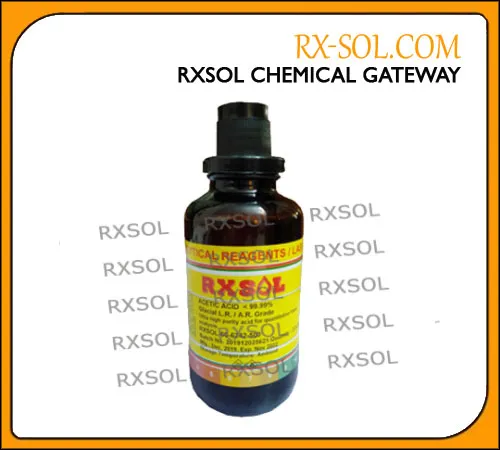
It is an organic compound with a carboxyl group on a pyridine ring. It is an isomer of nicotinic acid — the carboxyl group for isonicotinic acid is on the 4-position instead of the 3-position for nicotinic acid.
Safety and SDS
Read the safety data sheet before handling. Wear suitable gloves and eye protection.
View safety data sheet
| Product Name |
4-Pyridinecarboxylic acid |
| Product Type | RXSOL-61-6396-100 |
Company Details:
RX MARINE INTERNATIONAL
105, A wing , BSEL , TECH PARK.
VASHI ,NEW BOMBAY 400703 INDIA
| Phone | +91 22 65113333/ 5555 / 9999 / 27611360 / 27815540 |
| Fax | +91 22 2781 1318 :::AOH :0091 9322594669 |
| rxsolchemicals@gmail.com |
Composition/information on ingredients
|
Formula |
C6H5NO2 (Hill) |
|
CAS-No |
55-22-1 |
|
EC-No |
200-228-2 |
|
Molar mass |
123,11 g/mol |
Classification (REGULATION (EC) No 1272/2008) : Eye irritation, Category 2, H319 For the full text of the R-phrases mentioned in this Section, see Section 16.
| Signal word | Warning |
| Hazard statement: | H319 Causes serious eye irritation. |
| Precautionary statements: | P260 Do not breathe dust. P262 Do not get in eyes, on skin, or on clothing. |
| P305 + P351 + P338 IF IN EYES: | Rinse cautiously with water for several minutes. Remove contact lenses, if present and easy to do. Continue rinsing. |
|
Symbol(s) |
Xi |
Irritant |
|
R-phrase(s) |
36 |
Irritating to eyes. |
|
S-phrase(s) |
22-24-26 |
Do not breathe dust. Avoid contact with skin. In case of contact with eyes, rinseimmediately plent of water and seek medical advice |
|
EC-No. |
200-228-2 |
| After inhalation | Fresh air. |
| After skin contact | Wash off with plenty of water. Remove contaminated clothing. |
| After swallowing | Immediately make victim drink water (two glasses at most). Consult a physician. |
|
Most important symptoms and effects, both acute and delayed |
Irritant effects |
|
Indication of immediate medical attention and special treatment needed |
No information available. |
Special hazards arising from the substance or mixture:
| Combustible material | Development of hazardous combustion gases or vapours possible in the event of fire. Fire may cause evolution ofnitrogen oxides |
| Advice for firefighters | Special protective equipment for fire-fighters In the event of fire, wear self-contained breathing apparatus |
| Further information | Prevent fire extinguishing water from contaminating surface water or the ground water system. Suppress (knock down) gases/vapours/mists with a water spray jet. |
|
Advice for non emergency personnel: |
Avoid substance contact. Avoid inhalation of dusts. Ensure adequate ventilation. Evacuate the danger area, observe emergency procedures, consult anexpert |
| Advice for emergency responders | Protective equipment see section 8 |
| Environmental precautions | Do not empty into drains. |
| Methods and materials for containment and cleaning up: | Cover drains. Collect, bind, and pump off spills. Observe possible material restrictions (see sections 7.2 and 10.5). Take up dry. Dispose of properly. Clean up affected area. Avoid generation of dusts. |
| Reference to other sections | Indications about waste treatment see section 13 |
| Precautions for safe handling | Observe label precautions. Conditions for safe storage, including any incompatibilities Tightly closed. Dry. |
| Storage temperature | no restrictions |
| Storage temperature | Apart from the uses mentioned in section 1.2 no other specific uses are stipulated |
Control parameters:
Contains no substances with occupational exposure limit values.
Exposure controls: Engineering measures
Technical measures and appropriate working operations should be given priority over the use of personal protective equipment.
Individual protection measures: Protective clothing needs to be selected specifically for the workplace, depending onconcentrations and quantities of the hazardous substances handled. The chemical resistance ofthe protective equipment should be enquired at the respective supplier.Hygiene measuresChange contaminated clothing. Preventive skin protection recommended. Wash hands afterworking with substance.
Eye/face protection: Safety glasses
Hand protection:
full contact:
|
Glove material |
Nitrile rubbe |
|
Glove thickness |
0,11 mm |
|
Break through time |
> 480 min |
splash contact:
|
Glove material |
Nitrile rubbe |
|
Glove thickness |
0,11 mm |
|
Break through time |
> 480 min |
The protective gloves to be used must comply with the specifications of EC Directive 89/686/EEC and the related standard EN374
Other protective equipment: protective clothing:
Respiratory protection: required when dusts are generated.
Recommended Filter type: Filter P 2 (acc. to DIN 3181) for solid and liquid particles of harmful substances The entrepeneur has to ensure that maintenance, cleaning and testing of respiratory protective devices are carried out according to the instructions of the producer. These measures have to be properly documented.
Environmental exposure controls: Do not empty into drains.
Information on basic physical and chemical properties :
|
Form |
Powder |
|
Colour |
White |
|
Odour |
Odourless |
|
Odour Threshold |
No information available. |
|
pH |
3 - 4 at 6 g/l 20 °C (saturated solution) |
|
Melting point |
315 - 319 °C |
|
Boiling point/boiling range |
260 °C at 20 hPa |
|
Flash point |
No information available. |
|
Evaporation rate |
No information available. |
|
Flammability (solid, gas) |
No information available. |
|
Lower explosion limit |
No information available. |
|
Upper explosion limit |
No information available. |
|
Vapour pressure |
No information available. |
|
Relative vapour density |
4,2 |
|
Relative density |
No information available. |
|
Water solubility |
6 g/l at 20 °C |
|
Partition coefficient: noctanol/water |
log Pow: 0,32 Method: (experimental) |
|
Autoignition temperature |
No information available. |
|
Decomposition temperature |
No information available. |
|
Viscosity, dynamic |
No information available. |
|
Explosive properties |
No information available. |
|
Oxidizing properties |
No information available. |
Other data:Bulk density 500 kg/m³
| Reactivity | The following applies in general to flammable organic substances and preparations: incorrespondingly fine distribution, when whirled up a dust explosion potential may generally be assumed. |
| Chemical stability | The product is chemically stable under standard ambient condition room temperature). Possibility of hazardous reactions( |
| Violent reactions possible with: | Oxidizing agents, bases, strong reducing agents, acids |
| Conditions to avoid | no information available |
| Incompatible materials | no information available |
| Hazardous decompositionproducts |
in the event of fire: See chapter 5. |
Information on toxicological effects:
| Acute oral toxicity | LD50 rat |
| Dose | 5.000 mg/kg |
| Symptoms | Irritations of mucous membranes in the mouth, pharynx, oesophagus and gastrointestinal tract |
.
Acute inhalation toxicity:
| Symptoms |
Possible damages, mucosal irritations |
| Skin irritation |
Slight irritation |
|
Eye irritation |
Causes serious eye irritation. |
| Specifictargetorgantoxicity single exposure |
The substance or mixture is not classified as specific target organ toxicant, single exposure. |
|
Specific target organ toxicity - repeated exposure |
The substance or mixture is not classified as specific target organ toxicant, repeated exposure |
| Aspiration hazard | No aspiration toxicity classification |
| Further information | Other dangerous properties can not be excluded. Handle in accordance with good industrial hygiene and safety practice. |
Toxicity:
| Toxicity to daphnia and other aquatic invertebrates | EC50 |
| Species | Tetrahymen pyriformis |
| Dose | 2.932 mg/l |
| Exposure time | 60 h (ECOTOX Database) |
| Persistence and degradability | No information available. |
| Bioaccumulative potential | Partition coefficient: n-octanol/water |
| log Pow | 0,32 |
| Method | Experimental) (Lit.) Bioaccumulation is not expected (log Pow <1). |
| Mobility in soil | No information available. |
Waste treatment methods
Waste material must be disposed of in accordance with the Directive on waste 2008/98/EC as well as other national and local regulations. Leave chemicals in original containers. No mixing with other waste. Handle uncleaned containers like the product itself.
Not classified as dangerous in the meaning of transport regulations.
|
Safety, health and environmental regulations/legislation specific for the substance or mixture: |
EU regulations |
| Major Accident Hazard | 96/82/EC |
| Legislation: | Directive 96/82/EC does not apply |
| Occupational restrictions | Take note of Dir 94/33/EC on the protection of young people at National legislation |
| Storage class VCI | 10 - 13 Other liquids and solids |
| Chemical Safety Assessment: | For this product a chemical safety assessment was not carried out. |
Text of R and S phrase codes used in this safety data sheet:- R34: Causes burns; R36: Irritating to eyes; R37: Irritating to respiratory system; R41: Risk of serious damage to eyes. The information provided about the product on this Safety Data Sheet has been compiled from knowledge of the individual constituents The data given here is based on current knowledge and experience. This Safety Data Sheet describes the product in terms of safety requirements and does not signify any warranty with regard to the product's properties The data given here only applies when product used for proper application(s). The product is not sold as suitable for other applications - usage in such may cause risks not mentioned in this sheet. Do not use for other application(s) without seeking advice from manufacturer
Availability
4-pyridinecarboxylic acid manufacturer supplier distributor in Mumbai, Kandla, Kolkata, Vizag, Chennai, India, Fujairah, Dubai, Sharjah, UAE, Gulf, Middle East, Muscat Oman, Kenya Africa. Get the best quality of 4-pyridinecarboxylic acid at a competitive price from us. We have ready stock of 4-pyridinecarboxylic acid in India, UAE Gulf, Oman, Kenya Africa. Contact us for bulk as well as small orders.