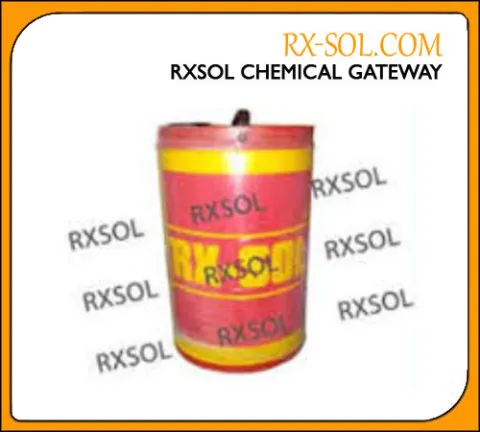
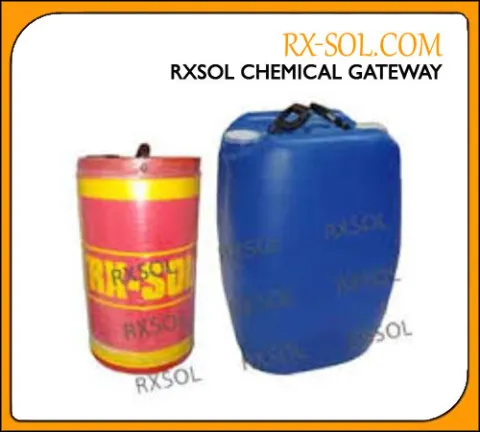
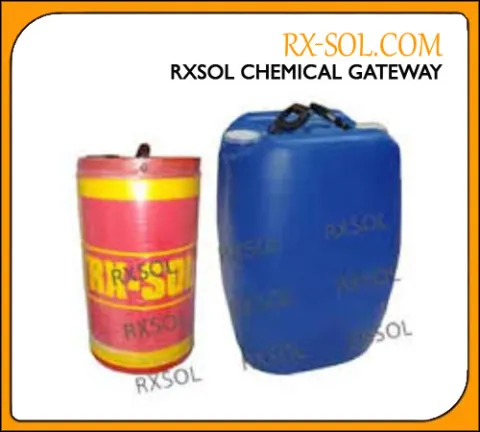
BOILPLEX AT Hardness Control
- Part number
- RXSOL-40-5027-025
- Category
- Boiler Chemicals
- Brand
- RXSOL
Overview
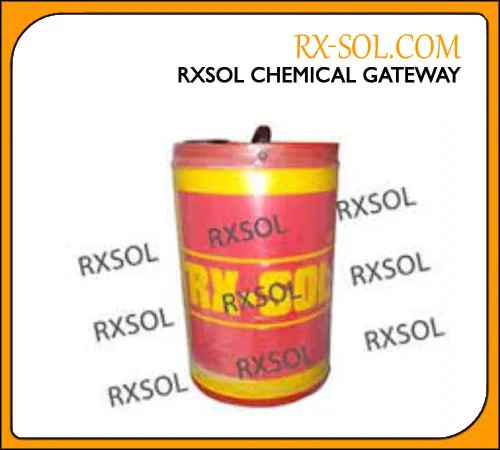
BOILPLEX AT Hardness Control is specialized Boiler Water treatment product to KEEP Boiler water Clear and Clean SLUDGE FREE.
Boilplex AT is basically phosphates combination with synthetic polymers. Very easy to use, provides flexibility in system operation and control over the operation of the auxiliary and exhaust gas heaters on the boats. The tool is designed to maintain the cleanliness of the boiler at unstable as feedwater.
Technical specifications
|
Appearance |
: Clear liquid |
|
Specific gravity at 25 º C (77 º F) |
: 1.056 |
|
Fire |
: off |
|
Freezing temperature |
: -6.6 º C (20 º F) |
|
pH |
: 13.4 |
|
Stability after freeze / that |
: yes |
Applications
To be most effective to prevent corrosion and scaling using drug Boilplex AT the drug should be constantly adding to the boiler system with a dosing devices BWT Dosing System. Less preferable to use gravitational dosing device, because preparation can evaporate when the water returns into the tank cascade.
RXSOL BOILPLEX AT Hardness Control Sludge Conditioner most commonly used in low and medium pressure boilers, to keep BOILER WATER CLEAR and Sludge free.
Dosage and directions
Regularly enter solutions drugs Boilplex AT with a dosing device BWT Dosing System in feedwater recirculation outlet below which returns cascading water in the tank. If there is no recirculation of feedwater, the drug should be submitted in suction tube feeding pump. When using gravity dispenser the drug should be fed to the point of feed water tank or in cascade. Drug supply line should be higher than normal water level (about 1 meter) and as close as possible to the fence of water nutrient pump. Boilplex AT to be dissolved in distilled water or condensate in the dispensing tank and gradually continuously fed for 24 hours, keeping the system demand. The daily dosage is depend on the volume of the system, the condensate quality and purity, as well as the quality and quantity of the feed water system. For standard operating systems the dosage Boilplex AT is about 1 liter a day.
Very large systems or in non-standard conditions will have a greater need for preparation. Many factors can affect the initial dose of the drug. The two most important factors - quality feedwater and the boiler. The recommended initial dose of 2.5 to 5 liters per tonne of water system. After the initial filling of the product during operation of the system on a daily basis should perform a test to adjust the dosage. Low quality feedwater demands increase quantities of preparation, as well as leaching of the polluted water from the boiler of the boiler due to the settling of particles on bottom of the boiler during system shutdown. This in turn entails the need for additional purging and increase the amount of drug.
The main objective of the program - to prevent fouling. The most effective way to fight c deposits is to use distilled water feed. Boilplex AT created for removing water hardness instability.
Blowdown
Purge procedure is necessary for the effectiveness of any treatment program and boiler watershall be in accordance recommendations manufacturer's instructions. Purging is required to remove the precipitate dissolved and suspended solids. Normal regular purging with sufficient neutral of conductivity 700 μmho. A higher rate of conductivity (above 700 μmho) frequency blowdown should be increased. Additionally, it is recommended to wash weekly collector or separator pair (if any) to reduce the accumulation of sludge.
Characteristics and notes
Testing:
Dosage and frequency Boilplex AT controlled blowdown simple tests on the quality of the boiler water.Tests include checking parameters such as hydrate alkalinity, conductivity, phosphates, stiffness feedwater and condensate pH. For more information about the testing procedure, refer to Table control the amount and dosage Boilplex AT Control and Dosage Chart or contact representative of Rx Marine International.
CHARACTERISTICS :
- Has dispersant properties.
- Converts crystals.
- Comprehensive protection.
- Air conditioning sludge.
- Multi-tool.
- Prevents scale.
- Easy to use and testing.
BENEFITS
- Do not allow the particles to stick together.
- Do not allow the build-up of scale on pipes.
- Provides efficient heat transfer.
- Soft sludge" can be easily removed by blowing.
- Redundant components ensure protection.
- Boiler Cleaner.
- Increases in operation.
- Reduces the need for acid peels.
- Saves maintenance costs Kotel.
- Control of corrosion caused due to low.
- pH levels in the condensate system.
- Controls alkalinity.
- Controls the formation of a new scale.
- Convenient for operator.
Safety and SDS
Read the safety data sheet before handling. Wear suitable gloves and eye protection.
View safety data sheet
| Product Name | Boilplex AT |
| Product | RXSOL-40-5027-025 |
Company Details:
RX MARINE INTERNATIONAL
105, A wing , BSEL , TECH PARK.
VASHI ,NEW BOMBAY 400703 INDIA
Stock Point : Mumbai, GAndhidham, Kolkata, Chennai, Visakhapatnam, Fujairah, Muscat, Nairobi Kenya
| Phone | +91 22 27611360 / 27815540 |
| Fax | +91 22 2781 1318 + :::AOH :0091 9821214367 |
| rxsolchemicals@gmail.com |
Hazardous Components CAS-No. Concentration
MORPHOLINE 110-91-8 >=10-<15%
POTASSIUM HYDROXIDE 1310-58-3 >=1.5-<5%
INORGANIC SALT 254504001-5294 >=1-<1.5%
POTASSIUM COMPOUND 254504001-5137 >=1-<1.5%
Mixed Polymer : Proprietory Blend
DANGER! MAY AFFECT THE CENTRAL NERVOUS SYSTEM CAUSING DIZZINESS,
HEADACHE OR NAUSEA. VAPOR MAY CAUSE TEMPORARY BLURRING OF VISION. MAY
BE HARMFUL. MAY CAUSE SEVERE BURNS OF RESPIRATORY AND DIGESTIVE TRACTS.
HARMFUL IF ABSORBED THROUGH THE SKIN. CAUSES SEVERE BURNS OF THE EYES
AND SKIN.
Potential Health Effects
Exposure routes
Inhalation, Skin absorption, Skin contact, Eye Contact, Ingestion
Eye contact
Can cause permanent eye injury. Symptoms include stinging, tearing, redness, and swelling of
eyes. Can injure the cornea and cause blindness. Additional symptoms of eye exposure may include:
blurred vision halo vision (blurred vision around bright objects)
Skin contact Can cause permanent skin damage. Symptoms may include redness, burning, and swelling of skin, burns, and other skin damage. The feeling of irritation or burning may be delayed following skin contact with potassium hydroxide solutions. Contact with mist or dust may cause multiple small skin burns. Passage of this material into the body through the skin is possible, and skin contact may be
harmful.
Ingestion
Swallowing this material may be harmful or fatal. Symptoms may include severe stomach and
intestinal irritation (nausea, vomiting, diarrhea), abdominal pain, and vomiting of blood. Swallowing
this material may cause burns and destroy tissue in the mouth, throat, and digestive tract. Low blood
pressure and shock may occur as a result of severe tissue injury.
Inhalation
Breathing of vapor or mist is possible. Breathing this material may be harmful or fatal.
Symptoms may include severe irritation and burns to the nose, throat, and respiratory tract. Symptoms
are not expected at air concentrations below the recommended exposure limits, if applicable (see Section 8.).
Aggravated Medical Condition
Preexisting disorders of the following organs (or organ systems) may be aggravated by exposure
to this material:, Upper respiratory tract, Skin, lung (for example, asthma-like conditions), Liver, kidney,
eye Symptoms
Signs and symptoms of exposure to this material through breathing, swallowing, and/or passage
of the material through the skin may include:, stomach or intestinal upset (nausea, vomiting, diarrhea),
thirst, irritation (nose, throat, airways), runny nose, Cough, central nervous system depression
(dizziness, drowsiness, weakness, fatigue, nausea, headache, unconsciousness), Weakness, Abdominal
pain, lung edema (fluid buildup in the lung tissue), kidney damage, liver damage, lung damage
Target Organs
Overexposure to this material (or its components) has been suggested as a cause of the following
effects in laboratory animals:, nasal damage, eye damage, kidney damage, liver damage, lung damage
Carcinogenicity
This material is not listed as a carcinogen by the International Agency for Research on Cancer
(IARC), the National Toxicology Program (NTP), or the Occupational Safety and Health Administration
(OSHA).
Reproductive hazard
Based on the available information, risk to the fetus from maternal exposure to this material
cannot be assessed.
Other information
Nitrites should not be added to this material because this can result in formation of nitrosamines.
Many nitrosamines cause cancer in laboratory animals.
Eyes
If material gets into the eyes, immediately flush eyes gently with water for at least 15 minutes
while holding eyelids apart. If symptoms develop as a result of vapor exposure, immediately move
individual away from exposure and into fresh air before flushing as recommended above. Seek
immediate medical attention.
Skin
Immediately flush skin with water for at least 15 minutes while removing contaminated clothing
and shoes. Seek immediate medical attention. Wash clothing before reuse and discard contaminated
shoes.
Ingestion
Seek immediate medical attention. Do not induce vomiting. Vomiting will cause further
damage to the mouth and throat. If individual is conscious and alert, immediately rinse mouth with water
and give milk or water to drink. If possible, do not leave individual unattended. Inhalation
If symptoms develop, immediately move individual away from exposure and into fresh air. Seek
immediate medical attention; keep person warm and quiet. If person is not breathing, begin artificial
respiration. If breathing is difficult, administer oxygen.
Notes to physician
Hazards: Excessive levels of phosphorus can cause low blood calcium, with tetany and
convulsions.
Treatment: No information available.
Inhalation
If symptoms develop, immediately move individual away from exposure and into fresh air. Seek immediate medical attention; keep person warm and quiet. If person is not breathing, begin artificial respiration. If breathing is difficult, administer oxygen.
Notes to physician
Hazards: Excessive levels of phosphorus can cause low blood calcium, with tetany and
convulsions.
Treatment: No information available.
Personal precautions
For personal protection see section 8. Persons not wearing protective equipment should be
excluded from area of spill until clean-up has been completed.
Environmental precautions
No data
Methods for cleaning upPersons not wearing protective equipment should be excluded from area of spill until clean-up has been completed. Stop spill at source, dike area of spill to prevent spreading, pump liquid to salvage tank. Remaining liquid may be taken up on sand, clay, earth, floor absorbent, or other absorbent material and shoveled into containers. Neutralize and mop up solution.
Persons not wearing protective equipment should be excluded from area of spill until clean-up
has been completed. Stop spill at source, dike area of spill to prevent spreading, pump liquid to salvage
tank. Remaining liquid may be taken up on sand, clay, earth, floor absorbent, or other absorbent material and shoveled into containers. Neutralize and mop up solution.
Exposure Guidelines
MORPHOLINE 110-91-8
ACGIH time weighted average 20 ppm
NIOSH Recommended exposure
limit (REL): 20 ppm
NIOSH Recommended exposure
limit (REL): 70 mg/m3
NIOSH Short term exposure limit 30 ppm
NIOSH Short term exposure limit 105 mg/m3
OSHA Z1 Permissible exposure limit 20 ppm
OSHA Z1 Permissible exposure limit 70 mg/m3
POTASSIUM HYDROXIDE 1310-58-3
ACGIH Ceiling Limit Value: 2 mg/m3
NIOSH Recommended exposure
limit (REL): 2 mg/m3
General advice
These recommendations provide general guidance for handling this product. Personal protective
equipment should be selected for individual applications and should consider factors which affect
exposure potential, such as handling practices, chemical concentrations and ventilation. It is ultimately
the responsibility of the employer to follow regulatory guidelines established by local authorities.
Exposure controls
Provide sufficient mechanical (general and/or local exhaust) ventilation to maintain exposure
below TLV(s).
Eye protection
Chemical splash goggles and face shield (8" min.) in compliance with OSHA regulations are
advised; however, OSHA regulations also permit other type safety glasses. (Consult your industrial
hygienist.) Contact lenses should not be worn.
Skin and body protection
To prevent repeated or prolonged skin contact, wear impervious clothing and boots.
Other protective equipment: eyewash station, emergency shower.
Wear resistant gloves such as:
Neoprene
Nitrile rubber
Respiratory protection
Exposures in the workplace should be monitored if worker exposure to vapor or mists exceeds
the PEL or TLV. Only a NIOSH-approved respirator and cartridge (TC-23C) is to be used. Monitoring
results must be used to assess the proper level of respiratory protection necessary (such as: full face
piece respirator with chemical cartridges or self-contained breathing apparatus { scuba} , etc.). Proper
engineering and/or administrative controls should be used to reduce worker exposure. The facility's
respiratory program must meet the requirements established in 29 CFR 1910.134, which includes a
program for medical evaluation.
| Physical state |
liquid |
| Form |
no data available |
| Colour |
light brown |
| Odour | No information available. |
| Boiling point/boiling range |
212 °F / 100 °C @ 1,013.33 hPa Calculated Phase Transition Liquid/Gas |
| Melting point/range |
16 °F / -9 °C |
| Sublimation point |
no data available |
| pH |
14 |
| Flash point |
> 212 °F / > 100 °C |
| Ignition temperature |
no data available |
| Evaporation rate |
(>)1 Ethyl Ether |
| Lower explosion limit/Upper explosion limit |
1.8 %(V) / 10.8 %(V) |
| Particle size |
no data available |
| Vapour pressure |
23.333 hPa @ 68 °F / 20 °C Calculated Vapor Pressure |
| Relative vapour density |
no data available |
| Density |
1.080 g/cm3 @ 77.00 °F / 25.00 °C |
| Bulk density |
No data |
| Water solubility |
completely soluble |
| Solubility(ies) |
no data available |
| Partition coefficient: n-octanol/water |
no data available |
| log Pow |
no data available |
| Autoignition temperature |
no data available |
| Viscosity, dynamic |
no data available |
| Viscosity, kinematic |
no data available |
| Solids in Solution |
no data available |
| Decomposition temperature |
no data available |
| Burning number |
no data available |
| Dust explosion constant |
no data available |
| Minimum ignition energy |
no data available |
Stability
Stable.
Conditions to avoid
None known.
Incompatible productsAcids, halogenated hydrocarbons, Strong oxidizing agents, nitrites and other nitrosating agents, Metals, chlorinated solvents, This product should not be used in conjunction with trimethylol propane or trimethylol propane-derived products. There is a possibility that bicyclic phosphates or phosphites can be produced as a result of the thermal decomposition of this product in combination with trimethylol propane, trimethylol propane-derived products or their corresponding trimethylol propane alkane homologs. Bicyclic phosphates and phosphites are a class of materials with acute neurotoxic properties which produce characteristic convulsive seizures in test animals.
Hazardous decomposition products
carbon dioxide and carbon monoxide, formaldehyde, nitrogen compounds, Oxides of
phosphorus, potassium oxide
Hazardous reactions
Product will not undergo hazardous polymerization.
Thermal decomposition
No data
Acute oral toxicity
MORPHOLINE : no data available
POTASSIUM HYDROXIDE : no data available
INORGANIC SALT : LD L0 Rat: 4,640 mg/kg
POTASSIUM COMPOUND : no data available
Acute inhalation toxicity
MORPHOLINE : LC 50 Rat: 8000 ppm; 8 h
POTASSIUM HYDROXIDE : no data available
INORGANIC SALT : no data available
POTASSIUM COMPOUND : no data available
Acute dermal toxicity
MORPHOLINE : LD 50 Rabbit: 500 mg/kg
POTASSIUM HYDROXIDE : LD 50 Rabbit: 1,260 mg/kg
INORGANIC SALT : LD 50 Rabbit: > 4,640 mg/kg
POTASSIUM COMPOUND : no data available
SECTION 12
Biodegradability
MORPHOLINE : no data available
POTASSIUM HYDROXIDE : no data available
INORGANIC SALT : no data available
POTASSIUM COMPOUND : Not readily biodegradable.
Bioaccumulation
MORPHOLINE : no data available
POTASSIUM HYDROXIDE : no data available
INORGANIC SALT : no data available
POTASSIUM COMPOUND : no data availableEcotoxicity effects
Toxicity to fish
MORPHOLINE : no data available
POTASSIUM HYDROXIDE : 96 h LC 50 Western mosquitofish (Gambusia affinis):
80.00 mg/l Method: Static; MortalityINORGANIC SALT : no data available
POTASSIUM COMPOUND : no data available
Toxicity to daphnia and other aquatic invertebrates.
MORPHOLINE : no data available
POTASSIUM HYDROXIDE : no data available
INORGANIC SALT : no data available
POTASSIUM COMPOUND : no data available
Toxicity to algae
MORPHOLINE : no data available
POTASSIUM HYDROXIDE : no data available
INORGANIC SALT : no data available
POTASSIUM COMPOUND : no data available
Toxicity to bacteria
MORPHOLINE : no data available
POTASSIUM HYDROXIDE : no data available
INORGANIC SALT : no data available
POTASSIUM COMPOUND : no data available
Biochemical Oxygen Demand (BOD)
MORPHOLINE : no data available
POTASSIUM HYDROXIDE : no data available
INORGANIC SALT : no data available
POTASSIUM COMPOUND : no data available
Chemical Oxygen Demand (COD)
MORPHOLINE : no data available
POTASSIUM HYDROXIDE : no data available
INORGANIC SALT : no data available
POTASSIUM COMPOUND : no data available
Additional ecological information
MORPHOLINE : no data available
POTASSIUM HYDROXIDE : no data available
INORGANIC SALT : no data available
POTASSIUM COMPOUND : no data available
Waste disposal methods
Dispose of in accordance with all applicable local, state and federal regulations.
REGULATION
|
ID NUMBER |
PROPER SHIPPING NAME |
*HAZARD CLASS |
SUBSIDIARY HAZARDS |
PACKING GROUP |
MARINE POLLUTANT / LTD. QTY. |
U.S. DOT - ROAD
|
UN 1719 Caustic alkali liquids n.o.s 8 III (POTASSIUM HYDROXIDE, MORPHOLINE) |
U.S. DOT - RAIL
|
UN 1719 Caustic alkali liquids n.o.s 8 III (POTASSIUM HYDROXIDE, MORPHOLINE) |
U.S. DOT - INLAND WATERWAYS
|
UN 1719 Caustic alkali liquids n.o.s 8 III (POTASSIUM HYDROXIDE, MORPHOLINE) |
TRANSPORT CANADA - ROAD
|
UN 1719 Caustic alkali liquids n.o.s 8 III (POTASSIUM HYDROXIDE, MORPHOLINE) |
TRANSPORT CANADA - RAIL
|
UN 1719 Caustic alkali liquids n.o.s 8 III (POTASSIUM HYDROXIDE, MORPHOLINE) |
TRANSPORT CANADA - INLAND WATERWAYS
|
UN 1719 Caustic alkali liquids n.o.s 8 III (POTASSIUM HYDROXIDE, MORPHOLINE) |
INTERNATIONAL MARITIME DANGEROUS GOODS
|
UN 1719 Caustic alkali liquids n.o.s 8 III (POTASSIUM HYDROXIDE, MORPHOLINE) |
INTERNATIONAL AIR TRANSPORT ASSOCIATION - CARGO
|
UN 1719 Caustic alkali liquids n.o.s 8 III (POTASSIUM HYDROXIDE, MORPHOLINE) |
INTERNATIONAL AIR TRANSPORT ASSOCIATION - PASSENGER
|
UN 1719 Caustic alkali liquids n.o.s 8 III (POTASSIUM HYDROXIDE, MORPHOLINE) |
MEXICAN REGULATION FOR THE LAND TRANSPORT OF HAZARDOUS MATERIALS AND
WASTES
|
UN 1719 Caustic alkali liquids n.o.s 8 III (POTASSIUM HYDROXIDE, MORPHOLINE) |
*ORM = ORM-D, CBL = COMBUSTIBLE LIQUID
Dangerous goods descriptions (if indicated above) may not reflect quantity, end-use or region-specific
exceptions that can be applied. Consult shipping documents for descriptions that are specific to the
shipment.
California Prop. 65
WARNING! This product contains a chemical known to the State CADMIUM
of California to cause birth defects or other reproductive harm. LEAD
WARNING! This product contains a chemical known to the State FORMALDEHYDE
of California to cause cancer. ARSENIC
CADMIUM
16. OTHER INFORMATION:
The information accumulated herein is believed to be accurate but is not warranted to be whether
originating with the company or not. Recipients are advised to confirm in advance of need that the
information is current, applicable, and suitable to their circumstances. This MSDS has been prepared by
Ashland's Environmental Health and Safety Department (1-800-325-3751).
DISCLAIMER OF LIABILITY :The information in this SDS was obtained from sources which we believe are reliable. However, the information is provided without any warranty, express or implied, regarding its correctness. The conditions or methods of handling, storage, use or disposal of the product are beyond our control and may be beyond our knowledge. For this and other reasons, we do not assume responsibility and expressly disclaim liability for loss, damage or expense arising out of or in any way connected with the handling, storage, use or disposal of the product. This MSDS was prepared and is to be used only for this product. If the product is used as a component in another product, this MSDS information may not be applicable.
Availability
Phosphate and synthetic polymer Based Boiler water treatment chemicals to control sludge for low and medium pressure boilers RXSOL BOILPLEX AT Hardness Control manufacturer ans supplier in Mumbai, Gandhidham Surat Gujrat, Chennai, Ennore, Visakhapatnam VIZAG Andhra Pradesh, Kolkata, Haldia, Paradip, Fujairah, Sharjah, Ajman, Abudhabi, Muscat Oman, Canada BE, Nairobi Mombasa, Kenya, Jinja Kampala, Uganda