
BORIC ACID POWDER
- Part number
- RXSOL-60-6604-086
- Active matter
- 98 - 99%
- Category
- Metal Treatment
- Brand
- RXSOL
Overview
Boric Acid Powder is usually used in dilute solutions as a treatment for diaper rash, insect bites and stings, and sunburns. Boric acid is an effective pesticide for cockroaches, rats, and flies. Boric acid is called a swimming pool chemical because it has proved to be highly useful for maintenance.
Applications
Boric Acid have antiviral and antifungal properties due to this reason boric acid most commonly used in health sector to treat for yeast.
Dosage and directions
Hydrophobic preparations or from talcum powder. Independently of the exposure route, about 90 % of a dose of boric acid is excreted unchanged in the urine.
BORIC ACID is used as an anti-fungal ointment or powder and removes any foul odor of the feet Boric acid isn't harmful or lethal, or poisonous in small doses.
Characteristics and notes
Boric Acid is Antiseptic, Insecticide, flame retardant, or a neutron absorber, and a precursor of other chemical compounds.
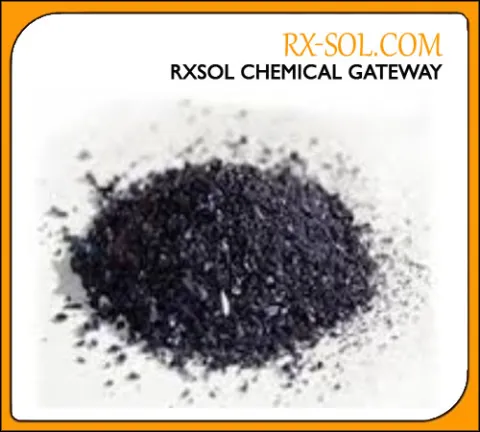
It looks like fine table salt in the granular form or like baby powder in the powdered. It is important to note that the health effects of boric acid.
Safety and SDS
Read the safety data sheet before handling. Wear suitable gloves and eye protection.
View safety data sheet
| Product Name |
|
|
| Product Type | BORIC ACID LR | |
| Revised date |
Company Details:
RX MARINE INTERNATIONAL
105, A wing , BSEL , TECH PARK.
VASHI ,NEW BOMBAY 400703 INDIA
Stock Point : Mumbai, Kandla, Chennai, Visakhapatnam, Kolkata, Fujairah, Muscat Barka, Nairobi
| Phone | +91 22 27815541 / 42 |
| Fax | +91 22 2781 1318 :::AOH :0091 9821214367 |
| rxsolchemicals@gmail.com |

4.1. Description of first aid measures
Inhalation : Assure fresh air breathing. Allow the victim to rest.
Skin contact : Remove affected clothing and wash all exposed skin area with mild soap
and water, followed by warm water rinse.
Eye contact : Rinse immediately with plenty of water. Obtain medical attention if pain,
blinking or redness persist.
Ingestion : Obtain emergency medical attention. Rinse mouth. Do NOT induce vomiting.
4.2. Most important symptoms and effects, both acute and delayed
Symptoms relating to use : Not expected to present a significant hazard under
anticipated conditions of normal use.
4.3. Indication of any immediate medical attention and special treatment needed
General information : Never give anything by mouth to an unconscious person. If you
feel unwell, seek medical advice (show the label where possible).
Technical bulletin
Open technical bulletin
CAS NUMBER: 10043-35-3
SYNONYMS: boracic acid; orthoboric acid1
PHYSICAL DESCRIPTION:
Appearance: white powder (B0394 and B7660 may have possible yellow cast)
Molecular formula: H3BO3
Molecular weight: 61.83
Melting point: ~171°C1
Boric acid volatizes in steam. When heated to 100°C, the solid loses water and is slowly converted into metaboric acid
(HBO2); tetraboric acid (H2B4O7) is formed at 140°C and boron trioxide (B2O3) at higher temperatures.3
pKa = 9.23 at 25°C; DpK/DT = -0.008 4
Useful buffering range is pH 8.2-10.1
Sigma offers several different boric acid products, slightly different in quality control descriptions:2
STABILITY / STORAGE AS SUPPLIED:
Boric acid is a very stable dry solid at room temperature. It should be stable indefinitely, but should be evaluated for continued suitability in user application every three to five years.
SOLUBILITY / SOLUTION STABILITY:
Boric acid dissolves in water: 1 gram in 18 mL cold water, in 4 mL boiling water, 6 mL boiling alcohol. Sigma tests B0252 at 40 g/mL, and B7660 at 1 M (62 g/mL), obtaining clear solutions. Powdered boric acid may dissolve more slowly in water than a crystalline product, but with gentle warming will dissolve to give a clear solution.
A 1 M solution of B7660 will have a pH of 3.5-6.0 in water at 20°C. Solutions of boric acid are stable at room temperature. They can be sterile-filtered or autoclaved.
GENERAL REMARKS:
Boric acid has in years past been used as a mild bacteriostatic and fungistatic agent, but has been mainly superseded by more effective disinfectants.4 It has been used as an insecticide, either alone or mixed with a sweetening agent, but its toxicity makes this use inappropriate around children or pet animals.1,3
GENERAL REMARKS: (continued)
Borate buffers are commonly used in biochemistry, with some confusion as to what reagents should be used. Boric acid has a single boron; its salt forms complex equilibria in solution, with the ion B4O7 -2 being the predominant species. Many procedures do not give a method of preparation for the borate buffer intended; it is important to express the ionic strength in terms of boron molarity. One can titrate a 0.1 M solution of boric acid with sodium hydroxide to pH 9.0. If ionic strength is of no concern, titrating a solution of sodium tetraborate (borax) with HCl will also yield a buffer of pH 9.0, which contains NaCl. A 0.1 M solution of sodium tetraborate is 0.4 M in "boron ion." Several references give "recipes" for preparing borate buffers.4-6
B0252 is reagent grade; B7660, SigmaUltra, has been tested for trace metals; B0394, ACS Reagent, meets criteria set by the American Chemical Society; B7901 grade, Electrophoresis grade, has been tested in an electrophoresis system.