Brij-35, 30% Solution
- Part number
- RXSOL-61-6394-500
- Category
- Lab Equipment
- Brand
- RXSOL
Overview
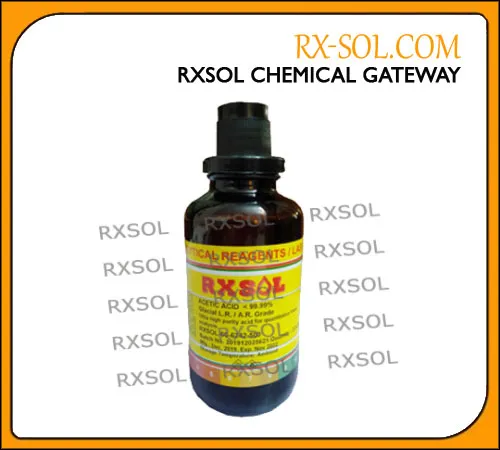
Brij 35 Detergent Solutions are stabilized 30% solutions of Brij-35 detergent for use in various protein methods.
The detergent Brij™ 35 is a nonionic polyoxyethylene surfactant that is most frequently used as a component of cell lysis buffers or a surfactant in various HPLC applications. Surfact-Amps Detergent Solutions provide unsurpassed purity, quality and stability. Unlike neat detergents, which are extremely viscous, Surfact-Amps 30% Solutions are easy to pipette and accurately dispense. The surfactant solutions are carefully prepared and packaged under nitrogen in glass ampules or HDPE bottles, ensuring their stability and eliminating the accumulation of peroxides and degradation products.
Technical specifications
Properties of Brij 35 Detergent
| Molecular Weight | 1225g |
|---|---|
| Detergent Class | Nonionic |
| Aggregation Number | 4 |
| Micelle Molecular Weight | 49,000g |
| Critical Micelle Concentration (CMC) | 9mM (0.011%, w/v) |
| Cloud Point | >100°C |
| Dialyzable | No |
Applications
- Brij 35 – a nonionic detergent for use in various protein methods
- Accurate – 30% detergent solutions in ultrapure water
- Easy-to-use – solutions are simple to dispense and dilute for use
Safety and SDS
Read the safety data sheet before handling. Wear suitable gloves and eye protection.
View safety data sheet
| Product Name |
Brij-35, 30% Solution |
| Product Type | RXSOL-61-6394-500 |
Company Details:
RX MARINE INTERNATIONAL
105, A wing , BSEL , TECH PARK.
VASHI ,NEW BOMBAY 400703 INDIA
| Phone | +91 22 65113333/ 5555 / 9999 / 27611360 / 27815540 |
| Fax | +91 22 2781 1318 :::AOH :0091 9322594669 |
| rxsolchemicals@gmail.com |
| Substance/mixture | Mixture |
| Other means of identification |
Not applicable. |
| CAS number/other identifiers CAS number | Not applicable. |
| Ingredient name |
% |
CAS number |
| Dodecan-1-ol, ethoxylated | 25 - 45 | 9002-92-0 |
Any concentration shown as a range is to protect confidentiality or is due to batch variation.
There are no additional ingredients present which, within the current knowledge of the supplier and in the concentrations applicable, are classified as hazardous to health or the environment and hence require reporting in this section. Occupational exposure limits, if available, are listed in Section 8.
OSHA/HCS status: This material is considered hazardous by the OSHA Hazard Communication Standard (29 CFR 1910.1200).
Classification of the substance or mixture: SKIN CORROSION/IRRITATION - Category 2 SERIOUS EYE DAMAGE/ EYE IRRITATION - Category 1
GHS label elements
Signal word: Danger
Hazard statements: Causes serious eye damage.Causes skin irritation.
Precautionary statements
Prevention: Wear protective gloves. Wear eye or face protection. Wash hands thoroughly after handling.
Response: IF ON SKIN: Wash with plenty of soap and water. Take off contaminated clothing. Wash contaminated clothing before reuse. If skin irritation occurs: Get medical attention. IF IN EYES: Rinse cautiously with water for several minutes. Remove contact lenses, if present and easy to do. Continue rinsing. Immediately call a POISON CENTER or physician.
Storage: Not applicable.
Disposal: Not applicable.
Hazards not otherwise classified: None known.
Description of necessary first aid measures
Eye contact: Get medical attention immediately. Call a poison center or physician. Immediately flush eyes with plenty of water, occasionally lifting the upper and lower eyelids. Check for and remove any contact lenses. Continue to rinse for at least 10 minutes. Chemical burns must be treated promptly by a physician.
Inhalation: Get medical attention immediately. Call a poison center or physician. Remove victim to fresh air and keep at rest in a position comfortable for breathing. If it is suspected that fumes are still present, the rescuer should wear an appropriate mask or self-contained breathing apparatus. If not breathing, if breathing is irregular or if respiratory arrest occurs, provide artificial respiration or oxygen by trained personnel. It may be dangerous to the person providing aid to give mouth-to-mouth resuscitation. If unconscious, place in recovery position and get medical attention immediately. Maintain an open airway. Loosen tight clothing such as a collar, tie, belt or waistband.
Skin contact: Get medical attention immediately. Call a poison center or physician. Flush contaminated skin with plenty of water. Remove contaminated clothing and shoes. Wash contaminated clothing thoroughly with water before removing it, or wear gloves.Continue to rinse for at least 10 minutes. Chemical burns must be treated promptly by a physician. Wash clothing before reuse. Clean shoes thoroughly before reuse.
Ingestion: Get medical attention immediately. Call a poison center or physician. Wash out mouth with water. Remove dentures if any. Remove victim to fresh air and keep at rest in a position comfortable for breathing. If material has been swallowed and the exposed person is conscious, give small quantities of water to drink. Stop if the exposed person feels sick as vomiting may be dangerous. Do not induce vomiting unless directed to do so by medical personnel. If vomiting occurs, the head should be kept low so that vomit does not enter the lungs. Chemical burns must be treated promptly by a physician. Never give anything by mouth to an unconscious person. If unconscious, place in recovery position and get medical attention immediately. Maintain an open airway. Loosen tight clothing such as a collar, tie, belt or waistband.
|
Suitable extinguishing media |
Use an extinguishing agent suitable for the surrounding fire. |
|
Unsuitable extinguishing media |
None known. |
|
Unsuitable extinguishing media |
In a fire or if heated, a pressure increase will occur and the container may burst. |
|
Hazardous thermal decomposition products |
Decomposition products may include the following materials:carbon dioxide carbon monoxide |
|
Special protective actions for fire-fighters: |
Promptly isolate the scene by removing all persons from the vicinity of the incident if there is a fire. No action shall be taken involving any personal risk or without suitable training. |
|
Special protective equipment for fire-fighters |
Fire-fighters should wear appropriate protective equipment and self-contained breathing apparatus (SCBA) with a full face-piece operated in positive pressure mode. |
Personal precautions, protective equipment and emergency procedures
For non-emergency personnel: No action shall be taken involving any personal risk or without suitable training.Evacuate surrounding areas. Keep unnecessary and unprotected personnel from entering. Do not touch or walk through spilled material. Do not breathe vapor or mist. Provide adequate ventilation. Wear appropriate respirator when ventilation is inadequate. Put on appropriate personal protective equipment.
For emergency responders : If specialised clothing is required to deal with the spillage, take note of any information in Section 8 on suitable and unsuitable materials. See also the information in "For nonemergency personnel".
Environmental precautions: Avoid dispersal of spilled material and runoff and contact with soil, waterways, drains and sewers. Inform the relevant authorities if the product has caused environmental pollution (sewers, waterways, soil or air).
Methods and materials for containment and cleaning up
Small spill: Stop leak if without risk. Move containers from spill area. Dilute with water and mop up if water-soluble. Alternatively, or if water-insoluble, absorb with an inert dry material and place in an appropriate waste disposal container. Dispose of via a licensed waste disposal contractor.
Large spill: Stop leak if without risk. Move containers from spill area. Approach release from upwind. Prevent entry into sewers, water courses, basements or confined areas. Wash spillages into an effluent treatment plant or proceed as follows. Contain and collect spillage with non-combustible, absorbent material e.g. sand, earth, vermiculite or diatomaceous earth and place in container for disposal according to local regulations (see Section 13). Dispose of via a licensed waste disposal contractor. Contaminated absorbent material may pose the same hazard as the spilled product. Note: see Section 1 for emergency contact information and Section 13 for waste disposal.
Precautions for safe handling
Protective measures: Put on appropriate personal protective equipment (see Section 8). Do not get in eyes or on skin or clothing. Do not breathe vapor or mist. Do not ingest. If during normal use the material presents a respiratory hazard, use only with adequate ventilation or wear appropriate respirator. Keep in the original container or an approved alternative made from a compatible material, kept tightly closed when not in use. Empty containers retain product residue and can be hazardous. Do not reuse container.
Advice on general occupational hygiene: Eating, drinking and smoking should be prohibited in areas where this material is handled, stored and processed. Workers should wash hands and face before eating, drinking and smoking. Remove contaminated clothing and protective equipment before entering eating areas. See also Section 8 for additional information on hygiene measures.
Conditions for safe storage,including any incompatibilities: Store between the following temperatures: 20 to 25°C (68 to 77°F). Store in accordance with local regulations. Store in original container protected from direct sunlight in a dry,cool and well-ventilated area, away from incompatible materials (see Section 10) and food and drink. Store locked up. Keep container tightly closed and sealed until ready for use. Containers that have been opened must be carefully resealed and kept upright to prevent leakage. Do not store in unlabeled containers. Use appropriate containment to avoid environmental contamination.
Control parameters
Occupational exposure limits:None.
Appropriate engineering controls: If user operations generate dust, fumes, gas, vapor or mist, use process enclosures, local exhaust ventilation or other engineering controls to keep worker exposure to airborne contaminants below any recommended or statutory limits.
Environmental exposure controls: Emissions from ventilation or work process equipment should be checked to ensure they comply with the requirements of environmental protection legislation. In some cases, fume scrubbers, filters or engineering modifications to the process equipment will be necessary to reduce emissions to acceptable levels.
Individual protection measures
Hygiene measures: Wash hands, forearms and face thoroughly after handling chemical products, before eating, smoking and using the lavatory and at the end of the working period. Appropriate techniques should be used to remove potentially contaminated clothing. Wash contaminated clothing before reusing. Ensure that eyewash stations and safety showers are close to the workstation location.
Eye/face protection: Safety eyewear complying with an approved standard should be used when a risk assessment indicates this is necessary to avoid exposure to liquid splashes, mists,gases or dusts. If contact is possible, the following protection should be worn, unless the assessment indicates a higher degree of protection: chemical splash goggles and orface shield. If inhalation hazards exist, a full-face respirator may be required instead.
Skin protection
Hand protection: Chemical-resistant, impervious gloves complying with an approved standard should be worn at all times when handling chemical products if a risk assessment indicates this is necessary. Considering the parameters specified by the glove manufacturer, check during use that the gloves are still retaining their protective properties. It should be noted that the time to breakthrough for any glove material may be different for different glove manufacturers. In the case of mixtures, consisting of several substances, the protection time of the gloves cannot be accurately estimated.
Body protection: Personal protective equipment for the body should be selected based on the task being performed and the risks involved and should be approved by a specialist before handling this product.
Other skin protection: Appropriate footwear and any additional skin protection measures should be selected based on the task being performed and the risks involved and should be approved by a specialist before handling this product.
Respiratory protection: Use a properly fitted, air-purifying or air-fed respirator complying with an approved standard if a risk assessment indicates this is necessary. Respirator selection must be based on known or anticipated exposure levels, the hazards of the product and the safe working limits of the selected respirator.
Appearance
| Physical state | [Clear viscous liquid.] |
| Color | Colorless. |
| Odor | Not available. |
| Odor threshold | Not available. |
| Boiling point | Not available. |
| Melting point | Not available. |
| pH | Not available. |
| Flash point |
[Product does not sustain combustion.] |
| Burning time | Not available. |
| Burning rate | Not available. |
| Evaporation rate | Not available. |
| Flammability (solid, gas) | Not available. |
| Lower and upper explosive (flammable) limits | Not available. |
| Vapor pressure | Not available. |
| Vapor density | Not available. |
| Relative density | 1.03 |
| Solubility |
Easily soluble in the following materials: cold water and hot water. |
| Solubility in water | Not available. |
| Partition coefficient | Not available. |
| Auto-ignition temperature | Not available. |
| Decomposition temperature | Not available. |
| SADT. | Not available. |
| Viscosity. | Not available. |
|
Reactivity |
No specific test data related to reactivity available for this product or its ingredients. |
|
Chemical stability |
The product is stable. |
|
Possibility of hazardous reactions |
Under normal conditions of storage and use, hazardous reactions will not occur. |
|
Conditions to avoid |
No specific data. |
|
Incompatible materials: |
No specific data. |
|
Hazardous decomposition products |
Under normal conditions of storage and use, hazardous decomposition products should not be produced. |
Information on toxicological effects
Acute toxicity
|
Product/ingredient name |
Result | Species | Dose | Exposure |
| Dodecan-1-ol, ethoxylated | LD50 Oral | Rat | 1000 mg/kg | - |
Irritation/Corrosion
| Product/ingredient name | Result | Species | Score | Exposure | Observation |
| Dodecan-1-ol, ethoxylated |
Eyes - Severe irritant Skin - Moderate irritant Skin - Mild irritant Skin - Moderate irritant
|
Rabbit Human Rabbit
Rabbit
|
- - - - |
24 hours 750 Micrograms 72 hours 6 milligrams Intermittent 24 hours 500 milligram 24 hours 500 milligram
|
- - - - |
Toxicity
Persistence and degradability: Not available.
Bioaccumulative potential
| Product/ingredient name | LogPow | BCF | Potential |
|
Dodecan-1-ol, ethoxylated |
- |
220 |
low |
Mobility in soil
Soil/water partition coefficient (KOC): Not available.
Other adverse effects: No known significant effects or critical hazards.
Disposal methods : The generation of waste should be avoided or minimized wherever possible. Disposal of this product, solutions and any by-products should at all times comply with the requirements of environmental protection and waste disposal legislation and any regionallocal authority requirements. Dispose of surplus and non-recyclable products via a licensed waste disposal contractor. Waste should not be disposed of untreated to thesewer unless fully compliant with the requirements of all authorities with jurisdiction. Waste packaging should be recycled. Incineration or landfill should only be considered when recycling is not feasible. This material and its container must be disposed of in a safe way. Care should be taken when handling emptied containers that have not been cleaned or rinsed out. Empty containers or liners may retain some product residues. Avoid dispersal of spilled material and runoff and contact with soil, waterways, drains and sewers.
| DOT Classification | IATA | |
| UN number |
Not regulated. |
Not regulated. |
|
UN proper shipping name |
- | - |
|
Transport hazard class(es) |
- | - |
|
Packing group |
- | - |
|
Environmental hazards |
Yes. | No. |
|
Additional information |
- | - |
Special precautions for user: Transport within user’s premises: always transport in closed containers that are upright and secure. Ensure that persons transporting the product know what to do in the event of an accident or spillage.
Transport in bulk according to Annex II of MARPOL73/78 and the IBC Code: Not available.
U.S. Federal regulations: TSCA 8(a) CDR Exempt/Partial exemption: All components are listed or exempted.United States inventory (TSCA 8b): All components are listed or exempted.
| Clean Air Act Section 112 (b) Hazardous AirPollutants (HAPs): | Not listed |
| Clean Air Act Section 602 Class I Substances | Not listed |
| Clean Air Act Section 602Class II Substances: | Not listed |
| DEA List I Chemicals (Precursor Chemicals): | Not listed |
| DEA List II Chemicals (Essential Chemicals): | Not listed |
SARA 302/304
No products were found.
Composition/information on ingredients
SARA 304 RQ : Not applicable.
SARA 311/312
Classification: Immediate (acute) health hazard
Composition/information on ingredients
| Name | % |
Fire hazard |
Sudden release of pressure |
Reactive |
Immediate (acute) health hazard |
| Dodecan-1-ol, ethoxylated | 25 - 45 | No. | No. | No. | Yes |
State regulations
| Massachusetts | None of the components are listed. |
| New York | None of the components are listed |
| New Jersey | None of the components are listed |
| Pennsylvania | None of the components are listed |
| Canada inventory | At least one component is not listed |
International regulations
| International lists | Australia inventory (AICS): All components are listed or exempted. |
| China inventory (IECSC): | All components are listed or exempted. |
| Japan inventory | All components are listed or exempted. |
| Korea inventory | All components are listed or exempted. |
| Malaysia Inventory (EHS Register): | Not determined. |
| New Zealand Inventory of Chemicals (NZIoC) | All components are listed or exempted |
| Philippines inventory (PICCS): | All components are listed or exempted |
| Taiwan inventory (CSNN) | Not determined. |
| Chemical Weapons Convention List Schedule I Chemicals | Not listed |
| Chemical Weapons Convention List Schedule II Chemicals | Not listed |
| Chemical Weapons Convention List Schedule III Chemicals | Not listed |
Text of R and S phrase codes used in this safety data sheet:- R34: Causes burns; R36: Irritating to eyes; R37: Irritating to respiratory system; R41: Risk of serious damage to eyes. The information provided about the product on this Safety Data Sheet has been compiled from knowledge of the individual constituents The data given here is based on current knowledge and experience. This Safety Data Sheet describes the product in terms of safety requirements and does not signify any warranty with regard to the product's properties The data given here only applies when product used for proper application(s). The product is not sold as suitable for other applications - usage in such may cause risks not mentioned in this sheet. Do not use for other application(s) without seeking advice from manufacturer
Availability
Brij-35, 30% Solution manufacturer supplier distributor in Mumbai, Kandla, Kolkata, Vizag, Chennai, India, Fujairah, Dubai, Sharjah, UAE, Gulf, Middle East, Muscat Oman, Kenya Africa. Get the best quality of Brij-35, 30% Solution at a competitive price from us. We have ready stock of Brij-35, 30% Solution in India, UAE Gulf, Oman, Kenya Africa. Contact us for bulk as well as small orders.