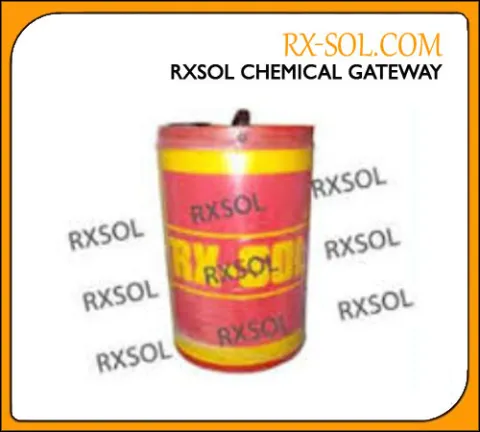
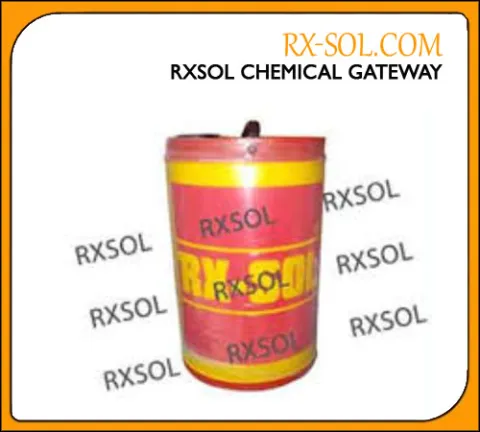
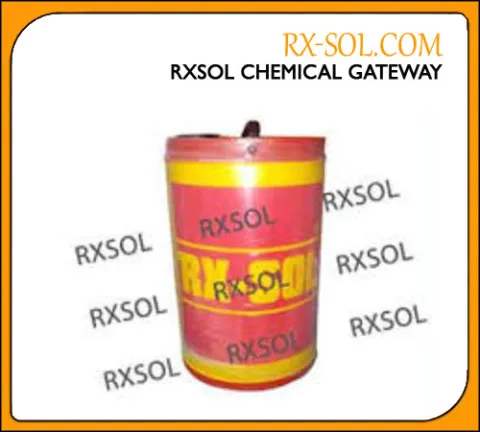
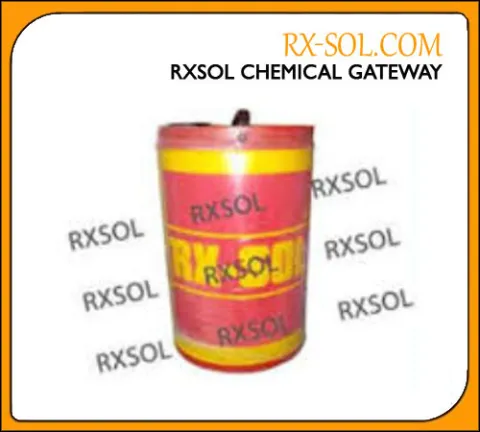
Chlorine Dioxide
- Part number
- RXSOL-60-6652-025
- Category
- Ballast Tank Chem
- Brand
- RXSOL
Overview
Chlorine dioxide is a chemical compound with the formula ClO₂ that is used as a bleach, disinfectant, and antimicrobial agent
Applications
Chlorine Dioxide is added to drinking water to Protect people from harmful bacteria and other microorganisms.
Dosage and directions
Chlorine dioxide is a strong oxidizing agent, bactericide, and antiseptic. It is used in bleaching cellulose, paper pulp, leather, flour, fats and oils
Characteristics and notes
Chlorine Dioxide Usage/Application: Air Disinfectant, Water Disinfectant, Surface Disinfectant.
Safety and SDS
Read the safety data sheet before handling. Wear suitable gloves and eye protection.
View safety data sheet
| Porduct Name | Chlorine Dioxide |
| Part Number | RXSOL-60-6652-025 |
Company Details:
RX MARINE INTERNATIONAL
105, A wing , BSEL , TECH PARK.
VASHI ,NEW BOMBAY 400703 INDIA
Branch : Kandla, Mumbai , Chennai, Vizag, Kolkata, UAE , OMAN , CANADA and KENYA
| Phone | +91 22 20871200 - 1400 |
| Fax | +91 22 27612100 :::AOH :0091 9821214367 |
| rxsolchemicals@gmail.com | |
| Website | www.rxmraine.com |
| Chemical Name | Cas No | EC No | % | Formula |
| Sodium Chlorite | 7758-19-2 | 231-836-6 | 80+/-1% | NaClO2 |
| Signal Word | Danger |
| Hazard Statements | H271 May cause fire or explosion: strong oxidizer. H301 Toxic if swallowed. H310 Fatal in contact with skin H314 Causes severe skin burns and eye damage. H373 May cause damage to organs through prolonged or repeated exposure. H410 Very toxic to aquatic life with long lasting effects. |
| Precautionary statements | P221 Take any precaution to avoid mixing with combustibles. P260 Do not breathe dust/fume/gas/mist/vapors/spray. P280 Wear protective gloves/protective clothing/eye protection/ face protection. P284 (in case of inadequate ventilation) Wear respiratory protection. |
| Other hazard | No data available |
| General advice | Consult a physician. Show this safety data sheet to the doctor in attendance. Move out of dangerous area. Never give anything by mouth to an unconscious person. If you feel unwell, seek medical advice (show the label if possible). In case of contact with clothing: Remove clothing immediately. Submerge in water to prevent the possibility of a fire. Wash shoes with wate |
| Eye Contact | Immediately rinse with water for at least 30 minutes while holding the eyelids wide open. Immediately call a POISON CENTER or doctor/physician. Continue rinsing eyes during transport to hospital |
| Swallowed | Do NOT induce vomiting. Seek medical attention immediately. |
| Skin Contact | Take off contaminated clothing and shoes immediately. Flush skin with soap and plenty of water. Immediately call a POISON CENTER or doctor/physician |
| Inhalation | Using proper respiratory protection, immediately move the exposed person to fresh air. Keep at rest and in a position comfortable for breathing. Seek medical attention immediately. If not breathing, give artificial respiration |
| Ingestion | No data available |
| Most important symptoms and effects, both acute and delaye | No data available |
| Indication of any immediate medical attention and special treatment needed | If you feel unwell, seek medical advice (show label where possible). |
| Flammability | No data available |
| Suitable extinguishing media | Water. Form curtains of water to absorb the gases that are generated in the combustion. Keep containers and deposits cool, spraying them with water if exposed to the fire. If feasible, remove the combustible agent. Remove the containers from the area of fire, if this does not entail risk. |
| Unsuitable extinguishing media | CO2 powder (powdered dry ice), foam (organic products) |
|
Hazardous combustion products |
Chlorine, oxygen, and hydrochloric acid. |
| Protective Equipment | No data available |
| Specific Hazard Arising from the Chemical | This product is not flammable or explosive. If it reaches 175 degrees C it decomposes to chlorine and chlorate. Subsequent decomposition of the chlorate produces oxygen which may give rise to the explosion or bursting of closed containers. |
| Advice for firefighters | Self contained breathing equipment. Individual protective equipment (gloves and suitable clothing). Seek location with your back against the wind |
| Personal precautions, protective equipment and emergency procedures | Avoid contact with the eyes, skin and clothing. Do not act without appropriate protective equipment. |
| Spillage | No data available |
| Personal Protection | No data available |
| Enviromental Precaution | Recover the whole product that is possible in a clean dry plastic or metallic container. Following product recovery, flush area with water. If spill could potentially enter any waterway, including intermittent dry creeks, contact the U.S. COAST GUARD NATIONAL RESPONSE CENTER at 800-424-8802. In case of accident or road spill notify CHEMTREC at 800-424-9300 (in USA) or (international code) + 1-703-527-3887. |
|
Methods and materials for containment and cleaning |
Absorb any spillage using sand, earth or clay. Wash the area with plenty of water. Take the absorbent products to a safe storage for treatment by expert personnel in handling the product or an authorized waste handler. |
| Reference to other sections | See heading 8, Exposure Controls and Personal Protection. |
| Advice for safe handling | Avoid the formation of sparks. Avoid mixing with incompatible products (acids, acid materials, combustible materials, oils, greases, etc.). Avoid dust formation. |
| Hygiene measures | Handle in accordance with good industrial hygiene and safety procedures. Always wash your hands immediately after handling this product, and once again before leaving the workplace. Provide good ventilation in process area to prevent formation of vapor. Contaminated work clothing should not be allowed out of the workplace. Wash contaminated clothing before reuse. Do not eat, drink or smoke in the areas where product is used |
| Technical measures | Observe all regulations and local requirements regarding storage of containers |
| Storage conditions | Store in a dry, cool and well ventilated place. Keep containers closed when not in use. Store away from heat sources, ignition sources, direct sunlight, incompatible materials, combustible materials.. Storage areas should be periodically checked for corrosion and integrity. Usable materials for containers are Polyester, PVC, stainless steel, or coated steel |
| Incompatible materials | Wood, rubber, aluminum, copper and alloys |
| Enviornmenta exposure control | Emergency eye wash fountains and safety showers should be available in the immediate vicinity of any potential exposure. Avoid the emission of dust to the atmosphere. |
| Engineering Control | Use adequate ventilation to keep a low concentration in air. |
| Personal Protective Equipment | Avoid all unnecessary exposure. In the event of emission of sodium chlorite powder, use mas with a dust filter (EN 143 P2 or P3). In the event of formation of chlorine dioxide use breathing protection mask with filter for inorganic gases (Chlorine) for low concentrations, for higher concentrations use self contained breathing equipmen |
| Protective clothing | Wear suitable protective clothingImpermeable protective gloves. Nitrile rubber, PVC (do not use leather or rubber) |
| Eye/face protection | Chemical goggles. |
| Skin and body protection | Wear suitable protective clothing. Chemical resistant suit. |
| Respiratory protection | Use a NIOSH approved respirator or self contained breathing apparatus whenever exposure may exceed established Occupations Exposure Limits. Where risk assessment shows air purifying respirators are appropriate use a full face particle respirator type N100. |
| Other Protection Measure | Do not eat, drink or smoke during use. |
| Physical state | Solid Powder |
| Colour | White |
| Odour | Odorless |
| Odor Threshold | No data available |
| pH | 12-13 |
| Melting Point | Decomposes before melting |
| Boiling Point | No data available |
| Flash Point | No data available |
| Evaporation Rate | No data available |
| Flammability (solid, gas) | No data available |
| Explosive limits | No data available |
| Upper/lower flammability or explosive limits | No data available |
| Autoignition temperature | No data available |
| Decomposition temperature | 180-200 degrees C |
| Vapour pressure | No data available |
| Viscosity | No data available |
| Density | No data available |
| Relative Density | No data available |
| Specific Gravity | No data available |
| Partition coefficient | No data available |
| Explosive properties | No data available |
| Solubility | 572 g/L at 20 degrees C |
| Ignition temperature | No data available |
| Particle characteristics | No data available |
| Reactivity | No data available |
| Chemical stability | Stable under recommended handling and storage conditions (see section 7) |
| Possibilityof hazardous reactions | Violent exothermic reaction, development of heat with reducing materials (sodium sulfite). Potentially explosive reaction and fire with combustible materials (wood, cellulose, grease, cotton). |
| Conditions to avoid | Direct sunlight, moisture, extremely high or low temperatures, open flames, sources of ignition and incompatible materials. |
| Incompatible materials |
Acids, acid substances (Aluminum sulfate, aluminum chloride, ferric chloride), wood, cellulose, grease, cotton.
|
| Hazardous product dicomposition | This product decomposes into chloride and sodium chlorate under heating and direct sun-light. The subsequent decomposition of chlorate releases oxygen with risk of bursting containers. In contact with acid materials (acid, aluminum sulfate, aluminum chloride, etc. ) chlorine dioxide is formed with risk of explosion. |
| Acute toxicity | Toxic if swallowed. Fatal in contact with skin. Fatal if inhaled. Acute (oral) LD50 284 mg/kg body weight (Rats) ( OECD 401) Acute (dermal) LD50 134 mg/kg body weight (rabbit) ( EPA OPP 81-2) LC50 inhalation: An acute inhalation toxicity study is not required since exposure of humans via inhalation is unlikely taking into account the vapor pressure of the substance and/or the possibility of exposure to aerosols, particles or droplets of an inhalable size. |
| Skin corrosion/irritation | skin corrosive Category 1B: Causes severe skin burns and eye damage. Corrosive (rabbit: necrosis is observed in two animals) (EPA No 158.81-5 |
| Serious eye damage/irritation | Irreversible effects in the eye: Category 1: Causes serious eye damage. Damage observed in rabbits |
| Respiratory or skin sensitization | No data available |
| Carcinogenicity | No data available |
| Germ cell mutagenicity | No data available |
| Reproductive toxicity | No data available |
| Specific target organ toxicity-repeated exposure |
May cause damage to organs through prolonged or repeated exposure.
|
| Additional Information | No data available |
| Persistence and degradability | Readily biodegradable |
| Toxicity to fish | LC50 Fish 106mg/l (96h. Oncorhynchus mykiss) 105mg/l (96h, Cyprinodon variegatus) |
| Toxicity to daphnia and other aquatic invertebrates | No data available |
| Toxicity | No data available |
| Bioaccumilation potential | Sodium Chlorite is highly water soluble with an extremely low Log Pow. Therefore, the substance has a low potential for bioaccumulation. Due to its extremely low lipophilicity and high instability in water, sodium chlorite and hence chlorine dioxide are not expected to bioaccumulate. |
| Toxicity to bacteria | No data available |
| Toxicity to algae | EC50 Selenastrum capricornutum 1mg/l: 96hrs. ) |
| Products Biodegradation | No data available |
| Mobility in soil | No data available |
| Results of PBT av PvB assessment | No data available |
| Endocrine disrupting properties | No data available |
| Other adverse effects | Avoid release to the environment |
| Waste water method | Dispose of waste material in accordance with all local, regional, national, and international regulations. Hazardous waste due to toxicity |
| Sewage disposal recommendations | Do not dispose of waste into sewer. Do not empty into drains; dispose of this material and its container in a safe way. Avoid release to the environment. |
| UN number | ADR/RID:1496 | IMDG:1496 |
IATA:1496 |
| UN proper shipping name | ADR/RID:Sodium Chlorite | IMDG:Sodium Chlorite | IATA:Sodium Chlorite |
| Transport hazard classess | ADR/RID:5.1 | IMDG:5.1 | IATA:5.1 |
| Packaging group | ADR/RID:ll | IMDG:ll | IATA:ll |
| Environmental hazards | ADR/RID:Yes | IMDG:Yes | IATA:Yes |
| Special precautions for user | No data available | ||
| Further information | No data available |
| Safety, health and environmental regulations/legislation specific for the substance or mixture | This material safety data sheet complies with the requirements of Regulation (EC) No. 1907/2006 |
| Other regulations | This material is considered hazardous by the OSHA Hazard Communication Standard (29 CFR 1910.1200) |
| Chemical Safety Assessment | For this product a chemical safety assessment has been carried out |
| Other Information |
The information above is believed to be accurate and represents the best information currently available to us. However, we make no warranty of merchantability or any other warranty, express or implied, with respect to such information, and weassume no liability resulting from its use. Users should make their own investigations to determine the suitability of the information for their particular purposes. In no event shall be liable for any claims, losses, or damages of any third party or for lost profits or any special, indirect, incidental, consequential or exemplary damages, howsoever arising, even if Rx Marine International has been advised of the possibility of such damages. DISCLAIMER OF LIABILITY :The information in this SDS was obtained from sources which we believe are reliable. However, the information is provided without any warranty, express or implied, regarding its correctness. The conditions or methods of handling, storage, use or disposal of the product are beyond our control and may be beyond our knowledge. For this and other reasons, we do not assume responsibility and expressly disclaim liability for loss, damage or expense arising out of or in any way connected with the handling, storage, use or disposal of the product. This MSDS was prepared and is to be used only for this product. If the product is used as a component in another product, this MSDS information may not be applicable. |