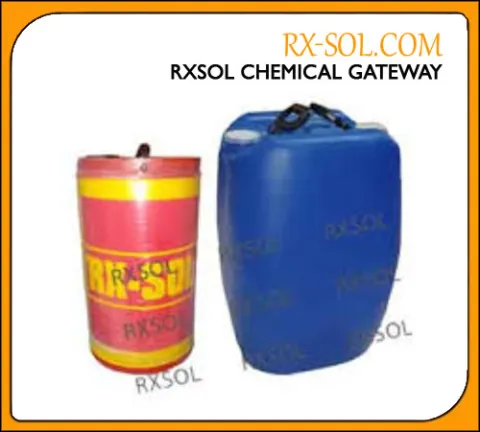
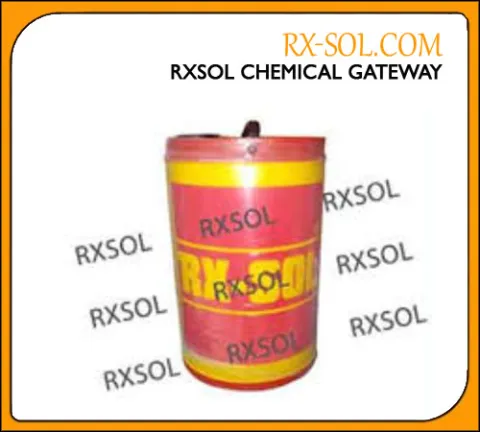
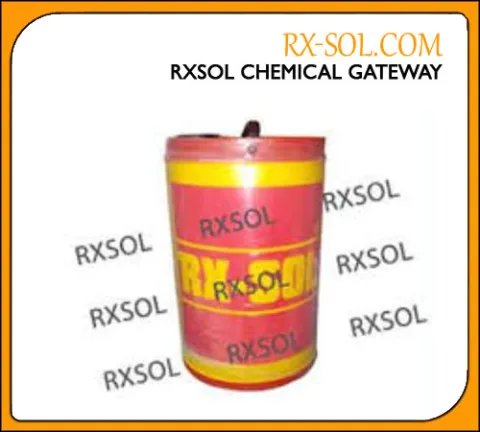
Concrete Pipeline Powder
- Part number
- RXSOL-67-6713-200
- Category
- Construction Chem
- Brand
- RXSOL
Overview
Technical specifications
Applications
Concrete pump line inwall is smeared irregularly when pumping, influence result of use, causes pump line to stop up easily, does not reach the effect that mortar moistens pipe, RXSOL CPLP Concrete Pipeline Lubricant Powder helps as a lubricant to release mortar freely.
Dosage and directions
Take Full container / Pouch of RXSOL CPLP Concrete Pipeline Lubricant Powder in 50 - 75 Ltr of water, Mix Properly to Get Homogenious Light viscous solution. Then use the RXSOL CPLP water mixed slurry solution in PUMP PIPELINE prior to concreting. its aqueous solution homogeneity is good, leave standstill 9 hours not stratified.The pump line inwall is smeared evenly when pumping, and is effective.
Characteristics and notes
RXSOL CPLP Concrete Pipeline Lubricant Powder enhance concrete flow without block in pipe line. Which is resultig not only TIME SAVER but also protect CIRCULATING SYSTEM and PIPE Line heavy maintenance free.
RXSOL CPLP Concrete Pipeline Lubricant Powder's aqueous solution homogeneity is good, leave standstill 9 hours not stratified.The pump line inwall is smeared evenly when pumping, and is effective.
Safety and SDS
Read the safety data sheet before handling. Wear suitable gloves and eye protection.
View safety data sheet
| Porduct Name | Concrete Pipeline Powder |
| Part Number | RXSOL-67-6713-200 |
Company Details:....
RX MARINE INTERNATIONAL
105, A wing , BSEL , TECH PARK.
VASHI ,NEW BOMBAY 400703 INDIA
Branch : Kandla, Mumbai , Chennai, Vizag, Kolkata, UAE , OMAN , CANADA and KENYA
| Phone | +91 22 20871200 - 1400 |
| Fax | +91 22 27612100 :::AOH :0091 9821214367 |
| rxsolchemicals@gmail.com | |
| Website | www.rxmraine.com |
| HAZARDOUS COMPONENTS | Percent ( By Weight) | CAS Number | OSHA PEL-TWA (mg/m3) | ACGIH TLV-- TWA (mg/m3) | MSHA PEL-TWA (mg/m3) |
| Crystalline Silica | <1% | 14808-60-7 |
(10 )/(%SiO2 + 2)(R)
(30 )/(%SiO2 + 2)(T)
|
.025 (R) | 10 )/(%SiO2 + 2)(R) |
| Portland Cement | 5-10 | 65997-15-1 | (5) (R) ; (15) (T) | 1 (R) | (10) |
| Calcium Hydroxide | 15-25 | 1305-62-0 | (5) (R) ; (15) (T) | 5 (T) | (5) |
For the full text of the H-Statements mentioned in this Section, see Section 16.
| HAZARD STATEMENT |
Concrete structure itself is not hazardous.
Odorless, gray, solid or hollow concrete objects of various shapes.
Non-flammable product.
Exposure to dust may cause respiratory irritation.
Repeated or prolonged exposure to dust can damage lungs if inhaled.
Exposure to crystalline silica dust can cause Silicosis, a form of lung cancer.
Exposure to dust may cause irritation to skin or contact dermatitis.
Exposure to dust can cause irritation to eyes.
|
| PREVENTION STATEMENT |
Do not eat, drink or use tobacco when using this product.
Do not chip, grind or break product to create dust.
Do not breathe dust created.
Wear respiratory protection, protective gloves and eye/face protection if large amounts of dust are
created.
Wash exposed skin thoroughly until dust is removed.
Flush eyes for 15 minutes. It irritation persists, seek medical attention.
|
| RESPONSE | If concerns or exposure occurs, seek medical attention. |
| STORAGE | Prevent rolling, falling or tip over. |
| DISPOSAL | Dispose of structure or parts thereof in accordance with state and local regulations. |
| INHALATION |
Move exposed individual to fresh air. Dust in throat and nasal passages should clear naturally by
coughing, sneezing and nasal discharge. Obtain medical attention if symptoms persist or develop
later.
|
| EYE CONTACT | After inhalation: fresh air. Call in physician. |
|
SKIN CONTACT
|
In case of skin contact: Take off immediately all contaminated clothing. Rinse skin withwater/ shower. |
| INGESTION | After eye contact: rinse out with plenty of water. Call in ophthalmologist. Remove contact lenses. |
|
FLASH POINT
Not combustible |
FLAMMABLE LIMITS Not applicable |
| EXTINGUISHING AGENTS | Not combustible. Use extinguishing agent appropriate for surrounding flammable materials. |
| UNUSUAL FIRE AND EXPLOSION HAZARDS | Spalling of hardened concrete may occur under conditions of intense heat. |
| PERSONAL PRECAUTIONS |
If large amounts of dust have been generated, eye protection and appropriate
respiratory protection should be used to protect cleanup personnel against dust.
|
| SPILL AND LEAK PROCEDURES |
Do not dry sweep broken, dusty material. Use water spray to minimize dust or
vacuum with HEPA filters
|
| Precautions for safe handling | Work under hood. Do not inhale substance/mixture. Avoid generation of vapours/aerosols. |
| Advice on protection against fire and explosion | Keep away from open flames, hot surfaces and sources of ignition.Take precautionarymeasures against static discharge. |
| Hygiene measures |
Change contaminated clothing. Preventive skin protection recommended. Wash hands after
working with substance.
For precautions see section 2.2.
|
| Specific end use(s)ons for safe storage, including any incompatibilities | Apart from the uses mentioned in section 1.2 no other specific uses are stipulated |
Control parameters
| Components with workplace control parameters | Contains no substances with occupational exposure limit values. |
Exposure controls
| Appropriate engineering controls | Handle in accordance with good industrial hygiene and safety practice. Wash hands before breaks and at the end of workday. |
Personal protective equipment
| Eye/face protection | Safety glasses with side-shields conforming to EN166 Use equipment for eye protection tested and approvedunder appropriate government standards such as NIOSH (US) or EN 166(EU). |
| Skin protection | Handle with gloves. Gloves must be inspected prior to use. Use proper glove removal technique (withouttouching glove's outer surface) to avoid skin contact with this product. Dispose of contaminated gloves afteruse in accordance with applicable laws and good laboratory practices. Wash and dry hands. |
| Body Protection | Complete suit protecting against chemicals, The type of protective equipment must be selected according tothe concentration and amount of the dangerous substance at the specific workplace. |
| Respiratory protection |
Required when vapours/aerosols are generated.Our recommendations on filtering respiratory protection are based on the following standards: DIN EN 143, DIN 14387 and other accompanying standards relating to the used respiratory protection system.
Recommended Filter type: Filter type ABEK
The entrepeneur has to ensure that maintenance, cleaning and testing of respiratory protective devices are carried out according to the instructions of the producer.These measures have to be properly documented.
|
| Control of environmental exposur | Do not let product enter drains. Risk of explosion. |
Information on basic physical and chemical properties
| Physical state | Liquid |
| Color | Colorless |
| Odour | Pleasant, aromatic |
|
Melting
point/freezing point
|
Melting point/range: -73 °C |
|
Initial boiling point
and boiling range
|
88,6 °C at 1.013,25 hPa |
| Flammability (solid, gas) | No data available |
|
Upper/lower
flammability or
explosive limits
|
Upper explosion limit: 8 %(V)
Lower explosion limit: 1,8 %(V)
|
| Flash Point | 5 °C - closed cup |
| Autoignition temperature | 460 °C at 1.013 hPa |
| Decomposition temperature | No data available |
| pH | No data available |
| Viscosity |
Viscosity, kinematic: 0,6 mm2/s at 20 °C0,475 mm2/s at 40 °C
Viscosity, dynamic: 0,602 mPa.s at 20 °C
|
| Water solubility | No data available |
|
Partition coefficient:
n-octanol/water
|
No data available |
| Vapor pressure | 92,27 hPa at 28,12 °C |
|
Density 0,872 g/cm3 at 20 °C
Relative density
|
0,872 g/cm3 at 20 °C No data available |
| Relative vapor density | No data available |
| Explosive properties | No data available |
| Oxidizing properties | |
| Other safety information | No data available |
| Relative vapor density | 3,53 - (Air = 1.0) |
| STABILITY | Stable. |
| INCOMPATIBILITY | Strong acids may etch concrete. |
| HAZARDOUS DECOMPOSITION PRODUCTS | None. |
| HAZA RDOUS POLYMERIZATION | Does not polymerize. |
| CONDITIONS TO AVOID |
Avoid contact with strong acids.
|
| ACUTE TOXICITY DATA |
Standard animal toxicity data (e.g. LD50, LC50) are not available for quartz. Epidemiologic
studies of workers indicate an increased risk of lung cancer from chronic exposure to
respirable crystalline silica; this effect was more pronounced in those with silicosis.
However, many of the studies did not account for effects of smoking or other confounding
exposures.
Epidemiologic studies have linked crystalline silica exposure with autoimmune diseases
and kidney disorders. Individuals with silicosis show a higher incidence of scleroderma, a
thickening of the skin. Current data have not shown a definite causal effect between these
effects and exposure to respirable crystalline silica.
In laboratory animal tests, dust containing newly broken particles of respirable silica
particles caused greater lung injury than equal exposures to particles aged for sixty days or
more.
|
|
ECOLOGICAL DATA |
Generally considered chemically inert in the environment. |
WASTE DISPOSAL
| DOT HAZARD CLASS | None. |
| DOT PLACARD | None. |
US FEDERAL REGULATIONS
| OSHA/ MSHA HAZARD COMMUNICATION |
This product is considered by OSHA/ MSHA to a hazardous chemical and should be included in the employer’s hazard communication program.
|
|
SARA 313 |
Not applicable.
|
| CERCLA 103 | Not applicable. |
| RCRA HAZARDOUS WASTE | Waste is not hazardous according to 40 CFR 261. |
| California Proposition 65 | Crystalline silica (airborne particles of respirable size) is a substance known y the State of California to cause cancer. |
|
STATE REGULATIONS
COMPONENT
Crystalline Silica, quartz 14808-60-7
|
STATE REGULATORY LISTS
CA, FL, MA, MN, NJ, PA
|
| Other Information |
The information above is believed to be accurate and represents the best information currently available to us. However, we make no warranty of merchantability or any other warranty, express or implied, with respect to such information, and weassume no liability resulting from its use. Users should make their own investigations to determine the suitability of the information for their particular purposes. In no event shall be liable for any claims, losses, or damages of any third party or for lost profits or any special, indirect, incidental, consequential or exemplary damages, howsoever arising, even if Rx Marine International has been advised of the possibility of such damages. DISCLAIMER OF LIABILITY :The information in this SDS was obtained from sources which we believe are reliable. However, the information is provided without any warranty, express or implied, regarding its correctness. The conditions or methods of handling, storage, use or disposal of the product are beyond our control and may be beyond our knowledge. For this and other reasons, we do not assume responsibility and expressly disclaim liability for loss, damage or expense arising out of or in any way connected with the handling, storage, use or disposal of the product. This MSDS was prepared and is to be used only for this product. If the product is used as a component in another product, this MSDS information may not be applicable. |
Availability
Concrete Pipeline Powder manufacturer supplier distributor in Mumbai, Kandla, Kolkata, Vizag, Chennai, India, Fujairah, Dubai, Sharjah, UAE, Gulf, Middle East, Muscat Oman, Kenya Africa. Get the best quality of Concrete Pipeline Powder at a competitive price from us. We have ready stock of Concrete Pipeline Powder in India, UAE Gulf, Oman, Kenya Africa. Contact us for bulk as well as small orders.