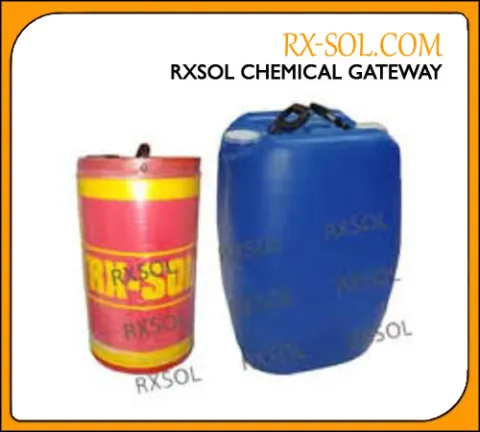
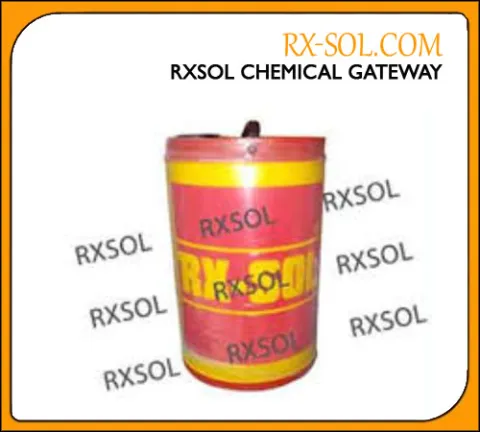
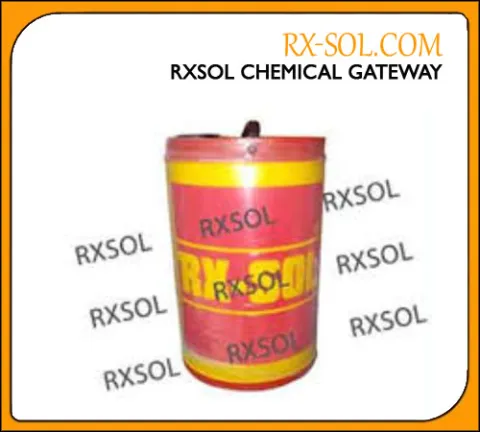
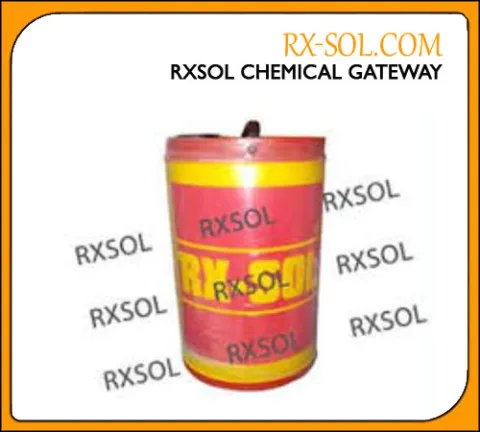
Corrosion Inhibitor 8050
- Part number
- RXSOL-34-8204-210
- Category
- RIGS Oil Field
- Brand
- RXSOL
Overview
CORROSION INHIBITOR to condensate CO2, H2S in pipeline. It is also designed corrosion inhibitor for effectively controls corrosion by dissolved oxygen and other ions. It shows excellent results when injected continuously or batch treatment. The condesate Corrosion Inhibitor CI 8050 is soluble in the water phase as well as in Hydrocarbons.
Applications
RXSOL Condesate CORROSION INHIBITOR provides excellent protection from Corrosion, which can be caused in Injection System. In Oilfield Applications /Refineries which contains many corrosive substances like Dissolved Oxygen and various Salts. It is designed to control internal corrosion caused by dissolved oxygen and other ions in Oil & Gas production systems, Gas pipe lines, Water storage / Injection systems and pipelines.
Dosage and directions
RXSOL Condesate Corrosion Inhibitor also CONTAINS non foaming agent to MAKES system foam FREE. The corrosion inhibitor is compatible with most of chemicals as well.
Dose: From the field experience, standard range of Dose Rates is 10-30 PPM.
Safety and SDS
Read the safety data sheet before handling. Wear suitable gloves and eye protection.
View safety data sheet
| Product Name | Corrosion Inhibitor CI 8050 |
| Part Number | RXSOL-81-8204-210 |
Company Details:
RX MARINE INTERNATIONAL
105, A wing , BSEL , TECH PARK.
VASHI ,NEW BOMBAY 400703 INDIA
Branch : Kandla, Hazira, Mumbai, Chennai, Vizag, Kolkata, UAE, OMAN , KENYA CANADA
| Phone | +91 22 20871200 -1400 |
| Fax | +91 22 27612100 :::AOH :0091 9821214367 |
| rxsolchemicals@gmail.com |
| Hazardous Component | CAS No. | EC No. | Percent | Classification |
| Gas oil | 649-224-00-6 | 269-822-7 | 80 - < 90 |
Flam. Liq. 3;H226 |
| Butyl diglycol ether | 603-096-00-8 | 203-961-6 | 3 - < 5 | Eye Irrit. 2;H319 |
|
Fatty acids, vegetable-oil, reaction - products with diethylenetriamine |
68153-72-0 | 268-894-7 | 3 - < 5 | Skin Irrit.2;H315, Eye Irrit. 2;H319 |
| Alkyl dimethyl benzyl ammonium Chloride | 68424-85-1 | 270-325-2 | 1 - < 3 | Acute Tox. 4;H302, |
| Dodecenylsuccinic acid | 29658-97-7 | 249-757-0 | 1 - < 3 | Eye Dam. 1;H318, Aquatic Chronic 3;H412 |
| Solvent naphtha (petroleum),heavy aromatic | 64742-94-5 | 265-198-5 | 1 - < 3 | Asp. Tox. 1;H304 |
|
Naphthalene |
91-20-3 | 202-049-5 |
0,25 - < 1 |
Acute Tox. 4;H302 |
| Signal Word | Danger |
| Hazard Statements |
H304 May be fatal if swallowed and enters airways. H315 Causes skin irritation. H318 Causes serious eye damage. H332 Harmful if inhaled. H351 Suspected of causing cancer. H373 May cause damage to organs (bone marrow, liver, thymus) through prolonged or repeated exposure. H411 Toxic to aquatic life with long lasting effects. |
| Precautionary statements - prevention | P273 Avoid release to the environment. |
| Precautionary statements -response |
P301 + P330 + P331 IF SWALLOWED: rinse mouth. Do NOT induce vomiting. P302 + P352 IF ON SKIN: Wash with plenty of water. P304 + P340 IF INHALED: Remove person to fresh air and keep comfortable for breathing. P305 + P351 + P338 IF IN EYES: Rinse cautiously with water for several minutes. Remove contact lenses, if present and easy to do. Continue rinsing. P310 Immediately call a POISON CENTRE/doctor. |
| Storage Not available. | Not available. |
| Disposal | Not available. |
| Supplemental label information | None |
| Inhalation | If inhaled, remove to fresh air. If not breathing give artificial respiration, preferably mouth-to-mouth. If breathing is difficult give oxygen. Only trained personnel should administer oxygen. Get medical attention. |
| Ingestion | Rinse mouth with water several times. DO NOT induce vomiting. If vomiting occurs naturally, keep head lower than hips to prevent aspiration. Obtain medical assistance immediately. |
| Eyes | In case of contact, immediately flush eyes with plenty of water for at least 15 minutes and get medical attention. |
| Skin | In case of contact, immediately flush skin with plenty of soap and water for at least 15 minutes. Remove contaminated clothing and launder before reuse. Get medical attention if irritation persists. |
| Suitable Extinguishing media | Water Foam Carbon dioxide (CO2) Dry powder |
|
Unsuitable extinguishing media |
For this substance/mixture no limitations of extinguishing agents are given. |
|
Special hazards arising from the substance or mixture |
Oxides of carbon and nitrogen evolved in fire. |
|
Advice for firefighters |
Self contained breathing apparatus. (CEN : EN 137) |
|
Special fire fighting procedures |
Use standard firefighting procedures and consider the hazards of other involved materials. Prevent spillage and fire-fighting water from entering in public sewers or the immediate environment. |
| Personal precautions, protective equipment and emergency procedur | Advice for non-emergency personnel: Do not breathe vapors, aerosols. Evacuate the danger area, observe emergency procedures, consult an expert. For personal protection see section 8. |
|
Environmental precautions |
Do not let product enter drains. |
|
Methods and materials for containment and cleaning up |
Absorb onto inert material and dispose of according to Hazardous Waste Regulations. After cleaning, flush away traces with water. |
| Precautions for safe handling |
Handle in accordance with good industrial hygiene and safety procedures. |
|
Storage |
Keep away from heat and sources of ignition. |
|
Hygiene measures |
Wash hands and other exposed areas with mild soap and water before eating, drinking or smoking and when leaving work |
| Specific End Use | Only for professional and industrial users |
| Shelf Life | 24 Month |
| Control parameters | OELs. Maximum Allowable Limits for Air Pollutants in Working Areas [Law to Protect the Air from Pollution, Resolution of the Cabinet of Ministers No. 12 of 2006] | ||||||||||||||||||||||||||||||||||||||||||||||||||||||||||||||||||||||
| Occupational exposure limits |
|
||||||||||||||||||||||||||||||||||||||||||||||||||||||||||||||||||||||
| Personal protective equipment |
Eye/face protection Use equipment for eye protection tested and approved under appropriate government standards uch as NIOSH (US) or EN 166(EU). Skin protection Handle with gloves. Gloves must be inspected prior to use. Use proper glove removal technique (without touching glove's outer surface) to avoid skin contact with this product. Dispose of ontaminated gloves after use in accordance with applicable laws and good laboratory practices. Wash and dry hands. Body Protection impervious clothing, The type of protective equipment must be selected according to the concentration and amount of the dangerous substance at the specific workplace. Respiratory protection Respiratory protection not required. For nuisance exposures use type OV/AG (US) or type ABEK (EU EN 14387) respirator cartridges. Use respirators and components tested and approved under appropriate government standards such as NIOSH (US) or CEN (EU). Control of environmental exposure Do not let product enter drains. |
||||||||||||||||||||||||||||||||||||||||||||||||||||||||||||||||||||||
| Thermal hazards | Not available. | ||||||||||||||||||||||||||||||||||||||||||||||||||||||||||||||||||||||
|
Environmental exposure controls |
Prevent from entering in public sewers or the immediate environment. Do not empty into drains, dispose of this material and its container to hazardous or special waste collection point. |
||||||||||||||||||||||||||||||||||||||||||||||||||||||||||||||||||||||
|
General Information |
|
|
Form |
Fluid |
|
Colour |
Yellow |
|
Odour |
Hydrocarbon |
| Odor Threshold | No Data Available |
| pH (5% Emulsion) | 6-8.5 |
|
Melting/Freezing Point |
< -5 °C |
|
Boiling point/Boiling range |
160 °C |
|
Flash point |
61 °C P-M(CC) |
|
Evaporation rate |
< 1 (Ether = 1) |
| Flammability (solid, gas) | Not applicable. |
| Upper/lower flammability or explosive limits | No data available |
| Vapour Density | 05,15 - (Air = 1.0) |
| Vapour pressure | < 5 mm Hg |
| Vapour pressure temp. | 21 °C |
| Vapour density | > 1 (Air = 1) |
| Relative density |
0,84 |
| Relative density temperature | 21 °C |
| Solubility (water) | < 0,1 % |
| Partition coefficient (n-octanol/water) | Not available. |
| Auto-ignition temperature | Not applicable. |
| Decomposition temperature | Not available. |
| Viscosity | Not applicable. |
| Viscosity temperature | 21 °C |
| Explosive properties | Not available. |
| Oxidising properties | Not available |
| Pour point | -15 °C |
| Shelf life | 720 days |
| VOC | 90 % (Estimated) |
| Reactivity | No additional information available |
| Chemical stability | The product is chemically stable under standard ambient conditions (room temperature) . |
| Possibility of hazardous reactions | Not applicable. |
| Conditions to avoid | Strong heating. |
| Incompatible materials | Strong oxidising substances |
| Hazardous decomposition products | Nitrogen oxides (NOx). Carbon oxides. |
|
Corrosion Inhibitor CI 8050 |
Acute Dermal LD50 Rabbit: > 5000 mg/kg (Calculated according to GHS additivity formula) |
||||||||||
| Toxicity |
|
||||||||||
| Acute Toxicity |
Harmful if inhaled. |
||||||||||
| Skin corrosion/irritation | Causes skin irritation. | ||||||||||
| Serious eye damage/irritation | Causes serious eye damage. | ||||||||||
| Respiratory or skin ensitisation | Based on available data, the classification criteria are not met. | ||||||||||
| Specific target organ toxicity - repeated exposure |
May cause damage to organs (bone marrow, liver, thymus) through prolonged or repeated exposure. |
||||||||||
|
Specific target organ toxicity - single exposure |
Based on available data, the classification criteria are not met. | ||||||||||
| Carcinogenicity | Suspected of causing cancer. | ||||||||||
| Germ cell mutagenicity | Based on available data, the classification criteria are not met. | ||||||||||
| Reproductive toxicity | Based on available data, the classification criteria are not met | ||||||||||
| Ingestion | May be fatal if swallowed and enters airways.May cause irritation of the gastrointestinal tract. | ||||||||||
| Inhalation | May cause irritation to the respiratory system. | ||||||||||
|
Skin contact |
Causes skin irritation. | ||||||||||
| Eye contact | Causes serious eye damage. | ||||||||||
| Symptoms | Not available. | ||||||||||
| Aspiration hazard | May be fatal if swallowed and enters airways. | ||||||||||
| Mixture versus substance information | None known. | ||||||||||
| Other information | Not available. |
| Toxicity to Fish |
Alkyl dimethyl benzyl ammonium chloride (CAS 68424-85-1) EC50 Active Sludge 10 mg/l Daphnia magna 0,016 mg/l, 48 hour Aquatic Fish LC50 Rainbow trout 0,93 mg/l, 96 hour |
| Bioaccumulative potential | Not available. |
| Partition coefficient n -octanol/ water(log Kow) |
Butyl diglycol ether 0,56 Naphthalene 3,3 |
| Bioconcentration factor (BCF) |
Not available |
| Persistence and degradability | Not available |
| Other adverse effects | Harmful to aquatic life. |
| Bioaccumulative potential | Not available. |
|
Results of PBT and vPvB assessment |
Not a PBT or vPvB substance or mixture. |
| Other adverse effects | Not available. |
|
Waste treatment methods |
According to Hazardous Waste Regulations. EWC ( European Waste Code ) recommendation : 15 01 10 15 Waste packaging; absorbents, wiping cloths, filter materials and protective clothing not otherwise specified. 15 01 Packaging (including separately collected municipal packaging waste). 15 01 10 Packaging containing residues of or contaminated by dangerous substances. Depending on the origin and state of the waste, other EWC numbers may be applicable too. |
| Disposal methods/information |
According to Hazardous Waste Regulations. EWC ( European Waste Code ) recommendation : 16 03 05 16 Wastes not otherwise specified in the list. 16 03 Off-specification batches and unused products. 16 03 05 Organic wastes containing dangerous substances. Depending on the origin and state of the waste, other EWC numbers may be applicable too |
ADR
| UN Number | UN3082 |
| UN proper shipping | ENVIRONMENTALLY HAZARDOUS SUBSTANCE, LIQUID, N.O.S. (Gas oil, Mixture) |
| Hazard Class | 9 |
| Subsidiary risk - | -- |
| Tunnel restriction code (-) | |
| Packing Group: | III |
| Environmental hazards | Yes |
| Special precautions for user | Not available. |
RID/ADN
| UN Number | UN3082 |
| UN proper shipping | ENVIRONMENTALLY HAZARDOUS SUBSTANCE, LIQUID, N.O.S. (Gas oil, Mixture) |
| Hazard Class | 9 |
| Subsidiary risk - | -- |
| Tunnel restriction code (-) | |
| Packing Group: | III |
| Environmental hazards | Yes |
| Special precautions for user | Not available. |
AIR TRANSPORT (ICAO/IATA):
| UN Number | UN3082 |
| UN proper shipping | ENVIRONMENTALLY HAZARDOUS SUBSTANCE, LIQUID, N.O.S. (Gas oil, Mixture) |
| Hazard Class | 9 |
| Subsidiary risk - | -- |
| Tunnel restriction code (-) | |
| Packing Group: | III |
| Environmental hazards | Yes |
| Special precautions for user | Not available. |
MARINE TRANSPORT (IMDG/IMO):
| UN Number | UN3082 |
| UN proper shipping | ENVIRONMENTALLY HAZARDOUS SUBSTANCE, LIQUID, N.O.S. (Gas oil, Mixture) |
| Hazard Class | 9 |
| Subsidiary risk - | -- |
| Tunnel restriction code (-) | |
| Packing Group: | III |
| Environmental hazards | Yes |
| Special precautions for user | Not available. |
| EmS | F-A, S-F |
| Transport in bulk according to Annex II of MARPOL and the IBC Code | This substance/mixture is not intended to be transported in bulk. |
|
Safety, health and environmental regulations/legislation |
EU regulations Regulation (EC) No. 1005/2009 on substances that deplete the ozone layer, Annex I and II, as amended Not listed. Regulation (EC) No. 850/2004 On persistent organic pollutants, Annex I as amended Not listed. Regulation (EU) No. 649/2012 concerning the export and import of dangerous chemicals, Annex I, Part 1 as amended Not listed. Regulation (EU) No. 649/2012 concerning the export and import of dangerous chemicals, Annex I, Part 2 as amended Not listed. Regulation (EU) No. 649/2012 concerning the export and import of dangerous chemicals, Annex I, Part 3 as amended Not listed. Regulation (EU) No. 649/2012 concerning the export and import of dangerous chemicals, Annex V as amended Not listed. Regulation (EC) No. 166/2006 Annex II Pollutant Release and Transfer Registry, as amended Naphthalene (CAS 91-20-3) Regulation (EC) No. 1907/2006, REACH Article 59(10) Candidate List as currently published by ECHA Not listed. Authorisations Regulation (EC) No. 1907/2006, REACH Annex XIV Substances subject to authorization, as amended Not listed. |
|
Restrictions on use |
Regulation (EC) No. 1907/2006, REACH Annex XVII Substances subject to restriction on marketing and use as amended Butyl diglycol ether (CAS 112-34-5) 55 Solvent naphtha (petroleum),heavy aromatic (CAS 64742-94-5) |
|
Directive 2004/37/EC: on the protection of workers from the risks related to exposure to carcinogens and mutagens at work, as amended. |
Solvent naphtha (petroleum),heavy aromatic (CAS 64742-94-5) Naphthalene (CAS 91-20-3) |
| Inventory status |
Country(s) or region Inventory name On inventory (yes/no)*
Europe European List of Notified Chemical Substances (ELINCS) No |
| List of abbreviations |
EC-No: European Commission Number COD: Chemical Oxygen Demand IATA: International Air Transport Association CAS: Chemical Abstract Service. CLP: Classification, Labeling and Packaging REGULATION (EC) No 1272/2008 on classification, labeling and packaging of substances and mixtures. CEN: European Committee for Standardization (Comité Européen de Normalisation). TWA: Time Weighted Average. STEL: Short-term Exposure Limit. LD50: Lethal Dose 50%. LC50: Lethal Concentration 50%. EC50: Effective Concentration 50%. NOEL: No observed effect level. BOD: Biochemical oxygen demand. TOC: Total Organic Carbon. ADR: European agreement concerning the international carriage of dangerous goods by road (Accord européen relatif transport des merchandises dangereuses par route). ADN: European Agreement concerning the International Carriage of Dangerous Goods by Inland Waterways (Accord européen relatif au transport international des marchandises dangereuses par voies de navigation intérieures). IMDG Code: International Maritime Dangerous Goods Code. RID: Regulations concerning the international carriage of dangerous goods by rail (Règlement International concernant le transport de marchandises dangereuses par chemin de fer). |
| Other Information | The information above is believed to be accurate and represents the best information currently available to us. However, we make no warranty of merchantability or any other warranty, express or implied, with respect to such information, and we assume no liability resulting from its use. Users should make their own investigations to determine the suitability of the information for their particular purposes. In no event shall be liable for any claims, losses, or damages of any third party or for lost profits or any special, indirect, incidental, consequential or exemplary damages, howsoever arising, even if RX Marine International has been advised of the possibility of such damages. |
Availability
Condensate Corrosion Inhibitor CI 8050 manufacturer and supplier in UAE Middle East, Oman, Sharjah, Ajman, Abudhabi, Dubai, Fujairah, Muscat Sohar Barka Oman, Sudan, Yemen, Mumbai, Kolkata, Chennai, Gandhidham, Surat, Ahmedabad, Visakhapatnam, Haldia, Paradip, Ennore, Navi Mumbai