Drilling Fluids & Mud Oil Field chemicals
H2S Scavenger RX 40 Glyoxal Based
- Part number
- RXSOL-81-2065-250
- Brand
- RXSOL
Overview
Hydrogen sulfide H2S is a colorless, flammable, and toxic gas prevalent in the hydrocarbon processing industry. H2S scavengers are widely used in hydrocarbon processing facilities to maintain plant worker's safety and productivity and eliminate their odor emissions. These specialized chemicals react selectively with and remove H2S to help meet product and process specifications.
H2S Scavenger RX 40 portfolio of products is specially designed to be a cost-effective solution for a broad range of operating conditions and product compositions.H2S Scavenger Rx 40 ( Glyoxal Based) is more efficient than the alternative triazine products.
Technical specifications
| Appearance | : Clear Liquid. |
|
Color |
: Colourless to pale yellow |
|
Odour |
: Mild |
|
pH |
: 2.0 - 3.5 Acidic |
|
Boiling point |
: 103.6 °C |
| Flash point | : Non-flammable |
| Flammability | : Non-flammable |
| Solubility in water | : Soluble |
| Density | : 1.20-1.27 g/cm3 |
Applications
H2S Scavenger RX 40 is usen in many type of industries to remove H2S and some of s below
- 3-phase production streams
- 2-phase gas streams
- Downhole
- Subsea
- Wellhead
- Bulk storage tanks
- Produced water streams
Dosage and directions
Scavenging H2S is considered a two step process. The hydrogen sulfide must first be dissolved into the fluid and then once dissolved, it must quickly react with the scavenger molecules. The rate of removal is governed by the rate at which the H2S dissolves into the scavenger-containing phase (mass transfer rate) and the rate that the scavenger reacts with H2S. For this reason, contact time is the major consideration when designing an H2S scavenger program.
Scavenging rate/efficiency is governed by the following parameters:
- Temperature
- Flow regimes
- Contact time
- Equipment design
A suggested treatment is 7 to 12 ppm of H2S Scavenger RX 40 per ppm H2S per bbl of fluid. It is highly recommended to use an atomizing injection quill for all continuous treatments.It is a requirement for products used in the production of crude oil or natural gas to not increase the corrosion of the rate of fluids. It has been observed that H2S Scavenger RX 40 can cause corrosion of carbon steel.Corrosion in fluid streams containing 0.1 – 1% (i.e. 1,000 – 10,000 pm) of H2S Scavenger Rx 40 can easily be mitigated by the application of standard production corrosion inhibitors. These standard corrosion inhibitors types include quaternary ammonium compounds, alkylalkylenediamine and fatty acid salts and derivatives.
Characteristics and notes
Future & Benefit ::
- H2S Scavenger RX 40 is effective and can be applied in neutral, acidic, and alkaline conditions (pH environment), where triazine is effective and stable only under alkaline conditions.
- An acidic formulation allows the product to avoid causing carbonate scaling. It can also be formulated with acid stimulation package to scavenge any potential H2S release.
- H2S Scavenger RX 40 when diluted in water (pH below neutral) does not produce an increased quantity of formaldehyde as a by product, where MEA triazine does.
- No precipitation of calcium scale in H2S Scavenger Rx 40 .
- H2S Scavenger RX 40 has very high temperature stability with no decomposition up to 150°C.
- H2S Scavenger RX 40 + H2S reaction products are 100% water soluble and do not precipitate by oversaturation.
- H2S Scavenger RX 40 is non-amine based.
Safety and SDS
Read the safety data sheet before handling. Wear suitable gloves and eye protection.
View safety data sheet
| Product Name | H2S Scavenger Rx 40 ( Glyoxal Based) |
| Part Number | RXSOL-81-2065-250 |
Company Details:
RX MARINE INTERNATIONAL
105, A wing , BSEL , TECH PARK.
VASHI ,NEW BOMBAY 400703 INDIA
Branch : Kandla, Mumbai , Chennai, Vizag, Kolkata, UAE , OMAN , CANADA and KENYA
| Phone | +91 22 20871200 - 1400 |
| Fax | +91 22 27612100 :::AOH :0091 9821214367 |
| rxsolchemicals@gmail.com |
|
Chemical Name |
CAS Number |
EC Number |
Weight |
|
Glyoxal |
107-22-2 |
203-474-9 |
39 - 40% |
| Ethylene Glycol | 107-21-1 | 203-474-3 | 1 - 2% |
| Signal Word | Warning |
| Hazard Statements |
H320 Causes eye irritation. |
| Precautionary statements - prevention |
P280 Wear protective gloves/protective clothing/eye protection/face protection. |
| Precautionary statements - response |
P308 + P311 IF exposed or concerned: Call a POISON CENTER or doctor/physician. |
| General information | Remove contaminated clothing. |
|
After inhalation |
Keep patient calm, remove to fresh air, seek medical attention. |
|
After skin contact |
Wash affected areas thoroughly with soap and water. Remove contaminated clothing. Wash contaminated clothing before reuse. If irritation develops, seek medical attention. |
|
After eye contact |
In case of contact with the eyes, rinse immediately for at least 15 minutes with plenty of water. Seek medical attention. |
|
After swallowing |
Rinse mouth and then drink plenty of water. Never induce vomiting or give anything by mouth if the victim is unconscious or having convulsions. Immediate medical attention required. |
| Flash Point | Non Flammable |
| Suitable extinguishing media | water spray, foam, dry powder, carbon dioxide |
|
Unsuitable extinguishing media |
For this substance/mixture no limitations of extinguishing agents are given. |
|
Hazards during fire Fighting |
No particular hazards known. |
|
Advice for firefighters |
Firefighters should be equipped with self-contained breathing apparatus and turn-out gear. |
|
Further information |
Collect contaminated extinguishing water separately, do not allow to reach sewage or effluent systems. |
| Personal precautions, protective equipment and emergency procedur | Avoid contact with the skin, eyes and clothing. |
|
Environmental precautions |
Do not let product enter drains. |
|
Methods and materials for containment and cleaning up |
For large amounts: Pump off product. For residues: Pick up with suitable absorbent material (e.g. sand, sawdust, general-purpose binder, kieselguhr). Dispose of absorbed material in accordance with regulations. Spills should be contained, solidified, and placed in suitable containers for disposal. Dispose of absorbed material in accordance with regulations. |
| Precautions for safe handling | Ensure thorough ventilation of stores and work areas. |
|
Storage |
Suitable materials for containers: Stainless steel 1.4401, Stainless steel 1.4301 (V2), High density polyethylene (HDPE), glass, Low density polyethylene (LDPE). Protect from air.Storage temperature: < 40 °C.During the storage a product characteristic clouding or crystallin precipitation of the trimeric glyoxal hydrate may occur. The process is reversible if warmed up mild (max. 40 °C). From the data on storage duration in this safety data sheet no agreed statement regarding the warrantee of application properties can be deduced. Protect from temperatures above: 50 °C |
|
Hygiene measures |
Wash hands and other exposed areas with mild soap and water before eating, drinking or smoking and when leaving work |
| Components with occupational exposure limits |
Ethylene Glycol ::: ACGIH TLV CLV |
| Appropriate Engineering controls | Use as general industrial hygiene practice. |
| Personal protective equipment |
Respiratory protection: Do not exceed the maximum use concentration for the respirator facepiece/cartridge combination. For emergency or non-routine, high exposure situations, use a NIOSH-certified full facepiece pressure demand self-contained breathing apparatus (SCBA) or a full facepiece pressure demand supplied-air respirator (SAR) with escape provisions. Wear a NIOSH-certified (or equivalent) organic vapour respirator. Hand protection: chloroprene rubber (Neoprene), nitrile rubber (Buna N), polyvinylchloride (Pylox) Eye protection: Tightly fitting safety goggles (chemical goggles). Wear face shield if splashing hazard exists. Body protection: Body protection must be chosen depending on activity and possible exposure, e.g. apron, protecting boots, chemical-protection suit (according to EN 14605 in case of splashes or EN ISO 13982 in case of dust). |
| General safety and hygiene measures | Work place should be equipped with a shower and an eye wash. Wear protective clothing as necessary to prevent contact. When using, do not eat, drink or smoke. Avoid contact with skin and eyes. Remove soiled or soaked clothing immediately. Wash off any contamination that gets onto the skin with plenty of water and soap, skin care. |
|
Form |
Fluid |
|
Colour |
Clear to light Yellow |
|
Odour |
Mild |
| Odor Threshold | No Data Available |
| pH | -50 - -15 °C |
|
Melting/Freezing Point |
20.5°C |
|
Boiling point/Boiling range |
Boiling point: 103.6 °C at 1.013 hPa - (ECHA) |
|
Flash point |
Non Flammable |
|
Ignition temperature |
Approx. 285 °C (DIN 51794) |
| Danger of explosion | Product does not present an explosion hazard. |
| Vapour pressure at 20°C | 20.2 hPa |
| Vapour Density | No data available |
| Density at 20°C | 1.23 - 1.27 g/cm³ |
| Relative Density | No data available |
| Evaporation rate | No data available |
| Flammability (solid, gas) |
No data available |
| Upper explosion limit |
No data available |
| Lower explosion limit | No data available |
| Water solubility at 20 °C | Completely soluble |
| Reactivity | No hazardous reactions if stored and handled as prescribed/indicated. |
| Chemical stability | The product is chemically stable under standard ambient conditions (room temperature) . |
| Possibility of hazardous reactions | The product is chemically stable. |
| Conditions to avoid | Strong heating. |
| Incompatible materials | strong alkalies |
| Hazardous decomposition products | No hazardous decomposition products if stored and handled as prescribed/indicated. |
|
Acute toxicity |
Assessment of acute toxicity: Of low toxicity after single ingestion. Virtually nontoxic after a single skin contact. Of moderate toxicity after short-term inhalation. |
| Irritation/Corrosion |
Type of value: LC50 Species: rat (male/female) Value: 2.44 mg/l (OECD Guideline 403) Exposure time: 4 h An aerosol was tested. |
| Dermal |
Type of value: LD50 |
| Eye |
Species: rabbit Result: Irritant. Method: OECD Guideline 405 |
| Sensitization |
Guinea pig maximization test |
| Aspiration Hazard | No aspiration hazard expected. |
| Chronic Toxicity/Effects |
Repeated dose toxicity Assessment of repeated dose toxicity: After repeated exposure the prominent effect is local irritation. Genetic toxicity Assessment of mutagenicity: The substance was mutagenic in various test systems with microorganisms and cell cultures; however, these results could not be confirmed in tests with mammals. Mutagenic properties can not be excluded on the basis of experimental data. Carcinogenicity Assessment of carcinogenicity: The whole of the information assessable provides no indication of a carcinogenic effect. Reproductive toxicity Assessment of reproduction toxicity: The results of animal studies gave no indication of a fertility impairing effect. Teratogenicity Assessment of teratogenicity: No indications of a developmental toxic / teratogenic effect were seen in animal studies. |
| Symptoms of Exposure | No applicable toxicity data |
|
Medical conditions aggravated by overexposure |
Data available do not indicate that there are medical conditions that are generally recognized as being aggravated by exposure to this substance/product. See MSDS section 11 - Toxicological information. |
| Toxicity to Fish |
Acute: (DIN 38412 Part 15 static) Leuciscus idus / LC50 (96 h): > 460 - < 680 mg/l Nominal concentration. |
| Aquatic invertebrates |
Acute: (Directive 79/831/EEC static) Daphnia magna/EC50 (48 h): 404 mg/l Nominal concentration. |
|
Aquatic plants |
Toxicity to aquatic plants: OECD Guideline 201 static Green algae/EC50 (72 h): > 100 mg/l Nominal concentration. |
| Microorganisms |
Toxicity to microorganisms: |
| Persistence and degradability | 90 - 100 % DOC reduction (19 d) (OECD 301 A (new version)) (aerobic, activated sludge, domestic, non-adapted) Readily biodegradable (according to OECD criteria). |
| Other adverse effects | Harmful to aquatic life. |
|
|
Assessment bioaccumulation potential |
| Additional Information |
Chemical oxygen demand (COD): 350 mg/g |
| Mobility in soil | The substance will not evaporate into the atmosphere from the water surface. Adsorption to solid soil phase is not expected. |
| Remarks | Do not discharge into waterways or sewer systems without proper authorization. Dispose of in accordance with national, state and local regulations. |
| Waste Disposal | Dispose as normaly as per local regultion |
| Transport hazard class(es) |
|
||||||||||||||||||||||||||||||
| Marine pollutant | No |
| Regulatory Information |
|
| NFPA Hazard codes | Health: 2 Fire: 0 Reactivity: 0 Special: |
| Other Information |
The information above is believed to be accurate and represents the best information currently available to us. However, we make no warranty of merchantability or any other warranty, express or implied, with respect to such information, and we assume no liability resulting from its use. Users should make their own investigations to determine the suitability of the information for their particular purposes. In no event shall be liable for any claims, losses, or damages of any third party or for lost profits or any special, indirect, incidental, consequential or exemplary damages, howsoever arising, even if RX Marine International has been advised of the possibility of such damages. DISCLAIMER OF LIABILITY :The information in this SDS was obtained from sources which we believe are reliable. However, the information is provided without any warranty, express or implied, regarding its correctness. The conditions or methods of handling, storage, use or disposal of the product are beyond our control and may be beyond our knowledge. For this and other reasons, we do not assume responsibility and expressly disclaim liability for loss, damage or expense arising out of or in any way connected with the handling, storage, use or disposal of the product. This MSDS was prepared and is to be used only for this product. If the product is used as a component in another product, this MSDS information may not be applicable. |
Availability
H2S Scavenger RX 40 Glyoxal Based manufacturer and supplier in India, Africa, UAE Middle East, Oman. H2S Scavenger RX 40 Glyoxal Based supplier in Mumbai, Fujairah, Muscat, Nairobi, Kolkata, Gandhidham, Chennai, Kolkata, Barka Sohar, Oman, Kenya Africa, Canada
Frequently asked questions
Glyoxal or triazine H2S scavenger — which is better?
Glyoxal (RX 40) for acidic or scaling-prone systems and where formaldehyde release and amine by-products are a concern; triazine for high-pH gas-sweetening towers with long contact time.
How is the dose set?
By H2S concentration, temperature, flow regime and contact time; scavenging is mass-transfer limited, so injection point and mixing matter as much as dose. The technical desk sizes it from your stream data.
Packing?
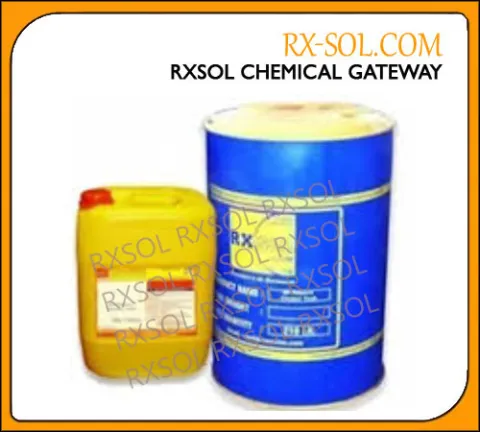
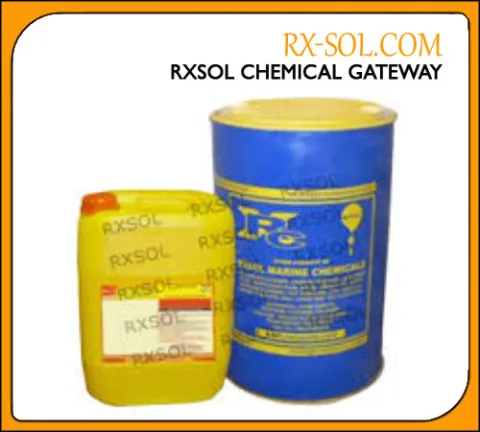
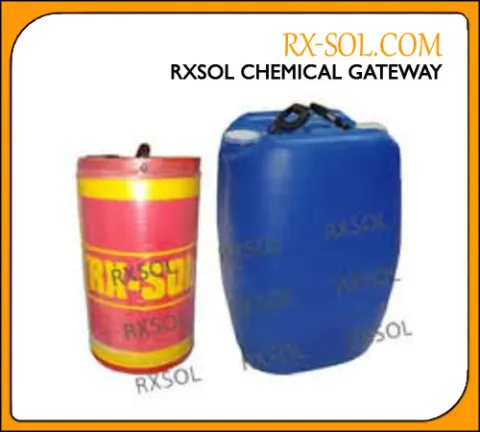
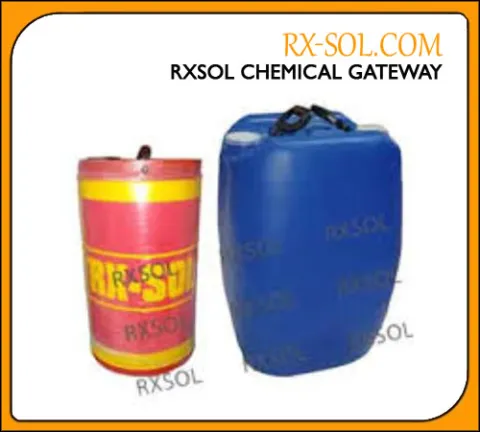
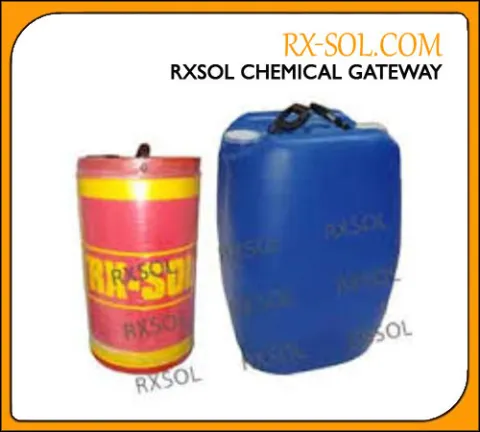
25 L, 210 L and 250 kg drums; IBC.