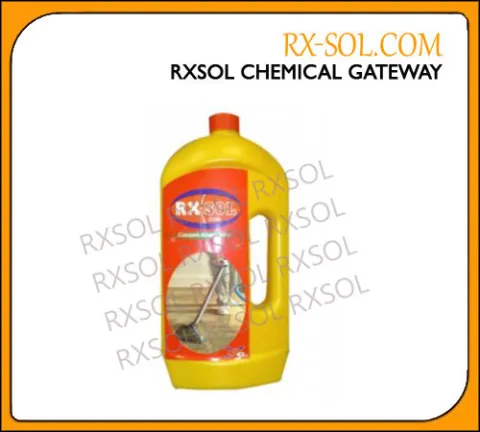
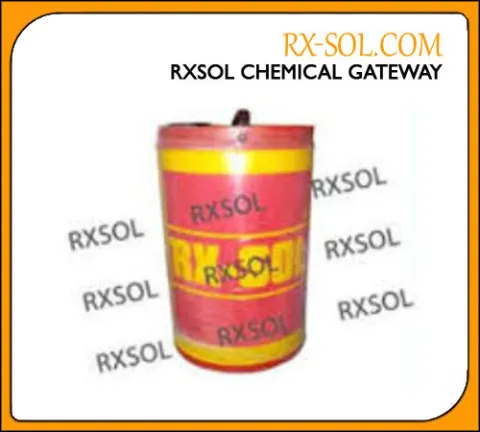
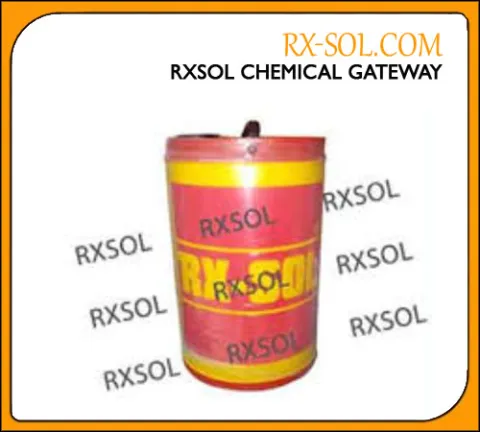
High Foaming Aircraft Cleaner
- Part number
- RXSOL-41-4126-025
- Category
- Air Lines
- Brand
- RXSOL
Overview
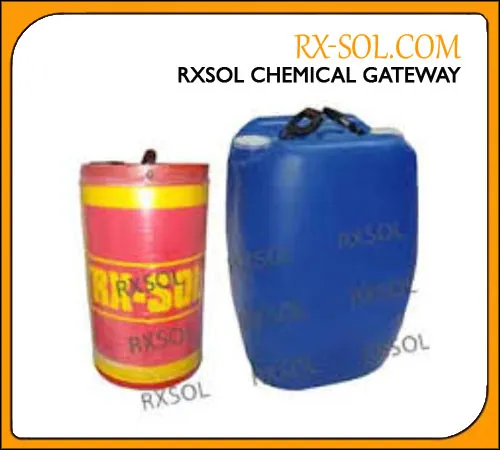
Aircraft Cleaner
High-Performance Exterior Cleaning Solution
HEAVY DUTY WASH SOAPTechnical specifications
RXSOL AIR CRAFT CLEANER Technical Highlights
| Type | Alkaline liquid cleaner |
|---|---|
| Foam Level | Moderate |
| Composition | Surfactants, soaps, alkaline builders, water-soluble solvents |
| Biodegradability | Yes |
| Petroleum Distillates | Free |
FIRST AID
| Eyes | Rinse immediately with water |
|---|---|
| Skin | Wash with soap and water |
| Ingestion | Seek medical advice immediately |
Applications
Aircraft Cleaner is a premium-quality, moderate foaming liquid cleaner specially formulated for effective cleaning of both painted and unpainted aircraft exterior surfaces.
It combines alkaline builders, surfactants, soap, and water-soluble solvents to efficiently remove grease, oil, and dirt while ensuring surface safety.
Field Applications of Air Craft Cleaner
- Aircraft exterior cleaning
- Ground equipment cleaning
- Hangar maintenance
- Industrial surfaces exposed to grease and oil
Features:
- Designed to remove residues of oil, grease, grime and carbon from the exterior surfaces of aircraft
- Non corrosive to most metals making this formula an exceptional degreaser in production and maintenance areas
- Concentrated
- Suitable for aircraft operators and manufacturers within the aerospace industry
- Highly economical in use
Dosage and directions
Usage & Dilution Ratio of RXSOL AIR CRAFT CLEANER
- Light Cleaning: 1:20 – 1:40
- General Cleaning: 1:10 – 1:20
- Heavy Duty Cleaning: 1:5 – 1:10
Normal Use as a one step cleaning operation, that leaves no film or residue and is safe on all surfaces. This product is highly concentrated, Also can be diluted one part concentrate to 25 parts water for pressure cleaning of heavy soil or traffic film. May be diluted with up to 100 parts water for light soil.
Can be applied:
- Manually (brush, sponge)
- Spray systems
- Pressure washing equipment
Characteristics and notes
WHY CHOOSE RXSOL AIR CRAFT CLEANER?
DUE to its Performance Advantages
- Rapid grease cutting action
- Prevents dirt redeposition
- Leaves surfaces clean and residue-free
- Safe for regular maintenance cleaning
- Powerful yet safe cleaning
- Environmentally responsible formulation
- Versatile and easy to use
- Economical for large-scale operations
Safety and SDS
Read the safety data sheet before handling. Wear suitable gloves and eye protection.
View safety data sheet
| Product Name | High Foaming Aircraft Cleaner |
| Part Number | RXSOL-41-4126-025 |
Company Details:
RX MARINE INTERNATIONAL
105, A wing , BSEL , TECH PARK.
VASHI ,NEW BOMBAY 400703 INDIA
Branch : Kandla, Mumbai , Chennai, Vizag, Kolkata, UAE , OMAN , CANADA and KENYA
| Phone | +91 22 20871200 - 1400 |
| Fax | +91 22 27612100 :::AOH :0091 9821214367 |
| rxsolchemicals@gmail.com | |
| Website | www.rxmraine.com |
Mixtures
Chemical nature : Aqueous solution of alkali salts and surfactants.
| Chemical Name | CAS No | Concentration |
| Benzenesulfonic acid, Na-salt | 127184-52-5 | >= 2.5 - < 10 |
| Sodium xylene sulphonate | 1300-72-7 | >= 1 - < 2.5 |
| 2-Butoxyethanol | 111-76-2 | >= 1 - < 2.5 |
| Potassium silicate | 1312-76-1 | >= 1 - < 2.5 |
| Trisodium phosphate dodecahydrate | 10101-89-0 | >= 1 - < 2.5 |
| Trisodiumnitrilotriacetate | 5064-31-3 | >= 0.1 - < 1 |
| Benzothiazole-2-thiol | 149-30-4 | >= 0.1 - < 0.25 |
| 2-(3- Methoxypropoxy)propan-1-ol | 34590-94-8 | >= 1 - < 2.5 |
| Proprietory Blend | --- | 84-90 |
| Classification of the substance or mixture |
Classification (REGULATION (EC) No 1272/2008): Skin corrosion, Category 1B H314: Causes severe skin burns and eye damage. Classification (67/548/EEC, 1999/45/EC): Corrosive R34: Causes burns. |
| Signal Word |
Danger. |
| Hazard Statements |
H314 Causes severe skin burns and eye damage. |
| Precautionary statements Prevention |
P260 Do not breathe dust/ fume/ gas/ mist/ vapours/ spray. P262 Do not get in eyes, on skin, or on clothing. P280 Wear protective gloves/ protective clothing/ eye protection/ face protection. |
| Precautionary statements Response |
P301 + P330 + P331 IF SWALLOWED: rinse mouth. Do NOT induce vomiting. P303 + P361 + P353 IF ON SKIN (or hair): Remove/ Take off immediately all contaminated clothing. Rinse skin with water/ shower. P305 + P351 + P338 IF IN EYES: Rinse cautiously with water for several minutes. Remove contact lenses, if present and easy to do. Continue rinsing. P308 IF exposed or concerned. P310 Immediately call a POISON CENTER or doctor/ physician. |
| Disposal | P501 Dispose of contents/ container to an approved waste disposal plant. |
| General advice |
First-aid crew: Ensure self-protection. Move out of dangerous area. Take off contaminated clothing and shoes immediately. |
| If inhaled |
Move to fresh air. If symptoms persist, call a physician. |
| Eye Contact |
Rinse immediately with plenty of water, also under the eyelids. Call a physician immediately. |
| Swallowed |
Clean mouth with water and drink afterwards plenty of water. Do NOT induce vomiting. Call a physician immediately. |
| Skin Contact |
Wash off with soap and plenty of water. Call a physician immediately. |
| Most important symptoms and effects, both acute and delayed |
Risks : corrosive effects. If swallowed, severe burns in the oral cavity and throat as well as danger of perforation of the digestive tract and stomach. |
| Indication of any immediate medical attention and special treatment needed | Treatment : Treat symptomatically. |
| Suitable extinguishing media |
Carbon dioxide (CO2). Dry powder. Alcohol-resistant foam. Water spray. |
| Unsuitable extinguishing media | High volume water jet. |
| Special hazards arising during firefighting |
May form toxic gases on heating or in case of fire. Carbon monoxide. Carbon dioxide (CO2). Sulphur oxides. |
| Advice for firefighters |
Special protective equipment for firefighters : In the event of fire, wear self-contained breathing apparatus. Further information : Use water spray to cool unopened containers. |
| Personal precautions, protective equipment and emergency procedures |
Ensure adequate ventilation. Wear personal protective equipment. |
| Advice for emergency responders | Protective equipment: see section 8 |
| Enviromental Precaution |
Do not flush into surface water or sanitary sewer system. Avoid subsoil penetration. Inform the relevant authorities if it enters sewers, aquatic environment or soil. |
| Methods and material for containment and cleaning up |
Ensure adequate ventilation. Contain spillage, soak up with non-combustible absorbent material, (e.g. sand, earth, diatomaceous earth, vermiculite) and transfer to a container for disposal according to local / national regulations (see section 13). |
| Advice on safe handling |
Provide sufficient air exchange and/or exhaust in work rooms. Have eye wash bottle or eye rinse ready at the work place. |
| Advice on protection against fire and explosion |
Normal measures for preventive fire protection. |
| Conditions for safe storage, including any incompatibilities |
Requirements for storage areas and containers : Keep containers tightly closed in a cool, well-ventilated place. Store in a place accessible by authorized persons only. Further information on storage conditions : Protect from frost. Storage period : 36 month Storage temperature : > 0 °C |
| Specific end use(s) | Cleaning agent |
| Appropriate engineering controls | Ensure adequate ventilation, especially in confined areas. |
| Breathing equipment |
In case of insufficient ventilation wear suitable respiratory equipment. Recommended Filter type: A-P2 |
| Protection of hands |
Neoprene gloves. Protective gloves complying with EN 374. Please observe the instructions regarding permeability and breakthrough time which are provided by the supplier of the gloves. Also take into consideration the specific local conditions under which the product is used, such as the danger of cuts, abrasion, and the contact time. |
| Eye protection |
Eye protection (EN 166). Tightly fitting safety goggles. Have eye wash bottle or eye rinse ready at the work place. |
| Body protection: | Chemical resistant protective clothing according to DIN EN 13034 (Type 6) |
| Hygiene measure |
Take off contaminated clothing and shoes immediately. Keep away from food, drink and animal feedingstuffs. Wash hands before breaks and immediately after handling the product. Avoid contact with skin and eyes. Do not breathe vapour. Do not breathe spray. |
| Environmental exposure controls |
Do not flush into surface water or sanitary sewer system. Avoid subsoil penetration. Inform the relevant authorities if it enters sewers, aquatic environment or soil. |
| Physical state | Liquid |
| Colour | Green |
| Odour | characteristic |
| Odor Threshold | Not Applicable |
| pH | 12.3 at 20 °C (undiluted) |
| Melting Point | Not Applicable |
| Boiling Point | ca. 100 °C |
| Flash Point | Not Applicable |
| Evaporation Rate | Not Applicable |
| Flammability (solid, gas) | Not Combustible |
| Explosive limits | No Data Available |
| Upper/lower flammability or explosive limits | No data available |
| Autoignition temperature | Not Applicable |
| Decomposition temperature | Not Applicable |
| Vapour pressure | Not Applicable |
| Density | 1.055 g/cm3 at 20 °C |
| Vapour Density | No Data Available |
| Freezing point | No data available |
| Specific Gravity | No data available |
| Partition coefficient | No data available |
| Explosive properties | No data available |
| Solubility | soluble |
| Relative density | Not Applicable |
| Ignition temperature | No information available. |
| Particle characteristics | No data available |
| Viscosity dynamic | 5 mPa*s at 20 °C |
| Reactivity | No dangerous reaction known under conditions of normal use. |
| Stability | Stable under normal conditions, |
| Possibility of hazardous reactions | None known. |
| Conditions to avoid | Protect from frost. |
| Incompatible materials | Strong acids |
| Hazardous decomposition products | No decomposition if stored and applied as directed. |
| Acute toxicity |
Acute oral toxicity : Acute toxicity estimate: > 2,000 mg/kg Method: Calculation method Acute oral toxicity Sodium xylene sulphonate : LD50: > 2,000 mg/kg Species: rat 2-Butoxyethanol : LD50: 1,746 mg/kg Species: rat Trisodium phosphate dodecahydrate : LD50: > 2,000 mg/kg Species: rat Trisodium-nitrilotriacetate : LD50: 1,000 - 2,000 mg/kg Species: rat Method: Calculation method Benzothiazole-2-thiol : LD50: > 2,000.0 mg/kg Species: rat 2-(3- Methoxypropoxy)propan-1-ol : LD50: 5,135 mg/kg Species: rat Acute inhalation toxicity : Acute toxicity estimate: > 20 mg/l vapour. Exposure time: 4 h Method: Calculation method Acute inhalation toxicity Trisodium-nitrilotriacetate : LC50: > 5 mg/l Exposure time: 4 h. Species: rat Information taken from reference works and the literature. Acute dermal toxicity : Acute toxicity estimate: > 2,000 mg/kg Method: Calculation method Acute dermal toxicity Sodium xylene sulphonate : LD50: > 2,000 mg/kg Species: rabbit 2-Butoxyethanol : LD50: > 2,000 mg/kg Species: guinea pig Method: OECD Test Guideline 402 Trisodium-nitrilotriacetate : LD50: > 10,000 mg/kg Species: rabbit Benzothiazole-2-thiol : LD50: > 2,000.0 mg/kg Species: rabbit 2-(3- Methoxypropoxy)propan-1-ol : LD50: 9,510 mg/kg |
| Respiratory or skin sensitisation | Sensitisation : Contains one or more substance(s) classified as sensitising. |
| Serious eye damage/eye irritation |
Skin irritation : Causes severe burns. Eye irritation : Causes serious eye damage. |
| Germ cell mutagenicity | Trisodium-nitrilotriacetate : Animal testing did not show any mutagenic effects. |
| Reproductive toxicity | Trisodium-nitrilotriacetate : Animal testing did not show any effects on fertility. |
| Teratogenicity | Trisodium-nitrilotriacetate : Animal testing did not show any effects on foetal development. |
| Carcinogenicity | Trisodium-nitrilotriacetate : Limited evidence of a carcinogenic effect. |
| Toxicity | |
| Toxicity to fish |
Sodium xylene sulphonate : LC50: > 1,000 mg/l Exposure time: 96 h Species: Fish 2-Butoxyethanol : LC50: 1,490 mg/l Exposure time: 96 h Species: Lepomis macrochirus (Bluegill sunfish) Trisodium phosphate dodecahydrate : LC0: 2,400 mg/l Exposure time: 48 h Species: Leuciscus idus (Golden orfe) Trisodium-nitrilotriacetate : flow-through test LC50: > 100 mg/l Exposure time: 96 h Species: Pimephales promelas (Fathead minnow) Information taken from reference works and the literature. 2-(3- Methoxypropoxy)propan-1-ol : LC50: 10,000 mg/l Exposure time: 96 h Species: Pimephales promelas (fathead minnow) |
| Toxicity to daphnia and other aquatic invertebrates |
Sodium xylene sulphonate : static test EC50: > 1,000 mg/l Exposure time: 48 h Species: Daphnia 2-Butoxyethanol : EC50: 1,720 mg/l Exposure time: 24 h Species: Daphnia Trisodium-nitrilotriacetate : EC50: 98 mg/l Exposure time: 96 h Species: Gammarus salinus (seawater shrimp) Information taken from reference works and the literature. 2-(3- Methoxypropoxy)propan-1-ol : LC50: 1,919 mg/l Exposure time: 48 h Species: Daphnia magna (Water flea) |
| Toxicity to algae |
Sodium xylene sulphonate : static test EC50: > 230 mg/l Exposure time: 96 h Species: Algae ErC50: 310 mg/l Exposure time: 72 h Species: Algae 2-Butoxyethanol : Cell multiplication inhibition test EC0: 900 mg/l Exposure time: 168 h Species: Scenedesmus quadricauda (Green algae) Trisodium-nitrilotriacetate : static test EC50: > 91.5 mg/l Exposure time: 72 h Species: Scenedesmus capricornutum (fresh water algae) Method: Tested according to Directive 92/69/EEC. Benzothiazole-2-thiol : EC50: 0.23 mg/l Exposure time: 96 h Species: Pseudokirchneriella subcapitata 2-(3- Methoxypropoxy)propan-1-ol : EC50: 1,000 mg/l Exposure time: 72 h Species: Selenastrum capricornutum (green algae). |
| Toxicity to bacteria |
2-Butoxyethanol : EC0: 700 mg/l Exposure time: 16 h Species: Pseudomonas putida Trisodium-nitrilotriacetate : EC50: 3,200 - 5,600 mg/l Exposure time: 8 h Species: . Information taken from reference works and the literature. Pseudomonas fluorescens 2 -(3- Methoxypropoxy)propan-1-ol : Growth inhibition EC10: 4,168 mg/l Species: Pseudomonas putida |
| Persistence and degradability |
Biodegradability : The surfactants contained in this preparation comply with the biodegradability criteria as laid down in Regulation (EC) No.907/2006 on detergents. Biodegradability 2-Butoxyethanol : 100 % Testing period: 28 d Readily biodegradable Zahn-Wellens Test; EG 88/302 Trisodium-nitrilotriacetate : 90 - 100 % Method: OECD Test Guideline 301B rapidly biodegradable |
| Bioaccumulative potential |
Bioaccumulation : Bioaccumulation is unlikely. Bioaccumulation Trisodium-nitrilotriacetate : Species: Brachydanio rerio (Zebra danio) Exposure time: 96 h Bioconcentration factor (BCF): < 3 Accumulation in aquatic organisms is unlikely |
| Mobility in soil | No further relevant information available. |
| Results of PBT and vPvB assessment | This mixture does not contain substances considered to be persistent, bioaccumulating and toxic (PBT)., This mixture does not contain substances considered to be very persistent and very bioaccumulating (vPvB). |
| Other adverse effects |
Additional ecological information : Water endangering Do not flush into surface water or sanitary sewer system. Avoid subsoil penetration. Even leakage of small amounts in the subsoil can contaminate drinking water. |
| Product |
Dispose of in accordance with local regulations. |
| Contaminated packaging | Dispose of as unused product. |
| Waste Code | Waste codes should be assigned by the user, preferably in discussion with the waste disposal authorities. |
| UN number | 1719 |
| UN proper shipping name |
CAUSTIC ALKALI LIQUID, N.O.S. Potassium silicate |
| Transport hazard class(es) | 8 |
| Packaging group | III |
| Environmental hazards | No |
| Tunnel restriction code | (E) |
Safety, health and environmental regulations/legislation specific for the substance or mixture:
| REACH - Candidate List of Substances of Very High Concern for Authorisation (Article 59). | This product does not contain substances of very high concern (Regulation (EC) No 1907/2006 (REACH), Article 57). |
| Water contaminating class (Germany) |
WGK 2 water endangering VWVWS A4 |
| Other regulations |
The product is classified and labelled in accordance with EC directives or respective national laws. Regional or national implementations of GHS may not implement all hazard classes and categories. |
| Other Information |
The information above is believed to be accurate and represents the best information currently available to us. However, we make no warranty of merchant ability or any other warranty, express or implied, with respect to such information, and we assume no liability resulting from its use. Users should make their own investigations to determine the suitability of the information for their particular purposes. In no event shall be liable for any claims, losses, or damages of any third party or for lost profits or any special, indirect, incidental, consequential or exemplary damages, how so ever arising, even if RX Marine International has been advised of the possibility of such damages. |
DISCLAIMER OF LIABILITY :The information in this SDS was obtained from sources which we believe are reliable. However, the information is provided without any warranty, express or implied, regarding its correctness. The conditions or methods of handling, storage, use or disposal of the product are beyond our control and may be beyond our knowledge. For this and other reasons, we do not assume responsibility and expressly disclaim liability for loss, damage or expense arising out of or in any way connected with the handling, storage, use or disposal of the product. This MSDS was prepared and is to be used only for this product. If the product is used as a component in another product, this MSDS information may not be applicable.
Availability
High Foaming Aircraft Cleaner manufacturer and supplier in Mumbai, Gandhidham, Kolkata, Chennai, Visakhpatnam, Fujairah, Dubai, Abidhabi, Ajman, Muscat, Oman