Safety and SDS
Read the safety data sheet before handling. Wear suitable gloves and eye protection.
View safety data sheet
| Product Name |
Hydrazine Anhydrous |
| Part Number | RXSOL-60-6042-100 |
Company Details:
RX MARINE INTERNATIONAL
105, A wing , BSEL , TECH PARK
VASHI ,NEW BOMBAY 400703 INDIA
| Phone | +91 22 65113333 / 5555 / 9999 |
| Fax | +91 22 2781 1318 :::AOH :0091 9821214367 |
| rxsolchemicals@gmail.com | |
| Website | www.rxmarine.com |
| CAS# | Chemical Name | Percent | EINECS/ELINCS |
| 302-01-2 | Hydrazine | >95 | 206-114-9 |
Emergency Overview
| Appearance | : | Colorless liquid. Flash Point: 38 deg C. |
Danger! Strong reducing agent. Fire and explosion risk in contact with oxidizing agents. May be fatal if absorbed through the skin. Causes eye and skin burns. Causes digestive and respiratory tract burns. Flammable liquid and vapor. Harmful if inhaled or swallowed. May cause allergic skin reaction. Cancer suspect agent. May cause blood abnormalities. May cause liver and kidney damage.
| Target Organs | : | Blood, kidneys, liver |
Potential Health Effects
| Eye | : | May cause irreversible eye injury. Exposure to the vapors or liquid may cause temporary blindness. Causes severe eye irritation and burns. |
Skin : May be fatal if absorbed through the skin. Prolonged and/or repeated contact may cause irritation and/or dermatitis. May cause skin sensitization, an allergic reaction, which becomes evident upon re-exposure to this material. Contact with liquid is corrosive and causes severe burns and ulceration. Contact with the skin may dissolve hair.
Ingestion : Harmful if swallowed. Causes gastrointestinal irritation with nausea, vomiting and diarrhea. May cause liver and kidney damage. Causes digestive tract burns with immediate pain, swelling of the throat, convulsions, and possible coma. Exposure may cause anemia and other blood abnormalities.
Inhalation : Harmful if inhaled. Irritation may lead to chemical pneumonitis and pulmonary edema. May cause liver and kidney damage. Causes severe irritation of upper respiratory tract with coughing, burns, breathing difficulty, and possible coma. Vapors may cause dizziness, nausea, itching, burning, and swelling of the eyes.
Chronic : Repeated inhalation may cause chronic bronchitis. May cause cancer according to animal studies. Repeated exposure may cause sensitization dermatitis. May cause reproductive and fetal effects.
Eyes : Immediately flush eyes with plenty of water for at least 15 minutes, occasionally lifting the upper and lower eyelids. Get medical aid imme diately. Do not allow victim to rub eyes or keep eyes closed.
Skin : Get medical aid immediately. Immediately flush skin with plenty of water for at least 15 minutes while removing contaminated clothing and shoes. Discard contaminated clothing in a manner which limits further exposure.
Ingestion : Do not induce vomiting. If victim is conscious and alert, give 2-4 cupfuls of milk or water. Never give anything by mouth to an unconscious person. Get medical aid immediately.
Inhalation : Get medical aid immediately. Remove from exposure and move to fresh air immediately. If breathing is difficult, give oxygen. Do NOT use mouth-to-mouth resuscitation. If breathing has ceased apply artificial respiration using oxygen and a suitable mechanical device such as a bag and a mask.
Notes to Physician : Treat symptomatically and supportively.
General Information : As in any fire, wear a self-contained breathing apparatus in pressure-demand, MSHA/NIOSH (approved or equivalent), and full protective gear. Vapors can travel to a source of ignition and flash back. Use water spray to keep fire-exposed containers cool. Flammable liquid and vapor. Autoignition temperature varies based upon contact surface. Vapors may be heavier than air. They can spread along the ground and collect in low or confined areas. May be ignited by heat, sparks, and flame. Vapors may form an explosive mixture with air. Containers may explode when heated.
Extinguishing Media : For large fires, use water spray, fog, or alcohol-resistant foam. Use water spray to cool fire-exposed containers. Do not get water inside containers. For small fires, use dry chemical, carbon dioxide, or water spray. Cool containers with flooding quantities of water until well after fire is out.
| Flash Point | : | 38 deg C ( 100.40 deg F) |
| Autoignition Temperature | : | 270 deg C ( 518.00 deg F) |
| Explosion Limits, Lower | : | 2.9% |
| Explosion Limits, Upper | : | 98% |
| NFPA Rating | : | Health: 3; Flammability: 3; Instability: 3 |
| General Information | : | Use proper personal protective equipment as indicated in Section 8. |
Spills/Leaks : Remove all sources of ignition. Absorb spill using an absorbent, non-combustible material such as earth, sand, or vermiculite. Do not use combustible materials such as sawdust. Do not get water inside containers. Approach spill from upwind. Use water spray to cool and disperse vapors, protect personnel, and dilute spills to form nonflammable mixtures. Control runoff and isolate discharged material for proper disposal.
Handling : Wash thoroughly after handling. Remove contaminated clothing and wash before reuse. Ground and bond containers when transferring material. Use spark-proof tools and explosion proof equipment. Do not get in eyes, on skin, or on clothing. Empty containers retain product residue, (liquid and/or vapor), and can be dangerous. Keep container tightly closed. Do not ingest or inhale. Do not pressurize, cut, weld, braze, solder, drill, grind, or expose empty containers to heat, sparks or open flames. Keep away from heat, sparks and flame. Use only with adequate ventilation or respiratory protection.
Storage : Keep away from heat, sparks, and flame. Keep away from sources of ignition. Do not store in direct sunlight. Store in a cool, dry, well-ventilated area away from incompatible substances. Flammables-area. Storage under a nitrogen blanket has been recommended. Isolate from oxidizing materials and acids.
Engineering Controls : Facilities storing or utilizing this material should be equipped with an eyewash facility and a safety shower. Use adequate general or local explosion-proof ventilation to keep airborne levels to acceptable levels.
Exposure Limits
| Chemical Name | ACGIH | NIOSH | OSHA - Final PELs |
| Hydrazine | 0.01 ppm TWA; Skin - potential significant contribution to overall exposure by the cutaneous r oute | 50 ppm IDLH | 1 ppm TWA; 1.3 mg/m3 TWA |
Personal Protective Equipment
| OSHA Vacated PELs | : | Hydrazine: 0.1 ppm TWA; 0.1 mg/m3 TWA |
| Eyes | : | Wear chemical splash goggles and face shield. |
| Skin | : | Wear appropriate protective gloves to prevent skin exposure. |
| Clothing | : | Wear appropriate protective clothing to prevent skin exposure. |
Respirators : Follow the OSHA respirator regulations found in 29 CFR 1910.134 or European Standard EN 149. Use a NIOSH/MSHA or European Standard EN 149 approved respirator if exposure limits are exceeded or if irritation or other symptoms are experienced.
Gloves Suit
| Physical State | : | Liquid |
| Appearance | : | Colorless |
| Odor | : | Strong odor - ammonia-like |
| pH | : | Not available |
| Vapor Pressure | : | 10 mm Hg @ 20 deg C |
| Vapor Density | : | 1.1 (air=1) |
| Evaporation Rate | : | Not available |
| Viscosity | : | 0.90 |
| Boiling Point | : | 113 deg C |
| Freezing/Melting Point | : | 1.4 deg C |
| Decomposition Temperature | : | Not available |
| Solubility | : | Soluble. |
| Specific Gravity/Density | : | 1.01 (water=1) |
| Molecular Formula | : | N2H4 |
| Molecular Weight | : | 32.05 |
| Chemical Stability | : | Thermally unstable. |
| Conditions to Avoid | : | Light, ignition sources, moisture, temperatures above 150°C. |
| Hazardous Decomposition Products | : | Oxides of nitrogen, ammonia and/or derivatives. |
| Hazardous Polymerization | : | Has not been reported. |
Incompatibilities with Other Materials : Substance is highly reactive reducing agent. Incompatible with oxidizing agents (including air), acids, and some metal oxides and metals. Substance may spontaneously ignite in air when in contact with porous materials. Ignites on contact with dinitrogen oxide and tetroxide, hydrogen peroxide, tetryl, and nitric acid. Explodes on contact with dicyanofurazan, n-halomides, potassium, silver compounds, sodium hydroxide, titanium compounds, and trioxygen difluoride. Explosive compounds may result from contact with air, chloromethylnitrobenzene, lithium perchlorate, metal salts, methanol + nitromethane, sodium , and sodium perchlorate. Also incompatible with barium oxide or calcium oxide, benzeneseleninic acid or anhydride, calcium, carbon dioxide + stainless steel, 1-chloro-2,4-dinitrobenzene, cotton waste + heavy metals, (difluoroamino)difluoroacetonitrile, iodine pentoxide, rust, ruthenium(III) oxide, thiocarbonyl azide thiocyanate,
| RTECS# | : | CAS# 302-01-2 |
| LD50/LC50 | : | LD50/LC50 |
| Dermal, guinea pig : LD50 | : | 190 mg/kg |
| Inhalation, mouse : LC50 | : | 252 ppm/4H |
| Inhalation, mouse : LC50 | : | 1000 mg/m3/2H |
| Inhalation, mouse : LC50 | : | 320 mg/m3/4H |
| Inhalation, rat : LC50 | : | 570 ppm/4H |
| Inhalation, rat : LC50 | : | 130 mg/m3/2H |
| Oral, mouse : LD50 | : | 59 mg/kg |
| Oral, mouse : LD50 | : | 59 mg/kg |
| Oral, rat : LD50 | : | 60 mg/kg |
| Oral, rat : LD50 | : | 60 mg/kg |
| Skin, rabbit : LD50 | : | 91 mg/kg |
| ACGIH | : | A3 - Confirmed animal carcinogen with unknown relevance to humans |
| California | : | Carcinogen, initial date 1/1/88 |
| NTP | : | Suspect carcinogen |
| IARC | : | Group 2B carcinogen |
| Mutagenicity | : | DNA Damage: hamster oral 15mg/kg, rat liver 3mmol/L. DNA Inhibition: mouse oral 200mg/kg, rat oral 60mg/kg. Unscheduled DNA |
| Synthesis | : | hamster ovary 250ug/L, rat oral 60mg/kg, rat lung 250ug/L.Oncogenic Transformation: human liver 80ug/L, human cell types 35mg/L. |
| Neurotoxicity | : | No information available. |
Epidemiology : This substance has shown a high tumor-generating potential in multiple studies. Hydrazine has been classified as carcinogenic in many rodent studies following long-term administration. The major target tissues include: liver, lungs, and respiratory tract. Please refer to Patty's Industrial Hygiene and Toxicology for specific information. Substance is listed by CA Proposition 65. IARC has determined that there is sufficient evidence of carcinogenicity to animals and inadequate evidence for humans.
Teratogenicity : Effects on Newborn: Viability index, subcutaneous-rat TDLo=80mg/kg Embryo or Fetus: Death and Fetotoxicity, inhalation-rat TCLo= 1mg/m3/24H. Specific Developmental Abnormalities: Central nervous system/Musculoskeletal/Urogenital, intraperitoneal-rat TDLo=30mg/kg.
Reproductive Effects : Post-implantation mortality, inhalation-rat TCLo=4mg/m3/2H. Maternal Effects: Ovaries/Fallopian tubes.Inhalation, ratTCLo=5ppm/6H; Paternal Effects: Testes/Sperm duct/Epididymis.Inhalation-hamster TCLo=1ppm/6H.
Other Studies:
Ecotoxicity : No data available. Rainbow trout (fresh water) 146ppm/0.5H (Lethal) Guppy (hard water): LC50 = 3.85mg/L/96H Guppy (soft water): LC50 = 0.61mg/L/96HBluegill sunfish: LC50 = 1.08mg/L/96H
Environmental : Biodegradation is not expected to be significant when large amounts of hydrazine are released due to the high microbial toxicity of hydrazine; at lower concentrations, however, hydrazine biodegradation could be important. Volatilization of hydrazine should not be important from moist soil surfaces given an estimated Henry's Law constant of 6.1X10⁻⁷ atm-cu m/mole, calculated from experimental values for vapor pressure and water solubility.
| Physical | : | No information available. |
Other : Bioconcentration in guppies was studied using a hydrazine concentration in water of 0.5 ug/g. After 96 hours, the concentration of hydrazine in guppies was about 144 ug/g. These values give a bioconcentration factor of 316. An estimated BCF value of 0.01 was calculated for hydrazine, using a measured log Kow of -2.07(2) and a recommended regression-derived equation. According to a classification scheme, these BCF values suggest that bioconcentration in aquatic organisms may be high, as for guppies; however, based on this compound's values for log Kow and water solubility, the potential
Chemical waste generators must determine whether a discarded chemical is classified as a hazardous waste. US EPA guidelines for the classification determination are listed in 40 CFR Parts 261.3. Additionally, waste generators must consult state and local hazardous waste regulations to ensure complete and accurate classification.
| RCRA P-Series | : | Not listed |
| RCRA U-Series | : | CAS# 302-01-2: waste number U133 (Reactive waste, Toxic waste). |
| US DOT | Canada TDG | |
| Shipping Name: | Hydrazine, Anhydrous | Hydrazine, Anhydrous |
| Hazard Class: | 8 | 8 |
| UN Number: | UN2029 | UN2029 |
| Packing Group: | I | I |
US FEDERAL
| TSCA | : | CAS# 302-01-2 is listed on the TSCA inventory. |
| Health & Safety Reporting List | : | None of the chemicals are on the Health & Safety Reporting List. |
| Chemical Test Rules | : | None of the chemicals in this product are under a Chemical Test Rule. |
| Section 12b | : | None of the chemicals are listed under TSCA Section 12b. |
| TSCA Significant New Use Rule | : | None of the chemicals in this material have a SNUR under TSCA. |
| CERCLA Hazardous Substances and corresponding RQs | : | CAS# 302-01-2: 1 lb final RQ; 0.454 kg final RQ |
| WGK (Water Danger/Protection) | : | CAS# 302-01-2: 3 |
| Canada - DSL/NDSL | : | CAS# 302-01-2 is listed on Canada's DSL List. |
| Canadian Ingredient Disclosure List | : | CAS# 302-01-2 is listed on the Canadian Ingredient Disclosure List. |
| SARA Section 302 Extremely Hazardous Substances | : | CAS# 302-01-2: 1000 lb TPQ |
| SARA Codes | : | CAS # 302-01-2: immediate, delayed, fire, reactive. |
| Section 313 | : | None of the chemicals in this product are considered highly hazardous by OSHA. |
| OSHA | : | CAS# 302-01-2 can be found on the following state right to know lists: California, New Jersey, Pennsylvania, Minnesota, Massachusetts. |
| STATE | : | CAS# 302-01-2 can be found on the following state right to know lists: California, New Jersey, Pennsylvania, Minnesota, Massachusetts |
Clean Air Act:
CAS# 302-01-2 is listed as a hazardous air pollutant (HAP).
This material does not contain any Class 1 Ozone depletors.
This material does not contain any Class 2 Ozone depletors.
Clean Water Act:
None of the chemicals in this product are listed as Hazardous Substances under the CWA.
None of the chemicals in this product are listed as Priority Pollutants under the CWA.
None of the chemicals in this product are listed as Toxic Pollutants under the CWA.
California Prop 65
The following statement(s) is(are) made in order to comply with the California Safe Drinking Water Act:
WARNING: This product contains Hydrazine, a chemical known to the state of California to cause cancer.
California No Significant Risk Level: CAS# 302-01-2: 0.04 æg/day NSRL
European/International Regulations
European Labeling in Accordance with EC Directives
Hazard Symbols : T C N
Risk Phrases:
R 10 Flammable.
R 23/24/25 Toxic by inhalation, in contact with skin and if swallowed.
R 34 Causes burns.
R 43 May cause sensitization by skin contact.
R 45 May cause cancer.
R 50/53 Very toxic to aquatic organisms, may cause long-term adverse effects in the aquatic environment.
Safety Phrases:
S 45 In case of accident or if you feel unwell, seek medical advice immediately (show the label where possible).
S 53 Avoid exposure - obtain special instructions before use.
S 60 This material and its container must be disposed of as hazardou s waste.
S 61 Avoid release to the environment. Refer to special instructions /safety data sheets.
Canada - WHMIS
This product has a WHMIS classification of E, B2, D1B.
This product has been classified in accordance with the hazard criteria of the Controlled Products Regulations and the MSDS contains all of the information required by those regulations.
| MSDS Creation Date | : | 7/01/1999 |
| Revision #7 Date | : | 6/29/2007 |
The information above is believed to be accurate and represents the best information currently available to us. However, we make no warranty of merchantability or any other warranty, express or implied, with respect to such information, and we assume no liability resulting from its use. Users should make their own investigations to determine the suitability of the information for their particular purposes. In no event shall Fisher be liable for any claims, losses, or damages of any third party or for lost profits or any special, indirect, incidental, consequential or exemplary damages, howsoever arising, even if Fisher has been advised of the possibility of such damages.
DISCLAIMER OF LIABILITY :The information in this SDS was obtained from sources which we believe are reliable. However, the information is provided without any warranty, express or implied, regarding its correctness. The conditions or methods of handling, storage, use or disposal of the product are beyond our control and may be beyond our knowledge. For this and other reasons, we do not assume responsibility and expressly disclaim liability for loss, damage or expense arising out of or in any way connected with the handling, storage, use or disposal of the product. This MSDS was prepared and is to be used only for this product. If the product is used as a component in another product, this MSDS information may not be applicable.
Availability
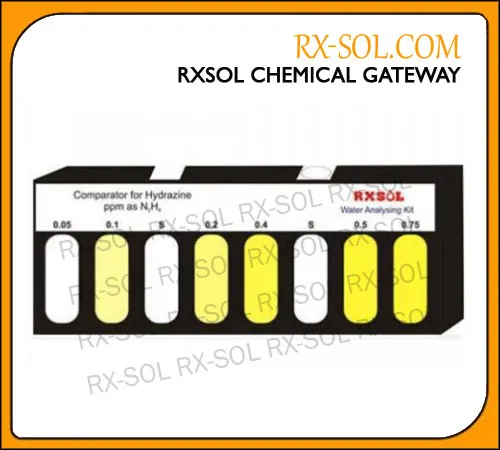
Hydrazine 0.1 PPM manufacturer supplier distributor in Mumbai, Kandla, Kolkata, Vizag, Chennai, India, Fujairah, Dubai, Sharjah, UAE, Gulf, Middle East, Muscat Oman, Kenya Africa. Get the best quality of Hydrazine 0.1 PPM at a competitive price from us. We have ready stock of Hydrazine 0.1 PPM in India, UAE Gulf, Oman, Kenya Africa. Contact us for bulk as well as small orders.