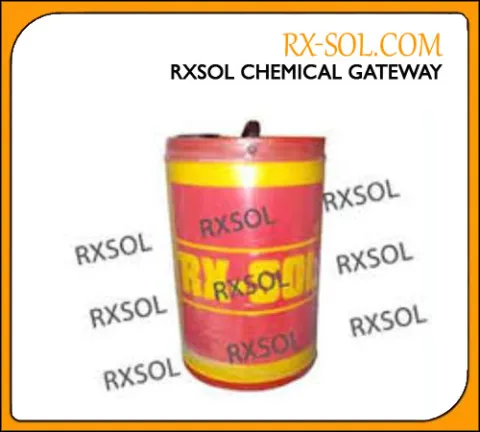
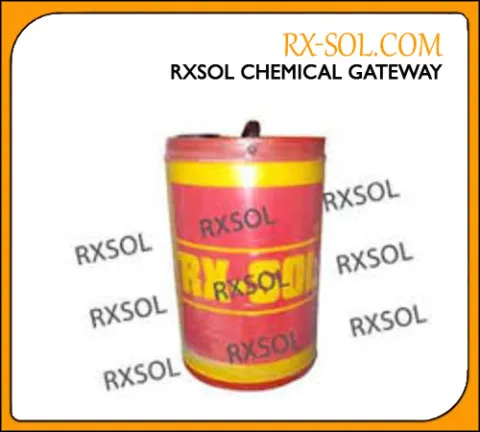
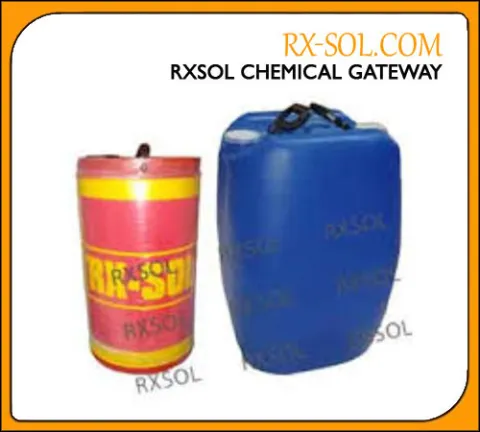
Hydrofluoric acid 70
- Part number
- RXSOL-68-1322-038
- Category
- Metal Treatment
- Brand
- RXSOL
Overview
Hydrofluoric acid is a solution of hydrogen fluoride in water. It is a colorless fuming liquid which can cause painful burns. Hf is one of the strongest inorganic acids, is used mainly for industrial purposes (eg, glass etching, metal cleaning, electronics manufacturing). Hydrofluoric acid also may be found in home rust removers.
Technical specifications
|||
| 21.5.2011. | |
| A CLEAR LIQUID WITH AN ACRID VAPOUR . |
LIQUID
| Also complies with BS 637 | PART 2 : 1984 ( ISO 6353 /2-1983 ) |
|---|---|
| HAZARD | Toxic by inhalation , corrosive to skin and mucous membranes |
| TLV | Ceiling 3 ppm |
Characteristics and notes
Severe burns occur after exposure of concentrated (ie, 50% or stronger solution) hydrofluoric acid to 1% or more body surface area (BSA), exposure to hydrofluoric acid of any concentration to 5%
Safety and SDS
Read the safety data sheet before handling. Wear suitable gloves and eye protection.
View safety data sheet
| Product Name | RXSOL-19-1322 |
| Product Type | Hydrofluoric acid 70 |
Company Details:
RX MARINE INTERNATIONAL
105, A wing , BSEL , TECH PARK.
VASHI ,NEW BOMBAY 400703 INDIA
Stock : Mumbai, Kandla, Kolkata, Visakhapatnam, Chennai, Muscat Barka, Fujairah
| Phone | +91 22 65113333 / 5555 / 9999 / 27611360 |
| Fax | +91 22 2781 1318 :::AOH :0091 9821214367 |
| rxsolchemicals@gmail.com , sales@tankcleaner.net/ | |
| Website | www.rxmarine.com/ , www.tankcleaner.net/ |
| Ingredient | CAS No | Percent | Hazardous |
| Hydrogen Fluoride | 7664-39-3 | 70% | Yes |
| Water | 7732-18-5 | 30% | No |
| Inhalation |
Severely corrosive to the respiratory tract. May cause sore throat, coughing, labored breathing and lung congestion/inflammation. |
| Ingestion | Corrosive. May cause sore throat, abdominal pain, diarrhea, vomiting,severe burns of the digestive tract, and kidney dysfunction. |
| Skin Contact |
|
| Eye Contact |
|
| Chronic Exposure |
Intake of more than 6 mg of fluorine per day may result in fluorosis,bone and joint damage. Hypocalcemia and hypomagnesemia can occur from absorption of fluoride ion into blood stream. |
| Aggravation of Pre-existing Conditions |
Persons with pre-existing skin disorders, eye problems, or impaired kidney or respiratory function may be more susceptible to the effects of this substance. |
Ingestion: If swallowed, DO NOT INDUCE VOMITING. Give large quantities of water.
Never give anything by mouth to an unconscious person. Get medical attention immediately.
Skin Contact: FOR ACID BURNS TO THE BODY: 1) Remove the victim from the contaminated area and immediately place him under a safety shower or wash him with a water hose, whichever is available. 2) Remove all contaminated clothing. 3) Keep washing with large amounts of water for a minimum of 15 to 20 minutes. 4) Have someone make arrangements for medical attention while you continue flushing the affected area with water. 5) a) If available, after thorough washing, the burned area should be immersed in a solution of 0.2% iced aqueous Hyamine 1622 or 0.13% iced aqueous Zephiran Chloride. If immersion is not practical, towels should be soaked with one of the above solutions and used as compresses for the burn area. Ideally compresses should be changed every 2 minutes. 5) b) An alternative treatment to 5a is for the physician to inject sterile 10% aqueous calcium gluconate solution subcutaneously beneath, around, and in the burned area. Initially use no more than 0.5 cc per square centimeter and do not distort appearance of skin. If pain is not completely relieved, additional treatment is indi-cated. 6) Seek medical attention as soon as possible for all burns regardless of how minor they may appear initially. Hyamine 1622 is a trade name for Tetracaine Benzethonium Chloride, Merck Index Monograph 1078, a quaternary ammonium compound sold by Rohm & Haas,Philad -elphia. Zephiran Chloride is a trade name for Benzalkonium Chloride, Merck Index Monograph 1059, also a quaternary ammonium compound, sold by SANOFI Winthrop Pharmaceutical, New York, NY.
Eye Contact: FOR ACID IN THE EYES: 1) Irrigate eyes for at least 30 minutes with copious quantities of water, keeping the eyelids apart and away from eyeballs during irrigation. 2) Get competent medical attention immediately, preferably an eye specialist. 3) If a physician is not immediately available, apply one or two drops of 0.5% Pontocaine Hydrochloride solution. 4) Do not use oily drops or ointment. Place ice pack on eyes until reaching emergency room.
Note to Physician: For burns of large skin areas, (greater than 25 square inches), for ingestion and for significant inhalation exposure, severe systemic effects may occur. Monitor and correct for hypocalcemia, cardiac arrhythmias, hypomagnesemia and hyperkalemia. In some cases renal dialysis may be indicated. For certain burns, especially of the digits, use of intra-arterial calcium gluconate may be indicated. Treat as chemical pneumonia. Monitor for hypocalcemia, 2.5% calcium gluconate in normal saline by nebulizer or by IPPB with 100% oxygen may decrease pulmonary damage. Bronchodilators may also be administered. Medical Surveillance: Provide phycical examinations of exposed personnel every six months including fluoride determinations in urine, studies of liver and kidney function: chest X-ray, annually. Protect from exposure those individuals with diseases of kidneys, liver, and lung.
Hazardous Industrial Chemicals Safety Manual). AN ALTERNATIVE FIRST AID PROCEDURE: Hydrofluoric Acid (HF) is a highly corrosive and toxic acid, even in a dilute form. It can severely damage the skin and eyes causing severe burns which are extremely painful. Additionally, the vapor from anhydrous HF or its concentrated solutions can cause damage to skin, eyes and the respiratory system. HF differs from other strong acids in that it not only causes surface burns but rapidly penetrates the skin, even in dilute solution, and causes destruction of underlying tissue and even bone by the extraction of Calcium. For this reason, washing the burn with water is not sufficient. A neutralizing agent which will also penetrate the skin is required. The effect of HF, i.e. onset of pain, particularly in dilute solutions, may not be felt for up to 24 hours. It is important, therefore, that persons using HF have immediate access to an effective antidote even when they are away from their work place in order that first aid treatment can be commenced immediately while the patient seeks medical advice. HOW TO TREAT HYDROFLUORIC ACID BURNS: It has been conclusively shown (references 1,2,3 and 4 below) that flushing the affected area with water for one minute and then massaging HF Antidote Gel into the wound until there is a cessation of pain is the most effective first aid treatment available. HF Antidote Gel contains Calcium Gluconate which combines with HF to form insoluble Calcium Fluoride, thus preventing the extraction of Calcium from the body tissue and bones. HF Antidote Gel is available in 25g tubes, and since the effects of the dilute acid may not be apparent for some hours, we recommend that any person in contact with HF should carry, or have access to a tube of HF Antidote Gel at all times; ideally with one tube at the work place, one on the person and one at home. For safety's sake, we believe that HF Antidote Gel should be issued to all employees who may come into contact with HF. EYE INJURIES: Irrigate the affected part immediately with copious amounts of cold water. Urgent medical advice must be sought. HF Antidote Gel is NOT for use in the eye. It is imperative that any person who has been contaminated by HF should seek medical advice even when the treatment by HF Antidote Gel has been applied.
Fire: Not considered to be a fire hazard. Fire may produce poisonous or
irritating gases.
Explosion: Violent exothermic reaction occurs with water. Sufficient heat may be produced to ignite combustible materials. Reacts with metals forming flammable Hydrogen gas. Fire Extinguishing Media: Keep upwind of fire. Use water or carbon dioxide on fires in which Hydrofluoric Acid is involved. Halon or foam may also be used. In case of fire, the sealed containers can be kept cool by spraying with water.Special Information: In the event of a fire, wear full protective clothing and NIOSH- approved self-contained breathing apparatus with full facepiece operated in the pressure demand or other positive pressure mode. Avoid getting water in tanks or drums; water can cause generation of heat and spattering. In contact with air, the acid gives off corrosive fumes which are heavier than air.
Personal Precautions
- Wear protective clothing as per section 8
Environmental Precautions
- Do not allow to enter public sewers and watercourses
Immediate Actions
- Contain spillage by any means possible
Clean Up Actions
- Absorb spillage in inert material and shovel up
- Ventilate the area and wash spill site after material pick-up is complete
Special Precautions
- Wear protective clothing as per section 8
Handling
- The usual precautions for handling chemicals should be observed
- See Section 8
- Eyewash bottles should be available
Storage
- Keep only in the original container in a cool, well ventilated place (S3/9/49)
- Protect from frost
Exposure Limits
- There are no recommended or established controls for this product
Exposure controls
- No special ventilation is required unless the product is used in a spray form
Occupational exposure controls
- Wear suitable protective clothing, including eye/face protection and gloves (plastic or rubber are recommended)
- During fumigation/spraying wear suitable respiratory equipment (S42)
| - | Odour: Odourless |
| - | Appearance: Clear Liquid, pale yellow, soluble in water |
| - | pH 10.5 - 11.5 at 0.1 % concentration |
| - | Boiling point >100 °C at 760 mm /Hg |
| - | Vapour pressure - not known |
| - | Freezing point <0 °C at 760 mm/Hg |
| - | Completely soluble in water |
| - | Specific gravity (water=1) 1.07 |
| - | Non combustible |
- Stable
- Avoid overheating, Keep away from frost
- See Section 5
Toxicological information
- No experimental data available
Inhalation
- Vapours or aerosols may cause irritation of eyes, nose and respiratory tract
Contact with skin
- Prolonged skin or eye contact may cause chemical burns
Contact with eyes
- Prolonged skin or eye contact may cause chemical burns
Ingestion
- The ingestion of significant quantities may cause burning sensation
Carcinogenicity
- No evidence of carcinogenic effects
Ecotoxicity
- This product has been evaluated on its behaviour in the environment by "The TNO Institue of
Environmental Sciences" (The Netherlands organisation for applied Scientific Research).
- Their conclusion on this product reads:
- "In general, this cleaning agent poses little danger to the environment, its main ingredients will either
dissolve rapidly and dissociate in water or are readily/inherently biodegradable."
- Based upon their report, IMO's BCH Working Group on the Evaluation of Safety and Pollution Hazards
approved this product for use as tank cleaning agent by chemical tankers.
Mobility
- Completely soluble in water
Persistence and Biodegradability
- The components in this product are readily biodegradable.
Bioaccumulation Potential
- Bioaccumulation of the components in this product is insignificant.
Other Adverse Effects
- No environmental problems are expected when the product is used / handled correctly.
Classification
- This material and/or its container must be disposed of as hazardous waste
- EU Waste class: 06 02
Disposal considerations
- Do not discharge into drains or the environment, dispose to an authorised waste collection point
- Disposal should be in accordance with local, state or national legislation
- Not classified as hazardous for transport
Risk Phrases
- Causes burns (R34)
- Irritating to respiratory system (R37) Safety Phrases
- Avoid contact with skin and eyes (S24/25)
- Wear suitable protective clothing, eye/face protection (S36/39)
- In case of accident or if you feel unwell, seek medical advice immediately (show the label where possible)
Text of R and S phrase codes used in this safety data sheet:- R34: Causes burns; R37: Irritating to respiratory system. The information
provided about the product on this Safety Data Sheet has been compiled from knowledge of the individual constituents The data given here is based on current knowledge and experience. This Safety Data Sheet describes the product in terms of safety requirements and does not signify any warranty with regard to the product's properties The data given here only applies when product used for proper application(s). The product is not sold as suitable for other applications - usage in such may cause risks not mentioned in this sheet. Do not use for other
application(s) without seeking advice from manufacturer
DISCLAIMER OF LIABILITY :The information in this SDS was obtained from sources which we believe are reliable. However, the information is provided without any warranty, express or implied, regarding its correctness. The conditions or methods of handling, storage, use or disposal of the product are beyond our control and may be beyond our knowledge. For this and other reasons, we do not assume responsibility and expressly disclaim liability for loss, damage or expense arising out of or in any way connected with the handling, storage, use or disposal of the product. This MSDS was prepared and is to be used only for this product. If the product is used as a component in another product, this MSDS information may not be applicable.
Availability
Hydrofluoric Acid Supplier in Oman Muscat, UAE Fujairah, Sharjah, Dubai, Abudhabi, Ajman, Mumbai, Chennai, Kolkata, Kandla, Visakhapatnam, Canada, Kenya Uganda