Overview
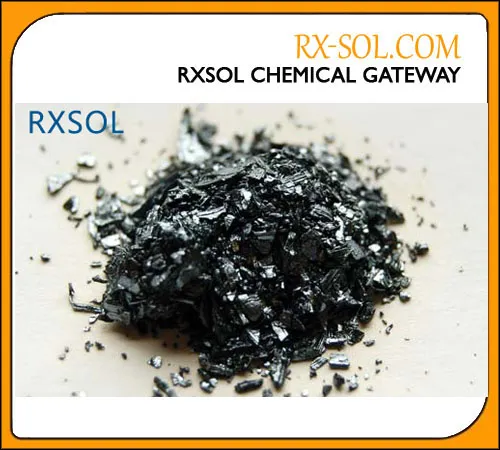
Iodine, a diatomic molecule (I2), is an oxidizing agent and solutions of it are frequently used in chemical analyses. Iodine suffers from low solubility in water and its volatility makes it difficult to handle directly. Both these problems are overcome by the addition of an Iodide salt (usually Potassium Iodide) which forms a Triiodide (I3-) complex with the Iodine. The Triiodide complex is extremely soluble in water and has decreased volatility.
Technical specifications
| CASR No | [7553 – 56 – 2] |
|---|---|
| EC-No | 31-442-4 |
| HS-No | 801 |
RTECSNN1575000
| Poison class | CH ) |
|---|---|
| Max. Allowable Concentration ( MAK ), Air | 1.1 mg / m3 |
| LD 50 oral rat | 14 mg / kg |
| Packing category | G |
Merck-Index10, 4881
| Mol. Formula | I |
|---|
Applications
Iodine solutions are typically standardized with Sodium Thiosulfate solutions or Arsenic Trioxide. The equation for reaction with Sodium Thiosulfate is:
See the Tech Tip under Arsenic Trioxide for information on standardization with Arsenic Trioxide.
Iodine Derivatives Manufacturer in India
Iodine is the heaviest and the rarest of stable halogens that can be found on the crust of earth. Iodine is mostly used in nutrition. About fifty percent of all iodine produces and manufactured worldwide is used to form Organoiodine compounds.
Iodine deficiency in human body is the number one cause of preventable mental retardation and thyroid problems. Certain regions and especially coastal regions have iodine naturally in the soil. But it is rare in most of the Earth’s surface. Therefore iodine is added in small quantities in salt to provide the body with the much needed iodine. Generally, Potassium iodide or Potassium iodate is added to table/common salt, in order to prevent problems caused by iodine deficiency.
Iodine has several applications other than iodization of salt. It has a plethora of industrial as well as medical applications and is also used to provide nutrition to animals. The importance of application of iodine varies and some of the major uses of iodine derivatives are in colourants, dyes and pigments, animal nutrition products, catalysts, stabilizers, disinfectants and antiseptics, pharmaceutical, and photography.
Dosage and directions
In order to minimize errors due to oxidation of the Iodide to Iodine, titrations involving Iodine solutions should be made in the pH range of 4 - 8, and contact with air should be minimized. Because of this oxidation tendency as well as the volatility of this element even in the Triiodide form, Iodine solutions should be restandardized periodically for increased accuracy, especially after the bottle has been opened. Starch forms an intensely blue complex with Triiodide and is almost always used as the indicator when the endpoint is not determined instrumentally.
Characteristics and notes
Iodine solutions can also be used to determine Sulfite, Sulfur Dioxide, or Sulfide, according to the following reactions:
In these reactions, it is better to add the Sulfite or Sulfide ion solution to an excess of acidified standard Iodine solution and then back-titrate the excess Iodine with standard Sodium Thiosulfate solution. This avoids loss of the analyte due to volatilization and thus leads to increased accuracy.
Safety and SDS
Read the safety data sheet before handling. Wear suitable gloves and eye protection.
View safety data sheet
|
Product Name |
Iodine Solution |
|
Product Type |
RXSOL-61-6405-500 |
Company Details:
RX MARINE INTERNATIONAL
105, A wing , BSEL , TECH PARK.
VASHI ,NEW BOMBAY 400703 INDIA
Stock Point : Mumbai, Kolkata, Chennai, Visakhapatnam, Gandhidham, Fujairah
| Phone | +91 22 27815540 / 41 / 42 |
| Fax | +91 22 2781 1318 :::AOH :0091 9322594669 |
| rxsolchemicals@gmail.com |
Composition:
| Name | CAS # | % by Weight |
| Iodine | 7553-56-2 | 5 |
| Potassium Iodide | 7681-11-0 | 10 |
| Water | 7732-18-5 | 85 |
Toxicological Data on Ingredients:
Iodine: ORAL (LD50): Acute: 14000 mg/kg [Rat]. 22000 mg/kg [Mouse]. Potassium
Iodide LD50: Not available. LC50: Not available.
Potential Acute Health Effects:
Hazardous in case of ingestion. Slightly hazardous in case of skin contact ( irritant, permeator), of eye contact (irritant).
Potential Chronic Health Effects:
Hazardous in case of ingestion. Slightly hazardous in case of skin contact (irritant, sensitizer), of eye contact (irritant), .CARCINOGENIC EFFECTS: Not available. MUTAGENIC EFFECTS: Mutagenic for mammalian somatic cells. [Potassium Iodide]. TERATOGENIC EFFECTS: Not available. DEVELOPMENTAL TOXICITY: Classified Reproductive system/toxin/female, Development toxin [POSSIBLE] [Potassium Iodide]. The substance is toxic to thyroid. The substance may be toxic to
blood, kidneys, liver, skin, eyes. Repeated or prolonged exposure to the substance can produce target organs damage.
| Eye Contact: | Check for and remove any contact lenses. In case of contact, immediately flush eyes with plenty of water for at least 15 minutes. Cold water may be used. Get medical attention. |
| Skin Contact: | Wash with soap and water. Cover the irritated skin with an emollient. Get medical attention if irritation develops. Cold water may be used. |
| Serious Skin Contact: | Not available. |
| Inhalation: | If inhaled, remove to fresh air. If not breathing, give artificial respiration. If breathing is difficult, give oxygen. Get medical attention. |
| Serious Inhalation: | Not available. |
| Ingestion: | Do NOT induce vomiting unless directed to do so by medical personnel. Never give anything by mouth to an unconscious person. Loosen tight clothing such as a collar, tie, belt or waistband. Get medical attention if symptoms appear. |
| Serious Ingestion: | Not available. |
| Flammability of the Product: | Non-flammable. |
| Auto-Ignition Temperature: | Not applicable. |
| Flash Points: | Not applicable. |
| Flammable Limits: | Not applicable. |
| Products of Combustion: | Not available. |
| Fire Hazards in Presence of Various Substances: | Not applicable. |
| Explosion Hazards in Presence of Various Substances: | Non-explosive in presence of open flames and sparks, of shocks. |
| Fire Fighting Media and Instructions: | Not applicable. |
| Special Remarks on Fire Hazards: | Not available. |
| Special Remarks on Explosion Hazards: | Potassium iodide + Fluorine Perchlorate will explode on contact. (Potassium Iodide) |
Small Spill:
Dilute with water and mop up, or absorb with an inert dry material and place in an appropriate waste disposal container.Finish cleaning by spreading water on the contaminated surface and dispose of according to local and regional authority
requirements.
Large Spill:
Absorb with an inert material and put the spilled material in an appropriate waste disposal. Finish cleaning by spreading water on the contaminated surface and allow to evacuate through the sanitary system. Be careful that the product is not present at a
concentration level above TLV. Check TLV on the MSDS and with local authorities.
Precautions:
Keep locked up.. Keep container dry. Do not ingest. Do not breathe gas/fumes/ vapor/spray. Never add water to this product. If ingested, seek medical advice immediately and show the container or the label. Avoid contact with skin and eyes.
Storage:
Keep container tightly closed. Keep container in a cool, well-ventilated area.
| Engineering Controls: | Provide exhaust ventilation or other engineering controls to keep the airborne concentrations of vapors below their respective threshold limit value. |
| Personal Protection: | Splash goggles. Lab coat. Gloves. |
| Personal Protection in Case of a Large Spill: | Splash goggles. Full suit. Boots. Gloves. Suggested protective clothing might not be sufficient; consult a specialist BEFORE handling this product. |
| Exposure Limits: | Iodine STEL: 1 (mg/m3) from ACGIH (TLV) [United States] STEL: 0.1 (ppm) from ACGIH (TLV) [United States] TWA: 1 CEIL:1 (mg/m3) from OSHA (PEL) [United States] TWA: 0.1 CEIL: 0.1 (ppm) from OSHA (PEL) [United States] STEL: 0.1 (ppm)[United Kingdom (UK)] STEL: 1.1 (mg/m3) [United Kingdom (UK)] Consult local authorities for acceptable exposure limits. |
Information on basic physical and chemical properties:
| Physical state and appearance: | Liquid. |
| Odor: | Sharp Characteristic. |
| Taste: | Not available. |
| Molecular Weight: | Not applicable. |
| Color: | Red. Brown. (Dark.) |
| pH (1% soln/water): | Neutral. |
| Boiling Point: | 100°C (212°F) |
| Melting Point: | 0°C (32°F) |
| Critical Temperature: | Not available. |
| Specific Gravity: | 1.05 (Water = 1) |
| Vapor Pressure: | The highest known value is 2.3 kPa (@ 20°C) (Water). |
| Vapor Density: | 1 (Air = 1) |
| Volatility: | Not available. |
| Odor Threshold: | Not available. |
| Water/Oil Dist. Coeff.: | Not available. |
| Ionicity (in Water): | Not available. |
| Dispersion Properties: | See solubility in water, methanol, diethyl ether, acetone. |
| Solubility: | Easily soluble in cold water, hot water, diethyl ether. Soluble in methanol. Partially soluble in acetone. |
| Stability: | The product is stable. |
| Instability Temperature: | Not available. |
| Conditions of Instability: | Incompatible materials |
| Incompatibility with various substances: | Slightly reactive to reactive with oxidizing agents, reducing agents, organic materials, metals, acids. |
| Corrosivity: | Not available |
| Special Remarks on Reactivity: |
Moisture Sensitive. Light Sensitive. Air Sensitive. Air causes decomposition to iodine. Reacts violently with strong oxidizers,bromotrifluorides, chlorotrifluorides, fluorine perchlorate, metallic salts. Attacks metals in moist environments. Also incompatible with salts of alkaloids, chloral hydrate, calomel (mercurous chloride), potassium chlorate, tartaric and otheracids, oxidants, diazonium salts, charcoal, ozone, strong reducers, alkali metals, metals (brass, aluminum magnesium,zinc, cadmium, copper, tin, nickel, steel), metallic salts, organic materials, light. (Potassium Iodide). Incompatible with liquid chlorine, acetaldehyde, ammonia, salt + ethanol, ammonium hydroxide, methyl alcohol, antimony, silver azide, lithium,potasssium , sodium, phosphorous, bromine pentafluoride, fluorine, oxygen difluoride, magnesium, finely divided metals,organic solvents, rubber goods, plastics, zinc, aluminum, alkali metals, sulphur, ammonia solutions, Bromine trifluoride,reducing agents, iron, ethanol + butadiene; ethanol + phosphorous; ethanol + methanol + HgO; foramide + pyrindine + sulfur trioxide; formamide; halogens or interhalogens; mercuric oxide; metal carbides; oxygen; pyridine; sodium hydride. Violent reaction with iodine and aluminum + diethyl ether ... (and) titanium (above 113 deg C) (Iodine) |
| Special Remarks on Corrosivity: | Not available. |
| Polymerization: | Will not occur. |
| Routes of Entry: | Absorbed through skin. Eye contact. Inhalation. Ingestion. |
| Toxicity to Animals: | Acute oral toxicity (LD50): 14000 mg/kg [Rat]. (Iodine). |
| Chronic Effects on Humans: |
MUTAGENIC EFFECTS: Mutagenic for mammalian somatic cells. [Potassium Iodide]. DEVELOPMENTAL TOXICITY: Classified Reproductive system/toxin/female, Development toxin [POSSIBLE] [Potassium Iodide]. Contains material which may cause damage to the following organs: blood, kidneys, liver, skin, eyes. |
| Other Toxic Effects on Humans: | Hazardous in case of ingestion. Slightly hazardous in case of skin contact (irritant, permeator), of inhalation. |
| Special Remarks on Toxicity to Animals: | Lowest Published Lethal Dose: LDL [Human] - Route: Oral; Dose: 28 mg/kg LCL [Rat] - Route: Inhalation; Dose: 137 ppm/1H(Iodine) |
| Special Remarks on Chronic Effects on Humans: | Can cause adverse reproductive efects and birth defects based on animal data. May affect genetic material based on animal data (Potassium Iodide) |
| Special Remarks on other Toxic Effects on Humans: | Can cause adverse reproductive efects and birth defects based on animal data. May affect genetic material based on animal data (Potassium Iodide) |
| Ecotoxicity: | Not available. |
| BOD5 and COD: | Not available. |
| Product of Biodegradation: | Possibly hazardous short term degradation products are not likely. However, long term degradation products may arise. |
| Toxicity of the Products of Biodegradation: | The product itself and its products of degradation are not toxic. |
| Special Remarks on the Product of Biodegradation: | Not available. |
Waste Disposal:
Waste must be disposed of in accordance with federal, state and local environmental control regulations.
DOT Classification:
Not a DOT controlled material (United States).
Identification:
Not applicable.
Special Provisions for Transport:
Not applicable.
Federal and State Regulations:
Illinois toxic substances disclosure to employee act: Iodine Rhode Island RTK hazardous substances: Iodine Pennsylvania
RTK: Iodine Minnesota: Iodine Massachusetts RTK: Iodine Massachusetts spill list: Iodine New Jersey: Iodine TSCA 8(b)
inventory: Iodine; Potassium Iodide; Water
Other Regulations:
OSHA: Hazardous by definition of Hazard Communication Standard (29 CFR 1910.1200).
Other Classifications:
WHMIS (Canada):
Not controlled under WHMIS (Canada).
DSCL (EEC):
R36/38- Irritating to eyes and skin. R40- Possible risks of irreversible effects. R62- Possible risk of impaired fertility.
R63-Possible risk of harm to the unborn child. S2- Keep out of the reach of children. S36/37- Wear suitable protective clothing and gloves. S46- If swallowed, seek medical advice immediately and show this container or label.
HMIS (U.S.A.):
Health Hazard: 2
Fire Hazard: 0
Reactivity: 0
Personal Protection: j
National Fire Protection Association (U.S.A.):
Health: 1
Flammability: 0
Reactivity: 0
Specific hazard:
Protective Equipment:
Gloves. Lab coat. Not applicable. Splash goggles.
The data given here is based on current knowledge and experience. This Safety Data Sheet describes the product in terms of safety requirements and does not signify any warranty with regard to the product's properties The data given here only applies when product used for proper application(s). The product is not sold as suitable for other applications usage in such may cause risks not mentioned in this sheet. Do not use for other application(s) without seeking advice from manufacturer.
DISCLAIMER OF LIABILITY :The information in this SDS was obtained from sources which we believe are reliable. However, the information is provided without any warranty, express or implied, regarding its correctness. The conditions or methods of handling, storage, use or disposal of the product are beyond our control and may be beyond our knowledge. For this and other reasons, we do not assume responsibility and expressly disclaim liability for loss, damage or expense arising out of or in any way connected with the handling, storage, use or disposal of the product. This MSDS was prepared and is to be used only for this product. If the product is used as a component in another product, this MSDS information may not be applicable.
Availability
Iodine supplier and exporter from Mumbai, Kandla, Chennai, Kolkata, Visakhapatnam, Dubai, Sharjah, Abu Dhabi, Ajman, Fujairah, Muscat, Oman and We are also pioneer as a Iodine supplier in Turbhe, Pawane, Mahape, Rabale, Taloja, Navi Mumbai - MIDC. RX MARINE INTERNATIONAL is a leading Iodine derivatives manufacturer supplier in India.