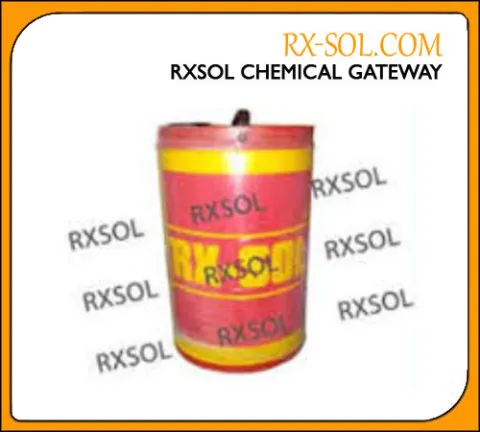
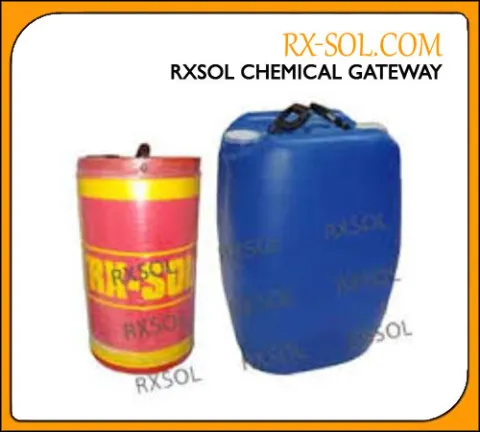
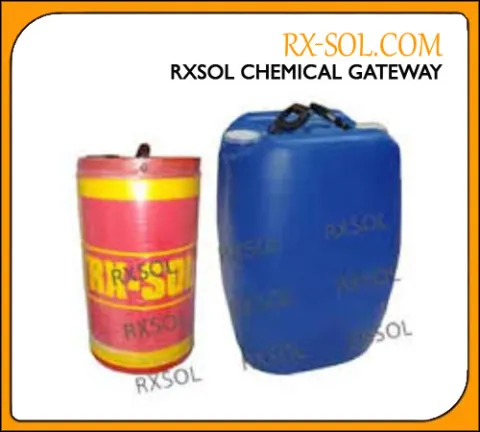
Morpholine 10% Solution
- Part number
- RXSOL-40-1382-210
- Category
- Boiler Chemicals
- Brand
- RXSOL
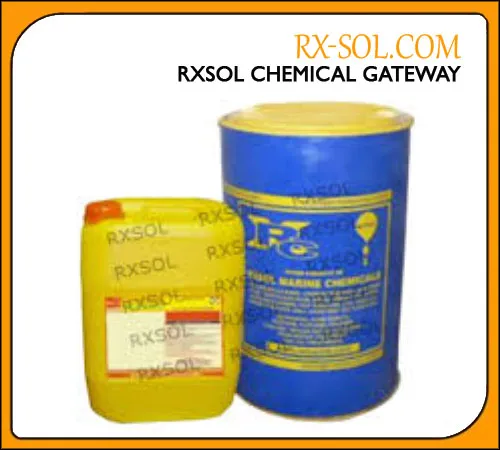
Overview
Coating Auxiliary Agents, Plastic Auxiliary Agents, Rubber Auxiliary Agents, Surfactants, Textile Auxiliary Agents, Water Treatment Chemicals
Purity ::: 99%-99.5%
Its pH adjusting qualities then become distributed throughout the steam plant to provide corrosionprotection. Morpholine is often used in conjunction with low concentrations of hydrazine or ammonia to provide a comprehensive all-volatile treatment chemistry for corrosion protection for the steam systems of such plants. Morpholine decomposes reasonably slowly in the absence of oxygen at the high temperatures and pressures in these steam systems.
Technical specifications
| PRODUCT NAME | : | MORPHOLINE 10% |
| CAS number | : | 110-91-8 |
| UN number | : | 2054 |
| Formula | : | C4H8ONH |
| Odour | : | AMINE LIKE |
| Solubility in water | : | COMPLETE |
| Density | : | 1.002 at 20 OC |
| Boiling point | : | 128 OC |
| Melting point | : | -5 OC |
| Viscosity | : | 2.23 cp at 20 OC |
| Flashpoint | : | 37 OC |
| Explosive limits | : | |
| Vapour pressure | : | 11 mbar at 20 OC |
| Skin absorption/irritation | : | YES |
| TLV Country NL Year 1995 | : | 20 S ppm 70 S mg/m3 |
| Pollution category 1994 | : |
D |
Applications
Also widely used as a fruit coating :::
Morpholine is used as a chemical emulsifier in the process of waxing fruit. Naturally, fruits make waxes to protect against insects and fungal contamination, but this can be lost as the fruit is cleaned. A small amount of new wax is applied to replace it. Morpholine is used as an emulsifier and solubility aid for shellac, which is used as a wax for fruit coating.
Morpholine derivatives used as agricultural fungicides in cereals are known as ergosterol biosynthesis inhibitors.
Dosage and directions
pH Control
Maintenance of proper pH throughout the boiler feedwater, boiler, and condensate systems is essential for corrosion control. Most low-pressure boiler system operators monitor boiler water alkalinity because it correlates very closely with pH, while most feedwater, condensate, and high-pressure boiler water requires direct monitoring of pH. Control of pH is important for the following reasons:
- corrosion rates of metals used in boiler systems are sensitive to variations in pH
- low pH or insufficient alkalinity can result in corrosive acidic attack
- high pH or excess alkalinity can result in caustic gouging/cracking and foaming, with resultant carryover
- speed of oxygen scavenging reactions is highly dependent on pH levels
The pH or alkalinity level maintained in a boiler system depends on many factors, such as sys-tem pressure, system metals, feedwater quality, and type of chemical treatment applied.
The corrosion rate of carbon steel at feedwater temperatures approaches a minimum value in the pH range of 9.2-9.6 . It is important to monitor the feedwater system for corrosion by means of iron and copper testing. For systems with sodium zeolite or hot lime softened makeup, pH adjustment may not be necessary. In systems that use deionized water makeup, small amounts of caustic soda or neutralizing amines, such as morpholine and cyclohexylamine, can be used.
In the boiler, either high or low pH increases the corrosion rates of mild steelThe pH or alkalinity that is maintained depends on the pressure, makeup water characteristics, chemical treatment, and other factors specific to the system.
The best pH for protection of copper alloys is somewhat lower than the optimum level for carbon steel. For systems that contain both metals, the condensate and feedwater pH is often maintained between 8.8 and 9.2 for corrosion protection of both metals. The optimum pH varies from system to system and depends on many factors, including the alloy used
To elevate pH, neutralizing amines should be used instead of ammonia, which (especially in the presence of oxygen) accelerates copper alloy corrosion rates. Also, amines form protective films on copper oxide surfaces that inhibit corrosion.
Safety and SDS
Read the safety data sheet before handling. Wear suitable gloves and eye protection.
View safety data sheet
| Product Name | Morpholine 10% Solution |
| Part Number | RXSOL-40-1382-210 |
Synonym: Tetrahydro-2H-1,4-oxazine
Chemical Formula: C4H9NO
Company Details:
RX MARINE INTERNATIONAL
105, A wing , BSEL , TECH PARK.
VASHI ,NEW BOMBAY 400703 INDIA
| Phone |
+91 22 65113333 / 5555 / 9999 / 27815540-42 |
| Fax | +91 22 2781 1318 :::AOH : 0091 9821214367 |
| rxsolchemicals@gmail.com; rxsolchemicals@gmail.com |
|
Chemical Name |
Concentration |
CAS Number |
EC Number |
R Phrases* |
Symbols |
|
Morpholine |
10% |
110-91-8 |
203-815-1. |
10 / 20 |
Xn. |
| Distilled Water | 90%` | 7732-18-5 | 231-791-2 | --------- | ---------- |
*See Section 16
|
Physical hazards |
Corosive skin and eye in Contacr |
|
Health hazards |
Harmful if swallowed |
|
Environmental Hazards |
Aquatic Chronic 2 - H411 |
|
Potential Acute Health Effects |
Hazardous in case of skin contact (irritant, permeator), of eye contact (irritant), of ingestion, of inhalation. Corrosive to skin and eyes on contact. Liquid or spray mist may produce tissue damage particularly on mucous membranes of eyes, mouth and respiratory tract. Skin contact may produce burns. Inhalation of the spray mist may produce severe irritation of respiratory tract, characterized by coughing, choking, or shortness of breath. Inflammation of the eye is characterized by redness, watering, and itching. Skin inflammation is characterized by itching, scaling, reddening, or, occasionally, blistering. |
|
Potential Chronic Health Effects |
Hazardous in case of skin contact (irritant, permeator), of eye contact (irritant), of ingestion, of inhalation. CARCINOGENIC EFFECTS: Not available. MUTAGENIC EFFECTS: Not available. TERATOGENIC EFFECTS: Not available. DEVELOPMENTAL TOXICITY: Not available. The substance is toxic to lungs, mucous membranes. Repeated or prolonged exposure to the substance can produce target organs damage. Repeated or prolonged contact with spray mist may produce chronic eye irritation and severe skin irritation. Repeated or prolonged exposure to spray mist may produce respiratory tract irritation leading to frequent attacks of bronchial infection. Repeated or prolonged inhalation of vapors may lead to chronic respiratory irritation. |
|
Contact with skin |
If the chemical got onto the clothed portion of the body, remove the contaminated clothes as quickly as possible, protecting your own hands and body. Place the victim under a deluge shower. If the chemical got on the victim's exposed skin, such as the hands : Gently and thoroughly wash the contaminated skin with running water and non-abrasive soap. Be particularly careful to clean folds, crevices, creases and groin. Cold water may be used. If irritation persists, seek medical attention. Wash contaminated clothing before reusing. |
|
Contact with eyes |
Check for and remove any contact lenses. In case of contact, immediately flush eyes with plenty of water for at least 15 minutes. Cold water may be used. Get medical attention immediately. |
|
Ingestion |
Do not induce vomiting. Examine the lips and mouth to ascertain whether the tissues are damaged, a possible indication that the toxic material was ingested; the absence of such signs, however, is not conclusive. Loosen tight clothing such as a collar, tie, belt or waistband. If the victim is not breathing, perform mouth-to-mouth resuscitation. Seek immediate medical attention. |
|
Inhalation |
Allow the victim to rest in a well ventilated area.Evacuate the victim to a safe area as soon as possible. Loosen tight clothing such as a collar, tie, belt or waistband. If breathing is difficult, administer oxygen. If the victim is not breathing, perform mouth-to-mouth resuscitation. WARNING: It may be hazardous to the person providing aid to give mouth-to-mouth resuscitation when the inhaled material is toxic, infectious or corrosive. Seek immediate medical attention |
| Flammability of theProduct | : | Non-flammable |
| Auto-Ignition Temperature | : | Not applicable. |
| Flash Points | : | Not applicable. |
| Flammable Limits | : | Not applicable. |
| Products of Combustion | : | These products are carbon oxides (CO, CO2), nitrogen oxides (NO, NO2...). |
| Fire Hazards in Presence of Various Substances | : | Not Available |
| Explosion Hazards in Presence of Various Substances | : | Risks of explosion of the product in presence of mechanical impact: Not available. Risks of explosion of the product in presence of static discharge: Not available. |
| Fire Fighting Media and Instructions | : | Not applicable. |
| Special Remarks on Fire Hazards | : | SMALL FIRE: Use DRY chemical powder. LARGE FIRE: Use alcohol foam, water spray or fog. Cool containing vessels with water jet in order to prevent pressure build-up, autoignition or explosion. |
| Special Remarks on Explosion Hazards | ; | Not Available |
|
Personal Precautions |
Wear protective clothing as per section 8. |
|
Environmental Precautions |
Avoid discharge into drains or watercourses or onto the ground. Contain spillage with sand,earth or other suitable non-combustible material. The product contains substances which are water-soluble and may spread in water systems. The product contains volatile substances which may spread in the atmosphere |
|
Immediate Actions |
Shut off source of leak if safe to do so. |
|
Small Spill |
Corrosive solid. Dilute with water and mop up, or absorb with an inert dry material and place in an appropriate waste disposal container. |
|
Large Spill |
Keep away from heat. Keep away from sources of ignition. Stop leak if without risk. Absorb with DRY earth, sand or other non-combustible material. Do not get water inside container. Do not touch spilled material. Use water spray curtain to divert vapor drift. Prevent entry into sewers, basements or confined areas; dike if needed. Eliminate all ignition sources. Call for assistance on disposal. Be careful that the product is not present at a concentration level above TLV. Check TLV on the MSDS and with local authorities. |
|
Handling |
Keep container dry. Keep away from heat. Keep away from sources of ignition. Ground all equipment containing material. Do not ingest. Do not breathe gas/fumes/ vapour/spray. Never add water to this product In case of insufficient ventilation, wear suitable respiratory equipment If ingested, seek medical advice immediately and show the container or the label. Avoid contact |
|
Storage |
Materials should be stored in a separate safety storage cabinet or room. Keep away from heat. Keep away from sources of ignition. Keep container tightly closed. Keep in a cool, well-ventilated place. Ground all equipment containing material. |
|
Engineering Control |
Provide exhaust ventilation or other engineering controls to keep the airborne concentrations of vapors below their respectiveb threshold limit value. Ensure that eyewash stations and safety showers are proximal to the work-station location. |
|
Personal Protection |
Splash goggles. Synthetic apron. Vapor and dust respirator. Be sure to use an approved/certified respirator or equivalent. Gloves. |
|
Personal Protection in case of Large Spill |
Splash goggles. Full suit. Vapor respirator. Boots. Gloves. A self contained breathing apparatus should be used to avoid inhalation of the product. Suggested protective clothing might not be sufficient; consult a specialist BEFORE handling this product. |
|
Exposure Limits |
TWA: 20 CEIL: 30 (ppm) TWA: 70 CEIL: 105 (mg/m3) Consult local authorities for acceptable exposure limits. |
| Odour | : | Amine like. (Slight.) |
| Taste | : | Not Available |
| Appereance | : | Clear Liquid |
| Molecular Weight | : | 87.12 g/mole |
| pH (1% soln/water) | : | Not Available |
| Boiling Point | : | 128.19°C (262.7°F) |
| Melting Point | : | -4.9°C (23.2°F) |
| Critical Temperature | : | Not available. |
| Specific Gravity | : | 0.99- 1.00 |
| Vapor Pressure | : | Not available. |
| Vapor Density | : | Vapor Density: 3 (Air = 1) |
| Volatility | : | 11% (v/v). |
| Odor Threshold | : | 0.1 ppm |
| Water/Oil Coeff | : | Not available. |
| Ionicity (in Water): | : | Not available. |
| Solubility | : | Easily soluble in cold water, hot water. |
| Stability | : | The product is stable. |
| Instability Temperature | : | Not available. |
| Conditions of Instability | : | Not Available. |
| Incompatibility Other | : | Not Available. |
| Corrosivity | : | Non-corrosive in presence of glass. |
| Special Remarks on Reactivity | : | Not Available. |
| Polymerization | : | No |
|
Routes of Entry |
Dermal contact. Eye contact. Inhalation. Ingestion |
|
Toxicity to Animals |
WARNING: THE LC50 VALUES HEREUNDER ARE ESTIMATED ON THE BASIS OF A 4-HOUR EXPOSURE. Acute oral toxicity (LD50): 525 mg/kg [Mouse]. Acute dermal toxicity (LD50): 500 mg/kg [Rabbit]. Acute toxicity of the vapor (LC50): 11313.7 ppm 4 hour(s) [Rat]. |
|
Chronic Effects on Humans |
The substance is toxic to lungs, mucous membranes. |
|
Other Toxic Effects on Humans |
Hazardous in case of skin contact (irritant, permeator), of ingestion, of inhalation. |
|
Special Remarks on Toxicity to Animals |
Not available. |
|
Special Remarks on Chronic Effects on Humans |
Not available. |
|
Ecotoxicity |
Not Available |
|
Mobility |
Completely soluble in water |
|
BOD5 and COD |
Not available |
|
Products of Biodegradation |
Possibly hazardous short term degradation products are not likely. However, long term degradation products may arise. |
|
Special Remarks on the Products of Biodegradation |
Not Available |
|
Disposal considerations |
Waste must be disposed of in accordance with federal, state and local environmental control regulations. |
- DOT Classification: NA
- Identification: Morpholine Solution
- Special Provisions for Transport: Not available.
|
Federal and State Regulations |
Pennsylvania RTK: Morpholine Massachusetts RTK: Morpholine TSCA 8(b) inventory: Morpholine |
|
Other Regulations |
OSHA: Hazardous by definition of Hazard Communication Standard (29 CFR 1910.1200). |
|
HMIS (U.S.A.): |
Health Hazard: 3 |
|
National Fire Protection Association |
Health: 3 |
| Protective Equipment: | Gloves. Lab coat. Vapor respirator. Be sure to use an approved/certified respirator or equivalent. Wear appropriate respirator when ventilation is inadequate. Splash goggles. |
|
The information above is believed to be accurate and represents the best information currently available to us. However, we make no warranty of merchantability or any other warranty, express or implied, with respect to such information, and we assume no liability resulting from its use. Users should make their own investigations to determine the suitability of the information for their particular purposes. In no event shall Rx Marine International be liable for any claims, losses, or damages of any third party or for lost profits or any special, indirect, incidental, consequential or exemplary damages, howsoever arising, even if Rx Marine International has been advised of the possibility of such damages.
DISCLAIMER OF LIABILITY :The information in this SDS was obtained from sources which we believe are reliable. However, the information is provided without any warranty, express or implied, regarding its correctness. The conditions or methods of handling, storage, use or disposal of the product are beyond our control and may be beyond our knowledge. For this and other reasons, we do not assume responsibility and expressly disclaim liability for loss, damage or expense arising out of or in any way connected with the handling, storage, use or disposal of the product. This MSDS was prepared and is to be used only for this product. If the product is used as a component in another product, this MSDS information may not be applicable. |
Availability
Morpholine 10% Solution manufacturer supplier distributor in Mumbai, Kandla, Kolkata, Vizag, Chennai, India, Fujairah, Dubai, Sharjah, UAE, Gulf, Middle East, Muscat Oman, Kenya Africa. Get the best quality of Morpholine 10% Solution at a competitive price from us. We have ready stock of Morpholine 10% Solution in India, UAE Gulf, Oman, Kenya Africa. Contact us for bulk as well as small orders.