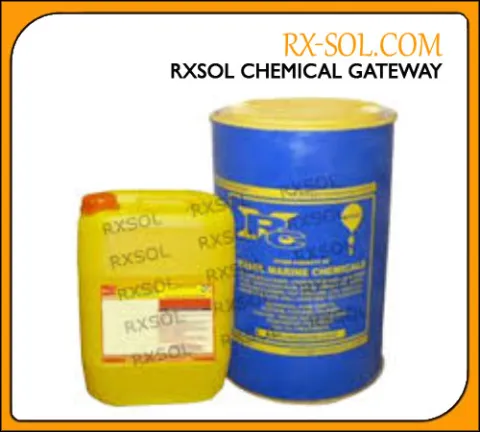
Odor Neutralizer
- Part number
- RXSOL-41-8345-025
- Category
- Swimming Pool & Spa
- Brand
- RXSOL

Overview
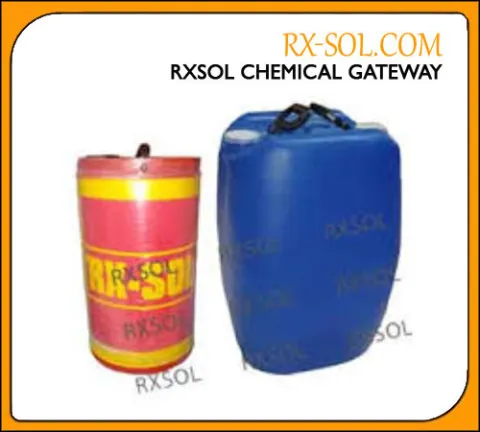
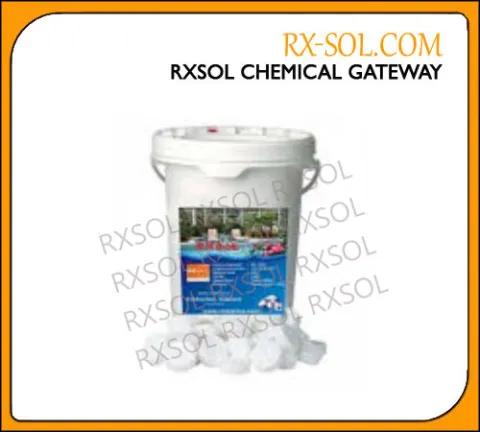
Odor Remover - Odor Neutralizer swimming pool chemical manufacturer and supplier. RXSOL Odor Eliminator was developed for the strong acid odours, mainly Hydrogen Sulphide, Methyl Mercaptan and other gases, associated with sewage and fatty wastes. RXSOL Odor Eliminator has added to it, an emulsifying agent, which helps with the dispersion of scum and oil and reduces fat build-up on plant and machinery and considerably reduces maintenance costs and prolongs equipment and infrastructure life. It is important to note, acidic odours, regardless of origin, can be neutralized using Odor Absorbent/Reducing Agent for Sewage Treatment Plant STP. The neutralization of Hydrogen Sulphide can be shown in the following equation: H2S (HYDROGEN SULPHIDE) + RXSOL Odor Eliminator = RNH3SH (AMINE-BISULPHIDE SALT). This is a non-volatile Amine, therefore has no odour and is readily absorbed.
Technical specifications
RXSOL Odor Eliminator is different to nearly all other odour neutralisers or masking agents. The difference lies in the product makeup: nearly every product in the market is a blend of essential oils or plant extracts combined with a standard surfactant while RXSOL Odor Eliminator is made of food and cosmetic grade compounds and contain only 1% essential oils or plant extracts (by total volume of concentrate). Basic chemistry proves all essential oil and plant extract based products cannot truly neutralise odours; they can only mask them or encapsulate them for a period before releasing them again. Essential oils and plant extracts cannot bind to, and react with, a compound such as H2S and change the structure of that volatile compound into a non-volatile compound.
Applications
RXSOL Odor Eliminator is also used in industries where hydrocarbon odours are a problem. Specifically, odorous compounds such as Benzene, Toluene, Ethyl benzene, Xylene, Naphthalene, and PAH’s (Polycyclic Aromatic Hydrocarbons). Examples of these types of industries are oil refineries, bitumen manufacturing for use in tar sealing roads, refining of natural gas, and contaminated soil remediation.
Dosage and directions
RXSOL Odor Eliminator can be applied by using one of the following methods to control odour.
Characteristics and notes
Our valuable Swimming pool chemicals....
Safety and SDS
Read the safety data sheet before handling. Wear suitable gloves and eye protection.
View safety data sheet
| Porduct Name | Odor Neutralizer |
| Part Number | RXSOL-41-8345-025 |
Company Details:
RX MARINE INTERNATIONAL
105, A wing , BSEL , TECH PARK.
VASHI ,NEW BOMBAY 400703 INDIA
Branch : Kandla, Mumbai , Chennai, Vizag, Kolkata, UAE , OMAN , CANADA and KENYA
| Phone | +91 22 20871200 - 1400 |
| Fax | +91 22 27612100 :::AOH :0091 9821214367 |
| rxsolchemicals@gmail.com | |
| Website | www.rxmraine.com |
| Substance/mixture | Mixture |
| Other means of identification | Not available. |
hazardous to health or the environment and hence require reporting in this section.
| OSHA/HCS status | While this material is not considered hazardous by the OSHA Hazard Communication Standard (29 CFR 1910.1200), this SDS contains valuable information critical to the safe handling and proper use of the product. This SDS should be retained and available for employees and other users of this product. |
| Classification of the substance or mixture | Not classified. |
| GHS label elements | |
| Signal word | No signal word. |
| Hazard statements | No known significant effects or critical hazards. |
| Precautionary statements | |
| Prevention | Not applicable. |
| Response | Not applicable. |
| Storage | Not applicable. |
| Disposal | Not applicable. |
| Hazards not otherwise classified | None known. |
| Substance/mixture | Mixture |
| Other means of identification | Not available. |
Description of first aid measures
| Eye contact | Immediately flush eyes with plenty of water, occasionally lifting the upper and lower eyelids. Check for and remove any contact lenses. Get medical attention if irritation occurs. |
| Inhalation | Remove victim to fresh air and keep at rest in a position comfortable for breathing. Get medical attention if symptoms occur. |
| Skin contact | Flush contaminated skin with plenty of water. Remove contaminated clothing and shoes. Get medical attention if symptoms occur. |
| Ingestion | Wash out mouth with water. Remove victim to fresh air and keep at rest in a position comfortable for breathing. If material has been swallowed and the exposed person is conscious, give small quantities of water to drink. Do not induce vomiting unless directed to do so by medical personnel. Get medical attention if symptoms occur. |
| Most important symptoms/effects, acute and delayed | |
| Potential acute health effects | |
| Eye contact | No known significant effects or critical hazards. |
| Inhalation | No known significant effects or critical hazards. |
| Skin contact | No known significant effects or critical hazards. |
| Ingestion | No known significant effects or critical hazards. |
| Over-exposure signs/symptoms | |
| Eye contact | No specific data. |
| Inhalation | No specific data. |
| Skin contact | No specific data. |
| Ingestion | No specific data. |
| Indication of immediate medical attention and special treatment needed, if necessary | |
| Notes to physician | Treat symptomatically. Contact poison treatment specialist immediately if large quantities have been ingested or inhaled. |
| Specific treatments | No specific treatment. |
| Protection of first-aiders | No action shall be taken involving any personal risk or without suitable training. |
Extinguishing media
| Suitable extinguishing media | Use an extinguishing agent suitable for the surrounding fire. |
| Unsuitable extinguishing media | None known. |
| Special hazards arising from the substance or mixture |
Highly flammable liquid and vapor. Runoff to sewer may create fire or explosion hazard.
In a fire or if heated, a pressure increase will occur and the container may burst, with the
risk of a subsequent explosion. The vapor/gas is heavier than air and will spread along
the ground. Vapors may accumulate in low or confined areas or travel a considerable
distance to a source of ignition and flash back.
In a fire or if heated, a pressure increase will occur and the container may burst.
|
| Hazardous thermal decomposition products | No specific data. |
| Special protective actions for fire-fighters |
Promptly isolate the scene by removing all persons from the vicinity of the incident if there is a fire. No action shall be taken involving any personal risk or without suitable training. |
| Special protective equipment for fire-fighters |
Fire-fighters should wear appropriate protective equipment and self-contained breathing apparatus (SCBA) with a full face-piece operated in positive pressure mode.
spray to keep fire-exposed containers cool.Promptly isolate the scene by removing all persons from the vicinity of the incident if
there is a fire. No action shall be taken involving any personal risk or without suitable
training. Move containers from fire area if this can be done without risk. Use water
spray to keep fire-exposed containers cool.
|
| Personal precautions, protective equipment and emergency procedures |
Advice for non-emergency personnel: Avoid inhalation of dusts. Evacuate the danger area, observe emergency procedures, consult an expert.
For personal protection see section 8.
|
| Environmental precautions | Do not let product enter drains. |
| Methods and materials for containment and cleaning up | Cover drains. Collect, bind, and pump off spills. Observe possible material restrictions (see sections 7 and 10). Take up dry. Dispose of properly. Clean up affected area. Avoid generation of dusts. |
| Reference to other sections | For disposal see section 13. |
| Precautions for safe handling | For precautions see section 2.2. |
| Conditions for safe storage, including any incompatibilities |
Recommended storage temperature see product label.
Recommended storage temperature see product label.Tightly closed.
Recommended storage temperature see product label.
|
| Specific end use(s) | Apart from the uses mentioned in section 1.2 no other specific uses are stipulated |
Control parameters
| Eye/face protection | Use equipment for eye protection tested and approved under appropriate government standards such as NIOSH (US) or EN 166(EU). Safety glasses |
| Skin protection |
This recommendation applies only to the product stated in the safety data sheet,
supplied by us and for the designated use. When dissolving in or mixing with other
substances and under conditions deviating from those stated in EN374 please
contact the supplier of CE-approved gloves (e.g. KCL GmbH, D-36124 Eichenzell,
Internet: www.kcl.de).
Full contact
Material: Nitrile rubber
Minimum layer thickness: 0,11 mm
Break through time: 480 min
Material tested:KCL 741 Dermatril® L
This recommendation applies only to the product stated in the safety data sheet,
supplied by us and for the designated use. When dissolving in or mixing with other
substances and under conditions deviating from those stated in EN374 please
contact the supplier of CE-approved gloves (e.g. KCL GmbH, D-36124 Eichenzell,
Internet: www.kcl.de).
Splash contact
Material: Nitrile rubber
Minimum layer thickness: 0,11 mm
Break through time: 480 min
Material tested:KCL 741 Dermatril® L
|
| Respiratory protection |
Required when dusts are generated.
Our recommendations on filtering respiratory protection are based on the following
standards: DIN EN 143, DIN 14387 and other accompanying standards relating to
the used respiratory protection system.
Recommended Filter type: Filter type P1
The entrepeneur has to ensure that maintenance, cleaning and testing of respiratory
protective devices are carried out according to the instructions of the producer.
These measures have to be properly documented.
|
| Control of environmental exposure | Do not let product enter drains.. |
Information on basic physical and chemical properties
| Appearance |
Form: Crystals with lumps
Color: white
|
| Odor | No data available |
| Odor Threshold | No data available |
| pH | No data available |
| Melting point/freezing point | Melting point: 150 °C |
| Initial boiling point and boiling range | 205,7 °C at 977,6 hPa - OECD Test Guideline 103 |
| Flammability (solid, gas) | No data available |
| Upper/lower flammability or explosive limits | No data available |
| Flash point | 138,6 °C - closed cup |
| Autoignition temperature | 360 °C |
| Decomposition temperature |
No data available
materials.Extremely flammable in the presence of the following materials or conditions: oxidizing
materials.
|
| pH |
No data available |
| Viscosity |
Viscosity, kinematic: No data available
Viscosity, dynamic: No data available
|
| Water solubility | 256,084 g/l at 25 °C - OECD Test Guideline 105- completely soluble |
| Partition coefficient: n-octanol/water | log Pow: -0,698 at 30 °C - Bioaccumulation is not expected., (ECHA) |
| Vapor pressure | < 0,1 hPa at 20 °C |
| Density | 1,116 g/cm3 at 20 °C at 975,5 hPa - OECD Test Guideline 109 |
| Relative density | No data available |
| Relative vapor density | No data available |
| Particle characteristics | No data available |
| Explosive properties | No data available |
| Oxidizing properties | None |
| Other safety information | |
| Bulk density | 400 - 500 kg/m3 |
| Reactivity | No data available |
| Chemical stability | The product is chemically stable under standard ambient conditions (room temperature) |
| Possibility of hazardous reactions | No data available |
| Conditions to avoid | No information available |
| Incompatible materials |
Strong acids
|
| Hazardous decomposition products | In the event of fire: see section 5 |
Information on toxicological effects
| Acute toxicity |
LD50 Oral - Rat - male and female - > 2.000 mg/kg
(OECD Test Guideline 420)
LC50 Inhalation - Rat - male and female - 4 h - > 5,05 mg/l
(OECD Test Guideline 403)
Remarks: (in analogy to similar products)
LD50 Dermal - Rat - male and female - > 2.000 mg/kg
(OECD Test Guideline 402)
Remarks: (in analogy to similar products)
The value is given in analogy to the following substances: disodium molybdate |
| Skin corrosion/irritation |
Skin - Rabbit
Result: No skin irritation - 4 h
(OECD Test Guideline 404)
Remarks: (in analogy to similar products)
The value is given in analogy to the following substances: Molybdenum dioxide
|
| Serious eye damage/eye irritation |
Eyes - Rabbit
Result: No eye irritation
(OECD Test Guideline 405)
Remarks: (in analogy to similar products)
The value is given in analogy to the following substances: Molybdenum dioxide
|
| Respiratory or skin sensitization |
Maximization Test - Guinea pig
Result: negative
(OECD Test Guideline 406)
Remarks:
(in analogy to similar products)
|
| Germ cell mutagenicity |
Test Type: Micronucleus test
Test system: Human lymphocytes
Metabolic activation: with and without metabolic activation
Method: OECD Test Guideline 487
Result: negative
Remarks: (in analogy to similar products)
The value is given in analogy to the following substances: Disodium molybdate dihydrate
Test Type: Ames test
Test system: Escherichia coli/Salmonella typhimurium
Metabolic activation: with and without metabolic activation
Method: OECD Test Guideline 471
Result: negative
Remarks: (in analogy to similar products)
The value is given in analogy to the following substances: Disodium molybdate dihydrate
Test Type: In vitro mammalian cell gene mutation test
Test system: mouse lymphoma cells
Metabolic activation: with and without metabolic activation
Method: OECD Test Guideline 476
Result: negative
Remarks: (in analogy to similar products)
The value is given in analogy to the following substances: Disodium molybdate dihydrate
|
| Carcinogenicity |
No data available
|
| Reproductive toxicity | No data available |
| Specific target organ toxicity - single exposure | No data available |
| Specific target organ toxicity - repeated exposure | No data available |
| Aspiration hazard | No data available |
| Persistence and degradability | No data available |
| Toxicity to fish | Static test LC50 - Oncorhynchus mykiss (rainbow trout) - 75 mg/l - 96 h (OECD Test Guideline 203) |
| Toxicity to daphnia and other aquatic invertebrates | Static test EC50 - Daphnia magna (Water flea) - 42,81 mg/l - 48 h (OECD Test Guideline 202) Remarks: (in analogy to similar products) The value is given in analogy to the following substances: maleic acid |
| Toxicity | Toxicity to fish LC50 - Pimephales promelas (fathead minnow) - 1.520 mg/l - 96 h |
| Toxicity to bacteria | EC10 - Bacteria - 14 mg/l - 72 h Remarks: (Lit.) EC5 - E.coli - 15.000 mg/l Remarks: (Lit.) (maximum permissible toxic concentration) |
| Toxicity to algae | Static test ErC50 - Pseudokirchneriella subcapitata (green algae) - 74,35 mg/l - 72 h (OECD Test Guideline 201) Remarks: (in analogy to similar products) The value is given in analogy to the following substances: maleic acid |
| Products Biodegradation | The methods for determining the biological degradability are not applicable to inorganic substances. |
| Mobility in soil | No data available |
| Results of PBT and vPvB assessment | This substance/mixture contains no components considered to be either persistent, bioaccumulative and toxic (PBT), or very persistent and very bioaccumulative (vPvB) at levels of 0.1% or higher. |
| Endocrine disrupting properties | No data available |
| Other adverse effects | No data available . |
| Product | Offer surplus and non-recyclable solutions to a licensed disposal company. Waste material must be disposed of in accordance with the Directive on waste 2008/98/EC as well as other national and local regulations. Leave chemicals in original containers. No mixing with other waste. Handle uncleaned containers like the product itself. |
| Contaminated packaging | Dispose of as unused product. |
| Waste treatment Method | See www.retrologistik.com for processes regarding the return of chemicals and containers, or contact us there if you have further questions. |
| UN number | ADR/RID:2404 IMDG:2404 IATA: 2404 |
| UN proper shipping name | ADR/RID:PROPIONITRILE IMDG:PROPIONITRILE IATA:PROPIONITRILE |
| Transport hazard class(es) | ADR/RID: 3 (6.1) IMDG: 3 (6.1) IATA:3 (6.1) |
| Packaging group | ADR/RID: II IMDG: II IATA:II |
| Environmental hazards | ADR/RID: No IMDG: No IATA: No |
| Special precautions for user | No data available |
| Further information | Not classified as dangerous in the meaning of transport regulations. |
| Safety, health and environmental regulations/legislation specific for the substance or mixture | This material safety data sheet complies with the requirements of Regulation (EC) No. 1907/2006. |
| Other regulations | Observe work restrictions regarding maternity protection in accordance to Dir 92/85/EEC or stricter national regulations where applicable. Take note of Dir 94/33/EC on the protection of young people at work. |
| Chemical Safety Assessment | For this product a chemical safety assessment was not carried out |
| Other Information |
The information above is believed to be accurate and represents the best information currently available to us. However, we make no warranty of merchantability or any other warranty, express or implied, with respect to such information, and weassume no liability resulting from its use. Users should make their own investigations to determine the suitability of the information for their particular purposes. In no event shall be liable for any claims, losses, or damages of any third party or for lost profits or any special, indirect, incidental, consequential or exemplary damages, howsoever arising, even if Rx Marine International has been advised of the possibility of such damages. |
Availability
Odor Eliminator Manufacturer Exporter and supplier in India UAE Oman Kenya Africa - Mumbai, Kandla Surat Gujrat, VASHI TURBHA NAVI MUMBAI Pune Nashik, Kolkata Haldia Paradip, Chennai Ennore, Visakhapatnam, Fujairah Dubai Ajman, Abudhabi, Sharjah Muscat Barka, Ghala, Ruwi, Sohar, Nairobi Kenya Africa