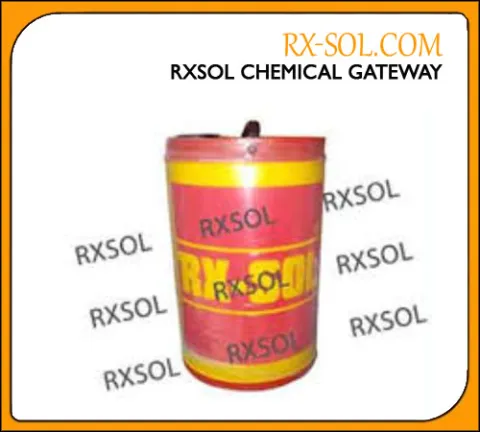
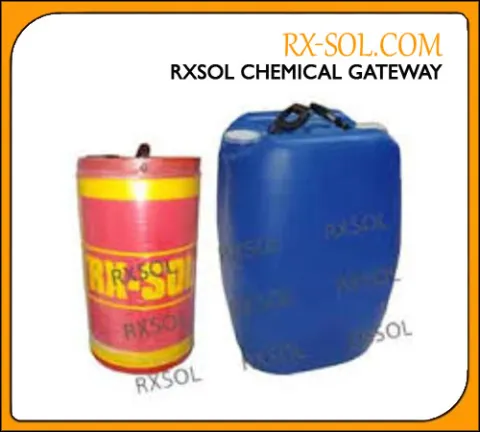
Paint Remover MC
- Part number
- RXSOL-18-1805-025
- Category
- Paint and Cleaning solvent
- Brand
- RXSOL
Overview
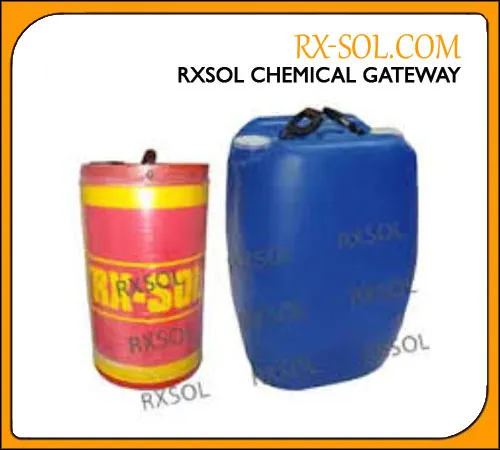
RXSOL paint Remover MC is a viscous liquid, hydroxide type remover and stripper which is formulated specifically for the removal of multiple layers of paint especially from older surfaces where high pressure cleaning could prove destructive to the substrate. It is also suitable for the removal of vegetative stains from a variety of masonry surfaces.
Technical specifications
RXSOL paint Remover MC is a specially surfactant base remover which is intended to assist in the removal of high strength coatings such as epoxies, urethanes, and enamels. Its quick reactivity makes it ideal for spot treating areas requiring paint removal (some types of graffiti).
Rx Marine International manufactures various type paint remover designed to remove a variety of coatings from various masonry surfaces. Applications include the removal of graffiti, multiple layers of paint, high-strength coatings, clear water repellents, wax, acrylic-based stucco finishes, and some vegetative stains.
Applications
Always test before undertaking large scale cleaning to confirm product selection, to ensure adequate results, to establish appropriate technique, and to establish typical coverage rates.Remove all loose and flaking paint using scrapers and/or high-pressure water. Allow surface to dry completely before applying Paint Remover.
GRAFFITI REMOVAL
The effective removal of graffiti requires the use of specific techniques in addition to those stated elsewhere in this product literature. While most graffiti can be effectively removed using RXSOL Paint Remover MC . warm substrate and ambient temperatures (>20°C/70°F), mechanical agitation of the Paint Remover on the substrate, and hot water pressure rinsing are imperative for the successful removal of graffiti.
Dosage and directions
Use the RXSOL paint Remover MC as supplied: DO NOT DILUTE.
Apply the RXSOL paint Remover MC using brush or roller. RXSOL Paint Remover MC should be applied with tools that can resist strong alkalis. RXSOL Paint Remover MC should be applied with tools that can resist strong solvents. Apply RXSOL Paint Remover MC in a uniform manner, with coverage at the rate established by the test panels. Allow the Paint Remover to dwell on the surface for the following minimum periods:
RXSOL Paint Remover MC 45 minutes to 2 hours
In cold temperatures, these times may need to be extended. In windy and warm conditions, care must be taken in the use of these Paint Remover to avoid allowing them to dry out as this will defeat the Removing and stripping process. Substrate temperature is generally more critical than ambient temperature. As the substrate temperature drops below 20°C (70°F) the effectiveness of these strippers diminishes. This is the reason that the use of hot water (>80°C/175° F) is recommended (as this helps to speed up the chemical reaction of the Paint Remover).
Periodic agitation with additional Paint Remover will usually optimize performance. Once the Paint Remover has fully reacted with the substance to be removed, pressure wash off.
Characteristics and notes
ADVANTAGES
Because of their thixotropic consistency, RXSOL paint Remover MC are easily applied, thus minimizing spillage. While hot water will definitely improve the efficiency of these products, the emulsifiers used do allow for cold-water rinsing. Each product is designed to be effective in the removal of a wide variety of substances.
CAUTION
The effective removal of paint and coatings necessitates the use of strong chemicals. Care must therefore be exercised when using these products. Provide proper protection to all non-masonry surfaces (including glass, metal, hardware, and vegetation). Care must also be used to protect adjacent surfaces which could be damaged by run-off, splash, or overspray.
Adequate ventilation must be maintained at all times. Protective equipment must be worn during every step of the cleaning process.
Because of pollution considerations, care should be exercised in the control of residue run-off. Concern should be shown not only for the environmental impact of the cleaning chemicals, but more likely for the chemical content of the coatings being removed (especially older paints which may contain lead, mercury, and other harmful substances). It is usually a wise practice to collect all solid effluent and dispose of this in accordance with applicable legislation.
LIMITATIONS
RXSOL Paint Remover MC are not suited for the removal of cementitious coatings. Consult the manufacturer for recommendations should this condition exist.
In order to remove the paint and coating residue, high pressure washing is recomended. If the substrate is too soft to withstand this procedure, some erosion of the surface is to be expected.
The effectiveness of RXSOL Paint Remover MC is directly related to ambient and surface temperatures. Because paint Removing or stripping involves chemical reactions, cold temperatures will slow down reactivity while warm temperatures will accelerate cleaning. If test panels are applied, ensure that testing conditions match, as closely as possible, those which will exist at the time the large scale work is to be done.
COVERAGE
Test panels are imperative to determine exact coverage. Coverages will vary depending on surface texture, porosity, the quantity and nature of the coatings to be removed. Typical coverage is in the range of 75 to 100 square feet per gallon.
Safety and SDS
Read the safety data sheet before handling. Wear suitable gloves and eye protection.
View safety data sheet
| Product Name | Paint Remover MC |
| Product Type | RXSOL-18-1805-025 |
Company Details:
RX MARINE INTERNATIONAL
105, A wing , BSEL , TECH PARK.
VASHI ,NEW BOMBAY 400703 INDIA
Stock Point : Mumbai, Kandla, Kolkata, Chennai, Vizag, Muscat, Fujairah
| Phone | +91 22 65113333 / 5555 / 9999 |
| Fax | +91 22 2781 1318 :::AOH :0091 9821214367 |
| rxsolchemicals@gmail.com |
| CHEMICAL NAME | (COMMON NAME) | CAS NO. | NFPA CODE | ACGIH TLV/TWA | OHSA PEL/TWA |
| Potassium Hydroxide | Potassium Hydrate | 1310-58-3 | 3,0,1,- | 2 mg/m3 (ceiling) | 2 mg/m3 (ceiling) |
| Alkanolamide | Alkanolamide | N/D | 1,1,0,- | N/A |
N/A |
| Ammonium Hydroxide | Ammonia | 7664-41-7 | 3,1,0,- | 25 ppm | 50 ppm |
| Ortho-Dichlorobenzene | 1,2-dichlorobenzene | 95-50-1 | 2,2,0- | 75 ppm | 75 ppm |
Percentage content of hazardous ingredients withheld as trade secret pursuant to Massachusetts regulations.
| PRIMARY ROUTES OF EXPOSURE: | Skin, eyes, inhalation |
| CARCINOGEN INFORMATION: | Contains trace quantities of para-dichlorobenzene which has been shown to cause tumors when administered orally to rodents at high levels. Ingestion is an unlikely route of exposure with this product. |
| MEDICAL CONDITIONS AGGRAVATED BY OVEREXPOSURE: | No applicable information found. |
| EFFECTS OF OVER EXPOSURE: | Irritation of eyes, nose and respiratory passages, central nervous system depression, possible liver and kidney injury. Causes severe burns to skin and eyes, resulting in deep ulceration and ultimate scarring. Possible headache, nausea, and pneumonia. |
| Chronic overexposure: | The chronic local effect may consist of multiple areas of superficial destruction of the skin or of primary irritant dermatitis. Similarly, inhalation of dust, spray, or mist may result in varying degrees of irritation or damage to the respiratory tract tissues and an increased susceptibility to respiratory illness. Animal studies indicate that chronic overexposure to high concentrations of o-dichlorobenzene may lead to lung, kidney and liver damage. |
| EYE CONTACT: | Destructive to eye tissues on contact. Will cause severe burns that result in damage to the eyes and even blindness. |
| SKIN CONTACT: | Destructive to tissues contacted and produces severe burns. |
| INHALATION: | Airborne concentrations of dust, mist or spray may cause damage to the upper respiratory tract and even to the lung tissue proper which could produce chemical pneumonia, depending upon severity of exposure. May cause drunkenness. Anesthetic or narcotic effect may occur. Narcosis, liver and kidney damage, unconsciousness and even death may result from prolonged, excessive exposures to o-dichlorobenzene. Overexposure to ammonia may also cause breathing difficulty, shock symptoms and pulmonary edema. |
| INGESTION: | Can cause severe burns and complete tissue perforation of mucous membranes of the mouth, throat, esophagus, and stomach if swallowed. |
| EYE CONTACT: | Immediately flush eyes with large amounts of water for at least 15 minutes, holding eyelids apart to ensure flushing of the entire eye surface. Washing eyes within one minute is essential to achieve maximum effectiveness. Seek medical attention immediately. |
| SKIN CONTACT: | Immediately wash contaminated skin with plenty of water. Presence of a slippery residue indicates that some caustic stillremains. Remove contaminated clothing and footwear and wash clothing before reuse. Discard footwear which cannot be decontaminated. Seek medical attention immediately. |
| INHALATION: | Get person out of contaminated area to fresh air. If breathing has stopped, artificial respiration should be started. Oxygen may be administered if readily available. Seek medical attention immediately. |
| INGESTION: | DO NOT induce vomiting. Give large quantities of water. If available, give several glasses of milk. Never give anything by mouth to an unconscious person. Seek medical attention immediately. |
| NOTE TO PHYSICIAN: | DO NOT administer adrenaline for inhalation/ingestion overexposure. Increased sensitivity of the heart to adrenaline may be present in a person receiving overexposure to ortho-dichlorobenzene. |
FLASH POINT (METHOD):
225°F (ASTM D 3278)
FLAMMABLE LIMITS:
Not determined.
EXTINGUISHING MEDIA:
Carbon dioxide, dry chemical, regular foam, or water fog.
SPECIAL FIRE FIGHTING PROCEDURES:
Do not enter confined fire space without proper protective equipment including a NIOSH/MSHA approved self-contained breathing apparatus. Cool fire exposed containers, surrounding equipment and structures with water.
UNUSUAL FIRE AND EXPLOSION HAZARDS:
Vapors are heavier than air and may accumulate in low areas or areas inadequately ventilated. Vapors may also travel along the ground to be ignited at location distant from handling site; flashback of flame to handling site may occur. Never use welding or cutting torch on or near drum (even empty) because product (even just residue) can ignite explosively.Thermal decomposition or burning will result in the release of toxic carbon monoxide, nitrogen compounds, carbon dioxide, and various hydrocarbons.
Keep container tightly closed. Isolate from oxidizers, heat, and open flame. Closed containers may burst if exposed to extreme heat. Applying to hot surfaces requires special precautions.
| RESPIRATORY PROTECTION: | A NIOSH approved dust/mist respirator should be used if mists are present to avoid contact with mucous membranes. If ammonia concentrations exceed the TLV, wear a NIOSH approved half mask respirator with ammonia specific cartridges. If the TLV for o-dichlorobenzene is exceeded, wear a half mask respirator with organic vapor cartridges. For emergencies, a self-contained breathing apparatus or a full-face respirator as approved by NIOSH/MSHA is recommended. |
| VENTILATION: | Good industrial hygiene practice dictates that the work area should be isolated and contained, and provided with adequate local exhaust ventilation or other controls to maintain the air concentrations below established exposure limits. |
| PROTECTIVE CLOTHING: | Skin and eyes must be protected from exposure to product and mists during handling and use. Wear rubber, PVC, or neoprene gloves, splash boots and an apron or rain suit depending on application procedures and jobsite conditions. |
| PROTECTIVE GLOVES: | Gloves coated with rubber, synthetic elastomers, PVC, or other plastic should be worn when handling to minimize skin contact. |
| EYE PROTECTION: | Chemical splash goggles and/or a face shield should be worn when working with or around this material. |
| OTHER PROTECTIVE EQUIPMENT: | Safety showers and eyewash stations should be provided in all areas in which this product is handled. |
| BOILING POINT (°F) |
VAPOR PRESSURE (mm Hg) |
VAPOR DENSITY (Air = 1) |
EVAPORATION RATE (Butyl Acetate =1) |
|
| Potassium Hydroxide | 2,408°F | Unknown | Unknown | Unknown |
| Alkanolamide | N/A | <1 | N/A | N/A |
| Ammonium hydroxide | 80°F | 546 @ 68°F | .60 | <1 |
| Ortho-Dichlorobenzene | 356°F | 1.2 @ 20°C | 5.1 | <1 |
STABILITY:
Stable.
CONDITIONS TO AVOID:
Contact with strong acids, aluminum, tin, zinc, and alloys of these metals.
INCOMPATIBILITY (MATERIALS TO AVOID):
Avoid contact with leather, wool, aluminum, tin, zinc, and alloys containing these metals. Do not mix with strong acids without dilution and agitation to prevent violent or explosive reaction. Oxidizing agents, sodium nitrite or other nitrosating agents.
HAZARDOUS COMBUSTION OR DECOMPOSITION PRODUCTS:
Hydrogen chloride and chlorine.
SHIPPING:
The proper shipping description for domestic transport only is Paint related material, 8, UN3066, II. The shipping description must be modified for marine transport. This product and packaging combination is not allowed in air transport.
NATIONAL MOTOR FREIGHT CLASSIFICATION:
NMFC #149980 Sub 2 Class Rate: 55
SARA 313 REPORTABLE:
| CHEMICAL NAME | CAS | UPPERBOUND CONCENTRATION % BY WEIGHT |
| O-Dichlorobenzene | 95-50-1 | 10% |
CALIFORNIA PROPOSITION 65:
WARNING:
This product contains a chemical (para-dichlorobenzene)
The information provided about the product on this Safety Data Sheet has been compiled from knowledge of the individual constituents The data given here is based on current knowledge and experience. This Safety Data Sheet describes the product in terms of safety requirements and does not signify any warranty with regard to the product's properties The data given here only applies when product used for proper application(s). The product is not sold as suitable for other applications usage in such may cause risks not mentioned in this sheet. Do not use for other application(s) without seeking advice from manufacturer.
DISCLAIMER OF LIABILITY :The information in this SDS was obtained from sources which we believe are reliable. However, the information is provided without any warranty, express or implied, regarding its correctness. The conditions or methods of handling, storage, use or disposal of the product are beyond our control and may be beyond our knowledge. For this and other reasons, we do not assume responsibility and expressly disclaim liability for loss, damage or expense arising out of or in any way connected with the handling, storage, use or disposal of the product. This MSDS was prepared and is to be used only for this product. If the product is used as a component in another product, this MSDS information may not be applicable.
Availability
Paint Remover MC manufacturer supplier distributor in Mumbai, Kandla, Kolkata, Vizag, Chennai, India, Fujairah, Dubai UAE, Muscat Oman, Kenya Africa. Get the best quality of Paint Remover MC at a competitive price from us. We have ready stock of Paint Remover MC in India, UAE Gulf, Oman, Kenya Africa. Contact us for bulk as well as small orders.