
Safety and SDS
Read the safety data sheet before handling. Wear suitable gloves and eye protection.
View safety data sheet
| Product Name | RXSOL-19-1644-210 |
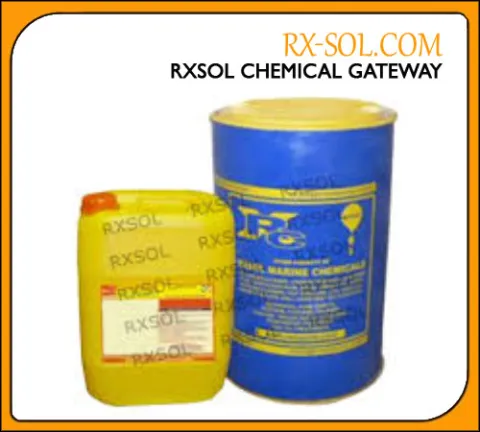
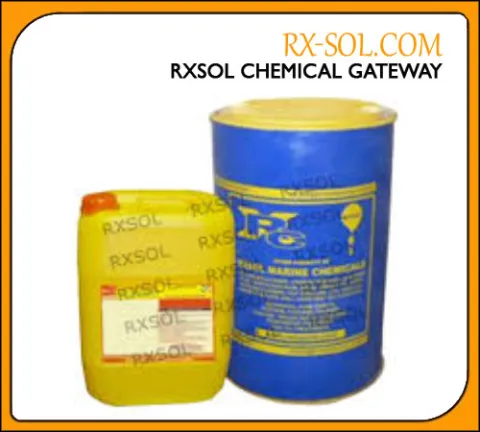
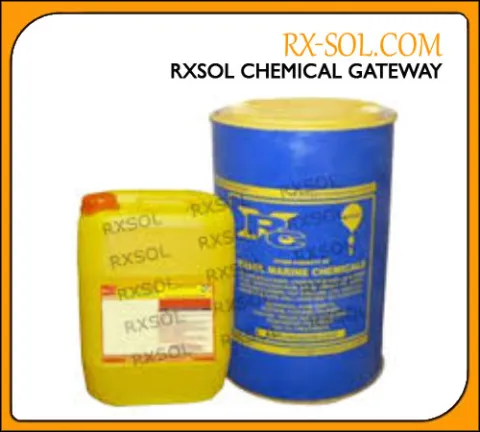
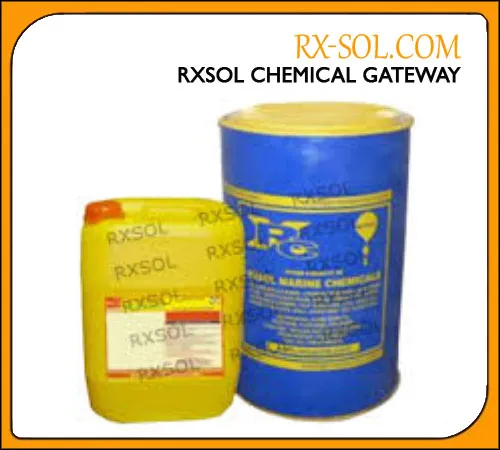
| Product Type | Polyols 220Kg |
Company Details:
RX MARINE INTERNATIONAL
105, A wing , BSEL , TECH PARK.
VASHI ,NEW BOMBAY 400703 INDIA
| Phone | +91 22 65113333 / 5555 / 9999 |
| Fax | +91 22 2781 1318 :::AOH :0091 9821214367 |
| rxsolchemicals@gmail.com |
Type of product:
Mixture polyether polyol No dangerous ingredients according to Regulation (EC) No. 1907/2006
Classification of the substance or mixture
GHS Classification: Not a dangerous substance according to GHS.
GHS-Labelling : Not a dangerous substance according to GHS.
Description of first aid measures
| General advice: | Remove contaminated clothing. |
| If inhaled: |
Take the person into the fresh air and keep him warm, let him rest; if there is difficulty in breathing, medical advice is required. |
| In case of skin contact: |
In case of skin contact wash affected areas thoroughly with soap and plenty of water. Consult a doctor in the event of a skin reaction |
| In case of eye contact: |
Hold the eyes open and rinse with preferably lukewarm water for a sufficiently long period of time (at least 10 minutes). Contact an ophthalmologist |
| If swallowed: | DO NOT induce the patient to vomit, medical advice is required |
| Suitable extinguishing media: |
Carbon dioxide (CO2), Foam, extinguishing powder, in cases of larger fires, water spray should be used. |
| Unsuitable extinguishing media: | High volume water jet |
| Special hazards arising from the substance or mixture: |
Burning releases carbon monoxide, carbon dioxide, oxides of nitrogen and traces of hydrogen cyanide. In the event of fire and/or explosion do not breathe fumes |
| Advice for fire-fighters: |
Firemen must wear self-contained breathing apparatus. Do not allow contaminated extinguishing water to enter the soil, ground-water or surface waters. |
Personal precautions, protective equipment and emergency procedures:
Put on protective equipment (see section 8). Ensure adequate ventilation/exhaust extraction. Keep unauthorized persons away.
Environment related measures:
Do not allow to escape into waterways, wastewater or soil.
Methods and material for containment and cleaning up:
Take up with absorbent for chemicals or, if necessary with dry sand and store in closed containers.
Reference to other sections:
For further disposal measures see section 13.
Precautions for safe handling:
When handling observe the usual precautionary measures for chemicals. Avoid contact with the skin and the eyes.
In all workplaces or parts of the plant where high concentrations of aerosols and/or vapors may be generated (e.g. during pressure release, mold venting or when cleaning mixing heads with an air blast), appropriately located exhaust ventilation must be provided in such a way that the WEL is not exceeded. The air should be drawn away from the personnel handling the product The efficiency of the exhaust equipment should be periodically checked.
Precautions should generally be taken against electrostatic charges according to the equipment used and the way the product is handled and packaged.
Keep away from foodstuffs, drinks and tobacco. Wash hands before breaks and at the end of workday. Keep working clothes separately. Change contaminated or soaked clothing.
Conditions for safe storage, including any incompatibilities:Keep container tightly closed and dry.
Storage temperature regarding personal safety: max. 50 °C.
Further specific information see our :"Technical Information"
Control parameters :
No information on Exposure Limit Values necessary according to EC directive 2006/121/EG For technical protective measures to limit exposure see also Chapter 7 "Handling and storage".
Exposure controls
Respiratory protection:
Unless the product is entirely enclosed, do not handle it until you have studied the respiratory precautions issued by the appropriate authority or accident prevention association. At substantial vapor concentrations respirators must be used. Put on full-mask respirator with filter type ABEK.
Hand protection:
Protective gloves are recommended. Conditionally suitable materials for protective gloves; EN 374:
Nitrile rubber - NBR (>= 0.35 mm) Breakthrough time not tested; dispose of immediately after contamination.
Eye protection:
Wear eye/face protection.
Skin and body protection:
Wear suitable protective clothing.
Safety precautions for handling freshly molded polyurethane parts: see section 16
| Appearance: | viscous |
| Colour: | colourless |
| Odour: | slight inherent odour |
| Odour Threshold: | not established |
| pH: | ca. 6,5 |
| Pour point | ca. -36 °C |
| Initial boiling point: | > 200 °C |
| Flash point: | ca. 235 °C |
| Evaporation rate: | not established |
| Flammability (solid, gas): | not applicable |
| Burning number: | not applicable |
| Vapour pressure: | 0,00133 hPa at 25 °C |
| Vapour density: | not established |
| Density: | 1,02 g/cm³ at 20 °C |
| Water solubility: | slightly soluble |
| Surface tension: | not established |
| Partition coefficient(n−octanol/water): | not established |
| Autoignition temperature: | not applicable |
| Ignition temperature: | not established |
| Decomposition temperature: | not established |
| Viscosity, dynamic: |
788 mPa.s at 20 °C 575 mPa.s at 25 °C 50 mPa.s at 95 °C |
| Explosive properties: |
not established |
| Dust explosion class: | not applicable |
| Oxidising properties: |
not established |
Chemical stability: No decomposition below initial boiling point.
Possibility of hazardous reactions: No hazardous reactions when used as directed.
Hazardous decomposition products: No hazardous decomposition products when stored and
handled correctly.
Toxicological studies on the product are not yet available.
An expected acute oral toxicity as LD50 in rats will be in the order of >2000 mg/kg as derived from products with similar composition.
Irritant/caustic action in analogy to a comparable product.
Skin effect: No skin irritation is expected.
Eye effect: Weak irritation of the eyes possible
Ecotoxicological studies of the product are not available.
Do not allow to escape into waterways, wastewater or soil.
Dispose in accordance with applicable international, national and local laws, ordinances and statutes. For disposal within the EC, the appropriate code according to the European Waste Catalogue (EWC) should be used.
Waste treatment methods :
After containers have been emptied as thoroughly as possible (e.g. by pouring, scraping or draining until "drip-dry"), they can be sent to an appropriate collection point set up within the framework of the existing take-back scheme of the chemical industry. Containers must be recycled in compliance with national legislation and environmental regulations.
None disposal into waste water.
ADR/RID :Not dangerous goods
ADN : Not dangerous goods
ADNR : (tanker only) Not dangerous goods
IATA : Not dangerous goods
IMDG : Not dangerous goods
Special precautions for user : Not dangerous cargo.Keep away from foodstuffs, acids and alkalis.
Transport in bulk according to Annex II of MARPOL73/78 and the IBC Code Product name: Glycerol propoxylated/ethoxylated, Pollution category: Z - Ship type: 3
Imformatiom Not Fund
Safety precautions for handling freshly molded polyurethane parts:
Depending on the production parameters, any uncovered surfaces of polyurethane moldings produced using this raw material may contain traces of substances (e. g. starting and reaction products, catalysts, release agents) with hazardous characteristics. Skin contact with traces of these substances must be avoided. When demolding or otherwise handling freshly molded polyurethane parts, protective textile gloves must be worn as a minimum. Their palm and finger areas should preferably be coated on the outside with nitrilerubber, PVC or polyurethane.Protective gloves should be changed daily. The wearing of protective clothing suited to the conditions normally encountered when handling freshly molded polyurethane parts is
recommended.
Changes since the last version are highlighted in the margin. This version replaces all previous versions.
Further information:
The information provided in this Safety Data Sheet is correct to the best of our knowledge,information and belief at the date of its publication. The information given is designed only as a guidance for safe handling, use, processing, storage, transportation, disposal and release and is not to be considered a warranty or quality specification. The information relates only to the specific material designated and may not be valid for such material used in combination with any other materials or in any process, unless specified in the text.
DISCLAIMER OF LIABILITY :The information in this SDS was obtained from sources which we believe are reliable. However, the information is provided without any warranty, express or implied, regarding its correctness. The conditions or methods of handling, storage, use or disposal of the product are beyond our control and may be beyond our knowledge. For this and other reasons, we do not assume responsibility and expressly disclaim liability for loss, damage or expense arising out of or in any way connected with the handling, storage, use or disposal of the product. This MSDS was prepared and is to be used only for this product. If the product is used as a component in another product, this MSDS information may not be applicable.
Technical bulletin
Open technical bulletin
41. Product- SurTec® 199 Highly Alkaline Cleaner
Properties
- highly alkaline liquid
- free of cyanide, silicate and surfactants
- very good conductivity
- free of hard complexing agents
- in combination with SurTec 089 recyclable via membrane filtration or oil separator
- emulsifying in combination with SurTec 415
- sprayable in combination with SurTec 084 or SurTec 086
- suited for steel, iron, cast, zinc die cast, copper and other nonferrous metals
Application
In combination with surfactants, SurTec 199 is suited for the cleaning in immersion, ultrasonic and spray application. It is also used for electrolytical cleaning, including polarity reversal. Prepare the make-up with cold water, because the solution will heat up.
Examples in combination with SurTec 089 (immersion with or without ultrasonic):
| make-up values: | degreasing | dephosphating |
|
SurTec 089 SurTec 199 |
0.1-1 %vol 2 - 7 %vol |
0.1-1 %vol 5 - 10 %vol |
| temperature: | 50-80°C | 50-80°C |
| application time: | 2-10 min | 5-30 min |
Examples in combination with SurTec 084 or SurTec 086:
| make-up values: | spray degreasing | dephosphating(e.g. in tumbling lines) |
|
SurTec 084 or SurTec 086 SurTec 199 |
0.1-1 %vol 2 - 5 %vol |
0.1-1 %vol 5 - 10 %vol |
| temperature: | 50-80°C | 50-80°C |
| application time: | 2-10 min | 5-30 min |
Example for the application in electrolytical degreasing:
|
make-up value: SurTec 199 |
degreasing with or without polarity reversal(e.g. for cleaning of printing cylinders) 10-15 %vol |
| temperature: | 20-70°C |
| application time: | 1-5 min |
Technical Specification
| (at 20°C) | Appearance | Density (g/ml) | pH-value (at 10 g/l) |
| SurTec 199 | liquid, light yellow to brownish, clear | 1.340 (1.32-1.36) | approx. 12.4 |
Maintenance and Analysis
Analyse and adjust the concentration of SurTec 199 regularly.
Sample Preparation
Take a sample at a homogeneously mixed position. Let it cool down to room temperature. If the sample is turbid, let the turbidity settle down and decant or filter the solution.
SurTec 199 – Analysis by Titration
| reagents: |
1 N hydrochloric or sulfuric acid indicator: bromophenol blue |
| procedure: |
1. Pipette 10 ml bath sample into a 250 ml Erlenmeyer flask. 2. Dilute to approx. 100 ml with deionised water. 3. Add 3 drops of indicator. 4. Titrate with 1 N acid from violet-blue to yellow. |
| calculation: | consumption in ml · 1.293 = %vol SurTec 199 |
While the running process carbonate will be formed by absorption of CO2 provided by the ambient air. In this case use the following modified analysing method:
SurTec 199 – Analysis by Titration (in case of carbonate formation)
| reagents: | 1 N hydrochloric or sulfuric acid barium chloride solution (15 %, BaCl2 · 2 H2O) indicator: phenolphthalein (0.1 g in 100 ml ethanol) |
| procedure: |
1. Pipette 10 ml bath sample into a 250 ml Erlenmeyer flask. 2. Dilute to approx. 100 ml with deionised water. 3. Add 20 ml barium chloride solution. 4. Add 10 drops of indicator. 5. Titrate with 1 N acid until the red colour disappears. |
| calculation: | consumption in ml · 1.45 = %vol SurTec 199 |
SurTec 199 – Analysis per Conductivity
The concentration of SurTec 199 can be determined by conductivity. If required a graphic showing the correlation between conductivity and concentration can be provided.
Ingredients
- potassium hydroxide
- amines
- salts of organic acids
Stock Keeping
In order to prevent delays in the production process, per 1,000 l bath the following amount should be kept in stock: SurTec 199 60 kg
Product Safety and Ecology
The safety instructions and the instructions for environmental protection have to be followed in order to avoid hazards for people and environment. The Material Safety Data Sheets (according to European legislation) contain explicit details for this.
The following hazard designations and classifications into water hazard classes (WHC) have to be taken into account:
| product | hazard designation | water hazard class |
| SurTec 199 | C - Corrosive | WHC 1 |
-------------------------------------------------------------------------------------------------------------------------------------------------
42. Product- SurTec® 320 S Stabilizer(For Tin Colouring Baths)
Properties
- acidic liquid
- cresol- and benzene-free stabilizer for colouring baths based on tin sulfate
- prevents the formation of insoluble tin(IV) compounds resulting from the colouring process and by air oxidation
- exceptional throwing power
- increased colouring speed
Application
make-up values:
|
tin(II)sulfate solution (19 %) SurTec 320 S sulfuric acid |
100-120 g/l 25 g/l 18-22 g/l |
| application time: | 0.5-15 min (depending on the desired colour) |
| temperature: | 22°C (20-24°C) |
| tank material: | polypropylene (PP), glass fibre reinforced plastic (GRP) or gummed steel tanks |
| heating: | required |
| cooling: | required |
| exhaust: | recommended for worker’s protection |
| filtration: | recommended, 0.1-0.5 times the total bath volume per hour; pore size: 10 μm |
Technical Specification
| (at 20°C) | Appearance | Density (g/ml) | pH-value (conc.) |
| SurTec 320 S | liquid, ruby to violet, turbid | 1.15 (1.13-1.17) | approx. 1.1 |
Maintenance and Analysis
Dose SurTec 320 S according to the tin(II)sulfate solution in the ratio 1:1 to maximum 3:1.
Ingredients
- iron salt
- organic acid
Consumption and Stock Keeping
The consumption depends heavily on the drag-out. To determine the exact amounts of drag-out, see SurTec Technical Letter 11.
The following value per m2 can be taken as estimated average consumption: SurTec 320 S 3-12 g
In order to prevent delays in the production process, per 1,000 l bath the following amount should be kept in stock: SurTec 320 S 50 kg
Product Safety and Ecology
The safety instructions and the instructions for environmental protection have to be followed in order to avoid hazards for human and environment. The Material Safety Data Sheets (according to European legislation) contain detailed information.
The following hazard designations and classifications into water hazard classes (WHC) have to be taken into account:
| product | hazard designation | water hazard class |
| SurTec 320 S | Xi - Irritant | WHC 1 |
-------------------------------------------------------------------------------------------------------------------------------------------
43. Product- SurTec® 354 Cold Sealing
Properties
- liquid, slightly acidic
- causes very good corrosion resistance
- used for preparation as well as for replenishment
- works very economical at low temperatures, due to lower heating costs compared to hot water sealing
- stand out due to short application time
- fulfils the current quality specifications of:
– dye spot test (DIN EN 12373-4)
– loss of mass test (DIN EN 12373-7)
Application
| make-up value: | 100 ml/l (make-up in deionised water) |
| analytical value: | 80-120 ml/l |
| application time: | 0.8-1.2 min/μm |
| temperature: | 28-32°C |
| pH-value: | 5.5-5.9 |
| agitation: |
air injection for make-up preparation and replenishment The sealing reaction itself needs no air circulation. But we recommend air injection for the thoroughly mixing of the bath solution during make-up preparation or replenishment. |
| tank: | polypropylene (PP), polyvinylchloride (PVC), glass fibre reinforced plastic (GRP) or stainless steel tanks (alloy 1.4571) |
| heating: | required |
| exhaust: | not required |
| filtration: | necessary: 0.5-1 time the total bath volume per hour, pore size: 5 μm |
| hint: |
In order to remove dragged-in suspension particles, an appropriate filter pump should be installed. Clean used tanks thoroughly before using for sealing. Prepare a new bath make-up with deionised water (max. conductivity: 100 μS/cm). |
Technical Specification
| (at 20°C) | Appearance | Density (g/ml) | pH-value (conc.) |
| SurTec 354 | liquid, green, clear | 1.039 (1.02-1.06) | 5.6 (5.4-5.8) |
Maintenance and Analysis
Sealing is one of the most sensitive processes in the whole anodising plant and therefore daily maintenance is essential. Thus, it is absolutely necessary to carry out the following instructions:
- check the pH-value daily and adjust with diluted ammonia solution or diluted acetic acid
- analyse the concentrations at least twice a week
Sample Preparation
Take a sample at a homogeneously mixed position. Let it cool down to room temperature. If the sample is turbid, let the turbidity settle down and decant or filter the solution.
SurTec 354 – Analysis by Titration
| reagents: |
0.01 mol/l EDTA solution (Titriplex III) ammonia solution (25 %, p.a.) indicator: murexide (1 %: 1 g grinded up finely with 99 g NaCl) |
| procedure: |
1. Pipette 5 ml bath sample into a 300 ml Erlenmeyer flask. 2. Dilute to approx. 100 ml with deionised water. 3. Add 10 ml concentrated ammonia solution (25 %). 4. Add a spatula tip of indicator (colour changes to yellow). 5. Let react for one minute. 6. Titrate with 0.01 M EDTA until the colour turns to purple. |
| calculation: | consumption in ml · 6.47 = ml/l SurTec 354 |
Fluoride Concentration in the Cold Sealing
To ensure a proper functioning of the sealing process the concentration of free fluoride should be maintained in the range of 500-800 mg/l. If the concentration is below the desired value, adjust the content by adding SurTec 355 B Cold Sealing Additive F. Note: 1 g SurTec 355 B contains 110 mg free fluoride.
Ingredients
- nickel salts
- cobalt salts
- fluoride salts
Consumption and Stock Keeping
The consumption depends heavily on the drag-out. To determine the exact amounts of drag-out, see SurTec Technical Letter 11.
The following values per m2 can be taken as estimated average consumption: SurTec 354 35-45 ml
In order to prevent delays in the production process, per 1,000 l bath the following amount should be kept in stock: SurTec 354 200 kg
Product Safety and Ecology
The safety instructions and the instructions for environmental protection have to be followed in order to avoid hazards for people and environment. The Material Safety Data Sheets (according to European legislation) contain explicit details for this.
The following hazard designations and classifications into water hazard classes (WHC) have to be taken into account:
| product | hazard designation | water hazard class |
| SurTec 354 |
T - Toxic N - Dangerous for the environment |
WHC 3 |
-------------------------------------------------------------------------------------------------------------------------------------------
44. Product- SurTec® 404 frostAL
Properties
- E6-etching additive
- alkaline liquid
- produces an uniform etching finish on surfaces of aluminium alloys even from start-up of the bath operation
- only very low foam formation even at high throughput
- free of nitrate, nitrite, chlorate and chloride
- good wetting and dispersing properties
- no formation of aluminium stone in case of high aluminium concentration
Application
make-up values:
SurTec 404: 35 g/l
NaOH : 50 g/l
analytical values:
aluminium 120-250 g/l
SurTec 404 30 - 45 g/l
NaOH 75 - 80 g/l
make-up: Work in aluminium until an amount of 30-45 g/l aluminium is dissolved in the etching bath.
temperature: 50-60°C
application time: 10-20 min
agitation: essential: circulation of the bath by compressed air
tank material: heatable steel tanks (alloy ST 35), stainless steel tanks
heating: required, made of alkaline resistant material
exhaust: required for worker’s protection
hint: Additional cooling will be necessary if you are operating at full capacity (workpiece flow). That can be done with steel radiators filled with cold water. This water can also be used for the rinsing baths. For best E6 finish results the temperature has to be kept constant.
Technical Specification
| (at 20°C) | Appearance | Density (g/ml) | pH-value (conc.) |
| SurTec 404 | liquid, yellowish-orange,clear to slightly turbid | 1.239 (1.23-1.26) | approx. 9.5 |
Maintenance and Analysis
Bath solution is permanently carried off by drag-out and the active substances are consumed by the etching process. Therefore analyse the concentration of sodium hydroxide, aluminium and SurTec 404 frostAL regularly by titration. If necessary replenish the bath with SurTec 404 and sodium hydroxide according to the aluminium content.
Sample Preparation
Take a sample at a homogeneously mixed position. Let it cool down to room temperature. If the sample is turbid, let the turbidity settle down and decant or filter the solution by using a blue ribbon filter. The sample must be clear and free of suspended particles.
Sodium Hydroxide (NaOH) und Aluminium – Analysis by Titration
| reagents: |
1 mol/l hydrochloric acid (= 1 N HCl solution) potassium fluoride solution (KF solution, 35 %) indicator: phenolphthalein solution (0.1 % in 70 % ethanol) |
| procedure: |
1. Pipette 5 ml bath sample into a 300 ml Erlenmeyer flask. 2. Dilute with 100 ml deionised water and mix well. 3. Add 3-4 drops of indicator solution (the colour of the solution turns from colourless to pink). 4. Titrate with 1 mol/l hydrochloric acid to discolouration (white).= consumption A (ml) 5. Add 70 ml KF solution (colour changes to pink again). 6. Refill the burette with 1 mol/l hydrochloric acid up to zero. 7. Titrate again from pink to discolouration.= consumption B (ml) 8. For control add 5 ml potassium fluoride solution: if the solution remains colourless the titration is finished, if the colour changes to pink please keep on titrating to complete discolouration. |
| calculation: |
(consumption A in ml - 1/3 consumption B in ml) · 8 = g/l NaOH consumption B in ml · 2 = g/l aluminium |
SurTec 404 – Analysis by Titration
| reagents: |
0.1 mol/l sodium thiosulfate solution (= 0.1 N Na2S2O3 solution) 1 mol/l hydrochloric acid (= 1 N HCl solution) hydrochloric acid solution (10 %) indicator: phenolphthalein solution potassium fluoride solution (35 %): dissolve 350 g potassium fluoride (KF) in water, fill up to 1000 ml and neutralize with phenolphthalein indicator solution potassium iodide solution (10 %): dissolve 10 g potassium iodide (KI) in 100 ml of deionised water sodium periodate solution: dissolve 4.4 g sodium periodate (NaIO4) in 200 ml 0.05 mol/l (1 N) sulfuric acid and fill up with deionised water to 1000 ml starch solution: add 2 g starch to 100 ml water and boil 10 minutes |
| procedure: |
1. Pipette 10 ml bath sample into a 100 ml volumetric flask. 2. Fill up with deionised water and mix the solution thoroughly. 3. Transfer 5 ml of this dilution into a 300 ml flat-bottomed flask with grounded glass stopper. 4. Add 50 ml deionised water. 5. Add some drops of indicator solution. 6. Add 15 ml potassium fluoride solution. 7. Neutralise the solution with 1 mol/l hydrochloric acid from pink to colourless. 8. Add 20 ml sodium periodate solution and close the flask. 9. Let the solution react 15 minutes in the dark. 10. Then add 20 ml potassium iodide solution. 11. Acidify with 50 ml 10 % hydrochloric acid solution. 12. Titrate the brown coloured solution with 0.1 mol/l sodium thiosulfate to light yellow. 13. Add some drops of starch solution (colour change to dark blue). 14. Continue titrating with 0.1 mol/l thiosulfate solution to colourless. = consumption bath sample (ml) 15. The stability of the used chemicals is limited. Therefore check activity and efficiency of the chemicals with the same procedure as described above. Instead of the bath sample add 55 ml water. = blank value (ml) |
| calculation: | (blank value in ml - consumption bath sample in ml) · 15.2 = g/l SurTec 404 |
Ingredients
- complexing agents
- alkali hydroxide
- reducing agent
Stock Keeping
The consumption depends heavily on the drag-out. To determine the exact amounts of drag-out, see SurTec Technical Letter 11. The following value per m² can be taken as estimated average consumption:
SurTec 404 frostAL approx. 20 g In order to prevent delays in the production process, per 1000 l bath the following amount should be kept in stock:SurTec 404 frostAL 50 kg
Product Safety and Ecology
The safety instructions and the instructions for environmental protection have to be followed in order to avoid hazards for people and environment. The Material Safety Data Sheets (according to European legislation) contain explicit details for this.
The following hazard designations and classifications into water hazard classes (WHC) have to be taken into account:
product - SurTec 404
hazard designation
water hazard class - WHC 1
Availability
Polyols manufacturer supplier distributor in Mumbai, Kandla, Kolkata, Vizag, Chennai, India, Fujairah, Dubai UAE, Muscat Oman, Kenya Africa. Get the best quality of Polyols at a competitive price from us. We have ready stock of Polyols in India, UAE Gulf, Oman, Kenya Africa. Contact us for bulk as well as small orders.