Potassium Iodide Crystals
- Part number
- RXSOL-60-6220-025
- Category
- Medicine
- Brand
- RXSOL
Overview
Cough remedy - Potassium iodide helps to clean loosen deposited mucus in the airways. Potassium Iodide helps you cough up the mucus so you can breathe more easily.
Applications
Potassium Iodide is a metal halide composed of potassium and iodide
It reacts with chlorine to make iodine and potassium chloride. It turns yellow when in air. This is because it reacts with oxygen and carbon dioxide to make iodine and potassium carbonate. ... That is why a solution of potassium iodide dissolves iodine.
Potassium Iodide also most commonly used in TABLE SALT to get iodide level in the salt...
Simply add 20 to 50 mg of Potassium Iodide / Potassium Iodate to 1 Kg Sale to get 20 to 50 ppm iodide label in the salt.
Pl. note Potassium iodide (KI) having 77% iodine percentage while potassium iodate (KIO3) have only 59% iodine. So pl. use what ppm level you required in your TABLE SALT.
Dosage and directions
Potassium iodide- KI is stable salt, In medical Science Most commonly used to block radioactive iodine from being absorbed by the thyroid gland.
Safety and SDS
Read the safety data sheet before handling. Wear suitable gloves and eye protection.
View safety data sheet
| Product Name | Potassium Iodide Crystal |
| Part Number | RXSOL-60-6220-025 |
Company Details:
RX MARINE INTERNATIONAL
105, A wing , BSEL , TECH PARK.
VASHI ,NEW BOMBAY 400703 INDIA
Stock Point : Mumbai, Kandla, Chennai, Kolkata, Visakhapatnam, Fujairah, Muscat
| Phone | +91 22 65113333 / 5555 / 9999 |
| Fax | +91 22 2781 1318 :::AOH :0091 9821214367 |
| rxsolchemicals@gmail.com | |
| Website- | www.rxmarine.com |
| Name of Substance | % Composition | Cas Number | EC Number | Molecular Formula | Molar Mass |
| Potassium Iodide | >99 | 7681-11-0 | 231-659-4 | KI | 166.01g/mol |
| Signal Word | Oxidizer |
| Hazard Statements |
H272 May intensify fire; oxidizer. H318 Causes serious eye damage. |
| Precautionary statements - prevention |
P221 Take any precaution to avoid mixing with combustibles, heavy-metal compounds, acids and alkalis |
| Potential Acute Health Effects: | Hazardous in case of skin contact (irritant), of eye contact (irritant), of ingestion, of inhalation. Prolonged exposure may result in skin burns and ulcerations. Over-exposure by inhalation may cause respiratory irritation. |
| Potential Chronic Health Effects | CARCINOGENIC EFFECTS: Not available. MUTAGENIC EFFECTS: Not available. TERATOGENIC EFFECTS: Not available. DEVELOPMENTAL TOXICITY: Not available. The substance may be toxic to kidneys, liver, central nervous system (CNS). Repeated or prolonged exposure to the substance can produce target organs damage. |
| General Note | Irritation and corrosion, respiratory arrest, Cyanosis, Stomach/intestinal disorders, collapse Risk of serious damage to eyes. |
| Eye Contact | Check for and remove any contact lenses. In case of contact, immediately flush eyes with plenty of water for at least 15 minutes. Cold water may be used. Get medical attention. |
| Skin Contact | In case of contact, immediately flush skin with plenty of water. Cover the irritated skin with an emollient. Remove contaminated clothing and shoes. Cold water may be used.Wash clothing before reuse. Thoroughly clean shoes before reuse. Get medical attention. |
| Inhalation: | If inhaled, remove to fresh air. If not breathing, give artificial respiration. If breathing is difficult, give oxygen. Get medical attention. |
| Ingestion: | Do NOT induce vomiting unless directed to do so by medical personnel. Never give anything by mouth to an unconscious person. If large quantities of this material are swallowed, call a physician immediately. Loosen tight clothing such as a collar, tie, belt or waistband. |
| Flammability | Not-flammable. |
| Flash Point | Not applicable. |
| Suitable extinguishing media | Use extinguishing measures that are appropriate to local circumstances and the surrounding environment. |
|
Hazardous combustion products |
Not available. |
| Explosion Hazards in Presence of Various Substances: | Risks of explosion of the product in presence of mechanical impact: Not available. Risks of explosion of the product in presence of static discharge: Not available. Slightly explosive in presence of metals. |
| Protective Equipment | Use personal protective equipment. |
| Special Remark on Fire Hazard | It is an oxidizer. It can start a fire in presence of combustible or flammable materials When heated to decomposition it emits very toxic fumes. |
| Advice for firefighters |
Special protective equipment for firefighters: Stay in danger area only with self-contained breathing apparatus. Prevent skin contact by keeping a safe distance or by wearing suitable protective clothing. Further information: Suppress (knock down) gases/vapours/mists with a water spray jet. Prevent fire extinguishing water from contaminating surface water or the ground water system. |
| Small Spillage | Use appropriate tools to put the spilled solid in a convenient waste disposal container. |
| Personal Protection | Advice for non-emergency personnel: Avoid inhalation of dusts. Avoid substance contact. Ensure adequate ventilation. Evacuate the danger area, observe emergency procedures, consult an expert. |
| Enviromental Precaution | Keep away from drains, surface and ground water. |
|
Methods and materials for containment and cleaning |
Cover drains. Collect, bind, and pump off spills. Observe possible material restrictions (see sections 7 and 10). Take up dry. Dispose of properly. Clean up affected area. Avoid generation of dusts |
| Handling | Keep away from heat. Keep away from sources of ignition. Keep away from combustible material.. Do not breathe dust. Wear suitable protective clothing. In case of insufficient ventilation, wear suitable respiratory equipment. If you feel unwell, seek medical attention and show the label when possible. Avoid contact with skin and eyes. Keep away from incompatibles such as reducing agents, combustible materials. |
| Storage | Keep container tightly closed. Keep container in a cool, well-ventilated area. Separate from acids, alkalies, reducing agents and combustibles. See NFPA 43A, Code for the Storage of Liquid and Solid Oxidizers. |
| Advice on general occupational hygiene | Wash hands after use. Do not to eat, drink and smoke in work areas. Remove contaminated clothing and protective equipment before entering eating areas. Never keep food or drink in the vicinity of chemicals. Never place chemicals in containers that are normally used for food or drink. Keep away from food, drink and animal feedingstuffs. |
|
Engineering Controls: |
Use process enclosures, local exhaust ventilation, or other engineering controls to keep airborne levels below recommended exposure limits. If user operations generate dust, fume or mist, use ventilation to keep exposure to airborne contaminants below the exposure limit. |
| Personal Protection | Face shield. Full suit. Vapor respirator. Be sure to use an approved/certified respirator or equivalent. Gloves. Boots. Splash goggles. Full suit. Vapor respirator. Boots. Gloves. A self contained breathing apparatus should be used to avoid inhalation of the product. Suggested protective clothing might not be sufficient; consult a specialist BEFORE handling this product. |
| Exposure Limits: | Not Available |
| Other Protection Measure | Respiratory protection required when dusts are generated. Recommended Filter type: Filter P 2 (acc. to DIN 3181) for solid and liquid particles of harmful substances. The entrepeneur has to ensure that maintenance, cleaning and testing of respiratory protective devices are carried out according to the instructions of the producer. These measures have to be properly documented. |
Gloves Suit
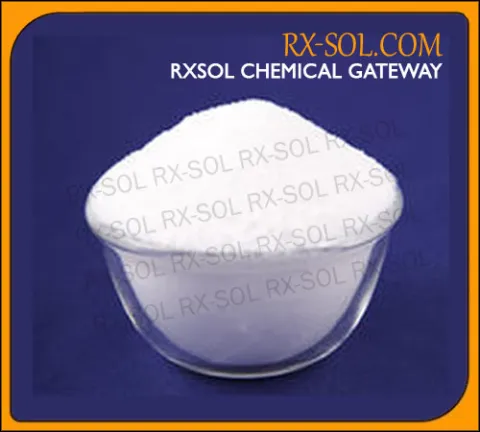
| Form | Solid (Crystals solid. Crystalline powder.) |
| Colour | White |
| Odour | Odorless |
| Odour Threshold | Not Available |
| pH | ca. 6 at 50 g/l 20 °C |
| Boiling Point | Not Applicable |
| Melting Point | 560°C |
| Flash Point | Dose not flush |
| Flammability (solid, gas) | The Product is not flammable |
| Explosive limits | Not Applicable |
| Vapour pressure | Not Applicable |
| Density | 3.98 g/cm3 at 20 °C |
| Relative density Information | Not Determine |
| Bulk density | ca.2,000 kg/m3 |
| Soluble in water | 92 g/l at 25 °C |
| Partition coefficient | Not Applicable |
| Explosive properties | None |
| Oxidising properties | Oxidiser |
| Recativity |
Oxidisable substances, combustible substances, Powdered metals, Sulphides, phosphorus, sulfur, Alkali metals, hydrides, Cyanides, arsenic, carbon/soot, Alkaline earth metals, powdered aluminium, metallic oxides, Isocyanates, Reducing agents |
| Stability | Product is stable. |
| Conditions to avoid | Ignition sources, dust generation. |
| Incompatible materials | Reactive with reducing agents, combustible materials, organic materials, metals. |
|
Hazardous combustion products |
In the event of fire: See section 5. |
| Polymerization | Will not occur. |
| Acute toxicity |
Acute Oral toxicity : Symptoms: Irritations of mucous membranes in the mouth, pharynx, oesophagus and gastrointestinal tract. |
| Skin irritation |
Rabbit Result: No irritation OECD Test Guideline 404 |
| Eye damage/eye irritation |
Rabbit Risk of permanent damage due to staining of the cornea. Causes serious eye irritation. |
| Respiratory or skin sensitisation | Sensitisation possible in predisposed persons. |
| Specific target organ toxicity (STOT) | Single exposure This information is not available. |
| Aspiration hazard | This information is not available |
| Other information | After absorption: Stomach/intestinal disorders, collapse, respiratory arrest, Cyanosis Other dangerous properties can not be excluded. Handle in accordance with good industrial hygiene and safety practice. |
| Toxicity |
Toxicity to daphnia and other aquatic invertebrates EC50 Daphnia magna (Water flea): > 100 mg/l; 48 h OECD Test Guideline 202 |
| Process of degradability | The methods for determining the biological degradability are not applicable to inorganic substances. |
| Bioaccumulative potential | Partition coefficient: n-octanol/water |
| Mobility in soil | No information available |
| Results of PBT and vPvB assessment | PBT/vPvB assessment not available as chemical safety assessment not required/not conducted |
| Other adverse effects | Discharge into the environment must be avoided. |
| Waste treatment Method | Waste material must be disposed of in accordance with the national and local regulations. Leave chemicals in original containers. No mixing with other waste. Handle uncleaned containers like the product itself. |
Transport of dangerous goods by road , rail and inland waterway (ADR/RID/ADN)
| UN Number | 1479 |
| Proper shipping name | OXIDIZING SOLID, N.O.S. (POTASSIUM IODIDE) |
| Class | 5.1 |
| Packing group | II |
| Tunnel restriction code | E |
International Maritime Dangerous Goods Code (IMDG)
| UN Number | 1479 |
| Proper shipping name | OXIDIZING SOLID, N.O.S. (POTASSIUM IODIDE) |
| Class | 5.1 |
| Packing group | II |
| EmS | F-A, S-Q |
International Civil Aviation Organization (ICAO-IATA/DGR)
| UN Number | 1479 |
| Proper shipping name | OXIDIZING SOLID, N.O.S. (POTASSIUM IODIDE) |
| Class | 5.1 |
| Packing group | II |
| Special Precaution for user | No |
| Fedral and State Regulation | TSCA 8(b) inventory: Potassium iodate |
| Other Regulation | OSHA: Hazardous by definition of Hazard Communication Standard (29 CFR 1910.1200). |
| WHMIS (Canada) | CLASS C: Oxidizing material. |
| DSCL (EEC) | R8- Contact with combustible material may cause fire. R22- Harmful if swallowed. R36/38- Irritating to eyes and skin. S2- Keep out of the reach of children. S17- Keep away from combustible material. S46- If swallowed, seek medical advice immediately and show this container or label. |
| HMIS |
Health Hazard: 2 Fire Hazard: 0 Reactivity: 1 Personal Protection: E |
| National Fire Protection Association (U.S.A.) |
Health: 2 Flammability: 0 Reactivity: 0 Specific hazard: |
| Protective Equipment | Gloves. Lab coat. Dust respirator. Be sure to use an approved/certified respirator or equivalent. Wear appropriate respirator when ventilation is inadequate. Splash goggles. |
Full text of R-Phrases
H272 May intensify fire; oxidizer.
H318 Causes serious eye damage.x
H272 May intensify fire; oxidizer.
H318 Causes serious eye damage.
The information above is believed to be accurate and represents the best information currently available to us. However, we make no warranty of merchantability or any other warranty, express or implied, with respect to such information, and we assume no liability resulting from its use. Users should make their own investigations to determine the suitability of the information for their particular purposes. In no event shall be liable for any claims, losses, or damages of any third party or for lost profits or any special, indirect, incidental, consequential or exemplary damages, howsoever arising, even if RX Marine International has been advised of the possibility of such damages.
DISCLAIMER OF LIABILITY :The information in this SDS was obtained from sources which we believe are reliable. However, the information is provided without any warranty, express or implied, regarding its correctness. The conditions or methods of handling, storage, use or disposal of the product are beyond our control and may be beyond our knowledge. For this and other reasons, we do not assume responsibility and expressly disclaim liability for loss, damage or expense arising out of or in any way connected with the handling, storage, use or disposal of the product. This MSDS was prepared and is to be used only for this product. If the product is used as a component in another product, this MSDS information may not be applicable.
Availability
KI Potassium Iodide manufacturer, supplier in Varanasi, Mumbai, Kandla, Chennai, Kolkata, Visakhapatnam, Fujairah, Dubai, Ajman, Abudhabi, Sharjah UAE, Ruwi Barka Ghala Muscat Oman, canada BC, Uganda, Kenya Africa