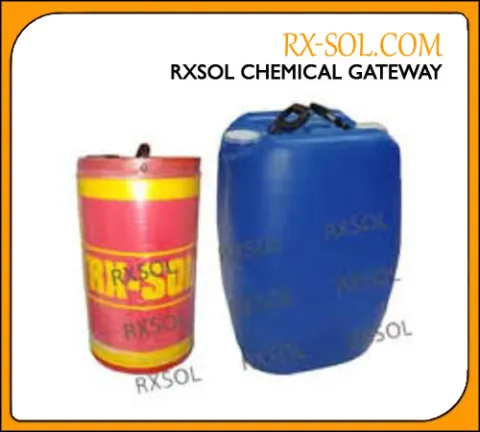
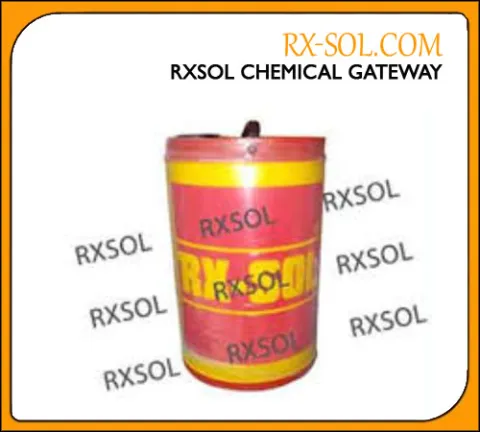
RXSOL DISTILLATES D110
- Part number
- RXSOL-34-3401-210
- Category
- RIGS Oil Field
- Brand
- RXSOL
Overview
This high quality RXSOL D110 is highly appreciated as it is an environmentally friendly substitute for industrial application solvent cleaning agents that harm the ozone layer. It has a strong detergent capability and is compatible with most materials. The RXSOL D110 is widely used as a solvent for paints, dyeing and printing auxiliaries, aerosol insecticides and liquid mosquito-repellents, and base oil for metal working fluid.
Technical specifications
| Appearance | Clear Liquid |
| Colour | Colourless |
| Kinematic Viscosity | 2.3 cSt (2.3 mm2/sec) @ 20 °C / 68 ºF |
| Flash Point | 81 ºC / 178 ºF |
| Boiling Point | 200 - 250 °C / 482 – 392 °F |
| Pour Point | -48 °C / -54 °F |
| Density | 790 - 810 kg/m3 (15 ºC / 59 ºF) |
| Vapor Pressure | 0.01 kPa (0.08 mm Hg) @ 20 °C / 68 ºF |
Applications
Low odor dearomatized hydrocarbon fluid suitable for:
- Aerosols/ vaporizer
- Agrochemicals
- Blanket wash
- Cleaning
- Concrete demolding Inks
- Metalworking
- Mastics and sealants
- Mold release agent
- Polymer processing
Safety and SDS
Read the safety data sheet before handling. Wear suitable gloves and eye protection.
View safety data sheet
| Product Name | RXSOL D110 |
| Part Number | RXSOL-34-3401-210 |
Company Details:
RX MARINE INTERNATIONAL
105, A wing , BSEL , TECH PARK.
VASHI ,NEW BOMBAY 400703 INDIA
Branch : Kandla, Hazira, Mumbai, Chennai, Vizag, Kolkat, Fujairah, Muscat , CANADA, KENYA
| Phone | +91 22 2087 1200 - 1400 |
| Fax | +91 22 27612100 :::AOH :0091 9821214367 |
| rxsolchemicals@gmail.com | |
| Website | www.rxmarine.com |
| Name of Substance | Cas Number | Weight % |
| DISTILLATES PETROLEUM,HYDROTREATED LIGHT | 64742-47-8 | 100% |
| Signal Word | Danger |
| Hazard Statements | H304 May be fatal if swallowed and enters airways |
| Precautionary statements - prevention |
P102 Keep out of reach of children. P103 Read label before use. |
| Precautionary statements - response |
P101 If medical advice is needed, have product container or label at hand. P301+P310 IF SWALLOWED: Immediately call a POISON CENTRE or doctor/physician. P331 Do NOT induce vomiting. |
| Other hazard information: |
HAZARD NOT OTHERWISE CLASSIFIED (HNOC): None as defined under 29 CFR 1910.1200. PHYSICAL / CHEMICAL HAZARDS Material can accumulate static charges which may cause an ignition. Material can release vapors that readily form flammable mixtures. Vapor accumulation could flash and/or explode if ignited. HEALTH HAZARDS May be irritating to the eyes, nose, throat, and lungs. Repeated exposure may cause skin dryness or cracking. ENVIRONMENTAL HAZARDS No significant hazards. |
| Skin Contact | Wash off immediately with plenty of water for at least 15 minutes. Immediate medical attention is required. |
| Eye Contact | Rinse immediately with plenty of water, also under the eyelids, for at least 15 minutes. Obtain medical attention. |
| Inhalation: | Remove from further exposure. For those providing assistance, avoid exposure to yourself or others. Use adequate respiratory protection. If respiratory irritation, dizziness, nausea, or unconsciousness occurs, seek immediate medical assistance. If breathing has stopped, assist ventilation with a mechanical device or use mouth-to-mouth resuscitation. |
| Ingestion | Clean mouth with water and drink afterwards plenty of water. Do not induce vomiting. Call a physician or Poison Control Center immediately. If vomiting occurs naturally, have victim lean forward. |
| Most important symptoms/effects | Breathing difficulties. Symptoms of overexposure may be headache, dizziness, tiredness, nausea and vomiting. |
| Notes to Physician | Treat symptomatically |
| Suitable extinguishing media | Use water spray, alcohol-resistant foam, dry chemical or carbon dioxide. Cool closed containers exposed to fire with water spray. |
| Unsuitable extinguishing media | Do not use a solid water stream as it may scatter and spread fire |
| Flash Point | 115°C (239°F) [ASTM D-93] |
| AutoignitionTemperature | 234°C (453°F) [ASTM E659] |
| Flammable Limits Uper | 5.00 |
| Flammable Limits Lower | 0.50 |
| Sensitivity to Mechanical Impact | No information available |
| Fire Fighting Instructions | Evacuate area. Prevent runoff from fire control or dilution from entering streams, sewers, or drinking water supply. Firefighters should use standard protective equipment and in enclosed spaces, self-contained breathing apparatus (SCBA). Use water spray to cool fire exposed surfaces and to protect personnel. |
| Specific Hazards Arising from the Chemical | Flammable. Containers may explode when heated. Vapors may form explosive mixtures with air. Vapors may travel to source of ignition and flash back. |
| Hazardous Combustion Products | Incomplete combustion products, Oxides of carbon, Smoke, Fume |
| Protective Equipment and Precautions for Firefighters | As in any fire, wear self-contained breathing apparatus pressure-demand, MSHA/NIOSH (approved or equivalent) and full protective gear. |
| Further Information | Remove container from danger zone and cool with water. Prevent fire extinguishing water from contaminating surface water or the ground water system. |
| Spillage |
Land Spill: Stop leak if you can do it without risk. Absorb or cover with dry earth, sand or other noncombustible material and transfer to containers. Recover by pumping or with suitable absorbent. |
| Personal Protection |
Avoid contact with spilled material. See Section 5 for fire fighting information. See the Hazard Identification Section for Significant Hazards. See Section 4 for First Aid Advice. See Section 8 for advice on the minimum requirements for personal protective equipment. Additional protective measures may be necessary, depending on the specific circumstances and/or the expert judgment of the emergency responders. If the exposure cannot be completely characterized or an oxygen deficient atmosphere is possible or anticipated, SCBA is recommended. Work gloves that are resistant to aromatic hydrocarbons are recommended. Note: gloves made of polyvinyl acetate (PVA) are not waterresistant and are not suitable for emergency use. Chemical goggles are recommended if splashes or contact with eyes is possible. Small spills: normal antistatic work clothes are usually adequate. Large spills: full body suit of chemical resistant, antistatic material is recommended. |
| Enviromental Precaution | Should not be released into the environment. See Section 12 for additional ecological information. Avoid release to the environment. Collect spillage. Do not flush into surface water or sanitary sewer system. |
| Methods and materials for containment and cleaning | Soak up with inert absorbent material. Keep in suitable, closed containers for disposal. Remove all sources of ignition. Use spark-proof tools and explosion-proof equipment |
| Handling | Wear personal protective equipment. Do not get in eyes, on skin, or on clothing. Use only under a chemical fume hood. Do not breathe vapors or spray mist. Do not ingest. Keep away from open flames, hot surfaces and sources of ignition. Use only non-sparking tools. To avoid ignition of vapors by static electricity discharge, all metal parts of the equipment must be grounded. Take precautionary measures against static discharges. |
| Storage | Keep containers tightly closed in a dry, cool and well-ventilated place. Keep away from heat and sources of ignition. Flammables area. Corrosives area. |
| Hygiene measures | Immediately change contaminated clothing. Apply preventive skin protection. Wash hands and face after working with substance. |
| Engineering Control | Provide exhaust ventilation or other engineering controls to keep the airborne concentrations of vapors below their respective threshold limit value. Ensure that eyewash stations and safety showers are proximal to the work-station location. | ||||||||||||||
| Personal Protection |
Eye/face Protection : Wear appropriate protective eyeglasses or chemical safety goggles as described by OSHA's eye and face protection regulations in 29 CFR 1910.133 or European Standard EN166. Skin and body protection : Wear appropriate protective gloves and clothing to prevent skin exposure. Long sleeved clothing.Flame retardant antistatic protective clothing. Respiratory Protection : Follow the OSHA respirator regulations found in 29 CFR 1910.134 or European Standard EN 149. Use a NIOSH/MSHA or European Standard EN 149 approved respirator if exposure limits are exceeded or if irritation or other symptoms are experienced. |
||||||||||||||
| Hygiene Measures | Handle in accordance with good industrial hygiene and safety practice. | ||||||||||||||
| Exposure Limits |
NOTE: Limits/standards shown for guidance only. Follow applicable regulations.No biological limits allocated |
||||||||||||||
| Form | Liquid |
| Colour | Colourless |
| Odour | Slight |
| Odor Threshold | No Information Available |
| pH | Not Applicable |
| Boiling Point | 239 °C / 289.4 - 293 °F |
| Flash Point | 115°C (239°F) [ASTM D-93] |
| Evaporation Rate | < 0.01 |
| Flammability (solid, gas) | Not Applicable |
| Explosive limits |
Upper 5.00 % Lower 0.50 % |
| Vapour pressure | 0.001 kPa (0.01 mm Hg) at 20 °C |
| Vapour Density | 7 at 101 kPa |
| Secific Gravity | 810 kg/m³ @20°C |
| Relative Density (at 15.6 °C) | 0.81 |
| Decomposition Temperature | No information available |
| Partition coefficient | No data available |
| Autoignition Temperature | 234°C (453°F) [ASTM E659] |
| Solubility in Water | Not Soluble |
| Viscosity | 2.6 cSt (2.6 mm2/sec) at 40 °C |
| Molecular Formula | |
| Molecular Weight | 202 g/mol |
| Recativity Hazard | None known, based on information available |
| Stability | This material is thermally stable when stored and used as directed. |
| Possibility of hazardous reactions | No known hazardous reactions. |
| Conditions to avoid | Elevated temperatures and sources of ignition. |
| Incompatible materials | Oxidizing agents |
| Hazardous Decomposition Products | Oxides of carbon and nitrogen, smoke and other toxic fumes. |
| Hazardous Reaction | Oxidizing agents, mineral acids, halogenated organic compounds. |
.
| Inhalation | |
| Acute Toxicity(Rat) 4 hours LC50 >5000 mg/m3(Vapor) |
Minimally Toxic. Based on test data for structurally similar materials. Test(s) equivalent or similar to OECD Guideline |
| Irritation:No end point data for material. | Negligible hazard at ambient/normal handling temperatures. |
| Ingestion | |
| Acute Toxicity (Rat): LD50 > 5000 mg/kg |
Minimally Toxic. Based on test data for structurally similar materials. Test(s) equivalent or similar to OECD Guideline |
|
Further information After absorption: |
Headache, somnolence, Dizziness, euphoria, agitation, spasms, narcosis Effect potentiated by: ethanol Damage to: Kidney, Central nervous system, Liver |
| Skin | |
| Acute Toxicity (Rabbit): LD50 > 5000 mg/kg | Minimally Toxic. Based on test data for structurally similar materials. Test(s) equivalent or similar to OECD Guideline |
| Skin Corrosion/Irritation | May dry the skin leading to discomfort and dermatitis. Based on test data for structurally similar materials. Test(s) equivalent or similar to OECD Guideline |
| Eye | |
| Serious Eye Damage/Irritation: Data available | May cause mild, short-lasting discomfort to eyes. Based on test data for structurally similar materials. Test(s) equivalent or similar to OECD Guideline |
| Sensitization | |
|
Respiratory Sensitization: No end point data for material. |
Not expected to be a respiratory sensitizer. |
| Skin Sensitization | Not expected to be a skin sensitizer. Based on test data for structurally similar materials. Test(s) equivalent or similar to OECD Guideline. |
| Aspiration | May be fatal if swallowed and enters airways. Based on physico-chemical properties of the material. |
| Germ Cell Mutagenicity | Not expected to be a germ cell mutagen. Based on test data for structurally similar materials. Test(s) equivalent or similar to OECD Guideline |
| Chronic Toxicity |
Mutagenicity: This material has been classified as non-hazardous. Carcinogenicity: This material has been classified as non-hazardous. Reproductive toxicity (including via lactation): This material has been classified as non-hazardous. Specific target organ toxicity (repeat exposure): This material has been classified as non-hazardous. |
| Acute aquatic hazard | This material has been classified as non-hazardous. Acute toxicity estimate (based on ingredients): >100 mg/L |
| Long-term aquatic hazard | This material has been classified as non-hazardous. Non-rapidly or rapidly degradable substance for which there are adequate chronic toxicity data available OR in the absence of chronic toxicity data, Acute toxicity estimate (based on ingredients): >100 mg/L, where the substance is not rapidly degradable and/or BCF < 500 and/or log Kow < 4. |
| Products of Biodegradation: | No information available. |
| Mobility in soil | No information available. |
| Results of PBT and vPvB assessment | Substance(s) in the mixture do(es) not meet the criteria for PBT or vPvB according to Regulation (EC) No 1907/2006, |
| Additional ecological information | Discharge into the environment must be avoided. |
| Waste treatment Method | Waste material must be disposed of in accordance with the national and local regulations. Leave chemicals in original containers. No mixing with other waste. Handle uncleaned containers like the product itself |
| Regulatory Disposal Information | RCRA Information: The unused product, in our opinion, is not specifically listed by the EPA as a hazardous waste (40 CFR, Part 261D), nor is it formulated to contain materials which are listed as hazardous wastes. It does not exhibit the hazardous characteristics of ignitability, corrositivity or reactivity and is not formulated with contaminants as determined by the Toxicity Characteristic Leaching Procedure (TCLP). However, used product may be regulated. |
| LAND (DOT): | Not Regulated for Land Transport |
| LAND (TDG): | Not Regulated for Land Transport |
| SEA (IMDG): | Not Regulated for Sea Transport according to IMDG-Code |
| Marine Pollutant: | No |
| AIR (IATA): | Not classified as Dangerous Goods by the criteria of the International Air Transport Association (IATA) Dangerous Goods Regulations for transport by air. |
| OSHA | This material is considered hazardous in accordance with OSHA HazCom 2012, 29 CFR 1910.1200. | ||||||
| SARA 302: | No chemicals in this material are subject to the reporting requirements of SARA Title III, Section 302 | ||||||
| CWA / OPA | This product is classified as an oil under Section 311 of the Clean Water Act (40 CFR 110) and the Oil Pollution Act of 1990. Discharge or spills which produce a visible sheen on either surface water, or in waterways/sewers which lead to surface water, must be reported to the National Response Center at 800-424-8802. | ||||||
| SARA (311/312) | Aspiration Hazard | ||||||
| SARA (313) | This material contains no chemicals subject to the supplier notification requirements of the SARA 313 Toxic Release Program. | ||||||
| The following ingredients are cited on the lists below: |
|
| HMIS | |
| Health Hazard | : 1 |
| Fire Hazard | : 1 |
| Reactivity | : 0 |
| Personal Protection | : H |
| Fire : | |
| Health Hazard | : 1 |
| Fire Hazard | : 1 |
| Reactivity | : 0 |
| Specific Hazard | : .. |
| Other Information |
The information above is believed to be accurate and represents the best information currently available to us. However, we make no warranty of merchantability or any other warranty, express or implied, with respect to such information, and we assume no liability resulting from its use. Users should make their own investigations to determine the suitability of the information for their particular purposes. In no event shall be liable for any claims, losses, or damages of any third party or for lost profits or any special, indirect, incidental, consequential or exemplary damages, howsoever arising, even if RX Marine International has been advised of the possibility of such damages. |
Availability
DISTILLATES PETROLEUM,HYDROTREATED LIGHT Exporter and Supplier in Mumbai, Kolkata, Chennai, Visakhapatnam, Nairobi Kenya, Muscat Barka Oman, Fujairah, Sharjah, Abudhabi, Dubai, Middle East, UAE, Canada