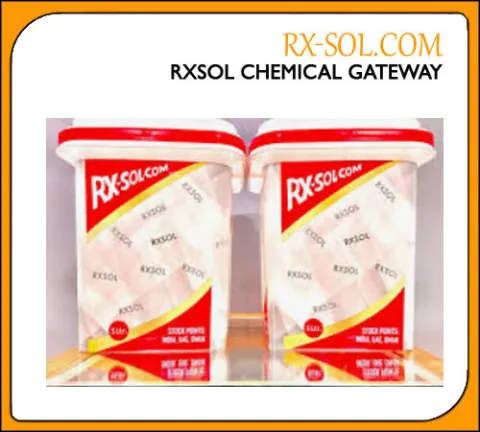
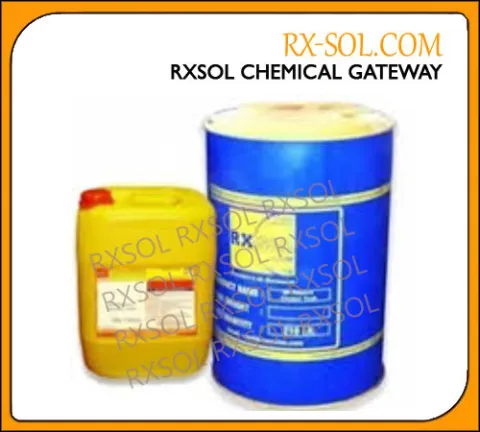
RXSOL RX 8
- Part number
- RXSOL-15-1675-005
- Category
- House / HOTEL & CATERING
- Brand
- RXSOL
Overview
Removal of scale without scrubbing can be possible with RX 8 solution. This Kettle Descaler helps to disolve lime scale chemically and avoid formation of scratches on shining surfaces of kettle.
RX 8 Lime eater dissolves hard and old lime scale deposits from your appliances. It extends the life of the appliance and saves running cost.Highly effective acid based descaler for kettles
RXSOL R8 or commonly called Kettle Descaler is a very important chemical especially for hotels and also for homes. It reacts with the scales and deposits in a very unique way and that is why our customers are always connected to us.
BENEFITS OF USING RXSOL R8 / KETTLE DESCALER
- Effectively removes limescale without the need for scrubbing.
- No complications in using RXSOL R8 Kettle Descaler
Technical specifications
TECHNICAL SPECIFICATIONS OF RXSOL R8 KETTLE DESCALER
Appearance: Yellow liquid
pH: 1.5
Shelf life: 24 months
Dilution: Ready to use
Non-flammable
The above data is typical of normal production and should not be taken as a specification.
Safe handling and storage information
Store in original closed containers away from extreme temperatures.Avoid contact with skin and eyes. Do not mix with any other chemicals other than as advised by your JohnsonDiversey representative.
Full guidance on the handling and disposal of this product is provided in a separate Material Safety Data Sheet.
Product compatibility
Safe to use on all kettles.
Applications
HOW TO USE RXSOL R8 KETTLE DESCALER
- Citric acid based - safe on surfaces, including plastic kettles.
- Suitable for descaling all kettles.
- Can be used neat for tough limescale deposits on shower heads/ tap bases.
- Look at the Dilution Section to know the dose
Other Grades :::
RXSOL RX1 (Orange colour) Sanitizer Use in washroom (Tap, washbasin, tiles)
RXSOL RX2 (Green Colour) Multi task Cleaner
RXSOL RX3 (Sky Blue ) Glass Cleaner
RXSOL RX4 (white Colour) Furniture Polish (Ready to Use) wooden floor, chairs legs, work stations.
RXSOL RX5 (Pink) Fragrance (Ready to use)
RXSOL RX6 (Blue) W.C cleaner (Ready to use)
RXSOL RX7 (Green colour) Floor Cleaner
RXSOL RX9 (No Colour) water Patch Cleaner, greasy marks
Dosage and directions
DILUTION OF KETTLE DESCALER:
- 1. Fill 3/4 parts of kettle with water and makes it boil fully , then disconnect heating procedure before going to 2nd step.
- 2. Add amount of RX 8 and leave to work. ( doses can vary on deposition of scale, For general and routine cleaning add 3 - 5% )
- 3. After cleaning effect flush / wash with fresh water.
- 4. Extra cleaning can be repeated with once more Boil water without addition of RX8 and pour away before using again.
Characteristics and notes
Effectively removes limescale without the need for scrubbing.
Safety and SDS
Read the safety data sheet before handling. Wear suitable gloves and eye protection.
View safety data sheet
| Product Name | RXSOL-15-1675-005 |
| Product Type | RXSOL RX 8 |
Company Details:
RX MARINE INTERNATIONAL
105, A wing , BSEL , TECH PARK.
VASHI ,NEW BOMBAY 400703 INDIA
| Phone | +91 22 65113333 / 5555 / 9999 |
| Fax | +91 22 2781 1318 :::AOH :0091 9821214367 |
| rxsolchemicals@gmail.com |
Mixtures
| Ingredient(s) | EC No | CAS No. | REACH No | Classification |
Classification (EC) 1272/2008 |
Notes | Weight% |
| Citric Acid | 201-069-1 | 77-92--9 | 01-2119457026-42 | Xi R36 | H319 Eye Irrit 2 | 20-30 | |
| Glycolic Acid | 201-180-5 | 79-14-1 | 01-2119485579-17 | C R22-34 |
H314 Skin Corr 1B H302 Acute Tox 4 |
1-3 |
Polymer. For the full text of the R, H and EUH phrases mentioned in this Section, see Section 16.
Workplace exposure limit(s), if available, are listed in subsection 8.1.
[1] Exempted: ionic mixture. See Regulation (EC) No 1907/2006, Annex V, paragraph 3 and 4. This salt is potentially present, based on calculation, and included for classification and labelling purposes only. Each starting material of the ionic mixture is registered, as required.
[2] Exempted: included in Annex IV of Regulation (EC) No 1907/2006.
[3] Exempted: Annex V of Regulation (EC) No 1907/2006.
[4] Exempted: polymer. See Article 2(9) of Regulation (EC) No 1907/2006.
The product has been classified and labelled in accordance with Directive 1999/45/EC and corresponding national legislation.
Indication Of Danger:
- Risk phrases: R36 Irritating to eyes
- Label Elements: Xi Irritant
- Safety phrases: S26 In case of contact with eyes, rinse immediately with plenty of water and seek medical advice.
- Further Indications On Label: Rinse and dry hands after use. For prolonged contact, protection for the skin may be necessary.
- Other Hazards: No other hazards known. The product does not meet the criteria for PBT or vPvB in accordance with Regulation (EC) No 1907/2006, Annex XIII.
Description of First Aid Measures
| Inhalation: | Remove from source of exposure. Get medical attention |
| Skin contact: | Not required under normal use. If irritation develops get medical attention. Rinse with plenty of water. |
| Eye contact: | Wash off immediately with plenty of water. Get medical attention. |
| Ingestion: | Remove material from mouth. Immediately drink 1-2 glasses of water or milk. Get medical attention |
| Self Protection of First-Aider: | Consider personal protective equipment as indicated in section 8. |
Most Important Symptoms And Effects, Both Acute And Delayed
| Inhalation: | Causes irritation |
| Skin contact: | Unlikely to be irritant in normal use |
| Eye contact: | Causes irritation |
| Ingestion: | Causes irritation |
| Sensitisation: | No known effects. |
Indication Of Any Immediate Medical Attention And Special Treatment Needed :
No information available on clinical testing and medical monitoring. Specific toxicological information on substances, if available, can be found in section 11.
| Extinguishing media: | Carbon dioxide. Dry powder. Water spray jet. Fight larger fires with water spray jet or alcohol resistant foam. |
| Special hazards arising from the substance or mixture: | No special hazards known. |
| Advice for fire-fighters: | As in any fire, wear self contained breathing apparatus and suitable protective clothin including gloves and eye/face protection. |
| Personal Precautions: | No special measures required |
| Environmental precautions: | Do not allow to enter drainage system, surface or ground water. Dilute with plenty of water |
| Methods For Cleaning Up: | Absorb with liquid-binding material (sand, diatomite, universal binders, sawdust). |
| Reference to other sections: | For personal protective equipment see Section 8.For disposal considerations see Section 13 |
Precautions For Safe Handling
| Advice on safe handling: | Handle in accordance with good industrial hygiene and safety practice. Do not mix with other products unless advised by Diversey. For advice on general occupational hygiene and environmental exposure controls see section 8. For incompatible materials see section 10. |
| Prevention of fire and explosion: | No special precautions required |
Conditions For Safe Storage, Including Any Incompatibilities
|
Requirements for storage rooms / facilities: |
In accordance with local and national regulations |
| Combined storage in storage rooms / facilities: | In accordance with local and national regulations. Store away from products containing chlorine-based bleaching agents or sulphites |
| Basic storage conditions: | Store in original container. Keep container tightly closed. For conditions to avoid see section 10. |
| Specific end use(s): | No specific advice for end use available |
Control Parameters Workplace exposure limits
- Air limit values, if available:
- Biological limit values, if available:
- Recommended monitoring procedures, if available:
- Additional exposure limits under the conditions of use, if available
DNEL/DMEL and PNEC values Human exposure
DNEL oral exposure - Consumer (mg/kg bw)
| Ingredient(s) | Short term – Local effects | Short term – Systemic effects | Long term – Local effectsa |
Long term – Systemic effects |
| Citric Acid | No data available | No data available | No data available | No data available |
| Glycolic Acid | No data available | No data available | No data available | 0.75 |
No data available
| Ingredient(s) | Short term – Local effects | Short term – Systemic effects | Long term – Local effectsa |
Long term – Systemic effects |
| Citric Acid | No data available | No data available | No data available | No data available |
| Glycolic Acid | No data available | No data available | No data available | 57.69 |
DNEL dermal exposure – Consumer
| Ingredient(s) | Short term – Local effects | Short term – Systemic effects | Long term – Local effectsa |
Long term – Systemic effects |
| Citric Acid | No data available | No data available | No data available | No data available |
| Glycolic Acid | No data available | No data available | No data available | 28.85 |
DNEL inhalatory exposure - Worker (mg/m3)
| Ingredient(s) | Short term – Local effects | Short term – Systemic effects | Long term – Local effectsa |
Long term – Systemic effects |
| Citric Acid | No data available | No data available | No data available | No data available |
| Glycolic Acid | No data available | No data available | No data available | 10.56 |
DNEL inhalatory exposure - Consumer (mg/m3)
| Ingredient(s) | Short term – Local effects | Short term – Systemic effects | Long term – Local effectsa |
Long term – Systemic effects |
| Citric Acid | No data available | No data available | No data available | No data available |
| Glycolic Acid | No data available | No data available | No data available | 2.6 |
Environmental exposure
Environmental exposure – PNEC
| Ingredient(s) |
Surface water, fresh (mg/l) |
Surface water, marine (mg/l) |
Intermittent (mg/l) |
Sewage treatment plant (mg/l) |
| Citric Acid | 0.44 | 0.0440 | No data available | <1000 |
| Glycolic Acid | 0.0321 | 0.0031 | 0.312 | 7 |
Environmental exposure - PNEC, continued
| Ingredient(s) |
Surface water, fresh (mg/l) |
Surface water, marine (mg/l) |
Intermittent (mg/l) |
Sewage treatment plant (mg/l) |
| Citric Acid | 34.6 | 3.46 | 33.1 | No data available |
| Glycolic Acid | 0.115 | No data available | 0.07 | No data available |
Exposure controls
General health and safety measures: Handle in accordance with good industrial hygiene and safety practice. Keep away from food, drink and animal feeding stuffs. Wash hands before breaks and at the end of the work day. Avoid contact with eyes.
The following information applies for the uses indicated in subsection 1.2. If available, please refer to the product information sheet for application and handling instructions. Normal use conditions are assumed for this section. Recommended safety measures for handling the undiluted product:
Appropriate engineering controls: No special requirements under normal use conditions Appropriate organisational controls: Avoid direct contact and/or splashes where possible. Train personnel.
Personal Protective Equipment
Eye / face protection: Safety glasses are not normally required. However their use is recommended in those cases where splashes may occur when handling the product.
Hand protection: Rinse and dry hands after use. For prolonged contact protection for the skin may be necessary.
Body protection: No special requirements under normal use conditions.
Respiratory protection: Respiratory protection is not normally required. However, inhalation of vapour, spray, gas or aerosols should be avoided.
Environmental exposure controls: No special requirements under normal use conditions
| Physical State: | Liquid |
| Colour: | Yellow |
| Odour: | Product specific |
| Odour Threshold: | Not applicable |
| pH: | < 2 (neat) |
| Melting/Freezing Point (°C): | Not determined |
| Initial Boiling point/range (°C): | Not determined |
| Flash point (°C): | Not applicable |
| Sustained Combustion: | Not determined |
| Evaporation Rate: | Not determined |
| Flammability (Solid/Gas): | Not determined |
| Upper/Lower Flammability Limit: | Not determined |
| Vapour Pressure: | Not determined |
| Vapour Density: | Not determined |
| Relative Density: | 1.10 g/cm³ (20°C) |
| Solubility in / Miscibility with Water: | Fully miscible |
| Autoignition Temperature: | Not determined |
| Decomposition Temperature: | Not determined |
| Viscosity: | Not determined |
| Explosive properties: | Not explosive |
| Oxidising properties: | Not oxidising |
| Surface Tension (N/m): | Not determined |
| Corrosion to Metals: | Not determined |
Reactivity: No reactivity hazards known under normal storage and use conditions.
Chemical stability: Stable under normal storage and use conditions.
Possibility of hazardous reactions: No hazardous reactions known under normal storage and use conditions.
Conditions to avoid: None known under normal storage and use conditions.
Incompatible materials: Keep away from products containing chlorine-based bleaching agents or sulphites. Reacts with alkali
Hazardous decomposition products: None known under normal storage and use conditions.
Information On Toxicological Effects
Mixtures: No test data is available on the mixture Substance data, where relevant and available, are listed below.
Acute toxicity –
Acute oral toxicity
| Ingredients | End point | Value (mg/kg) | Species | Method | Exposure Time (h) |
| Citric Acid | LD50 | 3000 | Rat | Method not given | |
| Glycolic Acid | LD50 | 2040 | Rat | Method not given |
Acute dermal toxicity
| Ingredients | End point | Value (mg/kg) | Species | Method | Exposure Time (h) |
| Citric Acid | LD50 | <2000 | Rat | ||
| Glycolic Acid | Not avaliable | Method not given |
Acute inhalative toxicity
| Ingredients | End point | Value (mg/kg) | Species | Method | Exposure Time (h) |
| Citric Acid | Not avaliable | ||||
| Glycolic Acid | LD50 | 3.6 | Rat | Method not given |
Irritation and corrosivity
Skin irritation and corrosivity
| Ingredients | Result | Species | Method | Exposure Time |
| Citric Acid | Not Irritant | Rabbit | OECD 404 (EU B.4) | |
| Glycolic Acid | Corrosive | Rabbit | Method not given |
Eye irritation and corrosivity
| Ingredients | Result | Species | Method | Exposure Time |
| Citric Acid | Severe Damage | Rabbit | OECD 405 (EU B.4) | |
| Glycolic Acid | Corrosive | Rabbit | Method not given |
Respiratory tract irritation and corrosivity
| Ingredients | Result | Species | Method | Exposure Time |
| Citric Acid | Not avalible | |||
| Glycolic Acid | Not avalible |
Sensitisation - Sensitisation by skin contact
| Ingredients | Result | Species | Method | Exposure Time |
| Citric Acid | Not sensitising | Guinea Pig | Method not given | |
| Glycolic Acid | Not sensitising | Guinea Pig | Method not given |
Sensitisation by inhalation
| Ingredients | Result | Species | Method | Exposure Time |
| Citric Acid | Not avalible | |||
| Glycolic Acid | Not avalible |
Repeated dose toxicity - Sub-acute or sub-chronic oral toxicity
| Ingredients | Endpoint | Value (mg/kg bw/d) | Species | Method | Exposure Time | Specific effects & organs affected |
| Citric Acid | Not avalible | |||||
| Glycolic Acid | Not avalible |
Sub-chronic dermal toxicity
| Ingredients | Endpoint | Value (mg/kg bw/d) | Species | Method | Exposure Time | Specific effects & organs affected |
| Citric Acid | Not avalible | |||||
| Glycolic Acid | Not avalible |
Sub-chronic inhalation toxicity
| Ingredients | Endpoint | Value (mg/kg bw/d) | Species | Method | Exposure Time | Specific effects & organs affected |
| Citric Acid | Not avalible | |||||
| Glycolic Acid | Not avalible |
Chronic toxicity
| Ingredients | Endpoint | Value (mg/kg bw/d) | Species | Method | Exposure Time | Specific effects & organs affected | Remark |
| Citric Acid | Not avalible | ||||||
| Glycolic Acid | Not avalible |
CMR effects (carcinogenicity, mutagenicity and toxicity for reproduction)
Mixture data: Based on available data, the classification criteria are not met. Substance data, where relevant and available Carcinogenicity
| Ingredient(s) | Effect |
| Citric Acid | No evidence for carcinogenicity, negative test results |
| Glycolic Acid | No data available |
Mutagenicity
| Ingredient(s) | Result (in vitro) | Method (in vitro) | Result (in vivo) | Method (in vivo) |
| Citric Acid | No data available | No evidence of genotoxicity, negative test results | Method not given | |
| Glycolic Acid | No data available | No evidence of genotoxicity, negative test results | Method not given |
Toxicity for reproduction
| Ingredients | Endpoint | Specific effect | Value (mg/kg bw/d) | Species | Method | Exposure Time | Specific effects & organs affected | Remark |
| Citric Acid | Not avalible | |||||||
| Glycolic Acid | Not avalible |
Potential Adverse Health Effects And Symptoms : Effects and symptoms related to the product, if any, are listed in Section 4
Toxicity
Mixtures: No test data is available on the mixture.
Substance data, where relevant and available, are listed below
Aquatic short-term toxicity
Aquatic short-term toxicity – fish
| Ingredients | Endpoint | Value (mg/kg bw/d) | Species | Method | Exposure Time |
| Citric Acid | LC50 | 440 | Leuciscus idus | Method not given | 48hrs |
| Glycolic Acid | LC50 | 164 | Pimephales Promelas | Method not given | 96hrs |
Aquatic short-term toxicity – crustacea
| Ingredients | Endpoint | Value (mg/kg bw/d) | Species | Method | Exposure Time |
| Citric Acid |
EC50 |
1535 | Daphnia Magna Straus | Method not given | 24hrs |
| Glycolic Acid |
EC50 |
141 | Daphnia Magna Straus | Method not given | 48hrs |
Aquatic short-term toxicity – algae
| Ingredients | Endpoint | Value (mg/kg bw/d) | Species | Method | Exposure Time |
| Citric Acid |
LC50 |
435 | Scenedesmus quadricauda | Method not given | 168hrs |
| Glycolic Acid | Not data avalible |
Aquatic short-term toxicity - marine species
| Ingredients | Endpoint | Value (mg/kg bw/d) | Species | Method | Exposure Time |
| Citric Acid | Not data avalible | ||||
| Glycolic Acid | Not data avalible |
Impact on sewage plants - toxicity to bacteria
| Ingredients | Endpoint | Value (mg/kg bw/d) | Species | Method | Exposure Time |
| Citric Acid | EC50 | <10000 | Pseudomonas Putida | Method not given | 16 hrs |
| Glycolic Acid | Not data avalible |
Aquatic long-term toxicity - Aquatic long-term toxicity – fish
| Ingredients | Endpoint | Value (mg/kg bw/d) | Species | Method | Exposure Time |
| Citric Acid | Not data avalible | ||||
| Glycolic Acid | Not data avalible |
Aquatic long-term toxicity – crustacea
| Ingredients | Endpoint | Value (mg/kg bw/d) | Species | Method | Exposure Time |
| Citric Acid | Not data avalible | ||||
| Glycolic Acid | Not data avalible |
Aquatic toxicity to other aquatic benthic organisms, including sediment-dwelling organisms, if available:
Terrestrial Toxicity
- Terrestrial toxicity - soil invertebrates, including earthworms, if available:
- Terrestrial toxicity - plants, if available:
- Terrestrial toxicity - birds, if available:
- Terrestrial toxicity - beneficial insects, if available:
- Terrestrial toxicity - soil bacteria, if available:
Persistence And Degradability Abiotic degradation
- Abiotic degradation - photodegradation in air, if available:
- Abiotic degradation - hydrolysis, if available:
- Abiotic degradation - other processes, if available:
Bioaccumulative Potential
Partition coefficient n-octanol/water (log Kow)
| Ingredients | Value | Method | Evaluation | Remark |
| Citric Acid | -1.72 | No bioaccumulation expected | ||
| Glycolic Acid | -1.07 |
Bioconcentration Factor (BCF)
| Ingredients | Value | Method | Evaluation | Remark |
| Citric Acid | Not data avalible | |||
| Glycolic Acid | Not data avalible |
Mobility In Soil
Adsorption/Desorption to soil or sediment
| Ingredients | Adsorption coefficien Log Koc |
Desorption coefficient Log Koc(des) |
Method |
Soil / sediment type |
Evaluation |
| Citric Acid | Not data avalible | Potential for mobility in soil, soluble in water | |||
| Glycolic Acid | Not data avalible |
Results of PBT and vPvB assessment: Substances that fulfil the criteria for PBT/vPvB, if any, are listed in section 3. Other adverse effects: No other adverse effects known.
Waste Treatment Methods
Waste from residues / unused
Products: Dispose of in compliance with all Federal, state, provincial, and local laws and regulations.
European Waste Catalogue: 20-01-29- detergents containing dangerous substances. Empty Packaging
Recommendation: Dispose of observing national or local regulations.
Suitable cleaning agents: Water, if necessary with cleaning agent.
ADR, RID, ADN, IMO/IMDG, ICAO/IATA
UN number: Non dangerous goods
UN proper shipping name: Non dangerous goods
Transport hazard class(es): Non dangerous goods
Packing group: Non dangerous goods
Environmentally Hazardous: Non dangerous goods
Special precautions for user: Non dangerous goods
Transport in bulk according to Annex II of MARPOL
73/78 and the IBC Code: The product is not transported in bulk tankers.
Safety, Health And Environmental Regulations/Legislation Specific For The Substance Or Mixture
Chemical safety assessment: A chemical safety assessment has not been carried out on the mixture
The information in this document is based upon our best present knowledge. However it does not constitute a guarantee for any specific product features and does not establish a legally binding contract.
MSDS code: 63721
MSDS Revision Date: 19-Nov-2012
Reason for Revision: Overall design adjusted in accordance with Regulation (EC) No 1907/2006, Annex II
Full text of the R, H and EUH R22 Harmful if swallowed
phrases mentioned in section 3: R34 Causes burns
R36 Irritating to eyes
H302 Harmful if swallowed.
H314 Causes severe skin burns and eye damage
H319 Causes serious eye irritation.
Abbreviations and acronyms: AISE The international Association for Soaps, Detergents and Maintenance Products
DNEL Derived No Effect Limit
EUH CLP Specific hazard statement
PBT Persistent, Bioaccumulative and Toxic
PNEC Predicted No Effect Concentration
REACH number - REACH registration number, without supplier specific part
vPvB very Persistent and very Bioaccumulative
DISCLAIMER OF LIABILITY :The information in this SDS was obtained from sources which we believe are reliable. However, the information is provided without any warranty, express or implied, regarding its correctness. The conditions or methods of handling, storage, use or disposal of the product are beyond our control and may be beyond our knowledge. For this and other reasons, we do not assume responsibility and expressly disclaim liability for loss, damage or expense arising out of or in any way connected with the handling, storage, use or disposal of the product. This MSDS was prepared and is to be used only for this product. If the product is used as a component in another product, this MSDS information may not be applicable.
Availability
We are one of the largest manufacturers and suppliers in INDIA and U.A.E.
In INDIA we have our stockpoints in MUMBAI, GANDHIDHAM, TUTICORIN, VISHAKHAPATNAM, HOWRAH
In U.A.E. we have our stockpoints in FUJAIRAH and OMAN