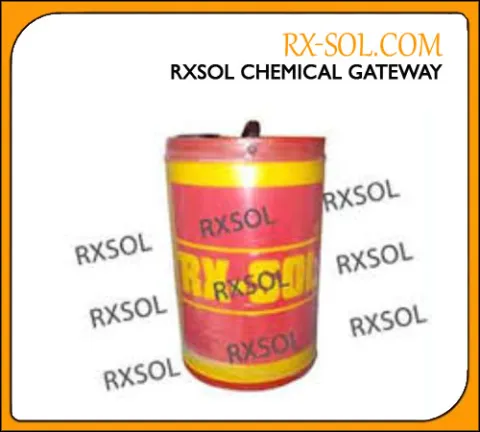
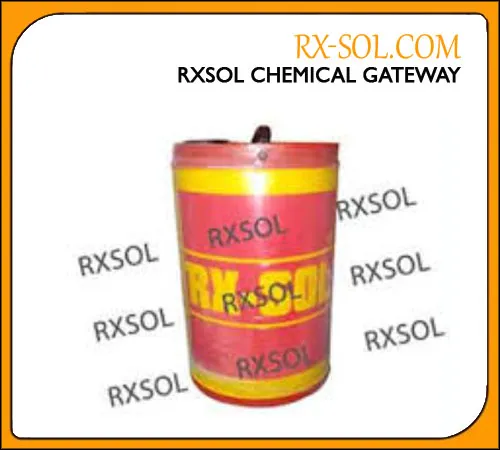
Scale Inhibitor with Antifoamer
- Part number
- RXSOL-16-1056-025
- Category
- Evaporator Treat
- Brand
- RXSOL
Overview
Scale is the precipitate that forms on surfaces in contact with water as a result of the precipitation of normally soluble solids that become insoluble as temperature increases. The chemical treatment of water associated with oil and gas includes the application of scale inhibitors, such as phosphonates, to help maintain the integrity of equipment that is used during the drilling and production phases. Treatment is used to Reduce the concentration of scale forming compounds that can accumulate in production wells, water and disposal wells, flowlines and surface equipment. The accumulation of scale can reduce flowrates or for instance, lower efficiencies in heat exchangers. Scale inhibiting chemicals can be applied up or downhole of the wellhead and are in general, classified into four categories: Oil-Miscible, Totally Water Free, Emulsified and Solid. Depending on the mineral content present in the water, duration of the project and operation needs, the chemicals can be applied continuously or in scale squeeze applications.
Applications
Technical Capabilities:
Available scale inhibiting chemicals are effective at preventing mineral deposits caused by compounds such as calcium carbonate, strontium sulfate, calcium sulfate, barium sulfate, iron sulfide and iron oxide. Selection of the appropriate scale inhibitor and dose will include water testing to identify the types and concentrations of scale forming compounds present in the water. For example, phosphonate-based scale inhibitors are effective at preventing carbonate and sulfate scales whereas, polymer-base scale inhibitors are effective for sulfate/carbonate scales of barium, strontium and calcium.
Technical Limitations:
The amount of scale that will precipitate out of water is dependent of temperature, pressure, water incompatibility and mineral content. Because these variables often fluctuate, predicting and controlling the type and amount of scale inhibitor to use can be difficult requiring constant operations adjustments to account for these fluctuating parameters.Recent concerns about potential toxicity issues associated with scale inhibitors have led the shale gas industry to evaluate alternative scale inhibitors such as polyaspartic acid. Polyaspartic acid is a manufactured amino polycarboxylic acid that can function as a scale inhibitor, corrosion inhibitor, dispersant, chelation agent, and water absorber. According to the manufacturer, polyaspartic acid is non-toxic, biodegradable, and non-polluting.
Costs:
Because the amount and type of scale that can precipitate out of water is dependent on many factors, a cost associated with application is variable. However, the volume of application is low relative to the overall composition of water for fracture treatment. For example, approximately 0.08% or 0.043% of fracture water in the Marcellus Basin and Fayetteville respectively, is composed of scale inhibiting chemicals.
Dosage and directions
Safety and SDS
Read the safety data sheet before handling. Wear suitable gloves and eye protection.
View safety data sheet
| Product Name |
Scale Inhibitor P |
| Product Type |
RXSOL-16-1056-025 |
Company Details:
RX MARINE INTERNATIONAL
105, A wing , BSEL , TECH PARK.
VASHI ,NEW BOMBAY 400703 INDIA
Stock Point ::: Mumbai, Muscat, Kandla, Kolkata, Visakhapatnam, Chennai, Fujairah
| Phone | +91 22 27815540 / 41 / 42 |
| Fax | +91 22 2781 1318 :::AOH :0091 9322594669 |
| rxsolchemicals@gmail.com |
| Component | CAS-No | Weight %- Range |
| Trisodium Ortho Phosphate | 7601-54-9 | 1-5 |
| Ethane-1,2-diol | 107-21-1 | 1-5 |
EMERGENCY OVERVIEW:
Main physical hazards:
No classified physical hazards.
|
Main physical hazards |
No classified physical hazards. |
|
Main health hazards |
Repeated or prolonged exposure may cause irritation of eyes and skin. |
|
Precautions |
Avoid contact with the skin and the eyes. Wear suitable protective equipment. Keep container tightly closed. |
|
HMIS classification |
Health: 1 Flammability: 0 Physical hazard: 0 |
|
Eye contact |
Immediately flush eyes with water for 5 minutes while holding eyelids open. |
|
Skin contact |
Rinse with water. If symptoms persist, call a physician. |
|
Ingestion |
Do not induce vomiting without medical advice. Obtain medical attention. |
|
Inhalation |
Move to fresh air in case of accidental inhalation of vapors. Consult a physician if necessary. |
|
Flash point |
>100 °C / >212 °F |
|
Method |
Pensky-Martens CC |
|
Autoignition temperature |
No data available. |
|
Flammability limits in air |
No information available. |
|
Oxidizing properties |
No data available |
|
Suitable extinguishing media |
Use extinguishing media appropriate for surrounding material. |
|
Extinguishing media which must not be used for safety reasons |
Not applicable. |
|
Special exposure hazards arising from the substance or preparation itself, its combustion products, or releasedgases |
Carbon oxides. |
|
Special protective equipment for firefighters |
Wear self-contained breathing apparatus and protective suit. |
|
NFPA rating |
|
|
Special |
None |
|
Main physical hazards |
No classified physical hazards. |
| Personal precautions | Avoid contact with skin and eyes. Wear suitable protective equipment. |
| Methods for cleaning up | Dam up. Put into suitable containers for disposal. |
| Environmental precautions | Prevent product from entering drains. Prevent entry into sewage. |
|
Handling Precautions |
Avoid contact with the skin and the eyes. Wear suitable protective equipment. Keep container tightly closed. |
|
Safe handling advice |
Wear suitable protective equipment. |
|
Technical measures/storage conditions |
Keep away from direct sunlight. Keep container tightly closed. |
|
Packaging requirements |
Keep in properly labelled containers. |
|
Incompatible products |
No information available. |
|
Engineering measures to reduce exposure |
Control the source. Enclosure of the process. Other suitable methods. |
|
Hygiene measures |
Avoid prolonged or repeated contact with skin. Wear suitable protective equipment. |
|
Respiratory protection |
None normally needed |
|
Eye protection |
Tightly fitting safety goggles. |
|
Hand protection |
Neoprene. Nitrile. Butyl. PVC. |
|
Skin and body protection |
Chemical resistant apron. |
|
ACGIH - TLVs |
OSHA - PELs |
||||||
|
Component |
TWA / Ceiling |
STEL |
ACGIH - Skin |
TWA / C |
STEL |
Final PELs - Skin |
|
|
Trisodiumortho phosphate |
|||||||
|
Ethane-1,2-diol |
100 mg/m3 C |
||||||
Particles Not Otherwise Regulated/Specified [PNOR or PNOS] (insoluble or poorly soluble):
OSHA PEL's for Inert or Nuisance Dust are covered by PNOR limits: respirable fraction: 5 mg/m3; total dust 15 mg/m3.
ACGIH PNOS Recommendations: Airborne concentrations should be kept below 3 mg/m3, respirable particulate, and 10 mg/m3,inhalable particles.
Information on basic physical and chemical properties:
| Form | Liquid |
| Color | Clear to hazy yellow |
| Odor | None |
| Odor threshold | No information available. |
| pH | 4 |
| Boiling point/range | No data available. |
| Flash point | >100 °C / >212 °F |
| Method | Pensky-Martens CC. |
| Flammability limits in air Lower | No information available. |
| Upper | No information available. |
| Bulk density | Not applicable. |
| Melting point/range | No data available. |
| Decomposition temperature | No data available. |
| Water solubility | Soluble. |
| Fat solubility: | No information available. |
| Partition coefficient (n-octanol/water) | Not applicable. |
| Relative density | No information available |
| Vapor pressure | Similar to water |
| Vapor density | No data available |
| Viscosity | No data available |
| Evaporation rate | Similar to water. |
| %Volatile (VOC) | No data available. |
| Stability | : Stable under recommended storage conditions. |
| Conditions to avoid | : Freezing. |
| Incompatibility with other substances | : None known. |
| Hazardous decomposition products | : Carbon oxides. |
| Hazardous polymerization | : Hazardous polymerization does not occur. |
PRODUCT TOXICOLOGICAL INFORMATION:
Information given is based on data on the components and the toxicology of similar products.
| Eye contact | : May be mildly irritating. |
| Skin contact | : Prolonged skin contact may cause skin irritation. |
| Ingestion | : Swallowing large amounts may be harmful. |
| Inhalation | : No effect expected. |
| Sensitization - lung | : Not known to cause allergic reaction. |
| Sensitization - skin | : Not known to cause allergic reaction. |
Chronic Health Hazard:
| Carcinogenic effects | :Not listed by IARC, USA NTP, or USA OSHA. |
| Mutagenic effects | :See COMPONENT TOXICOLOGICAL INFORMATION below. |
| Teratogenic effects | :Not known to cause birth defects or have a deleterious effect on a developing fetus. |
| Reproductive toxicity | :Not known to adversely affect reproductive functions and organs. |
| Target organ effects | :See COMPONENT TOXICOLOGICAL INFORMATION below. |
COMPONENT TOXICOLOGICAL INFORMATION:
|
Component |
Target Organ Effects |
LD50 / LC50 |
|
Trisodiumortho phosphate |
- |
> 2000 mg/kg (Oral LD50; Rat) |
|
Ethane-1,2-diol |
respiratory system, skin,eyes,CNS |
= 4000 mg/kg (Oral LD50; Rat) |
|
Component |
IARC Group 1 or 2: |
ACGIH - Carcinogens: |
OSHA Listed Carcinogens |
NTP |
|
Trisodiumortho phosphate |
||||
|
Ethane-1,2-diol |
A4 - Not Classifiable as a Human |
|
Component |
OTHER TOXICOLOGICAL INFORMATION |
|
Ethane-1,2-diol |
Mutagen - somatic cells. Long termexposure by inhalation in controlled animal studies show ed sense organ effect, especially eyes, w ith corneal damage. Large oral doses caused liver,kidney, ureter and bladder effects in animal studies. Fetotoxic and teratogenic effects observed in controlled animal studies. Skin sensitivity: tw o cases of sensitization to ethylene glycol in occupational setting have been reported. Central nervous system(CNS) depressant. |
PRODUCT INFORMATION:
COMPONENT INFORMATION:
Ethane-1,2-diol:
|
Bioaccumulation |
Does not bioaccumulate |
|
Persistence / degradability |
Readily biodegradable. |
|
Freshwater Fish Species Data |
EC50 96 h (Selenastrumcapricornutum) = 6500 - 13000 mg/L |
|
Freshwater Fish Species Data |
LC50 96 h (Oncorhynchus mykiss) = 41000 mg/L |
|
Water Flea Data |
LC50 96 h (Lepomis macrochirus) = 27540 mg/L |
|
Other information |
EC50 48 h (w ater flea) = 46300 mg/L |
Waste from residues / unused products:
Dispose of in accordance with local regulations.
Contaminated packaging:
If reusable containers are used, send them back to the product supplier, after the required rinsing.
EPA RCRA HazardousWaste Code:
None
DOT:
| CERCLA RQ | : None |
| Hazard class | : Not regulated. |
| Proper shipping name | : Not regulated |
| Label(s) | : None required. |
IMDG/IMO:
| Shipping name | : Not regulated. |
| UN number | : None |
ICAO/IATA
| Shipping name: | : Not regulated. |
| UN number: | : None |
TDG(Canada):
| Shipping name | : Not regulated. |
| PIN | : None |
Note 1:
For the applicable placard selection refer to the appropriate transport regulations; the selection may vary depending on the cargo size and categories of other hazardous materials in the cargo.
International Chemical Inventories :
| USA, Toxic Substances Control Act inventory (TSCA) | : This product complies with TSCArequirements. |
| Canada, Domestic Substance List (DSL) | :This product complies with DSL requirements. |
OSHA Hazard Communication Standard:
(Complies with USAOSHA29 CFR 1910.1200 and ANSI Z 400.1)
EPA RCRA Hazardous Waste Code:
None
EPA, Sections 311 and 312 - Material Safety Data Sheet Requirements (40 CFR 370):
| Immediate (Acute) Health Hazard | : None |
| Delayed (Chronic) Health Hazard | : None |
| Fire Hazard | : None |
| Sudden Release or Pressure Hazard | : None |
| Reactive Hazard | : None |
EPA, Sections 313 - List of Toxic Chemicals (40 CFR 372):
This product contains the following substance(s), which appear(s) on the List of Toxic Chemicals:
Additional Regulatory Information:
Trisodium ortho phosphate:
| EPA, CERCLA Section 102a/103 Hazardous Substances (40 CFR 302.4) | : None |
| CERCLA/SARA - Hazardous Substances and their RQs | : None |
| EPA, SARA TITLEIII Section 304, Extremely Hazardous Substances (40 CFR 355.40) | : None |
| California Proposition 65 | : None |
International Hazard Class:
WHMIS Hazard Class:
Non-controlled product.
The information provided about the product on this Safety Data Sheet has been compiled from knowledge of the individual constituents The data given here is based on current knowledge and experience. This Safety Data Sheet describes the product in terms of safety requirements and does not signify any warranty with regard to the product's properties The data given here only applies when product used for proper application(s). The product is not sold as suitable for other applications usage in such may cause risks not mentioned in this sheet. Do not use for other application(s) without seeking advice from manufacturer.
DISCLAIMER OF LIABILITY :The information in this SDS was obtained from sources which we believe are reliable. However, the information is provided without any warranty, express or implied, regarding its correctness. The conditions or methods of handling, storage, use or disposal of the product are beyond our control and may be beyond our knowledge. For this and other reasons, we do not assume responsibility and expressly disclaim liability for loss, damage or expense arising out of or in any way connected with the handling, storage, use or disposal of the product. This MSDS was prepared and is to be used only for this product. If the product is used as a component in another product, this MSDS information may not be applicable.
Availability
Scale Inhibitor with Antifoamer manufacturer supplier distributor in Mumbai, Kandla, Kolkata, Vizag, Chennai, India, Fujairah, Dubai UAE, Muscat Oman, Kenya Africa. Get the best quality of Scale Inhibitor with Antifoamer at a competitive price from us. We have ready stock of Scale Inhibitor with Antifoamer in India, UAE Gulf, Oman, Kenya Africa. Contact us for bulk as well as small orders.