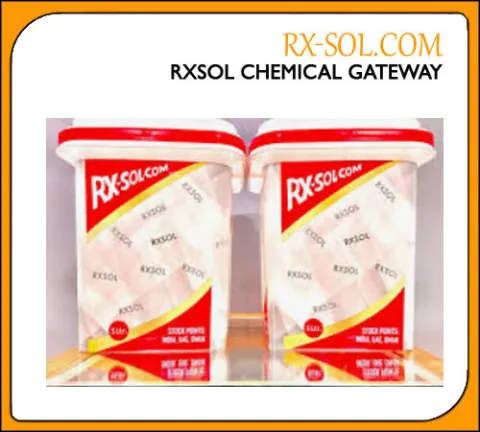
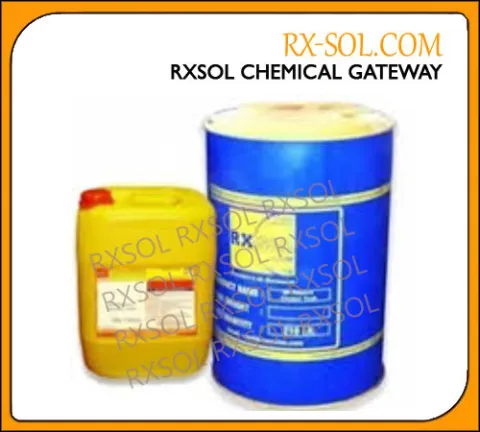
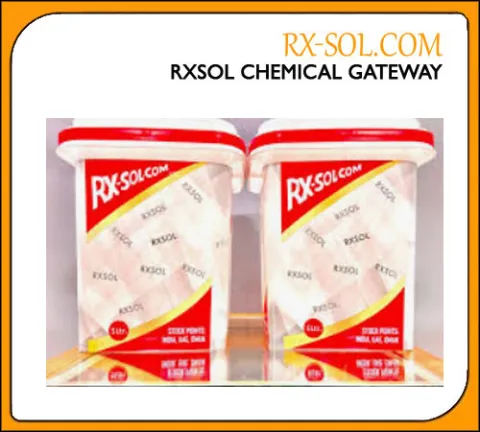
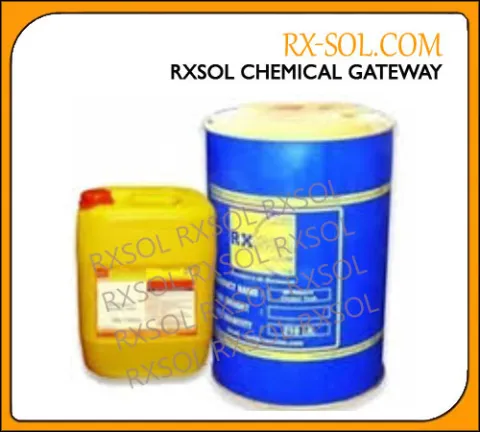
TCU Neutralizer ( Tannin/coffee/urine)
- Part number
- RXSOL-41-8760-025
- Category
- House / HOTEL & CATERING
- Brand
- RXSOL
Overview
Tannin/coffee/urine RXSOL TCU Neutralizer is multi purpose polymer surfactant and acid detergent which is very usefull for spotter and urine neutralizing treatment. As a spotter it is outstanding at removing brown or yellow tannin stains such as from coffee, tea, wine, soft drinks, most beverages, perfume and salt based materials such as many ice melters.
EMAIL TEMPELATE ::: http://www.rxmarine.com/TCU
Technical specifications
RTU pH: 2.8-3.5
Applications
Pre-treatment of urine stains with TCU Neutralizer dissolves urine salts for easy removal and perfectly prepares the affected area for treatment with Bio-Modifier or other urine neutralizers. It also aids in the removal of residual yellow stains from urine.
Dosage and directions
Urine Pre-treatment: Saturate affected area, allow to dwell 5 to 15 minutes, agitate, rinse and extract with clear water. Extraction with a Water Claw is ideal.
Spotter: For best results, allow 2 to 3 minutes absorbing and reactivel time.
Typical Dilution Ratio:
Urine Pre-treatment - 1:4 to 1:16 with water depending upon severity.
Spotter - Ready to use.
Safety and SDS
Read the safety data sheet before handling. Wear suitable gloves and eye protection.
View safety data sheet
| Product Name |
Tannin/Coffee/Urine Remover TCU Neutralizer |
| Product Type | RXSOL-41-8760-025 |
Company Details:
RX MARINE INTERNATIONAL
105, A wing , BSEL , TECH PARK.
VASHI ,NEW BOMBAY 400703 INDIA
| Phone | +91 22 65113333/ 5555 / 9999 / 27611360 / 27815540 |
| Fax | +91 22 27811318 |
| rxsolchemicals@gmail.com |
HAZARDOUS INGREDIENTS: OSHA PEL TLV
Acetic Acid (CAS # 64-19-7) 10 p.p.m. 10 p.p.m.
Citric Acid (CAS # 77-92-9) N/E N/E
Route(s) of entry Eyes? Yes Skin? Yes Inhalation? Yes Ingestion? Yes
Health Hazards: Eyes –May cause irritation.
Skin –May cause irritation.
Inhalation –Avoid breathing mist. May cause irritation.
Ingestion – May cause irritation.
Carcinogenicity: NTP: Known – No; Anticipated – No OSHA: -No IARC: No
Inhalation: Move to fresh air. If breathing is difficult, give oxygen. If not breathing, give artificial respiration. Get medical attention immediately.
Eyes: Immediately flush with water for 15 minutes. Seek medical attention if irritation persists.
Skin: Immediately flush with water for 15 minutes. Seek medical attention if irritation persists.
Ingestion: Call a physician or poison control center immediately. Do NOT induce vomiting. If victim is fully conscious, give a cupful of water. Never give anything by mouth to an unconscious person. If vomiting occurs, keep head lower than the hips to help prevent aspiration.
Flash Point: 159° F (Closed cup)
Extinguishing Media: water spray, dry chemical, carbon dioxide, alcohol foam Special Fire-Fighting Procedures: Wear self-contained breathing apparatus and protective clothing.
Use water spray to keep fire-exposed containers cool.
Hazardous Combustion Products: carbon dioxide, carbon monoxide
Use personal protective equipment. Eliminate all ignition sources. Neutralize with soda ash lime Absorb spill with vermiculite or other inert material, then place in a container for chemical waste.
For Large Spills: Use water spray to disperse vapors and flush spill area. Prevent runoff from entering drains, sewers, or streams. Dike for later disposal.
Personal Precautionary Measures: Do not get in eyes, on skin, on clothing. Avoid breathing mist or vapor. Do not taste or swallow. Use only with adequate ventilation. Wash thoroughly after handling. Storage: Keep container closed.
Country specific exposure limits have not been established or are not applicable unless listed below.
Ventilation: Good general ventilation (typically 10 air changes per hour) should be used. Ventilation rates should be matched to conditions. If applicable, use process enclosures, local exhaust ventilation, or other engineering controls to maintain airborne levels below recommended exposure limits. If exposure limits have not been established, maintain airborne levels to an acceptable level.
Respiratory Protection: If engineering controls do not maintain airborne concentrations below recommended exposure limits (where applicable) or to an acceptable level an approved respirator must be worn.
Eye Protection: Wear safety glasses.
Skin Protection: Wear chemical-resistant gloves.
| Odor: | Apple vinegar |
| Physical State: | Liquid. |
| Appearance: | Clear, Colorless |
| pH: | 2.8 to 3.5 |
| Specific Gravity: | 1.02 g/mL |
| Boiling Point: | N/E |
|
Freezing/Melting Point: |
N/E |
| Vapor Pressure: | N/E |
| Vapor Density: | N/E |
| Solubility in Water: | Complete |
Stability: Stable.
Incompatibility: Material reacts with strong oxidizing agents.
Hazardous Polymerization: Will not occur.
Acute toxicity data, if available, are listed below. Additional toxicity data may be available on request.
Data for acetic acid.
Oral LD-50:(rat) 3,310 - 3,530 mg/kg
Oral LD-50:(mouse) 4,960 mg/kg
Inhalation LC-50: (mouse) 1 h: 5620 ppm
Dermal LD-50: ( rabbit) 1,060 mg/kg
Skin Irritation (rabbit) severe
Eye Irritation (rabbit) severe
Acute toxicity data, if available, are listed below. Additional toxicity data may be available on request.
Acetic acid is a strongly acidic aqueous solution, and this property may cause adverse environmental effects.
Data for a major component:
Oxygen Demand Data:
BOD-5: 340 - 880 mg/g
COD: 1,000 mg/g
Acute Aquatic Effects Data:
96 h LC-50 (fathead minnow): > 100 mg/l
48 h LC-50 (mosquito fish): 251 mg/I
48 h LC-50 (golden orfe): 410 mg/l
96 h LC-50 (daphnid): 100 mg/l
Contain with chemical absorbent material. Do not dispose of on the land, in surface waters, or in storm drains. Small spills and waste may be flushed into a waste treatment sewer where local regulations permit. Larger quantities should be collected for reuse or consigned to a licensed hazardous waste hauler for disposal in accordance with federal, state and local regulations. All disposal must be in accordance with all federal, state and local regulations.
No restrictions for Ground, Air, or Maritime Transportation in accordance with 49 CFR parts
100-185.
All components are listed on TSCA
This product has no established regulatory information. All regulatory information given is based on individual components of the mixture by component number. While this information and recommendations set forth herein are believed to be accurate and reliable, it is provided without warranty regarding its accuracy.
N/A = Not applicable N/D = Not determined N/E = Not established
DISCLAIMER OF LIABILITY :The information in this SDS was obtained from sources which we believe are reliable. However, the information is provided without any warranty, express or implied, regarding its correctness. The conditions or methods of handling, storage, use or disposal of the product are beyond our control and may be beyond our knowledge. For this and other reasons, we do not assume responsibility and expressly disclaim liability for loss, damage or expense arising out of or in any way connected with the handling, storage, use or disposal of the product. This MSDS was prepared and is to be used only for this product. If the product is used as a component in another product, this MSDS information may not be applicable.
Availability
TCU Neutralizer ( Tannin/coffee/urine) manufacturer supplier distributor in Mumbai, Kandla, Kolkata, Vizag, Chennai, India, Fujairah, Dubai, Sharjah, UAE, Gulf, Middle East, Muscat Oman, Kenya Africa. Get the best quality of TCU Neutralizer ( Tannin/coffee/urine) at a competitive price from us. We have ready stock of TCU Neutralizer ( Tannin/coffee/urine) in India, UAE Gulf, Oman, Kenya Africa. Contact us for bulk as well as small orders.