Tellurium Powder
- Part number
- RXSOL-98-9817-025
- Category
- Metal Treatment
- Brand
- RXSOL
Overview
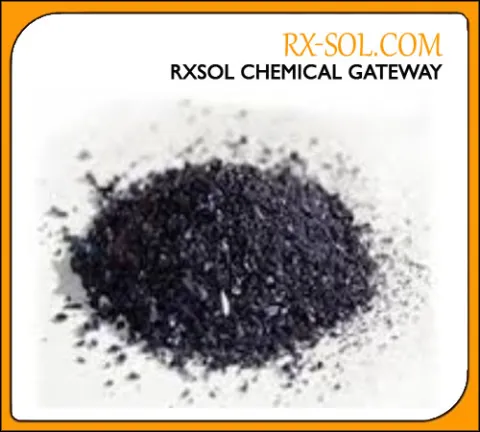
Tellurium powder is a dark gray-to-brown, amorphous, brittle powder, a metalloid element with the symbol Te, used in various applications including solar cells, thermoelectric production, metallurgy, and rubber applications.
Technical specifications
| Appearance | Dark grey powder |
|---|---|
| State | Solid at room temperature (20 °C) |
| Density | 4 g/cm³ |
| Melting Point | 450 °C |
| Boiling Point | 990 °C |
| Brittle | It is a brittle and easily pulverized metalloid |
| Chemical Properties | Tellurium is chemically related to selenium and sulfur, and exhibits oxidation states of -2, +2, +4, and +6, with +4 being the most common |
Applications
- Cadmium Telluride (CdTe) Solar Panels: Tellurium is used in the production of CdTe solar panels.
- Media Layer of Rewritable Optical Discs: It is also used in the media layer of rewritable optical discs.
- Thermoelectric Applications: Tellurium-based thermoelectric materials are used in devices like thermocouples and thermoelectric generators for temperature measurement and waste heat conversion.
- Semiconductor Applications: Tellurium can be used as a precursor to prepare tellurium-based nanomaterials for semiconductor applications.
- Quantum Dot Solutions: Tellurium is used in quantum dot solutions for fluorometric determination of bioactive compounds.
Dosage and directions
Tellurium powder is a dark grey-to-brown, amorphous powder with metallic characteristics, a brittle, mildly toxic, and rare metalloid, used in metallurgy, electronics, and solar power applications.
Characteristics and notes
General Precautions:
- Avoid contact with skin and eyes: Tellurium powder can cause irritation.
- Do not breathe dust: Inhaling tellurium dust can cause irritation and congestion of the respiratory tract.
- Wash thoroughly after handling: Remove any powder from skin and clothing.
- Do not eat, drink, or smoke while handling: Avoid contamination of food or drink.
- Keep away from food, drink, and animal feeding stuffs: Prevent accidental ingestion.
- Keep working clothes separately: Prevent contamination of personal clothing.
- Ensure eyewash stations and safety showers are close to the workstation location
Safety and SDS
Read the safety data sheet before handling. Wear suitable gloves and eye protection.
View safety data sheet
| Product Name | Tellurium Powder |
| Part Number | RXSOL-98-9817-025 |
Company Details:
RX MARINE INTERNATIONAL
105, A wing , BSEL , TECH PARK.
VASHI ,NEW BOMBAY 400703 INDIA
Branch : Kandla, Mumbai , Chennai, Vizag, Kolkata, UAE , OMAN , CANADA and KENYA
| Phone | +91 22 20871200 - 1400 |
| Fax | +91 22 27612100 :::AOH :0091 9821214367 |
| rxsolchemicals@gmail.com | |
| Website | www.rxmraine.com |
| Chemical Name | CAS No | EC number |
Weight |
Formula |
| Tellurium Powder | 13494-80-9 |
236-813-4 |
127.60 g/mol | Te |
| Classification according to Regulation (EC) No 1272/2008 |
Acute toxicity, Inhalation (Category 4), H332 Skin sensitisation (Sub-category 1B), H317 Reproductive toxicity (Category 1B), H360 Chronic aquatic toxicity (Category 3), H412 |
| Signal Word |
Danger. |
| Hazard Statements |
H317 May cause an allergic skin reaction. H332 Harmful if inhaled. H360 May damage fertility or the unborn child. H412 Harmful to aquatic life with long lasting effects. |
| Precautionary statements response |
P201 Obtain special instructions before use. P261 Avoid breathing dust/ fume/ gas/ mist/ vapours/ spray. P280 Wear protective gloves/ protective clothing/ eye protection/ face protection. P308 + P313 IF exposed or concerned: Get medical advice/ attention. |
| Other hazards | This substance/mixture contains no components considered to be either persistent, bioaccumulative and toxic (PBT), or very persistent and very bioaccumulative (vPvB) at levels of 0.1% or higher. |
| General advice | Consult a physician. Show this safety data sheet to the doctor in attendance. Move out of dangerous area. |
| If inhaled | If breathed in, move person into fresh air. If not breathing, give artificial respiration. Consult a physician. |
| Eye Contact | Flush eyes with water as a precaution. |
| Swallowed | Do NOT induce vomiting. Never give anything by mouth to an unconscious person. Rinse mouth with water. Consult a physician |
| Skin Contact | Wash off with soap and plenty of water. Consult a physician. |
| Most important symptoms and effects, both acute and delayed | The most important known symptoms and effects are described in the labelling (see section 2) and/or in section 11 |
| Indication of any immediate medical attention and special treatment needed | No data available |
| Suitable extinguishing media | Use water spray, alcohol-resistant foam, dry chemical or carbon dioxide. |
| Unsuitable extinguishing media | No data available. |
| Special hazards arising from the substance or mixture | No data available. |
| Further information | Use water spray to cool unopened containers |
| Hazardous combustion products | No data available. |
| Advice for firefighters | Wear self-contained breathing apparatus for firefighting if necessary. |
| Specific Hazards Arising from the Chemical | No data available. |
| Personal precautions, protective equipment and emergency procedures | Use personal protective equipment. Avoid dust formation. Avoid breathing vapours, mist or gas. Ensure adequate ventilation. Evacuate personnel to safe areas. Avoid breathing dust. |
| Enviromental Precaution | Prevent further leakage or spillage if safe to do so. Do not let product enter drains. Discharge into the environment must be avoided. |
| Methods and materials for containment and cleaning | Pick up and arrange disposal without creating dust. Sweep up and shovel. Keep in suitable, closed containers for disposal. |
| Reference to other sections | For disposal see section 13. |
| Advice on safe handling | Avoid contact with skin and eyes. Avoid formation of dust and aerosols. Avoid exposure - obtain special instructions before use. Provide appropriate exhaust ventilation at places where dust is formed. |
| Conditions for safe storage, including any incompatibilities | Store in cool place. Keep container tightly closed in a dry and well-ventilated place. Storage class (TRGS 510): Non-combustible, acute toxic Cat.3 / toxic hazardous materials or hazardous materials causing chronic effects |
| Appropriate engineering controls | Handle in accordance with good industrial hygiene and safety practice. Wash hands before breaks and at the end of workday. |
| Eye/face protection | Face shield and safety glasses. Use equipment for eye protection tested and approved under appropriate government standards such as NIOSH (US) or EN 166(EU). |
| Body Protection | Complete suit protecting against chemicals. The type of protective equipment must be selected according to the concentration and amount of the dangerous substance at the specific workplace. |
| Skin protection | Handle with gloves. Gloves must be inspected prior to use. Use proper glove removal technique (without touching glove's outer surface) to avoid skin contact with this product. Dispose of contaminated gloves after use in accordance with applicable laws and good laboratory practices. Wash and dry hands. |
| Respiratory protection | Where risk assessment shows air purifying respirators are appropriate use a full face respirator with multi-purpose combination (US) or type ABEK (EN 14387) respirator cartridges as a backup to engineering controls. If the respirator is the sole means of protection, use a full face supplied air respirator. Use respirators and components tested and approved under appropriate government standards such as NIOSH (US) or CEN (EU). |
| Control of environmental exposure | Prevent further leakage of spillage if safe to do so. Do not let product enter drains. |
| Physical state | Powder |
| Colour | grey |
| Odour | No data available |
| Odor Threshold | Not Applicable |
| pH | No data available |
| Melting Point | 450 °C - lit. |
| Boiling Point | 990 °C - lit |
| Flash Point | No data available |
| Evaporation Rate | Not Applicable |
| Flammability (solid, gas) | No data available |
| Explosive limits | No Data Available |
| Upper/lower flammability or explosive limits | No data available |
| Autoignition temperature | No data available |
| Decomposition temperature | No data available |
| Vapour pressure | No data available |
| Density | 0,845 g/cm3 |
| Vapour Density | No Data Available |
| Freezing point | No data available |
| Specific Gravity | No data available |
| Partition coefficient | No data available |
| Explosive properties | No data available |
| Solubility | 0,0017 g/l at 20 °C - |
| Relative density | 6,24 g/mL at 25 °C |
| Ignition temperature | No information available. |
| Particle characteristics | No data available |
| Viscosity | No data available |
| Reactivity | No data available |
| Stability | Stable under recommended storage conditions. |
| Possibility of hazardous reactions | No data available |
| Conditions to avoid | No data available |
| Incompatible materials | Zinc, cadmium, Sodium/sodium oxides, Potassium, Strong acids, Strong bases, Halogens |
| Hazardous decomposition products | Other decomposition products - No data available. |
| Acute toxicity | No data available |
| Skin corrosion/irritation | No data available |
| Respiratory or skin sensitization | No data available |
| Serious eye damage/eye irritation | No data available |
| Germ cell mutagenicity | No data available |
| Specific target organ toxicity - single exposure | No data available |
| Specific Target Organ Toxicity – Repeated Exposure | No data available |
| Aspiration Hazard | No data available |
| Persistence and degradability | No data available |
| Bioaccumulative potential | No data available |
| Toxicity | No data available |
| Mobility in soil | No data available |
| Results of PBT and vPvB assessment | This substance/mixture contains no components considered to be either persistent, bioaccumulative and toxic (PBT), or very persistent and very bioaccumulative (vPvB) at levels of 0.1% or higher. |
| Other adverse effects | Harmful to aquatic life with long lasting effects. |
| Product | Offer surplus and non-recyclable solutions to a licensed disposal company. Dissolve or mix the material with a combustible solvent and burn in a chemical incinerator equipped with an afterburner and scrubber. |
| Contaminated packaging | Dispose of as unused product. |
| UN number | Not regulated |
| UN proper shipping name |
Not dangerous goods |
| Transport hazard class(es) | Not regulated |
| Packaging group | Not regulated |
| Environmental hazards | No |
| Special precautions for user | No data available |
| Further information | No data available |
| Safety, health and environmental regulations specific for the product in question | This material safety data sheet complies with the requirements of Regulation (EC) No. 1907/2006. |
| Other regulations | No data available |
| Chemical Safety Assessment | For this product a chemical safety assessment was not carried out. |
| Other Information |
The information above is believed to be accurate and represents the best information currently available to us. However, we make no warranty of merchant ability or any other warranty, express or implied, with respect to such information, and we assume no liability resulting from its use. Users should make their own investigations to determine the suitability of the information for their particular purposes. In no event shall be liable for any claims, losses, or damages of any third party or for lost profits or any special, indirect, incidental, consequential or exemplary damages, how so ever arising, even if Rx Marine International has been advised of the possibility of such damages. |