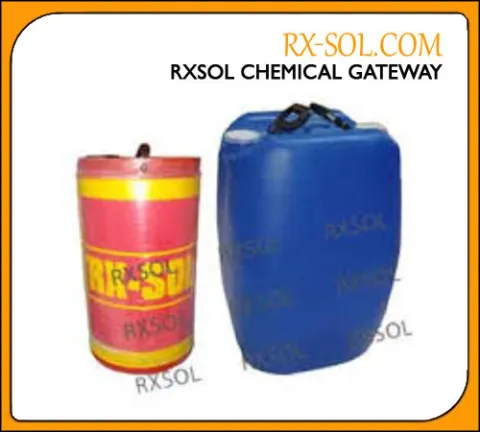
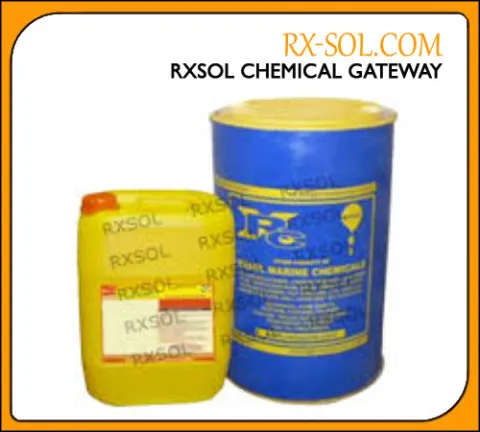
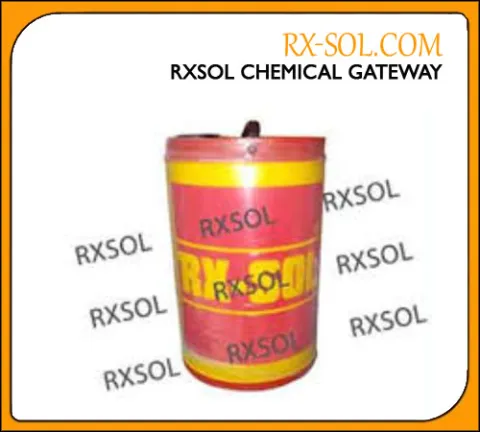
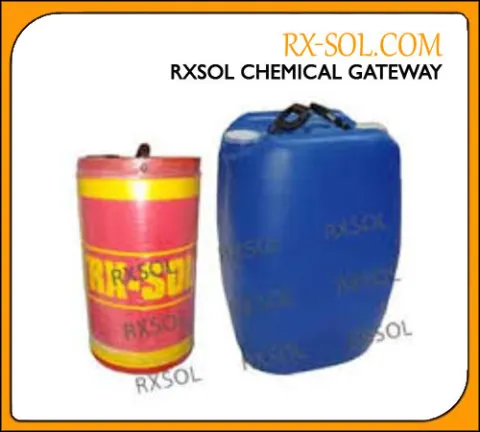
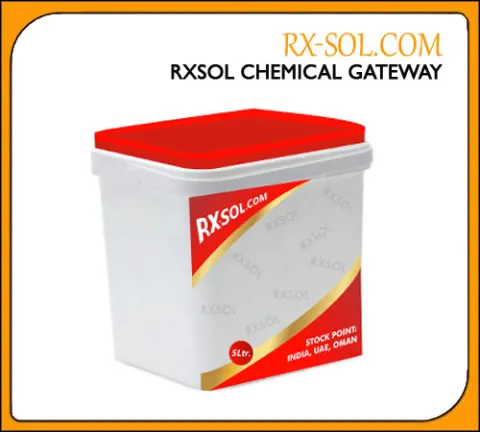
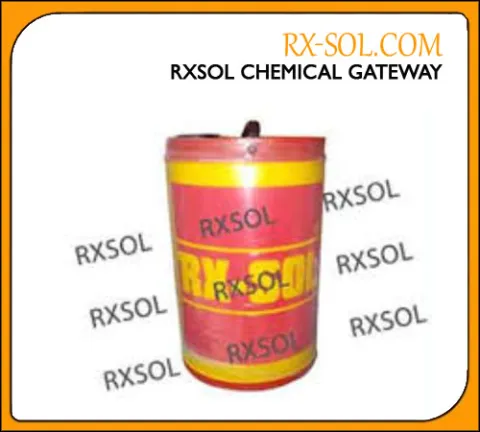
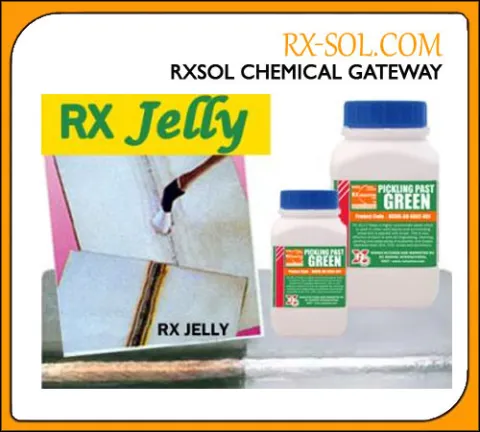
Passivation Liquid RX
- Part number
- RXSOL-20-2401-025
- Category
- Passivation
- Brand
- RXSOL
Overview
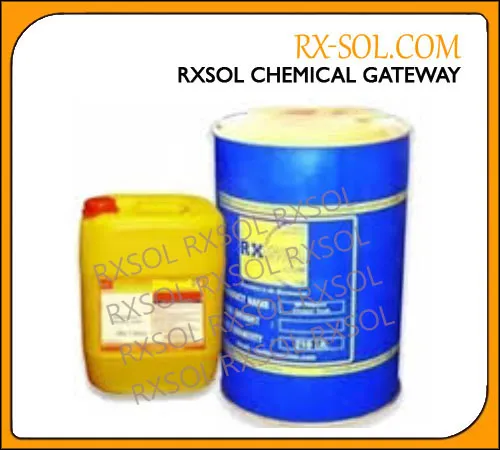
RXSOL PASSIVATION is Highly Conc and acidic product , It does not give Black or Yellow stain marks after washing with water. It simultaneously removes annealing colours, ferritic contamination & weld burns.
Spray is very safe & easy to use for cleaning of large equipments like S.S. vessels, dryers, agitators, dairy machinery, fermentators, internals as well as externals of pipes by pressurised spray bottle or pump. passivation proces improve the corrosion resistance of metal parts / surface.
Concentrated materials are suitable for use only on stainless steel. While diluted is suitable for cleaning aluminum.
Technical specifications
Applications
It is used to clean weld seams and surrounding areas with brush. It is used to remove heavy scales, discolouration, annealing colours, rust particles near weld and welding affected area by heat.
Circulation method : For closed system like PIPE , use concentrated materials atleast for 1-2 Hrs . Then FLUSH the system with TECHNICAL GRADE OF DI-WATER ( which is free from , all SOLUBLE IMPURITIES )
Spray Method : For TANK PASSIVATION , this is very effective method . Directly spray on wall of TANKS atleast for 10-15 Minutes , then wash the system with cupious amout of fresh water , finally use TECH GRADE DI water for complete wash.
Procedure of Passivation
1. Isolate the exchanger and set up a circuit with an external tank with heating coil inside and a pump to circulate cleaning solution.
FLUSHING:-
2. Flush the Exchanger with fresh water to remove loose material (like dirt etc.) till such time clear water comes.
INHIBITED ACID CLEANING:-
3. Circulate inhibited Acid (5-6 % Citric Acid and 1% Rodine 213) along with non ionic wetting agent like RXSOL-T300 through Exchanger Loop for 6 to 8 hours
4. It total iron concentration reaches 5000 - 8000 PPM and concentration below 2% acid percentage then dump the cleaning solution and repeat the cycle with fresh inhibited acid.
5. Samples to be tested for pH, TDS and iron on hourly basis.
6. Normal operating temperature should be 50-60º C.
7. When iron concentration and acid concentration of solution reaches steady state and cleaning in completed. Drain the cleaning solution.
NEUTRALIZING:-
8. Circulate 1-2% solution of soda Ash for one to two for neutralization.
9. Rinse the neutralizing solution with water till pH of Inlet and Outlet is same.
PASSIVATION:-
10. Immediately fill and Circulate with 1-3% of solution of sodium Hexametaphosphate for 4-6 hours keeping operating temperature around 50-60º C. Analyze for Phosphate levels in Inlet and Outlet. (Normally maintain 30-40 PPM O-PO4 level)
11. Drain the passive solution without flushing with water.
DRYING:-
12. Dry the circuit with dry air/N2.
Dosage and directions
For Pickling This is probably the most commonly used method. Use a solution of nitric and hydrofluoric acids in water. We use ASTM A380, solution D. The formula is specified in A380 as 6 - 25% HNO3 and ½ - 8% HF in water at 70 -140 F (21 - 60 C) for about 30 minutes. This is a strong cleaning solution and may etch highly finished surfaces.
Coverage / kg : Approx. 100 meters of weld seam.
Characteristics and notes
It also helps to detect pinholes after welding.
Why Passivation required ?
1. Stainless Steel owes its corrosion resistance to the formation of a chromium oxide surface layer but this happened due to presence of oxygen , And if the oxide has been stripped, perhaps by pickling, then the oxide layer takes a short time to reach its full thickness and this can be accelerated by passivation.
2. The heat tint produced by welding is not only unsightly but the thicker oxide layer includes chromium from the surface of the metal, lowering its corrosion resistance. Pickling both removes the oxide layer causing the colour tints and a thin layer of the underlying metal to restore the original properties.
3. Iron Contamination
A major cause of corrosion in service is iron contamination which can arise from a variety of sources. These include using tools made of mild or constructional steels like fork lifts being a common cause for abrasives that contain iron and any tool that has previously been used on non stainless steel. Cross contamination can also arise from grindings and debris created whilst working close by on steel, either in the workshop or on site. Iron contamination is not always obvious, if it is suspected it can be detected using the ASTM A380, ferroxyl test. This is a rapid test in which a solution turns blue in the presence of iron. Pickling is a very effective method of removing this iron contamination from the surface.
Safety and SDS
Read the safety data sheet before handling. Wear suitable gloves and eye protection.
View safety data sheet
| Product Name | RXSOL-20-2401-025 |
| Product Type | Passivation Liquid |
Company Details:
RX MARINE INTERNATIONAL
105, A wing , BSEL , TECH PARK.
VASHI ,NEW BOMBAY 400703 INDIA
| Phone | +91 22 65113333 / 5555 / 9999 |
| Fax | +91 22 2781 1318 :::AOH :0091 9821214367 |
| mail@rxmarine.com |
| Chemicals /Ingridents | CAS No. | EC No. |
Contents weight-% |
Hazard symbol/ Risk phrase* |
| Nitric acid, HNO3 | 7697-37-2 | 231-714-2 | 20-40 | O, C: R8, R35 |
| HF | 7664-39-3 | 231-634-8 | ---- | R26/27/28, R35 |
| KoH | 1310-58-3 | ----- | ----- | --------------- |
|
Environmental Hazards |
Harmful to aquatic organism |
|
Human Health Hazards |
Burning cause sensitization by the skin contact |
|
Physical & Chemical Hazards |
None none |
|
Ingestion |
If conscious washout mouth and give out one pint of water to drink . Do not induce vomiting without medical attention . |
|
Inhalation |
Remove to fresh air . Obtain medical attention |
|
Eye Contact |
Flush with water for at least 15 minutes. Obtain medical attention |
|
Extinguishing Media:- |
|
|
Suitable |
Non Flamable , Use extinguishing media like foam dry Co2 |
|
Not suitable |
Not applicable |
|
Special |
Not applicable |
|
Protection of fire Fighter |
Not applicable |
| Personal Precaution & Protection | Evacuate, isolate hazard area and deny entry.Avoid contact with: skin, eyes and clothing. Take off immediately all contaminated clothing. Note that contaminated clothing may be a fire hazard. Contaminated clothing should be soaked with water before being removed. It must be laundered |
|
Environmental Protection |
Prevent from entering into drains, ditches or rivers. Use appropriate containment to avoid environmental contamination. |
Handling : Respiratory & Eye System Protection Do not breath . Avoid contact with skin and eyes . In case of contact with skin , wash immediately with plenty of fresh water.
Storage : Store in tightly closed containers in dry, ventilated and locked hazardous chemical store with leak containment. Protect against physical damage and keep away from heat, source of ignition and incompatibles.
Engineering Control : Provide mechanical ventilation for confined spaces.
Eye Protection : Wear chemical safety goggles and face shield. Have eye-wash station available where eye contact can occur.
Skin Protection : Wear glove impervious to conditions of use. Additional protection may be necessary to prevent skin contact including use of apron, face shield, boots or overall.
Respiratory Protection : Full face shield operated at positive pressure. Self-contained breathing apparatus may be required in confined spaces or non routine or emergency situations. .
| Appearance | Liquid @ 25’C, clear, colourless |
| Odour | Pungent acidic |
| Boiling point 0C | 105 |
| Melting point 0C | -20 |
| pH | 1 @ 1% solution |
| Specific Gravity | 1.2 g/ml |
| Flash point (closed cup) 0C | Not Applicable |
| Vapor Pressure | None |
| Vapor Density | None |
| Solubility in with water | Fully Soluble. |
| Flammability (solid, gas) | Not Applicable |
| Upper/Lower Flammability/Explosive Limits |
Not Applicable |
| Autoignition temperature | Not Applicable |
| Decomposition Temperature | Not Applicable |
Chemical Stability : Stable
Possibility of hazardous reaction : Reacts with most metals producing hydrogen
gas and nitrogen oxides
Condition to avoid : Intense heat.
Incompatible materials : Strong bases. Strong reducing agents. Most common metals. Organic material. Alcohols. Carbides
Hazardous decomposition material :Formationof hazardous combustion gases or vapours possible
Signs and symptoms of overexposure : Eye irritation, headache, nausea, vomiting.
Acute Effects :
Eye contact : May cause cornea damage and permanent eye damage
Skin contact :Blistering and burn. Progressive ulceration will occur if treatment is not immediate.
Inhalation : Acute Toxicity
LD/LC50 values relevant for classification:
Oral LD50 1276 mg/kg (rat) - 1 hour- for Hydrofluoric acid
67 mg/kg (rat) – 4 hours -for Nitric acid
Sensitization : No sensitizing effects known.
| Excoticity | Harmful effect on aquatic organisms due to pH shift |
| Persistence anddegradability | No data available |
| Bio-accumulative potential | No data available |
| Mobility | Soluble in water. Readily absorbed into soil |
| Other adverse effects | No data available |
Neutralize the product with lime soda or ash before dispose. Upon neutralization of remaining acid rests and rinsing water can heavy metals precipitate and these constitute hazardous waste.
Additional information:
Effluent must be separated and disposed of as acidic waste. The product has in the undiluted form toxic effects on soil and water. The remaining acid rests and rinsing water can lower the pH value of wastewater and therefore should not be released until it has undergone a neutralization process.
UN Number
2922
UN PROPPER SHIPPING NAME
CORROSIVE LIQUID, TOXIC, N.O.S. (hydrofluoric acid, nitric acid)
TRANSPORT HAZARD CLASS(ES)
Classification Code:
CT1
PACKING GROUP
II
ENVIRONMENTAL HAZARDS
IMDG (Sea):
Class 8 (6.1) EmS F-A, S-B
Marine Pollutant: No
ADR/RID (road, rail):
Class 8 (6.1)
Tunnel restriction code: (E)
IATA/DGR (air):
Class 8 (6.1)
ADDITIONAL INFORMATION
The product is to be transported according to dangerous goods regulations.
Regulations:Hazard Symbols : Corrosive and Toxic
Risk Phrase
35 causes severe burns
Safety Phrase
23 Do not breathe in vapour.
26 In case of contact with eyes, rinse immediately with plenty of water and seek medical advise.
36/37/39 Wear suitable protective clothing and gloves and eye & face shield.
45 In case of accident or if you feel unwell, seek medical advice
Note
The regulatory information given above only indicates the principal regulations specifically applicable to the product described in the safety data sheet. The user's attention is drawn to the possible existence of additional provisions which complete these regulations. Refer to all applicable national, international and local regulations or provisions.
The information above is believed to be accurate and represents the best information currently available to us. However, we make no warranty of merchantability or any other warranty, express or implied, with respect to such information, and we assume no liability resulting from its use. Users should make their own investigations to determine the suitability of the information for their particular purposes. In no event shall Rx Marine International be liable for any claims, losses, or damages of any third party or for lost profits or any special, indirect, incidental, consequential or exemplary damages, howsoever arising, even if Rx Marine International has been advised of the possibility of such damages.
DISCLAIMER OF LIABILITY :The information in this SDS was obtained from sources which we believe are reliable. However, the information is provided without any warranty, express or implied, regarding its correctness. The conditions or methods of handling, storage, use or disposal of the product are beyond our control and may be beyond our knowledge. For this and other reasons, we do not assume responsibility and expressly disclaim liability for loss, damage or expense arising out of or in any way connected with the handling, storage, use or disposal of the product. This MSDS was prepared and is to be used only for this product. If the product is used as a component in another product, this MSDS information may not be applicable
Availability
Passivation Liquid RX manufacturer supplier distributor in Mumbai, Kandla, Kolkata, Vizag, Chennai, India, Fujairah, Dubai UAE, Muscat Oman, Kenya Africa. Get the best quality of Passivation Liquid RX at a competitive price from us. We have ready stock of Passivation Liquid RX in India, UAE Gulf, Oman, Kenya Africa. Contact us for bulk as well as small orders.