Buffer Cleaner
Oman Chemical is leading one Largest Supplier, Manufacture a


Product Code: RXSOL-19-1305-025
Oxygen Control
Chemical Oxygen Scavengers. The oxygen scavengers most commonly used in boiler systems are sodium sulfite, sodium bisulfite, hydrazine, catalyzed versions of the sulfites and hydrazine, and organic oxygen scavengers, such as hydroquinone and ascorbate.
It is of critical importance to select and properly use the best chemical oxygen scavenger for a given system. Major factors that determine the best oxygen scavenger for a particular application include reaction speed, residence time in the system, operating temperature and pressure, and feedwater pH. Interferences with the scavenger/oxygen reaction, decomposition products, and reactions with metals in the system are also important factors. Other contributing factors include the use of feedwater for attemperation, the presence of economizers in the system, and the end use of the steam. Chemical oxygen scavengers should be fed to allow ample time for the scavenger/oxygen reaction to occur. The deaerator storage system and the feedwater storage tank are commonly used feed points.
In boilers operating below 1,000 psig, sodium sulfite and a concentrated liquid solution of catalyzed sodium bisulfite are the most commonly used materials for chemical deaeration due to low cost and ease of handling and testing. The oxygen scavenging property of sodium sulfite is illustrated by the following reaction:
| 2Na2SO3 | + | O2 | ® | 2Na2SO4 |
| sodium sulfite | oxygen | sodium sulfate |
Theoretically, 7.88 ppm of chemically pure sodium sulfite is required to remove 1.0 ppm of dissolved oxygen. However, due to the use of technical grades of sodium sulfite, combined with handling and blowdown losses during normal plant operation, approximately 10 lb of sodium sulfite per pound of oxygen is usually required. The concentration of excess sulfite maintained in the feedwater or boiler water also affects the sulfite requirement.
Sodium sulfite must be fed continuously for maximum oxygen removal. Usually, the most suitable point of application is the drop leg between the deaerator and the storage compartment. Where hot process softeners are followed by hot zeolite units, an additional feed is recommended at the filter effluent of the hot process units (prior to the zeolite softeners) to protect the ion exchange resin and softener shells.
As with any oxygen scavenging reaction, many factors affect the speed of the sulfite-oxygen reaction. These factors include temperature, pH, initial concentration of oxygen scavenger, initial concentration of dissolved oxygen, and catalytic or inhibiting effects. The most important factor is temperature. As temperature increases, reaction time decreases; in general, every 18°F increase in temperature doubles reaction speed. At temperatures of 212°F and above, the reaction is rapid. Overfeed of sodium sulfite also increases reaction rate. The reaction proceeds most rapidly at pH values in the range of 8.5-10.0.
The following operational conditions necessitate the use of catalyzed sodium sulfite:
High feedwater sulfite residuals and pH values above 8.5 should be maintained in the feedwater to help protect the economizer from oxygen attack.
Some natural waters contain materials that can inhibit the oxygen/sulfite reaction. For example, trace organic materials in a surface supply used for makeup water can reduce speed of scavenger/oxygen reaction time. The same problem can occur where contaminated condensate is used as a portion of the boiler feedwater. The organic materials complex metals (natural or formulated catalysts) and prevent them from increasing the rate of reaction.
Sodium sulfite must be fed where it will not contaminate feedwater to be used for attemporation or desuperheating. This prevents the addition of solids to the steam.
At operating pressures of 1,000 psig and higher, hydrazine or organic oxygen scavengers are normally used in place of sulfite. In these applications, the increased dissolved solids contributed by sodium sulfate (the product of the sodium sulfite-oxygen reaction) can become a significant problem. Also, sulfite decomposes in high-pressure boilers to form sulfur dioxide (SO2) and hydrogen sulfide (H2S). Both of these gases can cause corrosion in the return condensate system and have been reported to contribute to stress corrosion cracking in turbines. Hydrazine has been used for years as an oxygen scave
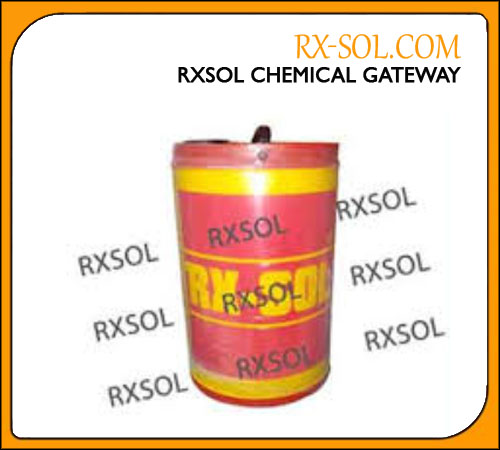
Product Code: RXSOL-50-5004-020
Function Mechanism: -
| Alkalinity Control | This components of RXSOL-50-5004-020 chemically precipitate the hardness of salts like Calcium & Magnesium & neutralizes the acidic conditions. |
| Hardness Control | RXSOL-50-5004-020 provides phosphate reserve to effectively react with and precipitate the hardness salts introduces with the feed water. |
| Sludge Conditioner | RXSOL-50-5004-020 component will preventing the sludge from adhering to metals surfaces. Boiler sludge can only be removed by blow down. |
| Oxygen Scavangers | Catalyzed of RXSOL-50-5004-020 controls the formation of oxygen to protects boiler & steam line corrosion protection. As an additional benefits it will assist to neutralize dissolved carbon dioxide. In this way RXSOL-50-5004-020 preventing oxygen “Pitting” corrosion. |
RXSOL-50-5004-020 is dependent on boiler operating condition, Feed 200 gm to 1 Kg of RXSOL-50-5004-020 solution for per thousand Ltr of boilers water Then control the system by Periodic Alkalinity test procedure. FREE LOGSHEET is available for our registered member. ( Maintaining of Logsheet allow to observing and evaluating the test results trend in order to use the exact amount needed for the stabilization of the system
If p-Alkalinity is below 200 ppm increase the ratio of RXSOL-50-5004-020 solution. If p-Alkalinity is above 400 ppm reduce the concentration of RXSOL-50-5004-020 solution by dilution with water.
RXSOL ALKALINITY, PHOSPHTE and SULFITE TEST KITS are available on request.
USES PROCEDURE : Always dissolve powder before feeding in BOILER WATER TANK.
Control Procedure:-
Control is by simple boiler water tests or RX CLEANSERS can provide a suitable test kits for this purpose

Product Code: RXSOL-51-6002-025
| Form | Liquid |
| Colour | Clear |
| Density | 1.24 kg/lit |
| pH | 8.5 - 10.0 |
| Freezing Point | <1C |

Product Code: RXSOL-50-5010-020
PHYSICAL PROPERTIES BOILER SLUDGE CONDITIONER is a white high molecular weight solution. It is hydrophilic and of low causticity.
Appearance / Color : CLEAR liquid
pH : 8 Odor : Odorless

Product Code: RXSOL-50-5008-020

Product Code: RXSOL-40-4009-020
| Appearance | Colourless to brown hazy |
| Odor | Odorless |
| Flammability | Non Flammable |
| pH | 11 |
| Density | 1.1 |
| Solubility | Completely soluble |
| Nature | Oxidising |

Product Code: RXSOL-50-5007-025
Products Properties:-
Non-Flammable
Safe Plant Handling
Low Odor
Provides corrosion protection in the liquid and the vapor phase
When used in hydrostatic testing the product provides protection in liquids below, above and at the liquid levels
Protection of recessed and hard to reach areas. Complicated valves and the interior surfaces of piping and equipment, which are often difficult or impossible to reach, are protected with true Vapor Corrosion Inhibitor action Easy to Useits POWDER can be applied by either blowing with conventional air blasting equipment or other methods using compressed air . Can be applied by sprinkling , rinsing or dipping metals in a solution of RXSOL-50-5007-025 , hydrotest solution, metalworking fluids, coatings, adhesives and water treatment formulations.
RXSOL-50-5007-025 is a powerful oxygen scavenger in liquid sulphite form suitable for low and medium pressure boilers. The reaction of RXSOL-50-5007-025 with oxygen is catalysed ensuring the rapid absorption of oxygen to protect feedlines and boilers from corrosion
Product Code: RXSOL-70-7005-025

Product Code: RXSOL-50-5005-025
We carry a complete line of condensate treatment chemicals. Condensate treatment chemicals are used to increase the condensate pH, thus reducing corrosion to the entire boiler steam system. The most common product is a tri-blend amine of cyclohexylamine, morpholine, and diethylaminoethanol (DEAE) neutralizing amines, although we do have standard RXSOL products or we can custom blend to your needs.
RXSOL-50-5005-DCM1 10% DEAE, 10% Cyclo, 10% Morpholine
RXSOL-50-5005-DCM2 20% DEAE, 20% Cyclo, 20% Morpholine
RXSOL-50-5005-C 20% Cyclohexylamine
RXSOL-50-5005-D 20% DEAE
RXSOL-50-5005-M 20% Morpholine
RXSOL-50-5005-C5 50% Cyclohexylamine
RXSOL-50-5005-D 50% DEAE
RXSOL-50-5005-M5 50% Morpholine
RXSOL-50-5005-025 alkaline and the vapors are irritating to eyes and lungs. Avoid contact with eyes and skin. Do not take internally. Observe safety regulations wear Goggles, PVC gloves and Apron when handling Provide ample ventilation Avoid contact with skin in case of contacts wash with cupious amount of water immediately. If eyes are splashed give immediate and prolonged irrigation with clean running water and obtain medical attention.
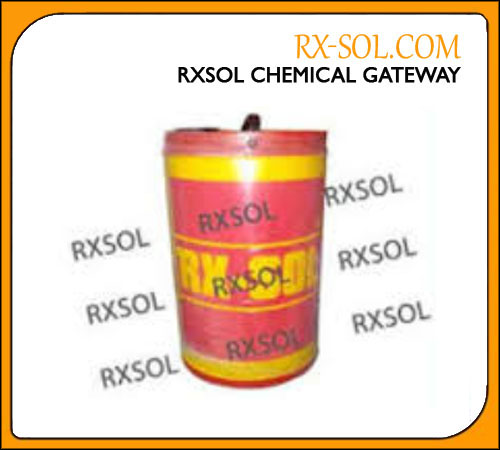
Product Code: RXSOL-60-1201-500
Toluene is toxic if swallowed or inhaled. It is also harmful in contact with the skin. Toluene is very flammable, so presents a significant fire risk. There is some evidence that repeated exposure to toluene may cause reproductive harm.Toluene should be stored in a "non-chlorinated waste" container for subsequent disposal.Safety glasses. If gloves are required, polyvinyl alcohol is recommended.
Standard Packing :
4x1 gallon Fluorinated Poly,
4x4 liter Amber Glass,
5 gallon Metal w/Rieke Spout,
55 gallon New Metal Drum
Wear safety glasses. The working area must be well ventilated to prevent the build-up of toluene vapour. Make sure that any sources of ignition, such as Bunsen burners, hot plates and hot air guns, are removed before you start work.
Eye contact: Immediately flush the eye with plenty of water. Continue for at least ten minutes and call for medical help. Skin contact: Wash off with soap and water. Remove any contaminated clothing. If the skin reddens or appears damaged, call for medical aid. Note that clothes soaked in toluene will be very flammable, so should be removed in an area in which there is no risk that they might catch fire. If swallowed: Call for immediate medical help.
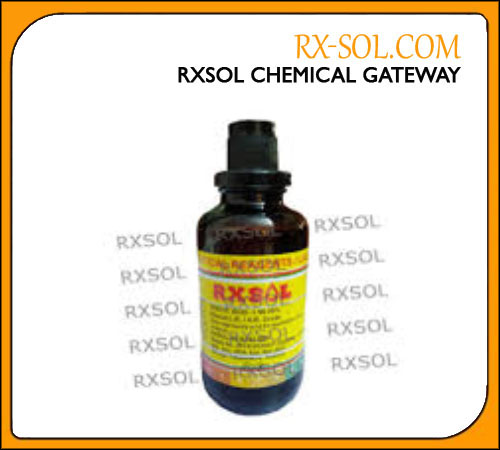
We are marine chemical supplier since 1996.These Marine Chemicals include different sets of products such as Tank Cleaners, Maintenance Chemicals, Cooling Water Treatment Chemicals, Boiler Water Treatment Chemicals, Fuel Additives, etc.

Oman Chemical is leading one Largest Supplier, Manufacture a

Oman Chemical is leading one Largest Supplier, Manufacture a
