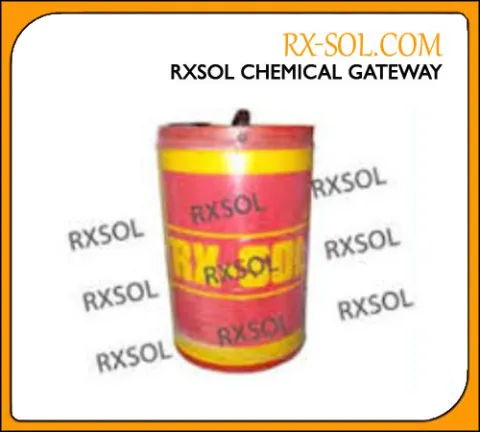
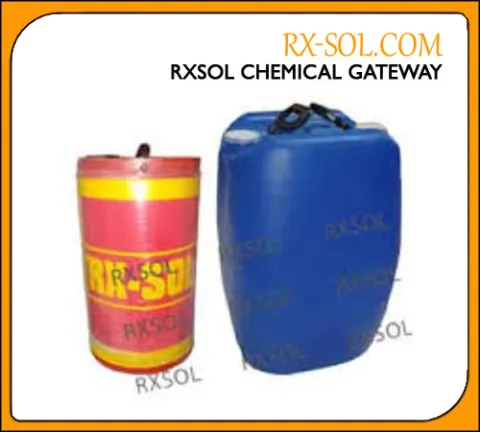
BORIC ACID GRANULAR
- Part number
- RXSOL-60-6604-085
- Category
- Agriculture
- Brand
- RXSOL
Overview
Applications
Dosage and directions
BORIC ACID is used as an anti-fungal ointment or powder and removes any foul odor of the feet Boric acid isn't harmful or lethal, or poisonous in small doses.
Characteristics and notes
It looks like fine table salt in the granular form or like baby powder in the powdered. It is important to note that the health effects of boric acid.
Safety and SDS
Read the safety data sheet before handling. Wear suitable gloves and eye protection.
View safety data sheet
| Product Name | : BORIC ACID POWDER |
| Part Number | : RXSOL-60-6604-086 |
Company Details:
RX MARINE INTERNATIONAL
105, A wing , BSEL , TECH PARK.
VASHI ,NEW BOMBAY 400703 INDIA
| Phone | +91 22 20871200-1400 |
| Fax | +91 22 20871500 :::AOH :0091 9821214367 |
| rxsolchemicals@gmail.com | |
| Website | www.rxmarine.com |
| Name of Substance | Cas Number | EINECS No | Wt.% | Symbol |
| Boric Acid | 10043-35-3 | 233-139-2 | -- | -- |
| Signal Word | Danger |
| Hazard Statements |
May damage fertility. May damage the unborn child. |
| Precautionary statements | P201 Obtain special instructions before use. P280 Wear protective gloves/ protective clothing/ eye protection/ face protection. P308 + P313 IF exposed or concerned: Get medical advice/ attention. |
| Other hazards | This substance/mixture contains no components considered to be either persistent, bioaccumulative and toxic (PBT), or very persistent and very bioaccumulative (vPvB) at levels of 0.1% or higher |
| General advice | Consult a physician. Show this safety data sheet to the doctor in attendance |
| Eye Contact | Flush eyes with water as a precaution |
| Skin Contact | Wash off with soap and plenty of water. Consult a physician. |
| Inhalation: | If breathed in, move person into fresh air. If not breathing, give artificial respiration. Consult a physician.. |
| Notes to Physicians | Never give anything by mouth to an unconscious person. Rinse mouth with water. Consult a physician. |
| Suitable extinguishing media | Use water spray, alcohol-resistant foam, dry chemical or carbon dioxide. |
| Extinguishing media which must not be used for safety reasons: | No data available |
| Special exposure hazards arising from the substance itself, combustion products, resulting gases: | Borane/boron oxides |
| Special protective equipment for fire-fighters: | Wear self-contained breathing apparatus for firefighting if necessary. |
| Additional information: | No data available |
| Personal precautions, protective equipment and emergency procedures |
Use personal protective equipment. Avoid dust formation. Avoid breathing vapours, mist or gas. Ensure adequate ventilation. Evacuate personnel to safe areas. Avoid breathing dust. |
| Enviromental Precaution | Prevent further leakage or spillage if safe to do so. Do not let product enter drains |
|
Methods and materials for containment and cleaning up |
Pick up and arrange disposal without creating dust. Sweep up and shovel. Keep in suitable, closed containers for disposal |
| Advice on safe handling | Avoid formation of dust and aerosols.Avoid exposure - obtain special instructions before use. Provide appropriate exhaust ventilation at places where dust is formed. |
| Storage | Store in cool place. Keep container tightly closed in a dry and well-ventilated place. Storage class (TRGS 510): Non-combustible, toxic hazardous materials or hazardous materials causing chronic effects. |
| Advice on general occupational hygiene | No data available. |
| Engineering Control | Handle in accordance with good industrial hygiene and safety practice. Wash hands before breaks and at the end of workday. |
| Personal Protection | Eye/face protection Safety glasses with side-shields conforming to EN166 Use equipment for eye protection tested and approved under appropriate government standards such as NIOSH (US) or EN 166(EU). Skin protection Handle with gloves. Gloves must be inspected prior to use. Use proper glove removal technique (without touching glove's outer surface) to avoid skin contact with this product. Dispose of contaminated gloves after use in accordance with applicable laws and good laboratory practices. Wash and dry hands. Body Protection Impervious clothing, The type of protective equipment must be selected according to the concentration and amount of the dangerous substance at the specific workplace. Respiratory protection Where risk assessment shows air-purifying respirators are appropriate use (EN 143) respirator cartridges as a backup to engineering controls. If th full-face supplied air respirator. Use respirators and components tested and approved under appropriate government standards such as NIOSH (US) or CEN (EU). |
| Control of environmental exposure | Prevent further leakage or spillage if safe to do so. Do not let product enter drains. |
Gloves Suit
| Form | solid |
| Odour | No data available |
| Boiling point and boiling range | 300 °C |
| Flash Point | No data available |
| Freezing Point | Melting point/range: 160 °C - dec |
| pH | 5.1 at 1.8 g/l at 25 °C |
| Evaporation rate | No data available |
| Flammability (solid, gas) | No data available |
| Upper explosion limit | No data available |
| Lower explosion limit | No data available |
| Explosive properties | No data available |
| Vapor pressure | 2.6 mmHg at 20 °C |
| Relative vapor density | No data available |
| Relative density | 1.440 g/cm3 |
| Water solubility | Soluble |
| Partition coefficient: octanol | No data available |
| Autoignition temperature | No data available |
| Thermal decomposition | No data available |
| Viscosity, kinematic | No data available |
| Explosive properties | No data available |
| Oxidizing properties | No data available |
| Recativity | None |
| Stability | Stable under recommended storage conditions |
| Possibility of hazardous reactions | No data available |
| Incompatible materials | Potassium, Acid anhydrides |
| Hazardous Decomposition | Hazardous decomposition products formed under fire conditions. - Borane/boron oxides |
| Condition to Avoid | Exposure to moisture |
| Route of Exposure | Inhalation, Eye contact, Skin contact |
| Eyes |
Serious eye damage/eye irritation. |
| Skin | Skin corrosion/irritation. |
| Ingestion | Causes digestive tract burns |
| Chronic Exposure | No data available |
| Acute oral toxicity | LD50 Oral - Rat - 2,660 mg/kg(Boric acid) |
| Acute inhalation toxicity | No data available |
| Acute dermal toxicity | No data available |
| Additional information | Toxicity reported for borates in humans: ingestion or absorption may cause anderythematous lesions on the skin and mucous membranes. Other symptoms delirium, convulsions, and coma. Death has been reported to occur in infa grams.(Boric acid). |
| Environmental Effects | No data available |
| Toxicity to fish | LC50 - Ptychocheilus lucius - 279 mg/l - 96 h(Boric acid) LC0 - Lepomis macrochirus (Bluegill) - > 1,021 mg/l - 96 h(Boric |
| Toxicity to daphnia and others | LC50 - Daphnia magna (Water flea) - 53.2 mg/l - 21 d(Boric acid) EC50 - Daphnia magna (Water flea) - 133 mg/l - 48 h(Boric acid) |
| Toxicity to algae | No data available |
| Biodegradability | No data available |
| Persistence and degradability | No data available |
| Bioaccumulative potential | No data available |
| Mobility in soil | No data available |
| Additional information | This substance/mixture contains no components considered to be either persistent, bioaccumulative and toxic (PBT), or very persistent and very bioaccumulative (vPvB) at levels of 0.1% or higher. |
| Remarks | Dispose of as unused product |
| Waste Disposal | Dissolve or mix the material with a combustible solvent and burn in a chem scrubber. Offer surplus and non-recyclable solutions to a licensed disposal company. |
Hazard Pictograms:
| UN Number | -- |
| Proper shipping name | -- |
| Transport hazard class(es) 8 | |
| ADR/RID | -- |
| Subsidiary risk IMDG | -- |
| Subsidiary risk IATA | -- |
| Packing group | |
| Packing group | -- |
| Environmental hazards | |
| Environmental hazards | No |
| Marine pollutant | No |
| ADR/RID | |
| Hazard ID | -- |
| Tunnel Category | -- |
| IMDG | |
| EmS Code | -- |
| IATA | |
| Packing Instruction (Cargo) | -- |
| Maximum quantity | -- |
| Packing Instruction (Passenger) | -- |
| Maximum quantity | -- |
| Regulations | This safety datasheet complies with the requirements of Regulation (EC) No. 1907/2006.. |
| Chemical safety assessment | For this product a chemical safety assessment was not carried out. |
| Further information | No data available. |
| Other Information |
The information above is believed to be accurate and represents the best information currently available to us. However, we make no warranty of merchantability or any other warranty, express or implied, with respect to such information, and we assume no liability resulting from its use. Users should make their own investigations to determine the suitability of the information for their particular purposes. In no event shall be liable for any claims, losses, or damages of any third party or for lost profits or any special, indirect, incidental, consequential or exemplary damages, howsoever arising, even if Rx Marine International has been advised of the possibility of such damages. DISCLAIMER OF LIABILITY :The information in this SDS was obtained from sources which we believe are reliable. However, the information is provided without any warranty, express or implied, regarding its correctness. The conditions or methods of handling, storage, use or disposal of the product are beyond our control and may be beyond our knowledge. For this and other reasons, we do not assume responsibility and expressly disclaim liability for loss, damage or expense arising out of or in any way connected with the handling, storage, use or disposal of the product. This MSDS was prepared and is to be used only for this product. If the product is used as a component in another product, this MSDS information may not be applicable. |