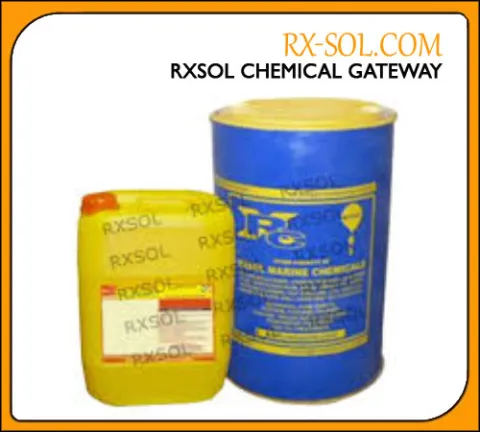
Sodium Nitrite
- Part number
- RXSOL-19-1525-025
- Category
- Cooling Water Chemical
- Brand
- RXSOL
Overview
Sodium Nitrite is used in various industries. In the Pharmaceutical Industry, it is used as an intermediate in the production of saccharine. In the textile industry as a bleaching agent and in the Rubber Industry as a rubber foam blowing agent.
Applications
|
Safety and SDS
Read the safety data sheet before handling. Wear suitable gloves and eye protection.
View safety data sheet
| Product Name |
Sodium Nitrite |
| Part Number |
RXSOL-19-1525-025 |
Company Details:
RX MARINE INTERNATIONAL
105, A wing , BSEL , TECH PARK.
VASHI ,NEW BOMBAY 400703 INDIA
| Phone | +91 22 2815540 / 41 / 42 |
| Fax | +91 22 2781 1318 :::AOH :0091 9821214367 |
| rxsolchemicals@gmail.com | |
| Website | www.rxmarine.com |
| Name of Substance | Cas Number | EC Number | Molecular Formula | Molar Mass |
| Sodium Nitrite | 7632-00-0 | 231-555-9 | NaNO₂ | 69.00 g/mol |
| Signal Word | Danger |
| Hazard Statements |
H272 May intensify fire; oxidizer. H301 Toxic if swallowed. H319 Causes serious eye irritation. H400 Very toxic to aquatic life. |
| Precautionary statements | Prevention P273 Avoid release to the environment. Response P305 + P351 + P338 IF IN EYES: Rinse cautiously with water for several minutes. Remove contact lenses, if present and easy to do. Continue rinsing. P308 + P310 IF exposed or concerned: immediately call a POISON CENTER or doctor/ physician |
| Labelling (67/548/EEC or 1999/45/EC) |
Symbol(s) |
| Eye Contact | Rinse immediately with plenty of water, also under the eyelids, for at least 15 minutes. Obtain medical attention. |
| Skin Contact |
After contact with skin, wash immediately with plenty of water. Gently and thoroughly Wash off immediately with plenty of water for at least 15 minutes. Get medical attention immediately if symptoms occur. |
| Inhalation: | Move to fresh air. If breathing is difficult, give oxygen. Do not use mouth-to-mouth method if victim ingested or inhaled the substance; give artificial respiration with the aid of a pocket mask equipped with a one-way valve or other proper respiratory medical device. Immediate medical attention is required. |
| Ingestion: | Do not induce vomiting. Call a physician or Poison Control Center immediately |
| Flammability | Non-flammable. |
| Flash Point | Not applicable. |
| Suitable extinguishing media | No Information Available. |
| Autoignition Temperature | 510 °C / 950 °F |
| Specific Hazards Arising from the Chemical | Oxidizer: Contact with combustible/organic material may cause fire. May ignite combustibles (wood paper, oil, clothing, etc.). Do not allow run-off from firefighting to enter drains or watercourses. |
|
Hazardous combustion products |
Nitrogen oxides (NOx) Sodium oxides |
| Protective Equipment | Use personal protective equipment. |
| Advice for firefighters | Wear self-contained breathing apparatus for fire fighting if necessary |
| Small Spillage | Use appropriate tools to put the spilt solid in a convenient waste disposal container. |
| Personal Protection | Use personal protective equipment. Ensure adequate ventilation. Avoid dust formation. Keep people away from and upwind of spill/leak |
| Environmental Precaution | Do not flush into surface water or sanitary sewer system. Do not allow the material to contaminate groundwater system. Prevent product from entering drains. Local authorities should be advised if significant spillages cannot be contained |
|
Methods and materials for containment and cleaning |
Keep combustibles (wood, paper, oil, etc) away from spilled material. Sweep up or vacuum up spillage and collect in a suitable container for disposal. Avoid dust formation. Keep in suitable, closed containers for disposal. |
| Handling | Wear personal protective equipment. Ensure adequate ventilation. Avoid dust formation. Do not breathe dust. Do not get in eyes, on skin, or on clothing. Do not ingest. Keep away from clothing and other combustible materials. |
| Storage | Keep containers tightly closed in a dry, cool and well-ventilated place. Do not store near combustible materials. Store under an inert atmosphere. |
| Advice on general occupational hygiene | Change contaminated clothing. Preventive skin protection recommended. Wash hands after working with substance. |
| Engineering Control | Use process enclosures, local exhaust ventilation, or other engineering controls to keep airborne levels below recommended exposure limits. If user operations generate dust, fume or mist, use ventilation to keep exposure to airborne contaminants below the exposure limit. |
| Personal Protection |
Eye/face protection : Wear appropriate protective eyeglasses or chemical safety goggles as described by OSHA's eye and face protection regulations in 29 CFR 1910.133 or European Standard Skin protection : Wear appropriate protective gloves and clothing to prevent skin exposure Respiratory Protection : Follow the OSHA respirator regulations found in 29 CFR 1910.134 or European Standard EN 149. Use a NIOSH/MSHA or European Standard EN 149 approved respirator if exposure limits are exceeded or if irritation or other symptoms are experienced. |
| Exposure Limits: | Not available. |
| Other Protection Measure |
Splash goggles. Full suit. Dust respirator. Boots. Gloves. A self-contained breathing apparatus should be used to avoid inhalation of the product. |
Gloves Suit
| Form | Powder Solid |
| Colour | White to yellow |
| Odour | Odourless |
| Odour Threshold | Not Applicable |
| pH | 8- 9 Aqueous solution at 20 °C |
| Boiling Point | 320 °C / 608 °F |
| Flash Point | No information available |
| Melting Point | 271 °C / 519.8 °F |
| Density | 2.1 g/cm3 at 20 °C |
| Evaporation rate | No Data Available |
| Flammability (solid, gas) | No Data Available |
| Explosive limits | Not Applicable |
| Vapour pressure | Not Applicable |
| Vapour Density | Not Applicable |
| Relative density Information | Not Determine |
| Solubility in Water | 820 g/L (20°C) |
| Oxidising properties | Oxidiser |
| Reactivity | Yes |
| Stability | Product is stable.Oxidizer: Contact with combustible/organic material may cause a fire. |
| Possibility of hazardous reactions | combustible substances, Aluminium, Sulphides, Cyanides, potassium cyanide, urea, hydrazine and derivatives, oxidisable substances, unsaturated hydrocarbons, sodium amide, phenol, Ethylene oxide, strong reducing agents, Ammonium salts, amides, hydrochloric acid, Potassium hexacyanoferrate (II) |
| Conditions to avoid | Incompatible products. Excess heat. Combustible material. Avoid dust formation. Exposure to moist air or water. |
| Incompatible materials | Acids, Amines, Reducing agents, Oxidizing agents, Combustible material, Strong reducing agents |
|
Hazardous Decomposition products |
Nitrogen oxides (NOx), Sodium oxides |
| Acute toxicity | LD50 Rat: 180 mg/kg |
| Acute inhalation toxicity | LC50 Rat: 5.5 mg/l; 4 h ; dust/mist (RTECS) |
| Skin corrosion/irritation | No skin irritation. |
| Serious eye damage/eye irritation | Causes serious eye irritation. |
| Respiratory or skin sensitisation | No Data Available |
| Specific target organ toxicity | Single exposure. This information is not available. |
| Aspiration hazard | No Data Available |
| Other information | Acute Potential Health Effects: Skin: Causes skin irritation. May be absorbed through the skin. Eyes: Causes eye irritation. May cause conjunctivitis. May cause permanent corneal opacification. Ingestion: Harmful if swallowed. Causes gastrointestinal tract irritation with nausea. May affect behaviour, brain, nervous system (change in motor activity, muscular incoordination, loss of reflexes, convulsions, coma), blood (methemoglobinemia), liver, metabolism, cardiovascular system (decrease in blood pressure, rapid pulse) and urinary system. May also cause weakness. |
| Toxicity | Toxicity to fish : flow-through test LC50 Oncorhynchus mykiss (rainbow trout): 0.54 - 26.3 mg/l; 96 h |
| A process of degradability | Possibly hazardous short term degradation products is not likely. However, long-term degradation products may arise. Toxicity of the Products of Biodegradation: The products of degradation are less toxic than the product itself. |
| Bioaccumulative potential | No Information Available. |
| Mobility in soil | No data Available |
| Results of PBT and vPvB assessment | PBT/vPvB assessment not available as chemical safety assessment not required/not conducted. |
| Other adverse effects | Discharge into the environment must be avoided. |
| Waste Treatment Method | Chemical waste generators must determine whether a discarded chemical is classified as a hazardous waste. Chemical waste generators must also consult local, regional, and national hazardous waste regulations to ensure complete and accurate classification. |
| Remarks | Please consider the relevant national or regional provisions. Waste shall be separated into the categories that can be handled separately by the local or national waste management facilities. |
| Waste Disposal | Waste should be disposed of in according to local rule and regulation. |
DOT
| UN Number | UN1500 |
| Proper shipping name | SODIUM NITRITE |
| Hazard Class | 5.1 |
| Subsidiary Hazard Class | 6.1 |
| Packing group | III |
TDG
| UN Number | UN1500 |
| Proper shipping name | SODIUM NITRITE |
| Hazard Class | 5.1 |
| Subsidiary Hazard Class | 6.1 |
| Packing group | III |
IATA
| UN Number | UN1500 |
| Proper shipping name | SODIUM NITRITE |
| Hazard Class | 5.1 |
| Subsidiary Hazard Class | 6.1 |
| Packing group | III |
IMDG
| UN Number | UN1500 |
| Proper shipping name | SODIUM NITRITE |
| Hazard Class | 5.1 |
| Subsidiary Hazard Class | 6.1 |
| Packing group | III |
| FEDRAL & Other Regulation | USA : Sodium nitrite Pennsylvania RTK: Sodium nitrite Massachusetts RTK: Sodium nitrite New Jersey: Sodium nitrite California Director's List of Hazardous Substances: Sodium nitrite TSCA 8(b) inventory: Sodium nitrite TSCA 12(b) one time export: Sodium nitrite SARA 313 toxic chemical notification and release reporting: Sodium nitrite CERCLA: Hazardous substances.: Sodium nitrite: 100 lbs. (45.36 kg) |
| Chemical safety assessment |
For this product a chemical safety assessment was not carried out. |
| DSCL (EEC) |
Full text of H-Statements referred to under sections 2 and 3. H272 May intensify fire; oxidizer. H301 Toxic if swallowed. H319 Causes serious eye irritation. H400 Very toxic to aquatic life. |
| HMIS | |
| Health Hazard | : 3 |
| Fire Hazard | : 0 |
| Reactivity | : 0 |
| Personal Protection | : C |
| Fire : | |
| Health Hazard | : 3 |
| Fire Hazard | : 0 |
| Reactivity | : 0 |
| Specific Hazard | : .. |
| Other Information |
The information above is believed to be accurate and represents the best information currently available to us. However, we make no warranty of merchantability or any other warranty, express or implied, with respect to such information, and we assume no liability resulting from its use. Users should make their own investigations to determine the suitability of the information for their particular purposes. In no event shall be liable for any claims, losses, or damages of any third party or for lost profits or any special, indirect, incidental, consequential or exemplary damages, howsoever arising, even if Rx Marine International has been advised of the possibility of such damages. DISCLAIMER OF LIABILITY :The information in this SDS was obtained from sources which we believe are reliable. However, the information is provided without any warranty, express or implied, regarding its correctness. The conditions or methods of handling, storage, use or disposal of the product are beyond our control and may be beyond our knowledge. For this and other reasons, we do not assume responsibility and expressly disclaim liability for loss, damage or expense arising out of or in any way connected with the handling, storage, use or disposal of the product. This MSDS was prepared and is to be used only for this product. If the product is used as a component in another product, this MSDS information may not be applicable. |
Availability
Sodium Nitrite manufacturer supplier distributor in Mumbai, Kandla, Kolkata, Vizag, Chennai, India, Fujairah, Dubai UAE, Muscat Oman, Kenya Africa. Get the best quality of Sodium Nitrite at a competitive price from us. We have ready stock of Sodium Nitrite in India, UAE Gulf, Oman, Kenya Africa. Contact us for bulk as well as small orders.