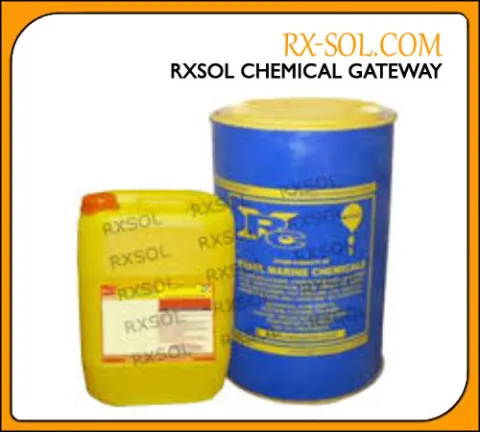
Sodium Chlorite Solution 31 Percent
- Part number
- RXSOL-42-1977-125
- Category
- Cooling Water Chemical
- Brand
- RXSOL
Overview
Sodium Chlorite is being mainly supplied to textile industry, water purification Industry, etc. SODIUM CHLORITE pure is a white crystalline solid. Difficult to burn, but accelerates the burning of organic substances. Forms explosive mixtures with certain combustible materials. Used in water purification, to bleach wood pulp, textile, fats, oils; and for many other uses.
Technical specifications
Applications
NaClO2 or ClNaO2 have 2 No of Hydrogen Bond Acceptor capacity. Most Commonly Used in water purification, to bleach wood pulp, textile, fats, oils; and for many other uses.
Sodium chlorite can be combined with citric acid for antimicrobial treatment. This treatment can be used on meats, poultry, fish, fruits and vegetables. It can be applied in food and water treatments to kill various microbial and parasites without eliminating healthy bacteria needed by our digestive system.
Dosage and directions
Sodium chlorite is a powerful oxidizer which makes make it a useful pesticide and herbicide. Sodium chlorite plays a very important role to deactivate many types of poisons by interacting with them and changing their chemical composition due to its powerful oxidizing powers.
It is helpful in bleaching various types of materials, such as wood, oils, and other textile products.
Safety and SDS
Read the safety data sheet before handling. Wear suitable gloves and eye protection.
View safety data sheet
| Porduct Name | Sodium Chlorite Solution |
| Part Number | RXSOL-42-1977-250 |
Company Details:
RX MARINE INTERNATIONAL
105, A wing , BSEL , TECH PARK.
VASHI ,NEW BOMBAY 400703 INDIA
Branch : Kandla, Mumbai , Chennai, Vizag, Kolkata, UAE , OMAN , CANADA and KENYA
| Phone | +91 22 20871200 - 1400 |
| Fax | +91 22 27612100 :::AOH :0091 9821214367 |
| rxsolchemicals@gmail.com | |
| Website | www.rxmraine.com |
| Product name | Cas No | Weight |
| Sodium Chlorite Solution | 7758-19-2 | 30-35% |
| Signal Word | Danger |
| Hazard Statements | CORROSIVE. HARMFUL OR FATAL IF SWALLOWED. TOXIC IF INHALED. CAUSES SEVERE SKIN BURNS AND EYE DAMAGE. MAY CAUSE DAMAGE TO RESPIRATORY SYSTEM AND BLOODDried material can ignite upon contact with combustibles. AQUATIC TOXICITY: Harmful to aquatic life |
| Precautionary statements | Wash thoroughly after handling. Wear protective gloves, protective clothing, eye, and face protection. Do not eat, drink or smoke when using this product. Do not breathe mist, vapours, or spray. Use only outdoors or in a well-ventilated area. Avoid release to the environment. Keep container tightly closed. Store in a secure manner. Always package, store, transport and dispose of all waste and contaminated equipment in accordance with all applicable federal, state, and local health and environmental regulations. Do not contaminate with acids, reducing agents, combustible materials, oxidizing materials, hypochlorite, organic solvents and compounds, garbage, dirt, organic matter, household products, chemicals, soap products, paint products, vinegar, beverages, oils, pine oil, dirty rags, sulfurcontaining rubber, or any other foreign matter. |
| Classification of the substance or mixture | No data available |
| Supplemental Hazard Statements | No data available |
| Other hazards | This substance/mixture contains no components considered to be either persistent, bioaccumulative and toxic (PBT), or very persistent and very bioaccumulative (vPvB) at levels of 0.1% or higher |
| General advice | Chlorine dioxide vapors are emitted when this product contacts acids or chlorine. If these vapors are inhaled, monitor patient closely for delayed development of pulmonary edema which may occur up to 48-72 hours postinhalation. Following ingestion, neutralization and use of activated charcoal is not indicated. Probable mucosal damage may contraindicate the use of gastric lavage. |
| If inhaled | If adverse effects occur, remove to uncontaminated area. Give artificial respiration if not breathing. If breathing is difficult, oxygen should be administered by qualified personnel. If respiration or pulse has stopped, have a trained person administer Basic Life Support (Cardio-Pulmonary Resuscitation and/or Automatic External Defibrillator) and CALL FOR EMERGENCY SERVICES IMMEDIATELY. |
| Eye Contact | Immediately flush eyes with a directed stream of water for at least 15 minutes, forcibly holding eyelids apart to ensure complete irrigation of all eye and lid tissues. Remove contact lenses, if present, after the first 5 minutes, then continue rinsing eye. Washing eyes within several seconds is essential to achieve maximum effectiveness. GET MEDICAL ATTENTION IMMEDIATELY |
| Swallowed | Never give anything by mouth to an unconscious or convulsive person. If swallowed, do not induce vomiting. Give water. If vomiting occurs spontaneously, keep airway clear. Give more water when vomiting stops. GET MEDICAL ATTENTION IMMEDIATELY |
| Skin Contact | Remove contaminated clothing, jewelry, and shoes immediately. Immediately flush contaminated areas with water. Wash contaminated areas with soap and water. Thoroughly clean and dry contaminated clothing before reuse. Discard contaminated leather goods. IF IRRITATION OCCURS, GET MEDICAL ATTENTION. |
| Inhalation | No data available |
| Ingestion | No data available |
| Most important symptoms and effects, both acute and delaye | The most important known symptoms and effects are described in the labelling (see section 2.2) and/or in section 11 |
| Indication of any immediate medical attention and special treatment needed | No data available |
| Flammability | No data available |
| Suitable extinguishing media | Use extinguishing agents appropriate for surrounding fire. |
| Unsuitable extinguishing media | No data available |
| Special hazards arising from the substance or mixture | No data available |
| Further information | No data available |
|
Hazardous combustion products |
Chlorine, Oxides of sodium |
| Advice for firefighters | Negligible fire hazard. Avoid evaporation to dryness. Dried material can ignite upon contact with combustibles. This product may represent an explosion hazard if it contacts acids, chlorine, or organic materials (Refer to Section 10) |
| Protective Equipment | Wear NIOSH approved positive-pressure self-contained breathing apparatus. Consider evacuation of personnel located downwind. Keep unnecessary people away, isolate hazard area and deny entry. Move container from fire area if it can be done without risk. Cool containers with water spray until well after the fire is out. Flood with fine water spray. Avoid inhalation of material or combustion by-products. Stay upwind and keep out of low areas |
| Specific Hazards Arising from the Chemical | No data available |
| Personal precautions, protective equipment and emergency procedures | Keep unnecessary people away, isolate hazard area and deny entry. Contain spill. Spill materials may be absorbed using nonflammable commercial absorbents. Dampen and scoop spilled material into clean, dedicated equipment. Every attempt should be made to avoid mixing spilled material with other chemicals or debris when cleaning up. Keep collected material damp and put into drums. Dispose promptly. Dried material can ignite upon contact with combustibles. Keep out of water supplies and sewers. Releases should be reported, if required, to appropriate agencies. |
| Spillage | No data available |
| Personal Protection | No data available |
| Enviromental Precaution | Do not let product enter drains. Risk of explosion. |
|
Methods and materials for containment and cleaning |
No data available |
| Reference to other sections | No data available |
| Advice on safe handling | Do not taste or swallow. Do not get in eyes, on skin, or on clothing. Avoid breathing vapors or mist when opening container. Avoid creation of vapor or mist. Wash thoroughly after handling. Use clean utensils. Do not add the product to any dispensing device containing residuals of other products. Contamination may start a chemical reaction with generation of heat, liberation of hazardous gases (chlorine dioxide a poisonous, explosive gas), and possible fire and explosion. Do not contaminate with acids, reducing agents, combustible materials, oxidizing materials, hypochlorite, organic solvents and compounds, garbage, dirt, organic matter, household products, chemicals, soap products, paint products, vinegar, beverages, oils, pine oil, dirty rags, sulfur-containing rubber, or any other foreign matter. Dried material can ignite upon contact with combustibles. |
| Conditions for safe storage including any incompatibilities |
No data available |
| Storage conditions | Store and handle in accordance with all current regulations and standards. Keep container properly labeled and tightly closed. Store in a cool, dry area. Store in a well-ventilated area. Store below 212 F (100 C). Avoid exposure to sunlight or ultraviolet light. Keep separated from incompatible substances (see Section 10 of the Safety Data Sheet). |
| Exposure controls | Personal protective equipment |
| Engineering Control | Use only in well-ventilated areas. Provide local exhaust ventilation where vapors, mist or aerosols may be generated. |
| Eye/face protection | Wear chemical safety goggles. Where splashing or spraying is possible, use a faceshield in addition to chemical protective goggles. Provide an emergency eye wash fountain and quick drench shower in the immediate work area |
| Body Protection | Wear appropriate chemical resistant glove Neoprene |
| Skin protection | Wear protective clothing to minimize skin contact. Contaminated clothing should be removed and laundered before reuse. Discard contaminated leather goods. |
| Respiratory protection |
A NIOSH approved full-face respirator equipped with N95 (dust, fume, mist) cartridges may be permissible when symptoms have been observed that are indicative of overexposure. If chlorine or chlorine dioxide is present, an acid gas cartridge is also required. An approved self-contained breathing apparatus operated in the pressure demand mode or an airline respirator with escape pack is required when an air purifying respirator is not adequate or for spills / emergencies of unknown concentrations. A respiratory protection program that meets 29 CFR 1910.134 must be followed whenever workplace conditions warrant use of a respirator.
|
| Other Protection Measure | No data available |
| Physical state | Liquid |
| Colour | Pale, yellow |
| Odour | Slight chlorine odor |
| Odor Threshold | No data available |
| pH | >12 @ 25 C |
| Melting Point | No data available |
| Boiling Point | No data available |
| Flash Point | No data available |
| Evaporation Rate | No data available |
| Flammability (solid, gas) | No data available |
| Explosive limits | No data Available |
| Upper/lower flammability or explosive limits | No data available |
| Autoignition temperature | No data available |
| Decomposition temperature | No data available |
| Vapour pressure | No data available |
| Viscosity | No data available |
| Relative Density | No data available |
| Specific Gravity | 1.1 to 1.3 @ 25 C |
| Partition coefficient | No data available |
| Explosive properties | No data available |
| Solubility | No data available |
| Ignition temperature | No data available |
| Particle characteristics | No data available |
| Reactivity | Stable at normal temperatures and pressures. |
| Chemical stability | The product is chemically stable under standard ambient conditions (room temperature) |
| Possibilityof hazardous reactions | Violent reactions possible with Strong oxidizing agents Hydrogen halides Fluorine nitrogen dioxide hydrides Chlorine |
| Conditions to avoid | Avoid heat, flames, sparks and other sources of ignition. Avoid evaporation to dryness. Dried material can ignite upon contact with combustibles. Avoid contamination with foreign materials. Avoid exposure to sunlight or ultraviolet light. |
| Incompatible materials |
Acids, Reducing agents, Combustible material, Oxidizing agents, Hypochlorite, Organic solvents and compounds, Garbage, Dirt, Organic materials, Household products, Chemicals, Soap products, Paint products, Vinegar, Beverages, Oils, Pine oil, Dirty rags, Sulfur-containing rubber, or any other foreign matter
|
| Hazardous decomposition products | Chlorine dioxide is formed on contact with acids, Thermal decomposition products include chlorine and oxides of sodium |
| Acute toxicity | LD50 Oral: 389 - 1800 mg/kg (Rat) LC50 Inhalation: 0.29 mg/L (4 hr-Rat) LD50 Dermal: > 2 gm/kg skin-rabbit Mist or spray may cause severe irritation of the respiratory tract with coughing, choking, pain and possibly burns of the mucous membranes. In some cases, pulmonary edema may develop. Skin contact may cause severe irritation, pain, and possibly burns. Direct eye contact may cause severe irritation, pain and burns, possibly severe, and permanent damage including blindness. Ingesting the material may cause immediate pain and severe burns of the mucous membranes. There may be discoloration of the tissues. Swallowing and speech may be difficult at first and then almost impossible. The effects on the esophagus and gastrointestinal tract may range from irritation to severe corrosion to death. Edema of the epiglottis and shock may occur |
| Skin corrosion/irritation | No data available |
| Serious eye damage/irritation | No data available |
| Respiratory or skin sensitization | No data available |
| Carcinogenicity | This product is not classified as a carcinogen by NTP, IARC or OSHA. |
| Germ cell mutagenicity | Sodium chlorite has tested positive in some studies. The significance of these test results for human health is unclear because the oxidizing effects of the chlorite or salting effects of sodium may significantly affect the ability of the tests to accurately detect mutagens |
| Reproductive toxicity | There is limited evidence of male reproductive effects in animal studies. |
| Specific target organ toxicity - single exposure |
No data available
|
| Additional Information | No data available |
| Persistence and degradability | Chlorite ions are reduced by some bacteria under anaerobic conditions. PERSISTENCE: This material will eventually degrade to sodium chloride. |
| Toxicity to fish | No data available |
| Toxicity to daphnia and other aquatic invertebrates | LC50 Daphnia Magna = 0.29 mg/L as 80% NaClO2 (48 hour) |
| Toxicity | LC50 rainbow trout = 290 mg/l as 80% NaClO2 (96 hour); Bluegill = 265-310 mg/l as 80% NaClO2 (96 hour); Sheepshead minnow = 62-90 ppm (96 hour)LD50 Mallard duck = 0.49-1.00g/kg as 80% NaClO2 (gavage); LD50 Bob White quail = 0.39 - 0.66 g/kg as 80% NaClO2 (gavage); Sodium chlorite in the diet of birds was not acutely toxic. Eight-day dietary LC50's in the Mallard duck and Bob White quail were > 5,000 ppm |
| Toxicity to bacteria | No data available |
| Toxicity to algae | No data available |
| Bioaccumulation potential | No data available |
| Mobility in soil | No data availalble |
| Results of PBT and vPvB assessment | This substance/mixture contains no components considered to be either persistent, bioaccumulative and toxic (PBT), or very persistent and very bioaccumulative (vPvB) at levels of 0.1% or higher. |
| Endocrine disrupting properties | The substance/mixture does not contain components considered to have endocrine disrupting propertiesaccording to REACH Article 57(f) or Commission Delegated regulation (EU) 2017/2100 or Commission Regulation (EU) 2018/605 at levels of 0.1% or higher. |
| Other adverse effects | No data available |
| Waste from material | Dispose in accordance with all applicable regulations. Do not put product, spilled product, or filled or partially filled containers into the trash or waste compactor. Contact with incompatible materials could cause a reaction and fire. Contact Customer Service to obtain neutralization instructions. Keep out of water supplies and sewers. May be subject to disposal regulations: U.S. EPA 40 CFR 261. Hazardous Waste Number(s): D001, D003. |
| Contaminated packaging | Container management: Containers are non-refillable. Do not reuse or refill containers. Offer for recycling if available. Offer for reconditioning if appropriate. Triple rinse or pressure rinse container promptly after emptying. Triple rinse containers 5-gallons or smaller as follows: Empty the remaining contents into application equipment or a mix tank and drain for 10 seconds after the flow begins to drip. Fill the container ¼ full with water and recap. Shake for 10 seconds. Pour rinsate into application equipment or a mix tank or store rinsate for later use or disposal. Drain for 10 seconds after the flow begins to drip. Repeat this procedure two more times. Triple rinse containers larger than 5 gallons as follows: Empty remaining contents into application equipment or a mix tank. Fill the container ¼ full with water. Replace and tighten closures. Tip container on its side and roll it back and forth, ensuring at least one complete revolution, for 30 seconds. Stand the container on its end and tip it back and forth several times. Empty the rinsate into application equipment or a mix tank or store rinsate for later use or disposal. Repeat this procedure two more times. Pressure rinse as follows: Empty the remaining contents into application equipment or a mix tank and continue to drain for 10 seconds after the flow begins to drip. Hold container upside down over application equipment or mix tank or collect rinsate for later use or disposal. Insert pressure rinsing nozzle in the side of the container, and rinse about 40 PSI for at least 30 seconds. Drain for 10 seconds, after the flow begins to drip. |
| Waste treatment Method | No data available |
| UN number | ADR/RID:1908 | IMDG:1908 |
IATA:1908 |
| UN proper shipping name | ADR/RID:Chlorite solution | IMDG:Chlorite solution | IATA:Chlorite solution |
| Transport hazard class(es) | ADR/RID:8 | IMDG:8 | IATA:8 |
| Packaging group | ADR/RID:ll | IMDG:ll | IATA:ll |
| Environmental hazards | ADR/RID:No | IMDG:No | IATA:No |
| Special precautions for user | No data available | ||
| Further information | No data available |
| Safety, health and environmental regulations/legislation specific for the substance or mixture | This material is considered hazardous by the OSHA Hazard Communication Standard (29 CFR 1910.1200) (US) |
| Other regulations | Take note of Dir 94/33/EC on the protection of young people at work |
| Chemical Safety Assessment | A Chemical Safety Assessment has been carried out for this substance. |
| Other Information |
The information above is believed to be accurate and represents the best information currently available to us. However, we make no warranty of merchantability or any other warranty, express or implied, with respect to such information, and weassume no liability resulting from its use. Users should make their own investigations to determine the suitability of the information for their particular purposes. In no event shall be liable for any claims, losses, or damages of any third party or for lost profits or any special, indirect, incidental, consequential or exemplary damages, howsoever arising, even if Rx Marine International has been advised of the possibility of such damages. DISCLAIMER OF LIABILITY :The information in this SDS was obtained from sources which we believe are reliable. However, the information is provided without any warranty, express or implied, regarding its correctness. The conditions or methods of handling, storage, use or disposal of the product are beyond our control and may be beyond our knowledge. For this and other reasons, we do not assume responsibility and expressly disclaim liability for loss, damage or expense arising out of or in any way connected with the handling, storage, use or disposal of the product. This MSDS was prepared and is to be used only for this product. If the product is used as a component in another product, this MSDS information may not be applicable. |
Availability
Sodium chlorite is also used for various industrial applications. It controls microbial contamination in industrial cooling systems and towers. It is used in place of chlorine in industrial ammonia plants because it does not react negatively with ammonia. Since it is an oxidizer, it is often a part of flue gas scrubber systems. Food-processing companies use it for washing fruits and vegetables because it is a fungicide. Meat and poultry are also washed with a solution, as is food processing equipment. Finally, it is an anti-mildew agent in detergent compositions and has been used in toothpaste and contact lens solutions.