|
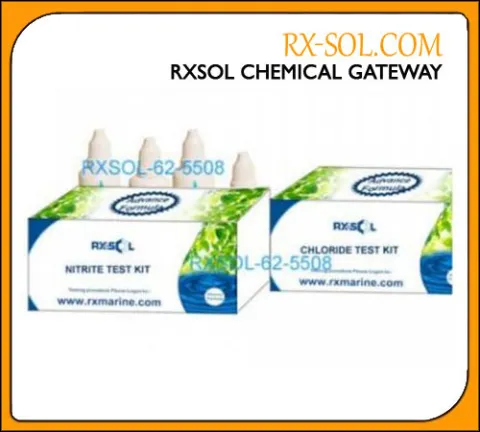
Product Name |
RXSOL-60-6604-312 |
|
Product Type |
CHLOROTEX REAGENT For determination of chlorine |
|
Revised date |
18-05-2025 |
Company Details:
RX MARINE INTERNATIONAL
105, A wing , BSEL , TECH PARK.
VASHI ,NEW BOMBAY 400703 INDIA
Stock Point : Mumbai, Kandla, Chennai, Visakhapatnam, Kolkata, Fujairah, Muscat Barka
Substance / Preparation :
Substance name Contents CAS No
Isopropyl alcohol 50-52 % 67-63-0
Dimineralized Water 48-50% 7732-18-5
Dihydrogen potassium phosphate <1.0% 7778-77-0
Potassium iodide <0.5% 7681-11-0
Proprietary Ingredient 0.010% Not available
Warning! Flammable liquid and vapor. Breathing vapors may cause drowsiness and
dizziness. Causes eye and respiratory tract irritation. Aspiration hazard if swallowed.
Can enter lungs and cause damage. Prolonged or repeated contact causes defatting
of the skin with irritation, dryness, and cracking. May cause central nervous system
depression. Flash Point: 24°C.
Target Organs: Central nervous system, Respiratory system, Eyes, Skin
Potential Health Effects
Eye: Produces irritation, characterized by a burning sensation, redness, tearing,
inflammation, and possible corneal injury. May cause transient corneal injury.
Skin: May cause irritation with pain and stinging, especially if the skin is abraded.
Isopropanol has a low potential to cause allergic skin reactions; however, rare cases of
allergic contact dermatitis have been reported. May be absorbed through intact skin.
Ingestion: Causes gastrointestinal irritation with nausea, vomiting and diarrhea. May
cause kidney damage. May cause central nervous system depression, characterized by
excitement, followed by headache, dizziness, drowsiness, and nausea. Advanced stages
may cause collapse, unconsciousness, coma and possible death due to respiratory failure.
Aspiration of material into the lungs may cause chemical pneumonitis, which may be
fatal.
Inhalation: Inhalation of high concentrations may cause central nervous system effects
characterized by nausea, headache, dizziness,unconsciousness and coma.
May cause narcotic effects in high concentration. Causes upper respiratory tract irritation.
Inhalation of vapors may cause drowsiness and dizziness.
Chronic: Prolonged or repeated skin contact may cause defatting and dermatitis.
Eyes: In case of contact, immediately flush eyes with plenty of water for at least 15
minutes. Get medical aid.
Skin: In case of contact, flush skin with plenty of water. Remove contaminated clothing
and shoes. Get medical aid if irritation develops and persists. Wash clothing before reuse.
Ingestion: Potential for aspiration if swallowed. Get medical aid immediately. Do not
induce vomiting unless directed to do so by medical personnel. Never give anything by
mouth to an unconscious person. If vomiting occurs naturally, have victim lean forward.
Inhalation: If inhaled, remove to fresh air. If not breathing, give artificial respiration. If
breathing is difficult, give oxygen. Get medical aid.
Notes to Physician: Urine acetone test may be helpful in diagnosis. Hemodialysis should
be considered in severe intoxication.Treat symptomatically and supportively.
General Information: As in any fire, wear a self-contained breathing apparatus in pressure-demand,
MSHA/NIOSH (approved or equivalent), and full protective gear. Vapors may form an
explosive mixture with air. Use water spray to keep fire-exposed containers cool.
Flammable liquid and vapor. Vapors are heavier than air and may travel
to a source of ignition and flash back. Vapors can spread along the ground and collect in
low or confined areas.
Extinguishing Media:
Water may be ineffective. Do NOT use straight streams of water. For large fires, use dry
chemical, carbon dioxide, alcohol-resistant foam, or water spray. For small fires, use
carbon dioxide, dry chemical, dry sand, or alcohol-resistant foam. Cool containers with
flooding quantities of water until well after fire is out.
Autoignition Temperature:
Not available
Explosion Limits:
Lower: Not available Upper: Not available
Flash Point: 24°C ( 75.20°F)
NFPA Rating: (estimated) Health: 1; Flammability: 3; Instability: 0
General Information:
Use proper personal protective equipment as indicated in Section 8.
Spills/Leaks: Absorb spill with inert material (e.g. vermiculite, sand or earth), then place
in suitable container. Use water spray to dilute spill to a non-flammable mixture. Clean
up spills immediately, observing precautions in the Protective Equipment section.
Remove all sources of ignition. Use a spark-proof tool. Provide ventilation. A
vapor suppressing foam may be used to reduce vapors.
Handling: Wash thoroughly after handling. Remove contaminated clothing and wash
before reuse. Ground and bond containers when transferring material. Use spark-proof
tools and explosion proof equipment. Avoid contact with eyes, skin, and clothing. Empty
containers retain product residue, (liquid and/or vapor), and can be dangerous. Take
precautionary measures against static discharges. Keep container tightly closed. Do not
pressurize, cut, weld, braze, solder, drill, grind, or expose empty containers to heat,
sparks or open flames. Use only with adequate ventilation. Avoid breathing vapor or
mist. Keep away from sources of ignition. Store in a tightly closed container. Keep from
contact with oxidizing materials. Store in a cool, dry, well-ventilated area away from
incompatible substances.
Engineering Controls:
Use explosion-proof ventilation equipment. Facilities storing or utilizing this material
should be equipped with an eyewash facility and a safety shower. Use adequate general
or local exhaust ventilation to keep airborne concentrations below the permissible
exposure limits.
Occupational Exposure Limits : No data available.
Personal Protective Equipment
Eyes: Wear appropriate protective eyeglasses or chemical safety goggles as described by
OSHA's eye and face protection regulations in 29 CFR 1910.133 or European Standard
EN166.
Skin: Wear appropriate protective gloves to prevent skin exposure.
Clothing: Wear appropriate protective clothing to prevent skin exposure.
Respirators: A respiratory protection program that meets OSHA's 29 CFR 1910.134 and
ANSI Z88.2 requirements or European Standard EN 149 must be followed whenever
workplace conditions warrant respirator use.
Physical State: Liquid
Odor: No information found
pH: 5-6
Vapor Pressure: No information found
Vapor Density: No information found
Evaporation Rate: No information
found Viscosity: No information
found Boiling Point: No information
found Freezing/Melting Point: No information found
Decomposition Temperature: No information found
Solubility in water: No information found
Specific Gravity/Density: 0.8-0.9
Molecular Weight: No information found
Chemical Stability: Stable.
Conditions to Avoid:
Ignition sources, excess heat
Incompatibilities with Other Materials
Strong oxidizing agents, strong acids, strong bases, amines, ammonia, ethylene oxide,
isocyanates, acetaldehyde, chlorine, phosgene, Attacks some forms of plastics, rubbers,
and coatings., aluminum at high temperatures
Hazardous Decomposition Products
Carbon monoxide, carbon dioxide
Hazardous Polymerization
Will not occur.
RTECS:
CAS# 67-63-0: NT8050000
CAS# 7732-18-5: ZC0110000
CAS# 7778-77-0: TC6615500
CAS# 7681-11-0: TT2975000
LD50/LC50:
CAS# 67-63-0:
Draize test, rabbit, eye: 100 mg Severe
Draize test, rabbit, eye: 10 mg Moderate
Draize test, rabbit, eye: 100 mg/24H Moderate
Draize test, rabbit, skin: 500 mg Mild
Inhalation, mouse: LC50 = 53000 mg/m3
Inhalation, rat: LC50 = 16000 ppm/8H
Inhalation, rat: LC50 = 72600 mg/m3
Oral, mouse: LD50 = 3600 mg/kg
Oral, mouse: LD50 = 3600 mg/kg
Oral, rabbit: LD50 = 6410 mg/kg
Oral, rat: LD50 = 5045 mg/kg
Oral, rat: LD50 = 5000 mg/kg
Skin, rabbit: LD50 = 12800 mg/kg.
CAS# 7732-18-5:
Oral, rat: LD50 = >90 mL/kg.
CAS# 7778-77-0:
Skin, rabbit: LD50 = >4640 mg/kg.
CAS# 7681-11-0:
No information found
Carcinogenicity:
CAS# 67-63-0: Not listed as a carcinogen by ACGIH, IARC, NTP, or CA Prop 65.
CAS# 7732-18-5: Not listed as a carcinogen by ACGIH, IARC, NTP, or CA Prop 65.
CAS# 7778-77-0: Not listed as a carcinogen by ACGIH, IARC, NTP, or CA Prop 65.
CAS# 7681-11-0: Not listed as a carcinogen by ACGIH, IARC, NTP, or CA Prop 65.
Epidemiology:
No information found
Teratogenicity:
A rat & rabbit developmental toxicity study showed no teratogenic effects at doses that
were clearly maternally toxic. In a separate rat study, no evidence of developmental
neurotoxicity was associated with gestational exposures to IPA up to 1200 mg/kg/d.
Reproductive: See actual entry in RTECS for complete information.
Mutagenicity: See actual entry in RTECS for complete information.
Neurotoxicity: In rats exposed to isopropanol by inhalation, acute neurotoxicity was
noted at 1 and 6 hours at 5000 ppm, but only minimal effects were seen at 1500 ppm and
the animals recovered within 5 hours. No toxicity was noted at 500 ppm.
Other: See actual entry in RTECS for complete information.
Ecotoxicity:
Fish: Fathead Minnow: >1000 ppm; 96h; LC50
Daphnia: >1000 ppm; 96h; LC50
Fish: Gold orfe: 8970-9280 ppm; 48h; LC50
IPA has a high biochemical oxygen demand and a potential to cause oxygen depletion in
aqueous systems, a low potential to affect aquatic organisms, a low potential to affect
secondary waste treatment microbial metabolism, a low potential to affect the
germination of some plants, a high potential to biodegrade (low persistence) with
unacclimated microorganisms from activated sludge.
Environmental: No information found
Physical:
THOD: 2.40 g oxygen/g
COD: 2.23 g oxygen/g
BOD-5: 1.19-1.72 g oxygen/g
Other: No information foun
Chemical waste generators must determine whether a discarded chemical is classified as
a hazardous waste. US EPA guidelines for the classification determination are listed in 40
CFR Part 261.3. Additionally, waste generators must consult state and local hazardous
waste regulations to ensure complete and accurate classification.
RCRA P Series Wastes
None of the components are on this list.
RCRA U Series Wastes
None of the components are on this list.
US DOT & Canadian TDG
Proper Shipping Name: ALCOHOLS,
N.O.S.
(Isopropanol) Hazard Class: 3
UN Number: UN1987
Packing Group: II
US Federal
TSCA
CAS# 67-63-0 is listed on the TSCA Inventory.
CAS# 7732-18-5 is listed on the TSCA Inventory.
CAS# 7778-77-0 is listed on the TSCA Inventory.
CAS# 7681-11-0 is listed on the TSCA Inventory.
Proprietary Ingredient is not listed on the TSCA Inventory.It is for research and
development use only.
Health and Safety Reporting List
CAS# 67-63-0: Effective 12/15/86, Sunset 12/15/96
Chemical Test Rules
CAS# 67-63-0: 40 CFR 799.2325
TSCA Section 12b
None of the components are on this list.
TSCA Significant New Use Rule (SNUR)
None of the components are on this list.
CERCLA Hazardous Substances and corresponding RQs
None of the components are on this list.
SARA Section 302 Extremely Hazardous Substances
None of the components are on this list.
SARA Hazard Categories
CAS# 67-63-0: immediate, delayed, fire.
CAS# 7778-77-0: immediate.
CAS# 7681-11-0: immediate, delayed.
SARA Section 313
This material contains Isopropyl alcohol (CAS# 67-63-0, 50-52%), which is subject to
the reporting requirements of Section 313 of SARA Title III and 40 CFR Part 372.
Clean Air Act - Hazardous Air Pollutants (HAPs)
None of the components are on this list.
Clean Air Act - Class 1 Ozone Depletors
None of the components are on this list.
Clean Air Act - Class 2 Ozone Depletors
None of the components are on this list.
Clean Water Act - Hazardous Substances
None of the components are on this list.
Clean Water Act - Priority Pollutants
None of the components are on this list.
Clean Water Act - Toxic Pollutants
None of the components are on this list.
OSHA - Highly Hazardous
None of the components are on this list.
OSHA - Specifically Regulated Chemicals
None of the components are on this list.
US State
State Right to Know
Isopropyl alcohol can be found on the following state Right-to-Know lists: California,
New Jersey, Pennsylvania, Minnesota, Massachusetts.
No information found
California Prop 65
None of the components are on this list.
California No Significant Risk Level
None of the components are on this list.
None of the components are on this list.
None of the components are on this list.
None of the components are on this list.
None of the components are on this list.
European/International Regulations
European Labelling in Accordance with EC Directives:
Hazard Symbols: F XI
Risk Phrases: R 11 Highly flammable.
R 36 Irritating to eyes.
R 67 Vapours may cause drowsiness and dizziness.
Safety Phrases: S 7 Keep container tightly closed.
S 16 Keep away from sources of ignition - No smoking.
S 24/25 Avoid contact with skin and eyes.
S 26 In case of contact with eyes, rinse immediately with plenty of water and seek
medical advice.
WGK (Water Danger/Protection)
No information found
United Kingdom Occupational Exposure Limits
No information found
United Kingdom Maximum Exposure Limits
No information found
Canadian DSL/NDSL
CAS# 67-63-0 is listed on Canada's DSL List.
CAS# 7732-18-5 is listed on Canada's DSL List.
CAS# 7778-77-0 is listed on Canada's DSL List.
CAS# 7681-11-0 is listed on Canada's DSL List.
Canadian WHMIS Classifications
This product has a WHMIS classification of B2, D2B.
This product has been classified in accordance with the hazard criteria of the Controlled
Products
Regulations and the MSDS contains all of the information required by those regulations.
Canadian Ingredient Disclosure List
CAS# 67-63-0 is listed on the Canadian Ingredient Disclosure List.
CAS# 7681-11-0 is listed on the Canadian Ingredient Disclosure List.
Sources of key data used : REGULATION (EC) No 1272/2008 OF THE EUROPEAN
PARLIAMENT AND OF THE COUNCIL of 16 December 2008 on classification,
labelling and packaging of substances and mixtures, amending and repealing Directives
67/548/EEC and 1999/45/EC, and amending Regulation (EC) No 1907/2006
Further information : None.
In accordance with REACH Regulation (CE) Nº 1907/2006 and with CLP Regulation
(CE) Nº 1272/2008 DISCLAIMER OF LIABILITY The information in this SDS was
obtained from sources which we believe are reliable. However, the information is
provided without any warranty, express or implied, regarding its correctness. The
conditions or methods of handling,storage, use or disposal of the product
are beyond our control and may be beyond our knowledge. For this and other reasons, we
do not assume responsibility and expressly disclaim liability for loss, damage or expense
arising out of or in any way connected with the handling, storage, use or disposal of the
product. This MSDS was prepared and is to be used only for this product. If the
product is used as a component in another product, this MSDS information may not be
applicable