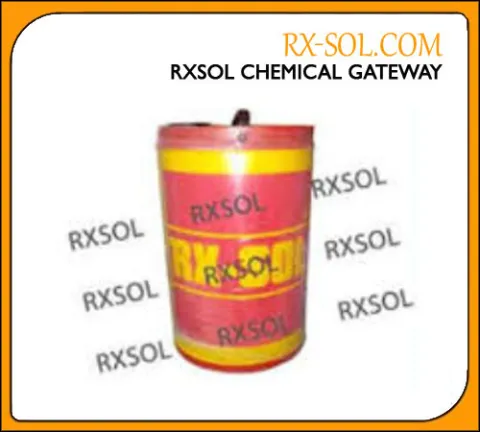
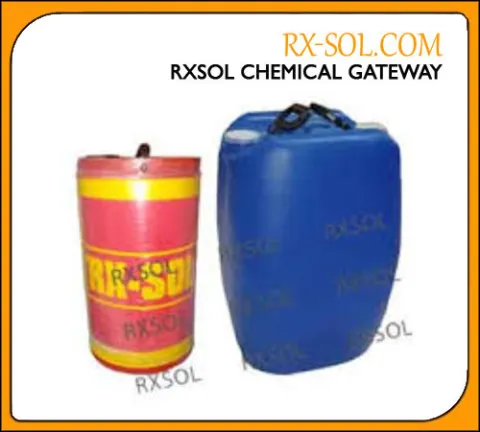
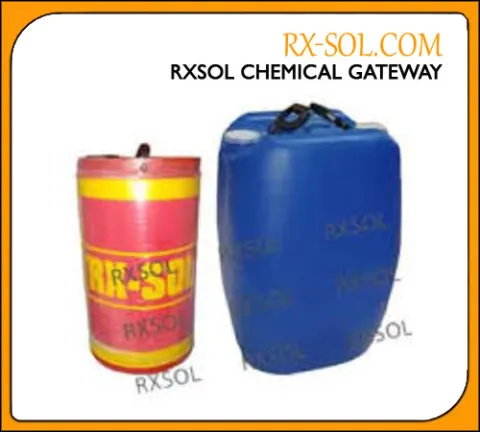
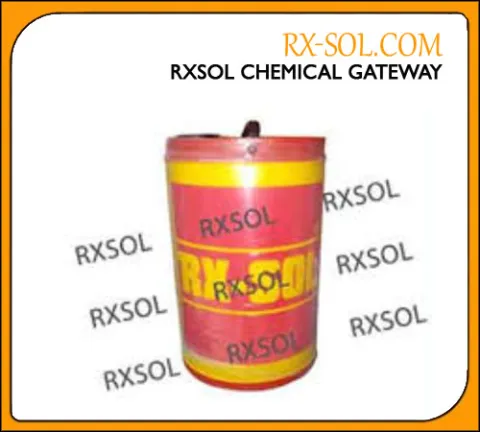
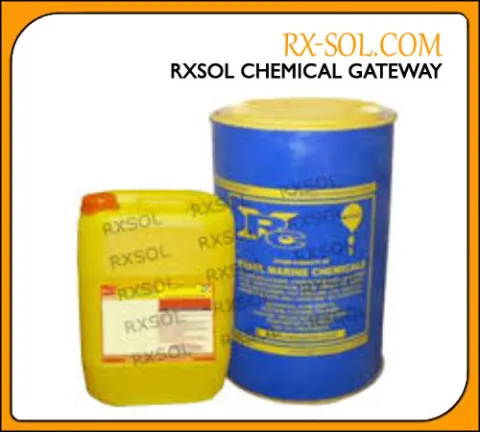
Corrosion Inhibitor Carboxylate XLI
- Part number
- RXSOL-43-4063-210
- Category
- Cooling Water Chemical
- Brand
- RXSOL
Overview
RXSOL Corrosion Inhibitor Carboxylate XLI Corrosion Inhibitor is a water based, low toxicity, environmentally friendly, nitrite free carboxylate inhibitor (OAT technology).
Technical specifications
- RXSOL Corrosion Inhibitor Carboxylate XLI Corrosion Inhibitor provides long life corrosion protection by using optimized and patented aliphatic carboxylate organic inhibitors that provide long lasting protection for cooling system metals and components including hard to protect aluminum.
- RXSOL Corrosion Inhibitor Carboxylate XLI Corrosion Inhibitor helps maintain excellent heat transfer since it does not contain silicates and phosphates which can over time create deposits on heat transfer surfaces.
- RXSOL Corrosion Inhibitor Carboxylate XLI Corrosion Inhibitor exhibits low depletion rates and does not require the addition of supplemental coolant additives with correct maintenance practices.
- Dilution of RXSOL Corrosion Inhibitor Carboxylate XLI Corrosion Inhibitor by more than 25% will reduce inhibitor performance.
- RXSOL Corrosion Inhibitor Carboxylate XLI Corrosion Inhibitor protects against erosion, corrosion and cavitation of cooling system components.
Applications
BENEFITS AND FEATURES
BENEFITS
Corrosion Protection
Dosage and directions
Characteristics and notes
Safety and SDS
Read the safety data sheet before handling. Wear suitable gloves and eye protection.
View safety data sheet
| Product Name | Corrosion Inhibitor Carboxylate XLI |
| Part Number | RXSOL-43-4063-210 |
Company Details:
RX MARINE INTERNATIONAL
105, A wing , BSEL , TECH PARK.
VASHI ,NEW BOMBAY 400703 INDIA
Branch : Kandla, Mumbai , Chennai, Vizag, Kolkata, UAE , OMAN , CANADA and KENYA
| Phone | +91 22 20871200 - 1400 |
| Fax | +91 22 27612100 :::AOH :0091 9821214367 |
| rxsolchemicals@gmail.com | |
| Website | www.rxmraine.com |
| COMPONENTS | CAS NUMBER | AMOUNT |
| Sodium 2-ethylhexanoate | 19766-89-3 | 10 - 30 %weight |
| Disodium sebacate | 17265-14-4 | 1 - 5 %weight |
| Tolyltriazole | 29385-43-1 | 1 - < 2.5 %weight |
| Imidazole | 288-32-4 | 0.1 - < 0.3 %weight |
| CLASSIFICATION |
Reproductive toxicant (developmental): Category 1B.
|
Label elements
| Signal Word | Danger |
| Health Hazards |
May damage the unborn child (H360D).
|
| Precautionary statement |
Prevention
Obtain special instructions before use (P201).
Do not handle until all safety precautions have been read and understood (P202).
Wear protective gloves/protective clothing/eye protection/face protection (P280).
Response
IF exposed or concerned: Get medical advice/attention (P308+P313).
Storage
Store locked up (P405).
Disposal
Dispose of contents/container in accordance with applicable local/regional/national/international regulations (P501).
|
| Eye | No specific first aid measures are required. As a precaution, remove contact lenses, if worn, and flush eyes with water |
| Skin | No specific first aid measures are required. As a precaution, remove clothing and shoes if contaminated. To remove the material from skin, use soap and water. Discard contaminated clothing and shoes or thoroughly clean before reuse. |
| Ingestion | No specific first aid measures are required. Do not induce vomiting. As a precaution, get medical advice. |
| Inhalation | No specific first aid measures are required. If exposed to excessive levels of material in the air, move the exposed person to fresh air. Get medical attention if coughing or respiratory discomfort occurs. |
IMMEDIATE HEALTH EFFECTS
| Eye | Not expected to cause prolonged or significant eye irritation |
| Skin | Contact with the skin is not expected to cause prolonged or significant irritation. Contact with the skin is not expected to cause an allergic skin response. Not expected to be harmful to internal organs if absorbed through the skin. |
| Ingestion | Not expected to be harmful if swallowed. |
| Inhalation | Not expected to be harmful if inhaled. |
DELAYED OR OTHER HEALTH EFFECTS
| Reproduction and Birth Defects | Contains material that may cause harm to the unborn child if swallowed based on animal data. See Section 11 for additional information. Risk depends on duration and level of exposure. |
| EXTINGUISHING MEDIA | Use water fog, foam, dry chemical or carbon dioxide (CO2) to extinguish flames. |
| PROTECTION OF FIRE FIGHTERS | |
| Fire Fighting Instructions |
This material will burn although it is not easily ignited. See Section 7 for proper handling and storage. For fires involving this material, do not enter any enclosed or confined fire space without proper protective equipment, including self-contained breathing apparatus.
|
| Combustion Products | Highly dependent on combustion conditions. A complex mixture of airborne solids, liquids, and gases including carbon monoxide, carbon dioxide, and unidentified organic compounds will be evolved when this material undergoes combustion. Combustion may form oxides of: Sodium, Nitrogen. |
| Protective Measures |
Eliminate all sources of ignition in vicinity of spilled material.
|
| Spill Management | Stop the source of the release if you can do it without risk. Contain release to prevent further contamination of soil, surface water or groundwater. Clean up spill as soon as possible, observing precautions in Exposure Controls/Personal Protection. Use appropriate techniques such as applying non-combustible absorbent materials or pumping. Where feasible and appropriate, remove contaminated soil. Place contaminated materials in disposable containers and dispose of in a manner consistent with applicable regulations. |
| Reporting | Report spills to local authorities as appropriate or required. |
| Precautionary Measures | Do not get in eyes, on skin, or on clothing. Wash thoroughly after handling. Keep out of the reach of children. |
| Static Hazard | Electrostatic charge may accumulate and create a hazardous condition when handling this material. To minimize this hazard, bonding and grounding may be necessary but may not, by themselves, be sufficient. Review all operations which have the potential of generating and accumulating an electrostatic charge and/or a flammable atmosphere (including tank and container filling, splash filling, tank cleaning, sampling, gauging, switch loading, filtering, mixing, agitation, and vacuum truck operations) and use appropriate mitigating procedures. |
| Container Warnings |
Container is not designed to contain pressure. Do not use pressure to empty container or it may rupture with explosive force. Empty containers retain product residue (solid, liquid, and/or vapor) and can be dangerous. Do not pressurize, cut, weld, braze, solder, drill, grind, or expose such containers to heat, flame, sparks, static electricity, or other sources of ignition. They may explode and cause injury or death. Empty containers should be completely drained, properly closed, and promptly returned to a drum reconditioner or disposed of properly.
|
| GENERAL CONSIDERATIONS |
Consider the potential hazards of this material (see Section 2), applicable exposure limits, job activities, and other substances in the workplace when designing engineering controls and selecting personal protective equipment (PPE). If engineering controls or work practices are not adequate to prevent exposure to harmful levels of this material, refer to PPE information below.
Factors that affect PPE include, but are not limited to: properties of the chemical, other chemicals which may contact the same PPE, physical requirements (fit & sizing, cut/puncture protection, dexterity, thermal protection, etc.), and potential allergic reactions to the PPE material. It is the responsibility of the user to read and understand all instructions and limitations supplied with the equipment since protection is usually provided for a limited time or under certain circumstances. Refer to appropriate CEN standards.
|
| ENGINEERING CONTROLS | Use general ventilation, local exhaust ventilation, or a combination of both. |
PERSONAL PROTECTIVE EQUIPMENT
| Eye/Face Protection | Wear protective equipment to prevent eye contact. Selection of protective equipment may include safety glasses, chemical goggles, face shields, or a combination depending on the work operations conducted. |
| Skin Protection | Wear chemical personal protective equipment (PPE) to prevent skin contact. Selection of chemical protective clothing should be performed by an Occupational Hygienist or Safety Professional and be based upon applicable standards (ASTM F739 or EN 374). Using chemical PPE depends upon operations conducted and may include chemical gloves, boots, chemical apron, chemical suit, and complete facial protection. Refer to PPE manufacturers to obtain breakthrough time information to determine how long PPE can be used before it needs to be replaced. Unless specific glove manufacturer data indicates otherwise, the below table is based upon available industry data to assist in the glove selection process and is intended to be used as reference only. |
| Respiratory Protection | No respiratory protection is normally required. Use a positive pressure air-supplying respirator in circumstances where air-purifying respirators may not provide adequate protection. |
| Occupational Exposure Limits | No applicable occupational exposure limits exist for this material or its components. Consult local authorities for appropriate values. |
| Physical state | Liquid |
| Color | Green (fluorescent) |
| Odor | Faint or Mild |
| Odor Threshold | No data available |
| pH | 7.8 - 8.5; 5%volume @ 20°C (solution in water) |
| Vapor Pressure | No data available |
| Relative Vapor Density | No data available |
| Initial Boiling Point | No data available |
| Solubility | Soluble in water |
| Freezing Point | No data available |
| Melting Point | Not applicable |
| Particle Characteristics |
Not applicable
|
| Density |
1.058 kg/l @ 20°C (68°F) (Typical)
|
| Kinematic Viscosity | No data available |
| Coefficient of Therm. Expansion / °F | No data available |
| Evaporation Rate | No data available |
| Decomposition temperature | No data available |
| Partition coefficient n-octanol/water (logarithmic value) | No data available |
| FLAMMABLE PROPERTIES | |
| Flammability (solid, gas) | Not Applicable |
| Flash point | Not Applicable |
| Autoignition | Not Applicable |
| Flammability (Explosive) Limits (% by volume in air) |
Lower: Not Applicable
Upper: Not Applicable
|
| Reactivity |
May react with strong acids or strong oxidizing agents, such as chlorates, nitrates, peroxides, etc
|
| Chemical stability | This material is considered stable under normal ambient and anticipated storage and handling conditions of temperature and pressure |
| Incompatibility With Other Materials | Not applicable |
| Hazardous Decomposition Products | None known (None expected) |
| Hazardous Polymerization | Hazardous polymerization will not occur. |
Information on toxicological effects
| Serious Eye Damage/Irritation |
The material is not considered an eye irritant. The product has not been tested. The statement is based on evaluation of data for similar materials or product components.
|
| Skin Corrosion/Irritation | The material is not considered a skin irritant. The product has not been tested. The statement is based on evaluation of data for similar materials or product components. |
| Skin Sensitization | The material is not considered a skin sensitizer. The product has not been tested. The statement is based on evaluation of data for similar materials or product components. |
| Acute Dermal Toxicity | The material is not considered a dermal toxicant. The product has not been tested. The statement is based on evaluation of data for similar materials or product components. |
| Acute Oral Toxicity | The material is not considered a dermal toxicant. The product has not been tested. The statement is based on evaluation of data for similar materials or product components. |
| Acute Inhalation Toxicity | The material is not considered a dermal toxicant. The product has not been tested. The statement is based on evaluation of data for similar materials or product components. |
| Acute Toxicity Estimate |
Not Determined
|
| Germ Cell Mutagenicity | The material is not considered a mutagen. The product has not been tested. The statement is based on evaluation of data for similar materials or product components. |
| Carcinogenicity | The material is not considered a carcinogen. The product has not been tested. The statement is based on evaluation of data for similar materials or product components. |
| Reproductive Toxicity | This material may damage the unborn child. The product has not been tested. The statement is based on evaluation of data for similar materials or product components. |
| Specific Target Organ Toxicity - Single Exposure |
The material is not considered a target organ toxicant (single exposure). The product has not been tested. The statement is based on evaluation of data for similar materials or product components
|
| Specific Target Organ Toxicity - Repeated Exposure |
The material is not considered a target organ toxicant (repeated exposure). The product has not been tested. The statement is based on evaluation of data for similar materials or product components
|
| Aspiration Hazard | The material is not considered an aspiration hazard. |
| ADDITIONAL TOXICOLOGY INFORMATION |
2-Ethylhexanoic acid (2-EXA) caused an increase in liver size and enzyme levels when repeatedly administered to rats via the diet. When administered to pregnant rats by gavage or in drinking water, 2-
EXA caused teratogenicity (birth defects) and delayed postnatal development of the pups. Additionally, 2-
EXA impaired female fertility in rats. Birth defects were seen in the offspring of mice who were administered sodium 2-ethylhexanoate via intraperitoneal injection during pregnancy.
|
| Ecotoxicity |
This material is not expected to be harmful to aquatic organisms.
The product has not been tested. The statement has been derived from the properties of the individual components.
|
| MOBILITY | No data available |
| PERSISTENCE AND DEGRADABILITY | This material is expected to be readily biodegradable. The product has not been tested. The statement has been derived from the properties of the individual components. |
| POTENTIAL TO BIOACCUMULATE |
Bioconcentration Factor: No data available.
Partition coefficient n-octanol/water (logarithmic value): No data available
|
| Use material for its intended purpose or recycle if possible. This material, if it must be discarded, may meet the criteria of a hazardous waste as defined by international, country, or local laws and regulations. |
| UN Shipping Description | NOT REGULATED AS DANGEROUS GOODS FOR TRANSPORT UNDER THE UNITED NATIONS MODEL REGULATIONS/RECOMMENDATIONS |
| IMO/IMDG Shipping Description |
NOT REGULATED AS DANGEROUS GOODS FOR TRANSPORT UNDER THE IMDG CODE
|
| ICAO/IATA Shipping Description | NOT REGULATED AS DANGEROUS GOODS FOR TRANSPORT UNDER ICAO |
| REGULATORY LISTS SEARCHED |
01-1=IARC Group 1
01-2A=IARC Group 2A
01-2B=IARC Group 2B
|
| CHEMICAL INVENTORIES | All components comply with the following chemical inventory requirements: AIIC (Australia), DSL (Canada), EINECS (European Union), ENCS (Japan), IECSC (China), KECI (Korea), PICCS (Philippines), TSCA (United States). |
| Other Information |
The information above is believed to be accurate and represents the best information currently available to us. However, we make no warranty of merchantability or any other warranty, express or implied, with respect to such information, and weassume no liability resulting from its use. Users should make their own investigations to determine the suitability of the information for their particular purposes. In no event shall be liable for any claims, losses, or damages of any third party or for lost profits or any special, indirect, incidental, consequential or exemplary damages, howsoever arising, even if Rx Marine International has been advised of the possibility of such damages. DISCLAIMER OF LIABILITY :The information in this SDS was obtained from sources which we believe are reliable. However, the information is provided without any warranty, express or implied, regarding its correctness. The conditions or methods of handling, storage, use or disposal of the product are beyond our control and may be beyond our knowledge. For this and other reasons, we do not assume responsibility and expressly disclaim liability for loss, damage or expense arising out of or in any way connected with the handling, storage, use or disposal of the product. This MSDS was prepared and is to be used only for this product. If the product is used as a component in another product, this MSDS information may not be applicable. |