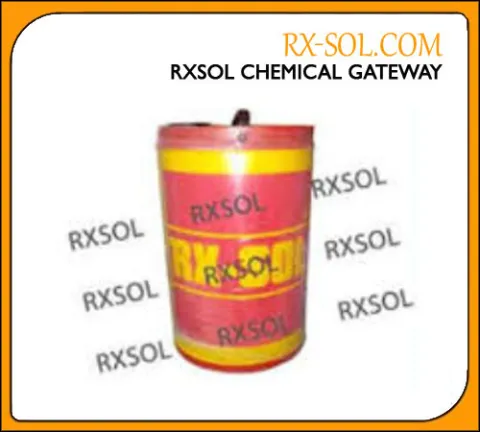
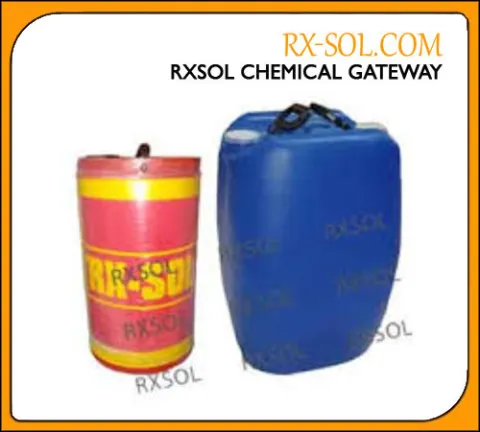
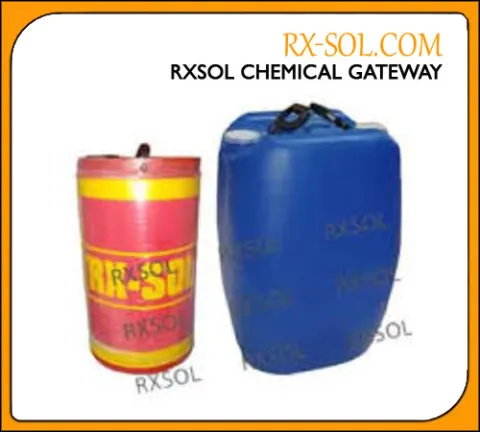
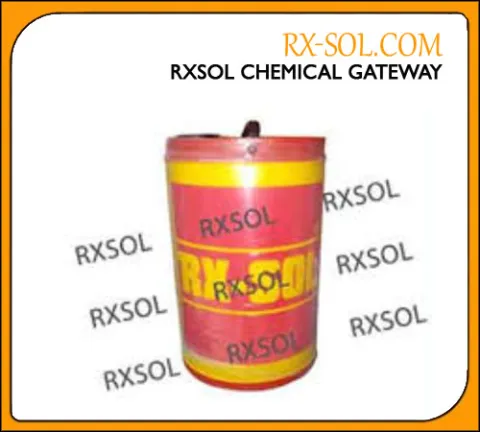
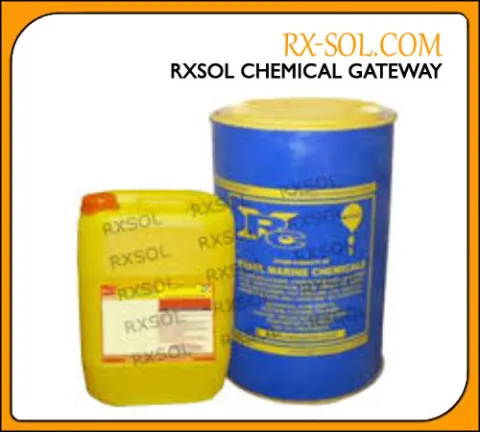
Sodium Chlorate Solution
- Part number
- RXSOL-19-2977-300
- Category
- Cooling Water Chemical
- Brand
- RXSOL
Overview
Sodium chlorate was as a pesticide, largely to kill weeds and undesirable foliage. Sodium Chlorate manufacturers, marketers and distributors and exporter. Sodium Chlorate white crystalline powder that is readily soluble in water. It is hygroscopic.
Technical specifications
|
Properties |
Technicals Grade |
Pure Grade |
|
Appearance |
Light Yellowish Crystals |
White Crystals |
|
Purity as Naclo3 |
98% + (-) 1% |
More than 99.4% |
| Nacl content | 0.5% Max. | Less than 0.1% |
| Moisture | 1-1.5% Max. | Less than 0.2% |
| Water Insoluble | 0.2 % Max. | Less than 0.05% |
| Whiteness (APHA) | --------- | Less than 17 |
Applications
Sodium Chlorate is being mainly supplied to Paper Industries for permanent whiteness to paper.
Safety and SDS
Read the safety data sheet before handling. Wear suitable gloves and eye protection.
View safety data sheet
| Product Name | Sodium Chlorate Solution |
| Part Number | RXSOL-19-2977-300 |
Company Details:
RX MARINE INTERNATIONAL
105, A wing , BSEL , TECH PARK.
VASHI ,NEW BOMBAY 400703 INDIA
Branch : Kandla, Mumbai , Chennai, Vizag, Kolkata, UAE , OMAN , CANADA and KENYA
| Phone | +91 22 20871200 - 1400 |
| Fax | +91 22 27612100 :::AOH :0091 9821214367 |
| rxsolchemicals@gmail.com | |
| Website | www.rxmraine.com |
| Chemical name | Common name and synonyms | CAS number | Conc. % By Weight |
| Sodium Chlorate | Chlorate of Soda; ERCOCIDE C | 7775-09-9 | 20-50 w/w% |
| Dihydrogen oxide | Water | 7732-18-5 | Balance |
| Physical hazards |
Oxidizing liquids Category 2
|
| Health hazards | Acute toxicity, oral Category 4 |
| Environmental hazards | Not currently regulated by OSHA, refer to Section 12 for additional information. |
| OSHA defined hazards | This mixture does not meet the classification criteria according to OSHA HazCom 2012. |
Label elements
| Signal Word | Danger |
| Hazard statement |
May intensify fire; oxidizer
Harmful if swallowed
|
| Precautionary statement |
Prevention
Keep away from heat. Keep away from clothing and other combustible materials. Take any precaution to avoid mixing with combustibles. Wear protective gloves, eye protection, face protection. Wash hands and face thoroughly after handling. Do not eat, drink or smoke when using this
product.
Response
IF SWALLOWED: Call a POISON CENTER/physician if you feel unwell. Rinse mouth.
In case of fire Use water to extinguish.
Storage
Does not apply.
Disposal
Dispose of contents and container in accordance with local/regional/national/international regulations.
|
| Hazard(s) not otherwise classified (HNOC) |
No OSHA defined hazard classes.
Other hazards which do not result in classification:
May cause mild skin and eye irritation.
|
| Supplemental information | Not applicable |
| Inhalation | Remove person to fresh air and keep comfortable for breathing. If not breathing, give artificial respiration. If breathing is difficult, trained personnel should give oxygen. Call a POISON CENTER or doctor/physician if you feel unwell. |
| Skin Contact | Take off immediately all contaminated clothing. Rinse skin with water/shower. Wash contaminated clothing before reuse. Call a POISON CENTER or doctor/physician if you feel unwell. |
| Eye Contact | Immediately flush eyes with plenty of water for at least 20 minutes. Remove contact lenses, if present and easy to do. Continue rinsing. If eye irritation persists: Get medical advice/attention. |
| Ingestion | Rinse mouth. Do not induce vomiting. Never give anything by mouth to a victim who is unconscious or is having convulsions. If the patient is conscious, give one or two glasses of water to dilute stomach contents. Call a POISON CENTER or doctor/physician if you feel unwell. |
| Most important symptoms/effects, acute and delayed | May cause mild eye irritation. Symptoms may include redness and itching. May cause irritation to the nose, throat and upper respiratory tract. Symptoms may include coughing, choking and wheezing. May be harmful or fatal if swallowed. Symptoms may include cyanosis (bluish discoloration of the skin), nervous system damage, lung inflammation and pulmonary edema (fluid accumulation). Symptoms may include pain, headache, nausea, vomiting, dizziness, drowsiness and other central nervous system effects. Prolonged or repeated exposure may cause blood system effects. Prolonged or repeated overexposure may cause kidney effects. |
| Indication of immediate medical attention and special treatment needed | Provide general supportive measures and treat symptomatically. |
| General information | In the case of accident or if you feel unwell, seek medical advice immediately (show the label where possible). Ensure that medical personnel are aware of the material(s) involved, and take precautions to protect themselves. |
| Suitable extinguishing media | Water spray, fog (flooding amounts). |
| Unsuitable extinguishing media | Do not use dry chemical fire extinguishing agents containing ammonium compounds (such as some A:B:C agents), since an explosive compound can be formed. Do not use carbon dioxide, dry chemical powder or other extinguishing agents that smother flames, since they are not effective in extinguishing fires involving oxidizers. |
| Specific hazards arising from the chemical |
Strong oxidizer - contact with other material may cause fire. May cause fire or explosion; strong oxidizer.
|
| Special protective equipment and precautions for firefighters | Firefighters must use standard protective equipment including flame retardant coat, helmet with face shield, gloves, rubber boots, and in enclosed spaces, SCBA. Avoid use of leather products. |
| Firefighting equipment/instructions | In case of fire: Evacuate area. Fight fire remotely due to the risk of explosion. In the event of fire, cool tanks with water spray. Move containers from fire area if you can do so without risk. Containers should be cooled with water to prevent vapor pressure build up. Do not allow run-off from firefighting to enter drains or water courses. Dike for water control. |
| Specific methods | Cool containers exposed to flames with water until well after the fire is out. |
| General fire hazards | May intensify fire; oxidizer. |
| Hazardous combustion products | Pure sodium chlorate decomposes explosively under intense fire conditions. It initially decomposes to sodium perchlorate and begins to liberate oxygen at about 265°C. Besides oxygen, other compounds formed in a fire include chlorine, hydrogen chloride and sodium oxide. |
| Personal precautions, protective equipment and emergency procedures |
Eliminate all ignition sources (no smoking, flares, sparks, or flames in immediate area). Immediately evacuate personnel to safe areas. Ensure clean-up is conducted by trained personnel only. Wear appropriate protective equipment and clothing during clean-up. Ventilate the contaminated area. Do not breathe mist or vapor. For personal protection, see section 8 of the SDS.
|
| Methods and materials for containment and cleaning up | Eliminate all ignition sources (no smoking, flares, sparks, or flames in immediate area). Ventilate the contaminated area. Wear appropriate protective equipment and clothing during clean-up. Keep combustibles (wood, paper, oil, etc.) away from spilled material. Stop leak if you can do it without risk. Dike far ahead of spill for later disposal. Absorb in vermiculite, dry sand or earth and place into containers. Prevent entry into waterways, sewer, basements or confined areas. Following product recovery, flush area with water. For waste disposal, see section 13 of the SDS. |
| Environmental precautions | Avoid release to the environment. Avoid discharge into drains, water courses or onto the ground. |
| Precautions for safe handling | Do not handle or store near an open flame, heat or other sources of ignition. No smoking in the area. Avoid contamination with organic materials. Avoid breathing mist or vapor. Avoid contact with eyes, skin and clothing. Keep away from acids and other incompatibles. Keep containers closed when not in use. Label containers appropriately. Wash hands after handling and before eating. Wear protective gloves and eye/face protection. |
| Conditions for safe storage, including any incompatibilities |
Storage area should be clearly identified, clear of obstruction and accessible only to trained and authorized personnel. Storage areas should not be constructed of wood or other organic materials. Do not store wood or other organic materials in areas that could come in contact with this material.
Keep away from combustible or readily oxidizable materials and acids. Store in a closed container away from incompatible materials (see section 10 of the SDS). Keep quantity stored as small as possible. Post "NO SMOKING" signs in area. Stored containers should be periodically checked for general condition and leakage. Protect against physical damage. Keep empty containers in separate storage area. Empty containers may contain hazardous residues. Keep closed. Have appropriate fire extinguishers and spill clean-up equipment in storage area.
|
| Occupational exposure limits | No exposure limits noted for ingredient(s). |
| Biological limit values | No biological exposure limits noted for the ingredient(s). |
| Appropriate engineering controls |
Good general ventilation (typically 10 air changes per hour) should be used. Ventilation rates should be matched to conditions. If applicable, use process enclosures, local exhaust ventilation, or other engineering controls to maintain airborne levels below recommended exposure limits. If exposure limits have not been established, maintain airborne levels to an acceptable level. In case of insufficient ventilation, wear suitable respiratory equipment. Do not use combustible material of construction where sodium chlorate will be used or stored.
|
Individual protection measures, such as personal protective equipment
| Eye/face protection | Wear safety glasses with side shields (or goggles). Eye wash fountain and emergency showers are recommended. |
| Skin protection | |
| Hand protection |
Avoid skin contact. Use nitrile, PVC or neoprene gloves. Do not use gloves made of leather, cotton or other organic absorbing materials. If gloves become contaminated they will become a significant fire hazard.
|
| Other | Wear suitable protective clothing. Wear flame resistant (FR) clothing. Change clothing at the end of each work shift or when it may be contaminated. Keep contaminated clothing wet between taking it off and washing it. For exposures with a high potential of contact, wear PVC or rubber rain suit, hard hat, rubber or plastic gloves, rubber boots, and safety glasses or goggles. Do not wear leather boots or gloves. |
| Respiratory protection | In case of insufficient ventilation, wear suitable respiratory equipment. Use a NIOSH/MSHA approved respirator if there is a risk of exposure to dust/fume/mists at levels exceeding the exposure limits. Seek advice from respiratory protection specialists. |
| General hygiene considerations | When using, do not eat, drink or smoke. Always observe good personal hygiene measures, such as washing after handling the material and before eating, drinking, and/or smoking. Routinely wash work clothing and protective equipment to remove contaminants. |
| Appearance | Clear to pale yellow mobile liquid |
| Physical state | Liquid |
| Form | Liquid |
| Color | Clear to light yellow |
| Odor | None |
| Odor threshold | Not available |
| pH | 7-9 |
| Melting point/ Freezing point |
17.6 °F (-8 °C) (20% solution)
-0.4 °F (-18 °C) (40% solution)
|
| Initial boiling point and boiling range | 215.6 - 226.4 °F (102 - 108 °C) |
| Flash point | Not applicable |
| Evaporation rate | Not available |
| Flammability (solid, gas) | Not applicable |
| Upper/lower flammability or explosive limits | |
| Flammability limit – lower (%) | Not applicable |
| Flammability limit – upper (%) |
Not applicable
|
| Explosive limit – lower (%) | Not available |
| Explosive limit – upper(%) | Not available |
| Vapor pressure | Not available |
| Vapor density | Not available |
| Relative density | Not available |
| Solubility (ies) | |
| Solubility (water) | Soluble |
| Partition coefficient (n-octanol/water) | Not available |
| Auto-ignition temperature | Not applicable |
| Decomposition temperature | > 500 °F (> 265 °C) |
| Viscosity | Not available |
| Other information | |
| Density | 1.15 - 1.45 g/cm3 |
| Explosive properties | Oxidizer, may have explosive properties |
| Molecular formula | Cl-Na-O3 |
| Molecular weight | 106.45 g/mol |
| Oxidizing properties | Strong oxidizer - contact with other material may cause fire |
| Percent volatile | Not available |
| Specific gravity | 1.15 – 1.45 |
| Reactivity |
The product is stable and non-reactive under normal conditions of use, storage and transport. Can form shock-, heat- or friction-sensitive mixtures with finely divided metals, metal salts, ammonium salts, non-metals, strong reducing agents and sulfides. Low pH (acidic) solutions can decompose to form corrosive and dangerously reactive chlorine dioxide. Decomposes above 265°C releasing oxygen.
|
| Chemical stability | Stable at normal temperatures and pressure. At low pH, solutions decompose forming corrosive and dangerously reactive chlorine dioxide. In intense fire situations there have been several cases of violent explosions attributed to sodium chlorate by itself. |
| Possibility of hazardous reactions | Hazardous polymerization does not occur |
| Conditions to avoid | Heat, sparks, friction, shock, impact, open flames, contact with combustible materials and acidic pH. |
| Incompatible materials | Combustible material. Organic compounds. Organic lubricants. Strong acids. Ammonium salts. Reducing agents. Powdered metals. |
| Hazardous decomposition products | Pure sodium chlorate decomposes explosively under intense fire conditions. It initially decomposes to sodium perchlorate and begins to liberate oxygen at about 265°C. Besides oxygen, other compounds formed in a fire include chlorine, hydrogen chloride and sodium oxide. |
Information on likely routes of exposure
| Inhalation |
May cause irritation to the respiratory system
|
| Skin contact | Causes mild skin irritation. |
| Eye contact | May cause mild eye irritation. |
| Ingestion | Harmful if swallowed. |
| Effects of short-term (acute) exposure | Symptoms may include cyanosis (bluish discoloration of the skin), nervous system damage, lung inflammation and pulmonary edema (fluid accumulation). Symptoms may include pain, headache, nausea, vomiting, dizziness, drowsiness and other central nervous system effects. May cause mild eye irritation. Symptoms may include redness and itching. May cause mild skin irritation. Symptoms may include redness and itching. May cause irritation to the nose, throat and upper respiratory tract. Symptoms may include coughing, choking and wheezing. |
| Effects of long-term (chronic) exposure |
Prolonged or repeated exposure may cause blood system effects.
Prolonged or repeated overexposure may cause kidney effects.. |
| Information on toxicological effects | |
| Acute toxicity | See data for individual ingredient acute toxicity data. |
| Product | Species | Test Results |
| Sodium Chlorate Solution 20%-50% | ||
|
Acute
Other
|
||
| LD50 | Rat | 2400 mg/kg (Calculated ATE) |
| Skin corrosion/irritation | Species | Test Results |
| Sodium Chlorate (CAS 7775-09-9) | ||
| Dermal | No information available | |
| Inhalation | ||
| LC50 | Rat | > 7 mg/l (4 hour) |
| Oral | ||
| LD50 | Rat | 1200 mg/kg |
| LD50 |
Mouse
Rabbit
|
8350 mg/kg
7200 mg/kg
|
| Skin corrosion/irritation | Direct contact with concentrated solutions can cause mild irritation. |
| Serious eye damage/eye irritation | May cause mild eye irritation. Symptoms may include redness and itching. |
| Respiratory or skin sensitization | |
| Respiratory sensitization | Not expected to be a respiratory sensitizer. |
| Skin sensitizer | Not expected to be a skin sensitizer. |
| Germ cell mutagenicity | Not expected to be mutagenic. |
| Carcinogenicity | This product is not considered to be a carcinogen by IARC, ACGIH, NTP, or OSHA. |
| US. OSHA Specifically Regulated Substances (29 CFR 1910.1001- 1050) | Not listed |
| Reproductive toxicity | Not classifiable as a reproductive toxin. |
| Specific target organ toxicity - single exposure |
Hazardous by OSHA criteria.
Specific Target Organ Toxicity (STOT), Single Exposure Category 3
May cause respiratory irritation.
|
| Specific target organ toxicity - repeated exposure | Not classified as a specific target organ toxicity - repeated exposure. |
| Aspiration toxicity | Not expected to be an aspiration hazard. |
| Chronic effects | Repeated and prolonged exposure of the skin can cause dermatitis and blood system effects. Repeated exposure by inhalation or ingestion may result in toxic effects, which appear gradually over weeks. Initially there may be abdominal pain, followed by internal bleeding, destruction of red blood cells, lung damage, liver damage, and kidney damage. The skin may be bluish. |
| Ecotoxicity | Not expected to be harmful to aquatic organisms. |
| Persistence and degradability |
Readily biodegradable. Sodium chlorate degrades very slowly in soil under aerobic conditions. May decompose by microbial degradation more rapidly under anaerobic conditions.
|
| Bioaccumulative potential |
No data available
|
| Mobility in soil | High water solubility indicates a high mobility in soil. Sodium chlorate can be leached out of soil. Chlorate accumulates in plant cells until toxic concentrations are reached and the plant dies. |
| Other adverse effects | No other adverse environmental effects (e.g. ozone depletion, photochemical ozone creation potential, endocrine disruption, global warming potential) are expected from this component. |
| Disposal instructions | Collect and reclaim or dispose in sealed containers at licensed waste disposal site. This material and its container must be disposed of as hazardous waste. Do not allow this material to drain into sewers/water supplies. Do not contaminate ponds, waterways or ditches with chemical or used container. Dispose of contents/container in accordance with local/regional/national/international regulations. |
| Local disposal regulations | Dispose in accordance with all applicable regulations. |
| Hazardous waste code | The waste code should be assigned in discussion between the user, the producer and the waste disposal company. |
| Waste from residues / unused products | Dispose of in accordance with local regulations. Empty containers or liners may retain some product residues. This material and its container must be disposed of in a safe manner (see: Disposal instructions). |
| Contaminated packaging | Empty containers should be taken to an approved waste handling site for recycling or disposal. Since emptied containers may retain product residue, follow label warnings even after container is emptied. |
| DOT | |
| UN number | UN2428 |
| UN proper shipping name |
Sodium chlorate, aqueous solution
|
| Transport hazard class(es) | |
| Class | 5.1 |
| Subsidiary risk | - |
| Label(s) | 5.1 |
| Packaging group | II |
| Special precautions for user | Read safety instructions, SDS and emergency procedures before handling. |
| Special provisions | A2, IB2, T4, TP1 |
| Packaging exceptions | 152 |
| Packaging non bulk | 203 |
| Packaging bulk | 241 |
| IATA | |
| UN number | UN2428 |
| UN proper shipping name | Sodium chlorate, aqueous solution |
| Transport hazard class(es) | |
| Class | 5.1 |
| Subsidiary risk | - |
| Packing group | ll |
| Environmental hazards | No |
| ERG Code | 5L |
| Special precautions for user | Read safety instructions, SDS and emergency procedures before handling. |
| Other information | |
| Passenger and cargo aircraft | Allowed |
| Cargo aircraft only | Allowed |
| IMDG | |
| UN number | UN2428 |
| UN proper shipping name | Sodium chlorate, aqueous solution |
| Transport hazard class(es) | |
| Class | 5.1 |
| Subsidiary risk | - |
| Packing group | ll |
| Environmental hazards | |
| Marine pollutant | No |
| EmS | F-H, S-Q |
| Special precautions for user | Read safety instructions, SDS and emergency procedures before handling. |
| Transport in bulk according to Annex II of MARPOL 73/78 and the IBC Code | Not available |
| US federal regulations | This product is a "Hazardous Chemical" as defined by the OSHA Hazard Communication Standard, 29 CFR 1910.1200. |
| TSCA Section 12(b) Export Notification (40 CFR 707, Subpt. D) | Not regulated |
| CERCLA Hazardous Substance List (40 CFR 302.4) | Not listed |
| SARA 304 Emergency release notification | Not regulated |
| OSHA Specifically Regulated Substances (29 CFR 1910.1001-1050) | Not listed |
| Hazard categories |
Immediate Hazard - Yes
Delayed Hazard - No
Fire Hazard - Yes
Pressure Hazard - No
Reactivity Hazard -No
|
| SARA 302 Extremely hazardous substance | Not listed |
| SARA 311/312 Hazardous chemical | No |
| SARA 313 (TRI reporting) | Not regulated |
| Clean Air Act (CAA) Section 112 Hazardous Air Pollutants (HAPs) List | Not regulated |
| Clean Air Act (CAA) Section 112(r) Accidental Release Prevention (40 CFR 68.130) | Not regulated |
| Safe Drinking Water Act (SDWA) | Contaminate candidate list. |
| US. California Controlled Substances. CA Department of Justice (California Health and Safety Code Section 11100) | Not listed |
| US. Massachusetts RTK - Substance List | Sodium Chlorate (CAS 7775-09-9) |
| US. New Jersey Worker and Community Rightto-Know Act | Sodium Chlorate (CAS 7775-09-9) |
| US. Pennsylvania RTK – Hazardous Substances | Sodium Chlorate (CAS 7775-09-9) |
| US. Rhode Island RTK | Not regulated |
| US. California Proposition 65 | California Safe Drinking Water and Toxic Enforcement Act of 1986 (Proposition 65): This material is not known to contain any chemicals currently listed as carcinogens or reproductive toxins. |
| Country(s) or region | Inventory name | On inventory (yes/no) |
| Australia | Australian Inventory of Chemical Substances (AICS) | Yes |
| Canada | Domestic Substances List (DSL) | Yes |
| Canada | Non-Domestic Substances List (NDSL) | No |
| China | Inventory of Existing Chemical Substances in China (IECSC) | Yes |
| Europe |
European Inventory of Existing Commercial
Chemical Substances (EINECS)
|
Yes |
| Europe |
European List of Notified Chemical Substances
(ELINCS)
|
No |
| Japan |
Inventory of Existing and New Chemical
Substances (ENCS)
|
Yes |
| Korea | Existing Chemicals List (ECL) | Yes |
| New Zealand | New Zealand Inventory | Yes |
| Philippines |
Philippine Inventory of Chemicals and Chemical
Substances (PICCS)
|
Yes |
| United States & Puerto Rico | Toxic Substances Control Act (TSCA) Inventory | Yes |
| Other Information |
The information above is believed to be accurate and represents the best information currently available to us. However, we make no warranty of merchantability or any other warranty, express or implied, with respect to such information, and weassume no liability resulting from its use. Users should make their own investigations to determine the suitability of the information for their particular purposes. In no event shall be liable for any claims, losses, or damages of any third party or for lost profits or any special, indirect, incidental, consequential or exemplary damages, howsoever arising, even if Rx Marine International has been advised of the possibility of such damages. |
Availability
Sodium Chlorate NOT FOR SALE manufacturer supplier distributor in Mumbai, Kandla, Kolkata, Vizag, Chennai, India, Fujairah, Dubai, Sharjah, UAE, Gulf, Middle East, Muscat Oman, Kenya Africa. Get the best quality of Sodium Chlorate NOT FOR SALE at a competitive price from us. We have ready stock of Sodium Chlorate NOT FOR SALE in India, UAE Gulf, Oman, Kenya Africa. Contact us for bulk as well as small orders.